













Blind Spot
Tim Lee agrees that Huckabee is a competitive general election candidate, and he makes an excellent point about Huckabee’s religiosity:
I think a lot of members of the liberal (and libertarian) secular elite have a weird blind spot when it comes to religion and religious rhetoric in politics. They tend to find sincere religious sentiments so alien that anyone who is conversant with the language of faith sounds nutty to them. But like it or not, this is still a predominantly religious country, and lots of voters respond well to religious rhetoric of the non-angry variety. I personally find it every bit as off-putting as Matt does, but we’re in the minority.
It’s not such a weird blind spot when you think about it. When religion seems to you to have little or no relevant or meaningful application to public life, you almost have to assume that anyone employing such rhetoric or actually pursuing policies on account of religious teachings is either totally cynical or a crazed theocrat (or perhaps, in the view of some secular observers, both at the same time). The idea that religious politics need not be either utterly vacuous or profoundly threatening to society contradicts a raft of assumptions that secular people have about the intersection of religion and politics. These people have also become so accustomed to the anodyne generic theism of our Presidents that it is jarring to them to hear someone cite Scripture with fluency and some modicum of understanding.
leave a comment
Medved Hearts Huckabee
Ross says of the possible Romney combeack:
If he seems viable, he’ll have Rush Limbaugh, Hugh Hewitt, and the rest of talk radio in his corner.
This is mostly right, with one notable exception. For some reason, Michael Medved has been going out of his way to take Huckabee’s side over the past few months, and he was an early proponent of the idea that Huckabee could unify the party better than others. In the wake of Ames, many people saw Huckabee’s second place finish as a kind of amusing curiosity, but Medved managed to see something early on that the rest of us ignored.
Five months ago, Medved saw something different about Huckabee:
First, his distinctly blue-collar, proudly working class background will help to destroy the notion that Republicans are the party of Wall Street and the country club.
But the Republicans, at least at the level of leadership and policymaking, really are that party, and what they seem to fear is that Huckabee will not just destroy this perception but also threaten to change the priorities of the party in ways disadvantageous to “Wall Street and the country club” (i.e., corporate interests). The more I think about it, the more wrong I think they are about Huckabee, which makes his “populism” just so much sympathising with American workers while doing nothing at all for them. Call it Potemkin Sam’s Club Republicanism.
Medved saw Huckabee’s background as an electoral asset:
The old Democratic class warfare tactics simply won’t work against Huckabee—his personal style and background make it impossible to associate him with some privileged elite.
Yet to listen to The Wall Street Journal, you’d think that Huckabee was using class warfare tactics. The problem that the GOP higher-ups seem to be having with the man is that he isn’t associated with their privileged elite, at least not directly. What makes Huckabee a valuable general election candidate are the very things that make him hateful to large parts of the GOP and movement leadership, but these general election assets are the things that ought to recommend him to them.
More remarkably, Medved saw Huckabee as the perfect candidate to shore up the right against a disaffected protest candidate:
With a Huckabee candidacy, on the other hand, a self-righteous anti-abortion, anti-immigration, anti-globalism fringe campaign becomes less powerful (and less necessary, for that matter). Those who worry that international conspirators are subverting American sovereignty as part of some CFR or Neo-Con conspiracy will feel far less fearful of Huckabee than of any other major candidate.
So the candidate who has praised NAFTA, called opponents of his pro-immigration bills racists and un-Christian, and claims to take foreign policy cues from Richard Haass and Frank Gaffney (when he isn’t declaring his love for Charles Krauthammer) is the one who will tamp down an anti-immigration and anti-globalist third party candidate who dislikes the influence of the CFR and neocons? If I had read this before the anti-Huckabee reaction, I would have laughed (it’s still pretty bizarre), but when I see Huckabee embracing Gilchrist and a hard anti-amnesty line and when I see him being painted as some protectionist proponent of national autarchy this statement is no longer quite so bizarre.
One thing that Medved didn’t foresee was the tremendous backlash against the candidate that was coming:
And it’s tough for anyone, from any faction in the party, to feel mad at Mike Huckabee.
David Brooks made a similar claim later, at which I duly scoffed, but there had to be some reason why both of them saw Huckabee as a unifying figure in the GOP where everyone else saw a radioactive, coalition-destroying candidate. As it turns out, both of them were simply wrong about the Republican reaction to Huckabee, but what is more difficult is trying to understand why the reaction is as ferocious as it has been. I’ve floated the “Huckabee is the social conservatives’ revenge” idea, as well as the “economic populist” angle and the “he embarrassingly reminds the GOP of the Bush administration that they have propped up” view, and more recently suggested that Huckabee is just too Southern and low-class for the GOP establishment to accept, and there is something to all of these explanations. But any one by itself or all of them together still fail to explain fully the hostility.
Medved also had this amusing prediction:
The big negatives the press will no doubt begin to attach to the surging Huckabee campaign involve the notion that he’s just too religious (and doesn’t believe in undirected, random Darwinism) and that he’s got no experience in foreign policy.
Yet the main parts of “the press” making these sorts of arguments are conservative outlets and pundits. It is Republican leaders who are extremely worried about his alleged excessive religiosity, his creationism and his lack of foreign policy experience. For their own reasons, mainstream media outlets continue mostly to lavish praise on Huckabee. Yes, they have begun digging into his ethics record and decisions as governor, but by and large it is not the mainstream media that want to annihilate him (at least not yet)–that is one of the conservative media’s obsessions at present.
As I’ve said before, I know the reasons why I, as a paleo, don’t like Huckabee and wouldn’t want him as President, but these are all the reasons why Bush voters should like him. If you liked NCLB, you’ll love a candidate who receives the endorsement of the New Hampshire NEA. The common complaint against Huckabee is that he isn’t really conservative, or not conservative enough, and I would agree that he isn’t by my standards, but by this standard now being applied to Huckabee Bush should never have passed muster, either. The self-exculpatory explanation from conservatives who supported Bush in both elections was that they either “always” knew that Bush wasn’t really conservative but were being pragmatic (lesser of two evils, yadda yadda yadda) or they realised too late that Bush wasn’t really governing as a conservative. The new story about Huckabee is that he is so un-conservative that he isn’t even as conservative as Bush, whom they now reject as non-conservative. What seems to be troubling these establishment critics of Huckabee is that he is no less conservative than Bush, and may be more so in some respects, but all of a sudden they have discovered a deep wellspring of uncompromising principle that does not allow them to tolerate Huckabee, even as they have cheered on Bush for seven years. This is an almost Romneyesque discovery of first principles in its novelty, and it is a bit hard to take seriously if you have been opposed to Bush from the beginning.
leave a comment
More Thoughts On Huckabee
Rod said that the WSJ was being disingenuous when it editorialised on Huckabee with these lines:
His innocence (or ignorance) on foreign policy, penchant for borrowing liberal economic attack lines, and even his rejection of Darwin’s theory of evolution deserve to be understood by voters before they make him their standard bearer.
Rod points out that much the same could have been said, and was said, about Bush in 1999-2000, but this didn’t stop the WSJ from backing him. The perceived difference on economics is supposed to be what drives the hostility to Huckabee, and originally I was persuaded that Huckabee was sincere in espousing a kind of economic populism and protectionism until I paid more attention to what he actually believed. It still seems correct to assume that his identity as a primarily socially conservative candidate, and one who does not hide his religion in the closet, has deeply troubled secular and “libertarian” Republicans, and that the reaction against him is a reaction of so-called “money-cons” (the sort that Rod described as “mainstream conservatives” in Crunchy Cons) against conservatives who think that social issues remain central and who are tired of being taken for granted.
Having been an early adopter of this economic policy explanation for the anti-Huckabee campaign, I now think this emphasis on Huckabee’s economics is to exaggerate the differences between Candidate Bush and Huckabee considerably. President Bush has indeed been tied closely to corporate Republicans and has been one all along, but if we can think back to the original Bush campaign in 2000 we will remember a candidate who stressed many of the same themes and tried to identify Republicans with a “reform” agenda in policy areas not traditionally assoociated with the GOP. If Bush launched his campaign with an attack on the Congressional GOP for “balancing the budget on the backs of the poor” (even then, Gerson’s rhetoric was annoying), Huckabee has engaged in much the same “I feel your pain” hand-waving that Bush did. If Huckabee is not so daft as to say things like, “Family values don’t stop at the Rio Grande,” he has plenty of statements on the record that make him sound every bit as sentimental and sappy on immigration, while also having said plenty of things that insult conservative restrictionists in the worst ways. The charge that Huckabee is “borrowing liberal economic attack lines” is mostly baseless, unless it is a “liberal economic attack line” to acknowledge that there is economic anxiety and uncertainty abroad in the land, which the new jobless numbers and purchasing reports are beginning to drive home. If he is borrowing them, perhaps it is because they have been succeeding electorally. In any case, we don’t know whether a “compassionate conservative” would have sounded more like a populist in 2000, because economic conditions were relatively better and there was much less anxiety. Huckabee is showing us what “compassionate conservatism” looks like in an election year where economic conditions are relatively worse.
The key differences between Bush and Huckabee and perhaps a better explanation for why so many Bush voters are balking at supporting Huckabee are that Huckabee is a real Southerner, in that he was born and raised there, while Bush was a transplanted Texan, and Huckabee came from a lower-middle class family and Bush came from wealthy American political aristocracy. To the extent that Huckabee represents anything threatening or different, it is in his biography and geography, if you will. Republicans have never given the reins to a real, born-and-bred Southerner. If Northeasterners are already freaking out about the risk of the GOP becoming a regional, Southern party, you can just imagine the terrible thoughts that run through their head when they consider the consequences of a Huckabee nomination. Bush was a transplant to west Texas, but had strong family and political ties back East, while Huckabee could represent a real shift of the political center of gravity of the GOP towards the region where a huge number of the party’s voters live. In this sense, it may not be so much what Huckabee is saying or not saying as where he comes from that worries the party elites who are from quite different places.
However, I think Rod has missed the larger point, as we all have, myself included, in thinking about anti-Huckabee sentiment. In WSJ ideology, as with so many other organs of putatively conservative opinion, national security and foreign policy are now supposed to be absolutely paramount, and the establishment’s preferred candidates on this score are McCain and Giuliani–always have been and always will be so long as they are in the race. Neoconservative publications were major McCain boosters eight years ago, in no small part because they were concerned that Bush’s promise of a “humble” foreign policy and his consorting with all manner of realists and people who initially seemed reasonable. The attacks on Huckabee’s foreign policy statements have usually derived from this same fear of creeping realism and an abandonment of the more militant and aggressive policies of the last seven years–he has therefore dutifully starting chattering about Islamofascism whenever he can to show that he is not some weak, diplomacy-loving friend of the State Department. Only grudgingly did neoconservatives initially accept Bush’s victory over McCain, and some of them were among his most ferocious critics in the early months of his first term, especially during the April incident with the Chinese. It seems to me that there are two kinds of responses to Huckabee emerging among leading Republicans: McCain supporters who could live with Huckabee if they had to (e.g., Brooks and possibly Kristol) and McCain and Giuliani supporters who have continued to see Huckabee as the blunt instrument with which their preferred candidate demolishes Mitt Romney and clears the path to the nomination. The establishment types who have already declared for Romney now find themselves fighting against a two or three-front assault, as everyone believes his candidate has the most to gain from Romney’s complete defeat. Honestly, I think the Giuliani and McCain supporters who think they will be able to banish Huckabee once he has become strong enough to knock Romney out are delusional, and they will find themselves confronted with a candidate they cannot easily stop and will also find a lot of bitter Romney supporters who will be in no mood to work very hard for candidates who helped beat their man.
leave a comment
It Didn’t Work Out So Well For The Athenians
Via Sullivan comes yet another in the series of weirdly insulting statements from people who are trying to say complimentary things about Obama:
Yet if Clinton’s answers come off as well-intended lectures, Obama is offering soaring sermons and generational opportunity. In 1960, the articulate Adlai Stevenson compared his own oratory unfavorably with John F. Kennedy’s. “Do you remember,” Stevenson said, “that in classical times when Cicero had finished speaking, the people said, ‘How well he spoke,’ but when Demosthenes had finished speaking, the people said, ‘Let us march.’ ” At this hour, Obama is the Democrats’ Demosthenes.
Demosthenes was certainly a persuasive speaker and has been remembered as one of the greatest orators, so on this level the comparison does Obama great honour (one might say far too great). Demosthenes was demagogos in an age where that label did not necessarily carry quite the same pejorative meaning that it does for us, whereas Obama is simply a demagogue in the conventional sense who has never actually led much of anything. Demosthenes was also the late classical equivalent of a jingoist and his avowed policy of confrontation with the Macedonians brought disaster to his city. In short, to be a group’s Demosthenes is to be an extremely eloquent and unwise man who brings ruin to his country, as well as meeting an unhappy end personally. Perhaps in a future column praising Hillary Clinton Dionne could liken her to Helen of Troy. With praise like this, Obama doesn’t need criticism.
leave a comment
New Hampshire Is Here
The new Marist poll confirms the movement that we have been seeing elsewhere: McCain gaining considerably, Giuliani imploding and Romney faltering. It also confirms the order of the New Hampshire Republican field that I assume will hold true later today: McCain, Romney, Huckabee, Paul and only then Giuliani. Giuliani has effectively given up on New Hampshire in every respect, pulling his television ads last month, but he now runs the real risk of coming in even with Fred Thompson, whose non-campaigning in New Hampshire has made him one of the least-liked candidates in the Granite State. In any case, two single-digit results in a row hardly bodes well for the alleged “national frontrunner” of yesterday.
Meanwhile, the traditional first New Hampshire voters in the small hamlet of Dixville Notch have cast their votes, and they seem to be a mirror of the general mood of the state, except that they are much less enthusiastic about Clinton than the larger electorate. However, as you might expect from an extremely small sample of voters who are unrepresentative of much of New Hampshire, Dixville Notch has a terrible record when it comes to voting for the eventual winners. This year may prove to be the exception to that rule, since Obama and McCain prevailed handily with seven and four votes respectively and have been expanding their leads in polls over the last week.
leave a comment
Coalitions and Incentives
Huckabee has every incentive to distance himself from the GOP coalition; his nomination rests on its demise. ~Dick Armey
If that doesn’t seem to make any sense, that’s because it doesn’t. Arguably, Huckabee’s election as President would lead to the splintering and demise of “the GOP coalition,” but for Huckabee to win the nomination he does have to alleviate the doubts of other members of the coalition who are not yet convinced that he is tolerable. Now Armey is a primarily economic conservative with some libertarian inclinations, and he has long been engaged in a running battle with prominent religious conservatives over domestic policy priorities, so we understand why Armey is hardly thrilled to see Huckabee succeeding. Even so, what Rollins said about the disappearing Reagan coalition is not all that remarkable. It is a statement of recognition that the current GOP coalition is not what it was fifteen years ago, much less almost thirty years ago. The makeup of the GOP has changed over just the past ten years, as many noted last year with the release of the latest Fabrizio polling. Trying to organise an electoral strategy that rallies a coalition that no longer exists would seem misguided and a classic example of fighting the political equivalent of the last war. Listening to Romney rail against the welfare state, as if it were 1980 all over again, you get the impression that he is trying to run for Reagan’s fourth term. There are significant elements of the GOP opposed to Huckabee, even though they may be relatively few in numbers, but the same might fairly be said of every major contender. When it comes to talking about all of the others, even Giuliani, most establishment Republicans do not make overblown claims that this or that nomination would entail the “demise” of the GOP coalition.
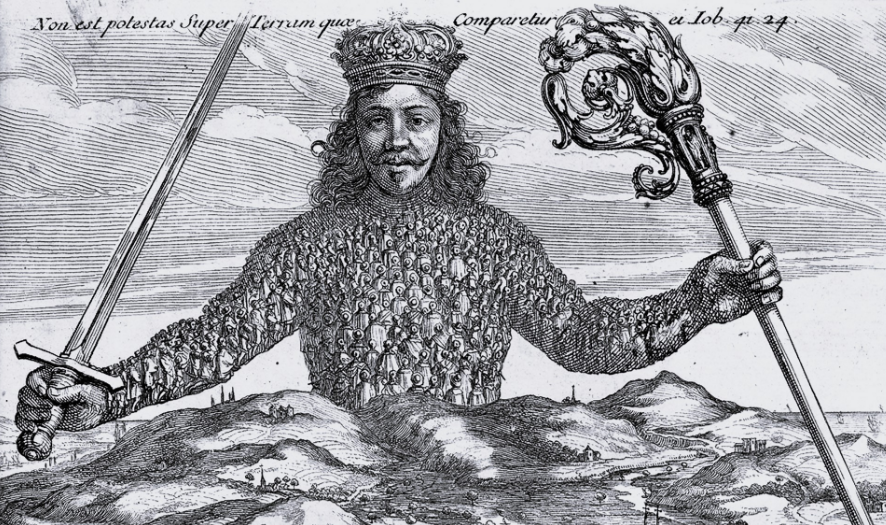
With respect to Huckabee, this accusation has become a bit of conventional wisdom so commonplace that people assert it without even going through the motions of demonstrating whether it is true or not. Whatever else you can say about Huckabee’s fiscal record, it is extremely odd for economic conservatives to attack him when he proposes to do more tax-cutting than every other Republican candidate save Ron Paul. Never mind for a moment that his plan is poorly conceived, would probably be impossible to pass and induces laughter in most conservative economists–he claims that he wants to wipe out corporate, capital gains, income and payroll taxes and yet the corporate wing of the party is actually angry at him? What more does the man have to promise these people? A consumption tax would actually function as a burden on small businesses, making every small firm and store around the nation into the middlemen for revenue collection–a task that would still be handled by some part of the federal bureaucracy. Forget for the moment that it would hit middle and lower-middle households more directly, since they spend a larger percentage of their income on consumption, and consider how unfriendly the program is to small business and how actually very pro-corporate it is. While a consumption tax would have a certain kind of benefit, in that it would, like all taxes, discourage the activity being taxed, the impact this would have on consumer spending would be fairly severe. Americans might become less consumerist, at least temporarily, and might be less inclined to go into ever-greater debt to buy trifles that will have become simply too expensive, but that probably means the service economy would suffer. Once again, this would hit small firms hardest and would have deleterious effects on the general economy. The biggest joke of the Huckabacklash is that he claims to represent Main Street Republican interests and somehow corporate Republicans believe it, even though his main domestic proposal is far more to their advantage than it is to Main Street. There is nothing especially desirable about reorganising how Leviathan is fed if we continue to insist on feeding it ever-increasing amounts.
leave a comment
Terrifying
Bill Kristol and I agree that Huckabee is electable and would be competitive in a general election. Very worrisome. That pits both of us against Stuart Rothenburg, who has a reputation for knowing what he’s talking about. Yet it seems obviousto me that Huckabee counteracts everything Obama has to offer, such as it is, while outmatching him in a number of ways. While Obama is the professorial “arugula” candidate, Huckabee is the candidate of the average American. While Obama is inexperienced liberal, Huckabee is the two-term governor who relates to Middle Americans. Whereas Obama wants to invade Pakistan…Huckabee wants to invade Pakistan. Okay, call that one a draw. Rothenburg reads this matchup exactly backwards. It isn’t Obama who cancels out Huckabee’s advantages, but Huckabee who cancels out Obama’s.
Update: In case the title caused any confusion, what I found terrifying was agreeing with Bill Kristol. A Huckabee nomination would be merely disturbing.
leave a comment
Fascism
Apparently the cover of the latest TAChas annoyed some Giuliani supporters. That is distressing. How will we get on without the approval of David Frum and Martin Kramer? We’ll probably manage somehow.
There has been an excessive deployment of the term fascist in our political discourse over the last ten years or so, almost all of it coming from neoconservatives and their allies, especially in the context of foreign policy arguments. I argued late last year against the nonsensical nature of the term Islamofascism, which neoconservative writers use on a regular basis, which belongs to the subtitle of Podhoretz’s latest volume and which forms a central part of neoconservative “analysis” of the threat to this country. Podhoretz, as you will recall, is an advisor to the Giuliani campaign, so there is something more than a little rich about other Giuliani advisors complaining about the reckless and inappropriate use of references to fascism. Their entire foreign policy view is little more than an elaborate version of shouting, “The new Hitler is coming!” Yet they have the temerity to complain when we portray an aggressive, authoritarian, jingoistic nationalist as somehow akin to aggressive jingoistic nationalists? Remarkable.
In America and Europe in the last fifty years or so, the term fascist has normally been used against traditional conservatives and rightists who value national sovereignty and who want to avoid foreign wars whenever possible. Apparently unaware of the irony, Republican admirers of FDR, architect of American state capitalism, have been glad to fling the f-word at the heirs to his Old Right enemies, because we respect the non-interventionist principles of America Firsters. The depiction of Giuliani in brownshirt seems more apt than not in that he has publicly stated his willingness to leave open the first-strike use of tactical nukes against another country, he has made a joke out of torturing detainees and he is on record (along with most conservative pundits) endorsing the aggressive invasion of another country. Giuliani is nothing if he is not a nationalist who believes in exerting strength through war and using the power of the state. According to a proper, specific definition of fascism, Giuliani is not a fascist, because fascism died in 1945 and as a phenomenon it has ceased to exist, but then Giuliani and his supporters long ago abandoned any such proper definitions of the term.
Meanwhile, on a related note, Michael has been a blogging up a storm during my absence from the old tubes.
leave a comment
My Heart Of Stone (And Yours)
Barack Obama has won the Iowa caucuses. You’d have to have a heart of stone not to feel moved by this. An African-American man wins a closely fought campaign in a pivotal state. He beats two strong opponents, including the mighty Clinton machine. He does it in a system that favors rural voters. He does it by getting young voters to come out to the caucuses. ~David Brooks
On this first point that Brooks makes about Obama, I have to disagree. It is not moving, though it is perhaps unsettling, that a politician of no particular accomplishment and vacuous, sunny rhetoric can win an important election through that same vacuity and the enthusiasm of those who wish to show that they can support a black candidate’s meaningless banter just as well as they can support anyone’s. As Pat Buchanan put it a bit bluntly, but astutely, on caucus night, Obama would not be where he is today were it not for his race. Simply put, a Midwestern Senator of limited experience and a conventionally liberal voting record would not be considered remotely viable as a presidential nominee and would have received little or no support–consider whether Russ Feingold or even the much more centrist Evan Bayh would have stood a chance, and you have your answer. It is somewhat ironic that many analysts have focused on the “overwhelmingly” white makeup of Iowa’s population, all the while failing to mention that it was mostly the activists of the Democratic left who participate in the Democratic caucuses, since it is these activists who would be most receptive to Obama’s appeal and indifferent to or even excited by his background. This is not surprising or scandalous or all that newsworthy. What is strange is the idea that a very personable, charismatic candidate from Illinois with tens of millions of dollars in fundraising and considerable support from the main political machine in the Midwest, that of the Chicago Daleys, should have achieved any less in neighbouring Iowa over a Southern has-been and Hillary Clinton. With no incumbent President or Vice President to challenge in the general, the Democratic caucus-goers no doubt felt free to take a chance on Obama, reassured by the utterly lackluster and chaotic nature of the GOP field. I raised a glass to Obama for defeating Hillary in Iowa, but it is time for everyone to sober up and stop pretending that drippy and meaningless optimism constitutes the path to good government.
Brooks asks:
When an African-American man is leading a juggernaut to the White House, do you want to be the one to stand up and say No?
When that man has terrible ideas, yes, I do. Elizabeth Edwards had an interesting, though completely self-serving, remark on Friday when she remarked that the civil rights and women’s rights activists on the left had fought to make race and gender irrelevant–this was her response to a loaded Matthews question about her husband running against a woman and a black man. I don’t pretend that either is entirely irrelevant, but both are certainly far down the list of my considerations. Call it the result of my liberal upbringing at a very P.C. private school, if you want. One question to ask yourself about Obama is this: if he were white, would I ever support him? Presumably many of his current supporters would, since they are also on board with his very progressive politics, but how broad a base of support do you suppose he would have? Would it actually be good for the country and for black candidates in the future if the first black candidate to contest for national office were so far removed from Middle America as Obama certainly is?
Reihan loves the Brooks column, and Hewitt hates it (as he hates all things that demean his beloved Romney), which is generally a pretty good recommendation, but there is more to say. Matt Welch delves into the archives and finds that Brooks was saying much the same thing about McCain and the establishment eight years ago that he is saying about Huckabee and the establishment today. It was a media-driven myth that McCain was a great anti-establishment figure in 1999-2000, and I am beginning to think that the same is true of Huckabee. He may have different priorities, as McCain does, but he does not represent the break with the current establishment that some Republicans fear and some conservatives hope to find. On the contrary, he represents continuity with the present administration in many respects. All of us who have problems with Mr. Bush and what he has done, to put it mildly, would like to see the current GOP leadership and the conservative elites who have supported them get their comeuppance. To the extent that Huckabee throws a wrench in their plans and generally aggravates them, we are very pleased, but this is not because he actually represents anything different from the very administration we oppose. For others, such as Brooks, I think Huckabee’s candidacy serves as a cipher for frustrations with the current direction of the GOP, just as Obama’s has served as an outlet for progressive frustrations with the Democratic Party. The candidates have been almost secondary for supporters and opponents alike–they see the candidates representing what supporters and opponents want the candidates to represent, and it doesn’t matter whether the descriptions they give are complete caricatures. They are serving as empty vessels for others’ hopes, so it is appropriate that they are framing their campaigns around empty promises of hope.
leave a comment