














Home/Rod Dreher

Christmas carol kid logic

When I was a kid, I used to wonder where was this place, Orientar, that the three kings came from.

I also wondered about that line from “God Rest Ye Merry Gentlemen” that said “In Bethlehem, in Jewry, our blessed babe was born.” I thought: “Why was Jesus born covered in jewelry?” Re: jewels, my parents said “JOOL-ry,” but my grandparents said “JEW-ry,” and I just assumed the carol was old-timey, and required pronouncing “jewelry” my grandparents’ way.

You have any other kid logic conundrums from Christmas?

Oh, one other thing. One of my favorite Christmas carols is “Good King Wenceslas,” but that’s something I came to in adulthood. We never sang it as children. Not sure why. Anyway, I cannot hear the melody without the words “The lime and lemon taste of Sprite” and “Sprite makes brighter holidays/Limon is the reason” coming to mind, because the soft drink had a holiday commercial appropriating the tune. Verily, brethren and sistren, my rage at Sprite over having colonized that melody in my mind is quite unappeasable!

leave a comment

Eating my way back home

So today I was driving downtown and listening to that great public radio food show “The Splendid Table,” when what did I hear but Jane and Michael Stern just raving about a Cajun home cooking joint in Lafayette called Johnson’s Boucaniere.  Oh, my sainted tante, just look at the menu, would you? Excerpt:

Smoked Garlic Sausage Po-Boy 

Our sausage is made in-house and smoked in our 16 foot long smoker. We take a link of garlic pork sausage, butterfly it, and put it on the griddle. Served on a toasted Evangeline Maid Po-Boy bun with our original recipe BBQ sauce.
$5.25

Begnaud Special 

Slow-smoked brisket sandwich with smoked garlic pork sausage topped with our homemade BBQ sauce.
$7.95

Googlemaps tells me it is 22 hrs 9 min from where I sit typing this to Johnson’s. Googlemaps also tells me that as of this time next week, it will 1 hr 36 minutes to Johnson’s from my new front door. I think the numbers are going my way!

leave a comment

Are co-sleeping mommies butchers?

The City of Milwaukee seems to say so in a new public service campaign:


Caryn Rivadeneira is ticked:

Unlike those who will give me dirty looks or ask me about my parenting when my hot-blooded boy goes sans coat, when the government gives dirty looks via shock-value posters like this, we have to wonder: Are they trying to make babies safe, or are they trying to criminalize co-sleeping? Because these posters sure seem to say that parents who co-sleep endanger their kids. And I’m pretty sure child endangerment is illegal in Milwaukee.

If the city had wanted to protect babies, a poster with information would’ve sufficed. It seems they could’ve listed the “rules” of safe co-sleeping, and still offered the website for further information and the free Pack-N-Play to parents who can’t afford a crib.

I realize that some will say that “shock value” pays off if it saves just one baby’s life. But when the government (or any of us) is trying to help parents to make wise choices, shame and shock make lousy tactics.

We co-slept with all three of our children, because they nursed through the night. Never had a problem with it — but then, we were aware of the potential risks, and took precautions. In the Milwaukee case, I would love to know what the other factors were in the deaths of local babies who died in co-sleeping. Were their mothers on medication, or impaired by drink or drugs? Rather than demonize co-sleeping — because honestly, is there anything more natural than a baby sleeping through the night next to her mother? — wouldn’t it be wiser to focus on bad co-sleeping habits, and educate against those?

This reminds me of the propaganda my mother’s generation got against breastfeeding.

leave a comment

Honey Badger, Randall, and the Heisman

I think it quite unlikely that LSU cornerback Tyrann “Honey Badger” Mathieu will win the Heisman Trophy today, but I loved this Wall Street Journal feature on him, especially because of this passage, and the quote:

As the season progressed, T-shirts began appearing at games quoting lines from the video like “Honey Badger Don’t Care” and “Honey Badger Takes What He Wants.” As the No. 1-ranked Tigers kept pounding teams into submission, even TV commentators started referring to Mathieu by the nickname.

Randall, who agreed to be interviewed only if his real name was not used, said this week that he was thrilled by Mathieu’s tie to the video and his contention for the Heisman.

“Yaaay!” Randall said. “In addition to being gorgeous, I think he’s absolutely amazing. He’s completely changed the face of college football, if you ask me. I mean, the man really is just like, he’s a one-man team.”

If you haven’t seen Randall’s original way-gay honey badger video, take a look (warning: the narration is vulgar in parts).

leave a comment

Why NPR religion show would fail

NYT religion columnist Mark Oppenheimer considers my post suggesting a daily news-talk show from NPR focusing on faith and values, and gives his reasons for why he believes such a show would be a “dismal failure.” Among them:

Well, the first thing is that people don’t care about theology. I mean, Rod does, and I kind of do, but your average American believer (or non-believer) does not care about the particular tenets of her faith. And so she won’t listen to me go on about various synods of Lutheranism.

The second thing is that to be interesting religion must be treated without reverence, and even better, with humor. The best religion stuff on TV or radio is on Jon Stewart (whose writers, I am convinced, know a lot about theology, as the authors of The Book of Mormon, which I saw last night, do). NPR has many virtues, but I suspect that any religion show NPR would do would suffer from over-earnestness and a severe lack of mirth. The desire not to be seen as anti-religious would be very strong; the aversion to poking fun would be too great. I can imagine lots of stories in which the interviewer listens patiently as some loopy minister  natters on idiotically about how God told him to start a men’s prayer/bowling league, with no skepticism coming from the interviewer.

Third, such a show would, I suspect, suffer in a very bad way from one of the faults that afflicts a lot of religion coverage (including mine): a suspension of normal journalistic practice of asking for proof.

There’s more, but I don’t want to quote too much of Mark’s post, and deprive him of the link. Do read the whole thing. 

To answer these objections, I would first say that I agree most people wouldn’t listen to a strictly theological show. That’s why I conceive of the program as a “faith and values” program, one that explores the theological aspect of current events, but also the moral and ethical aspects. Just yesterday I posted on a review essay in the New York Review of Books that focuses on the religious revival in China. Author Ian Johnson observes that the religious awakening in general there — not just Christian — but that there’s no coincidence that a disproportionate number of human rights lawyers are Christians. Why would this be, especially given that unlike (say) Islam, Christianity explicitly separates itself from worldly power (“render unto Caesar what is Caesar’s,” “my kingdom is not of this world,'” etc.)? Is there something about the Christian way of seeing the world that encourages human rights work in oppressive regimes? Is it only modern Christianity that’s like this? Why would Christians do it but not, for example, Taoists? These are the sorts of questions that an NPR show could take up.

While I’m interested in the differences between iterations of Lutheranism, I recognize that to succeed, an NPR program on religion would have to be far more broad-based. Terry Mattingly and the folks at GetReligion.org, the religion and journalism site, are always talking about the “ghosts” in news stories — that is, the religious element that tends to be ignored or downplayed. This program would be all about such ghosts. A third point: is it really the case that more Americans are interested in the ins and outs of the news media than religion? NPR makes available WNYC’s “On the Media” with Bob Garfield and Brooke Gladstone. It’s an interesting show, but I’m a professional journalist; when I listen to it, I find myself wondering how many people who aren’t professional journalists or media junkies care.

More after the jump:

Mark’s second objection is a lot harder to answer. To treat a religion without reverence doesn’t mean you have to disrespect it. It means that you treat it like you would a normal news subject. You have to be willing to put the same kinds of questions to your guests as you would to guests on a political show, for example. No kid gloves. The problem, as Mark recognizes, is that so many people are so unbelievably thin-skinned about religion that a normal interview in which a religious figure was challenged would strike many listeners (of that faith) as bigoted and offensive. When I was at the Dallas paper and dealt with members of the Muslim community, it frustrated me that the only kind of coverage they were willing to accept was completely uncritical boosterism. Write anything critical, and you were, in their view, an Islamophobic bigot. They were on the extreme, but many Christians and Jews can and do behave similarly.

This, I think, is one reason why reporters tend to stray away from doing serious religion coverage. It’s hard to know where the land mines are buried, and rather than have congregations organizing boycotts and suchlike, they’d rather not mess with it. Not long after I arrived in Dallas, I wrote about the extremism of a national Muslim group whose president presented them falsely as a voice of moderation. After this, I stumbled across an e-mail list for area Muslims in which members were discussing a stealth plan to enlist Christian and Jewish clerics and leaders in a quiet move to pressure my newspaper’s publisher to fire me for putting Muslims in danger. I gathered these e-mails and blogged about them, which killed the plot. I wonder what would have happened to me had I not had the dumb luck to have been able to be part of that e-mail community for 24 hours before they found me out.

If Mark is correct — and I fear he is — the conclusion to draw is that Americans are simply too immature, from a religious point of view, to embrace a quality news-talk show about faith and values. To be precise, Krista Tippett’s program is a very high quality show about faith and values, but it’s not a news-talk show. News-talk programming has to be somewhat adversarial and newsy. That sort of thing makes many religious believers very, very nervous.

And that leads to Mark’s third objection: that the hosts and reporters for such a show would inevitably find themselves unable to be normal journalists, because the audience would object. Mark identifies one aspect of this as “a suspension of normal journalistic practice of asking for proof.” I don’t think he means that religion journalists are to be Ditchkins-like inquisitors demanding that clerics provide scientific evidence for their religious truth claims. That would be absurd. I think he means that reporters wouldn’t feel at liberty to put guests on the spot and ask them why they believe things that seem outlandish. I, for one, would really love to hear observant Mormons talk about why they believe what their church teaches about the lost tribe of Israel existing on the North American continent in light of DNA evidence showing that this cannot be true. I would not want to hear an interviewer hectoring a Mormon guest about this, to be sure, so I suppose a host would have to be sensitive enough to know where the line is between asking an honest and necessary question, and when they’re badgering a guest for the sake of proving a point. But again, we go back to the point of the sensitivities of the audience. Plenty of Evangelicals, for example, would see nothing wrong and everything right with a host pressing a Mormon guest on that point, but would squirm in their seats if a host pressed an Evangelical Young Earth Creationist in the same way.

This, says Mark, is why so much religion journalism is mediocre: audiences don’t reward thoughtful, penetrating religion journalism, and journalists too often pull their punches out of deference to the audience’s expectations. Nobody wants to listen to a religion program that’s about nothing more than everybody sitting around being nice to each other, and agreeing not to put uncomfortable or divisive questions to others. But that kind of well-meaning earnestness, says Mark, is what you’d likely get from an NPR religion show. Some secular version of this is probably why “Tell Me More” is not as interesting as it could be. The pieties surrounding the discussion of race and culture in this country make for tepid journalism.

For example, the other day “Tell Me More” interviewed one of the black US Olympians who gave the black power salute at the 1968 Olympics, and who has a new book out. It was a total cream puff of an interview, following the usual “Tell Me More” formula of Minority Triumphs Over Adversity. When the story started, I wondered how the athlete’s thinking about his country had changed over the past decades, and why. Isn’t that interesting? Were there no questions that could be put to the athlete challenging his acts or his views? If any had been, they were left on the editing floor. If this is the kind of journalism NPR would do in a faith-and-values program — and Mark Oppenheimer has given good reasons for why this is what we could expect — then yes, better not to try it.

(BTW, Mark, I agree with you that it’s a shame so much of my Beliefnet work is now inaccessible. When the new owners took over, they changed the site somehow, and I typically can’t find most of what I ever wrote there — even though some of my blog entries are still there. Just wanted you to know that I had nothing to do with this apparent spiking of so many of my posts. If I had known that was going to happen, I would have cut, pasted, and archived some key posts.)


leave a comment

World’s most offensive building

Glenn Beck made a big deal about this planned luxury high-rise in South Korea, which looks like You Know What. The builders apologized, saying it was supposed to be a cloud, and that it never occurred to them to think of 9/11. I believe them. What kind of builder would want to suggest to potential tenants an event in which skyscrapers collapsed, killing thousands? If you don’t think of 9/11, the design is very cool. For American eyes, at least, that’s like saying if you don’t think of the Kennedy assassination, Dealey Plaza is a nice place to visit.

(Which, by the way, it’s not. I remember my first visit to Dealey Plaza. I expected something grand and dramatic, given what happened there. It’s just a highway interchange. Completely uninteresting. If world history hadn’t turned on that spot, nobody ever would have noticed it. Maybe that makes it more eerily poignant, I dunno.)

leave a comment

Giving the devil the law’s benefit

Mark Shea on the bipartisan advance of the national security state in the Age of Terrorism:

So what has the Senate—the check on an overweening Executive—done to rein in a President who regards himself as empowered to kill you if he feels like it?  The Senate wants to give the man claiming this unilateral power of life and death over every American the unilateral power to lock up—forever—any and all Americans on his word alone as well.

What could possibly go wrong? 

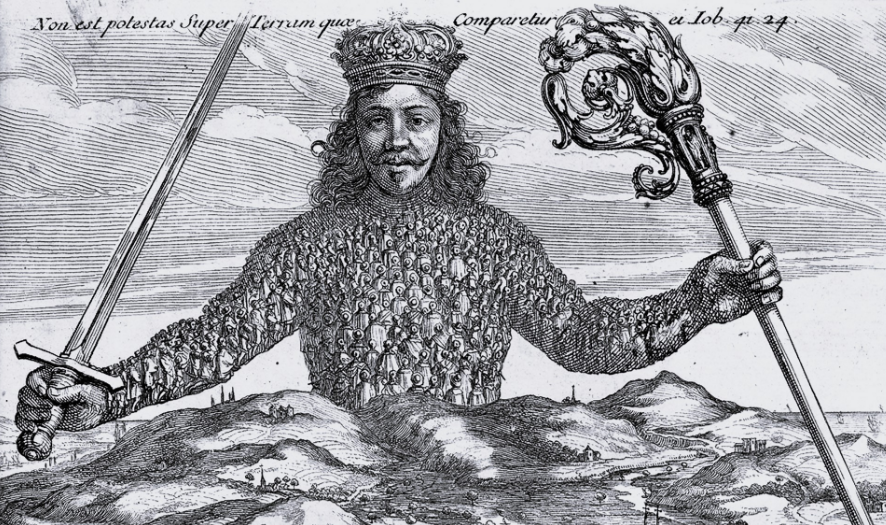
Simply this:  the reason institutions like the state exist and why a thousand years of Anglo-American law are there is to protect the citizens, not just from Bad Guys like terrorists, but just as much from the depredations of those with absolute and unquestioned power.  So, while this bill seems to many a neatly efficient way of dealing with the problem of terrorists, it also has the regrettable side effect of giving a small and absolutely unaccountable elite absolute and unaccountable power over every single American citizen while stripping you and me absolutely naked and defenseless before an omipotent Leviathan. Should the Executive decide he wants to say that you and I are terrorists and lock us up forever without hope of appeal, this bill says, “Go for it!” and takes away habeas corpus solely on the basis of his almighty and unquestionable fiat.

“Yeah, so what?” say some supporters of the bill.  “Senator Graham tells it like it is.  We’re at war and desperate times call for desperate measures.  If you don’t want to feel threatened by this tough measure then don’t be a terrorist traitor!”  Yes, well, there is that.  But there is also the little fact that what this bill does is a) place the matter of defining who is a “terrorist traitor” in the hands of an omnipotent executive who could, if he felt like it, declare you a terrorist traitor even when you aren’t one.  Indeed, you don’t even need to be a terrorist traitor.  You just need to be somebody the state thinks is suspicious based on its own bizarre criteria.

Read the whole thing. Clearly, Shea is just dying to be put on an Official List.

leave a comment

For Newt, once is not enough

The conservative Catholic scholar Frank Beckwith credits Newt Gingrich for changing his life for the better a couple of decades ago. And he recognizes that Gingrich has had a Catholic religious conversion, which by definition includes confession and remission of sins. But Beckwith cannot support Gingrich’s bid for the White House:

This is not to diminish or call into question Gingrich’s conversion. Quite the opposite. For, as the Catholic Catechism teaches, absolution of sins does not eradicate all the effects and consequences of those sins on the shaping of one’s character. This requires ongoing conversion, including detaching oneself from those things that may provide an occasion for sin.

It seems to me that a man whose sins arose as a consequence of the pursuit of political power and the unwise use of it after he became Speaker of the House should not be seeking the most powerful office in the world.

This is plain common sense. Why is is to uncommon among so many of us conservatives on the Newt question?

One part (but not the whole!) of the answer: it might well have to do with a theological difference. The Catholic (and Orthodox) viewpoint is that when one is forgiven sacramentally, that only opens the door to grace. One still has to repent, and keep at it — including going to confession, and sincerely exerting oneself in repentance. On this way of thinking, given what we know of his public character, to give Gingrich power again would be something like hiring a reformed alcoholic to run Seagram’s. The temptations would be simply too great.

Perhaps it’s easier for Evangelicals and Pentecostals to believe that a sincere confession of one’s sin, and an expression of repentance, is more effective in removing the tendency toward sin than Catholics and Orthodox believe it is? I don’t know about this. Evangelicals, what do you think? Help me out here.

leave a comment

EPA: Fracking likely poisoned groundwater

In Wyoming:


The Environmental Protection Agency said that hydraulic fracturing, a controversial natural gas drilling process, probably contaminated well water in Wyoming, a finding sure to roil the debate about expanding natural gas drilling around the country.

The EPA’s new draft report found dangerous amounts of benzene in a monitoring well near the town of Pavillion, in central Wyoming.

The EPA is conducting a comprehensive study about the possible effect of “fracking” on water resources, but initial results are not expected until late 2012. As a result, the Pavillion report may not give either side in the fracking debate the conclusive answers they seek.

But the EPA report is the first that uses multiple, on-the-ground samples to determine the effect of fracking on underground water sources in areas of oil and gas development.


leave a comment