















Home/Rod Dreher

Molly Katchpole, my hero

Go, girl, go!:

Molly Katchpole, a Verizon customer and recent college graduate from Washington, D.C., who successfully used Change.org to pressure Bank of America to drop its proposed debit card fee earlier this year, has launched a new Change.org campaign calling on Verizon Wireless to stop its plans to implement a new $2 “convenience fee” for single bill payments by phone or online.

She won, too. Verizon backed down today.


leave a comment

Louisiana: Mercy, not meritocracy

On this day when this blog, thanks to David Brooks’s generosity, has so many new readers, let me share with you a post from a few weeks back, in which I discussed why Louisiana is a place of mercy, not meritocracy. Excerpts:

A Louisiana native friend of mine who works in politics in Washington writes:

I was talking with a friend in DC not long ago (another Southern expat), and we agreed that people from Louisiana, like nowhere else, have the best understanding of “the good life.” It’s OK to be average there – to go to work each day, come home, have a beer, and love your family and friends. One thing that really sucks about DC is that everyone here very seriously carries the burden of having to Change The World.

Man, is that ever true. I have never lived anywhere in this country like Louisiana in this regard. I’ve lived places where people were more socially reserved and driven than others (New York City vs. Dallas), but nowhere like Louisiana in terms of the good life, measured not by material wealth or career advancement. When we were first married, my wife, who was born and raised in Dallas, was sometimes frustrated by the front porch culture she’d encounter when we’d go down from New York to visit my family. My folks love to sit on the front porch and talk to whoever comes by. And somebody is always coming by. It’s pleasant, to be sure, but Julie wasn’t used to front porch culture as a way of life. But as she got used to it, she came to appreciate how rare it is nowadays to be able to just sit there and enjoy your drink and being with your friends and family.

People do this in other places, I know. But it really is a way of life in Louisiana, at least south Louisiana, in a fashion I’ve not seen anywhere else.

More:

Every Louisiana expat I’ve known in my own expatriated years talks about it with such intense, usually mixed, emotions. Even folks who are angry about the place seem to know that their anger comes from heartbreak: they love it so much, but it is so, so disappointing. A dear friend, a Louisiana expat who lives and works in London, wrote me after he learned that I was moving back to our homeland, saying that he thought this was a great idea, because it has seemed to him that I’ve been trying to recreate what I loved about Louisiana in all the places I’ve been living. I thought that was a great insight, actually. Whenever a big storm is coming, my instinct is to ice down the beer and get out the gumbo pot. Now I’ll be living in a place where that actually makes sense to people.

Louisiana is a place where it’s easy to be frustrated, if you’re ambitious, or even if you have the perfectly reasonable expectation that things are supposed to work rationally. You can’t really romanticize these severe problems away. But also easy to be happy if you adjust those expectations of daily life, and of your life in general. I wrote in this space (hereherehere,here, and here) during our recent trip to St. Francisville to bury my sister about how moved I was by the outpouring of love and support from the community for my sister’s family during their time of trial — not only in Ruthie’s death, but throughout her entire 19-month struggle with cancer. The communal solidarity was astonishing, even a revelation to me. I mean, I knew I came from a good place, but I had not appreciated before how much I needed to be in a place like this. People are so easy to be with. They’re happy to see you come, and sorry to see you go. Mr. Ronnie has decided it might be a good night to make a gumbo at his camp on the creek, and wants to know if y’all want to come over? Just pick up a couple of six packs of beer and head down there, and sit on the front porch and drink and eat and and laugh and tell stories. That’s all. But that’s everything. Do you see? To be freed from the felt burden of having to Change the World, of having to get ahead, of having to think of your life in terms of achieve, achieve, achieve – it’s an unusual thing. You can be only okay in Louisiana, or maybe even something of a mess, and they’ll love you anyway, as long as you can laugh at yourself and at life, and know how to sit on the front porch, so to speak, and pass a good time.

Read the whole thing.  What you think about south Louisiana has a lot to do with your definition of the good life.

leave a comment

A love that will never die

A very happy wedding anniversary to Ruthie (1969-2011) Leming and her husband Mike, my brother-in-law and the bravest man I know. This is Mike’s first anniversary without Ruthie, but I still say it’s a happy day because to have had a marriage like theirs is to have known the best life has to offer this side of paradise. May her memory, and the memory of their marriage, be forever blessed.

leave a comment

Communitarian conservatism reading list

A professor writes:

 What books and/or essays would you list as must-reads for someone who wants to examine the communitarian conservative movement?

I really, really have to stop blogging and finish my Front Porch Republic project today, so I’m not going to go down this road right now. But Front Porch Republic is a great place to start with contemporary expressions of this way of thinking. I’d say Nisbet’s “The Quest for Community” is essential, as are the works of Russell Kirk. Christopher Lasch and Wendell Berry aren’t on the political right, but they’re cultural conservatives who have a lot to teach us. As always, historian George H. Nash’s “The Conservative Intellectual Movement in America Since 1945” is absolutely indispensable. And there is always the Kindle edition of my 2006 book “Crunchy Cons.”

There are more. Readers, let’s hear it.

leave a comment

The challenges of small town life

In the comments to the Brooks item below, Neil asks me to address a couple of issues raised by commenters on the NYT site, re: David’s column:

1. One commenter notes that “Community also has its dark side.” Another suggests that Brooks is “lionizing” small-town America with a story that is perhaps unrepresentative. Have you ever fully addressed this “dark side” of community?

I think I have, on a number of occasions, though not in a single post. I experienced bullying and social exclusion when I was in high school — the sort of thing that you’d find anywhere, but when you live in a small town, and go to a small school, there’s really no place to find refuge. When I went off to a public boarding school for gifted kids, I found that my new friends there who had come from big-city schools were different from we who had come from small-town schools. We small-town kids mostly felt like we had finally found solid ground — a place where we wouldn’t be picked on for being weird, or bookish. The big-city kids had found their own niches in their big-city schools.

What Ruthie’s death and dying revealed to me is that the same qualities that a teenage me found so oppressive about small-town life were the very things that held my family up during this terrible trial. I saw these things with different eyes. As I’ve written before, Alan Ehrenhalt, in his 1995 book “The Lost City,” points out that we all want the blessings of 1950s-style community, without the burdens. This is an impossible dream. You can’t have both maximal individual autonomy and a strong sense of community. One has to give. Earlier in my life, I was prepared to give up community for the sake of liberty — not only was I prepared to do so, but I did do so. But as time went by, and certainly when my healthy sister was struck down by cancer at a young age, I came to understand the true value of what I had left behind. And I came to love it again. That’s why I’m here. It’s not that I expect to find utopia here. Some of the same things I bridled against when I was 15 are still present. But there is no such thing as the perfect place, and now I have been given the vision to see and to embrace the goodness that was here all along. With that, though, comes accepting all the limitations and flaws of small-town life, and affirming its goodness all the same.

I was speaking the other day to someone here who told me about an unlikely friendship he’d developed with an irascible older man, who has since died. My interlocutor told me that he couldn’t imagine another kind of place where a man like him could have made genuine friends with a man like the older one, given the radical difference, even hostility, between their views on life. What my interlocutor meant, I think, was that living in this small town compelled them both to look at each other and recognize their mutual humanity, despite their great differences, and to work through that. People who live in big cities like to think that it is they who live in a truly diverse context, but that is often only superficially true. You can, if you like, create a community for yourself in a big city in which you only ever have to deal intimately with people who are just like yourself. That’s just not possible in a small town, at least not in the small town where I live. You know everybody, and everybody knows you.

Neil:

I suspect that many will worry about exclusion. Would the entire town would have rallied around Ruthie if she were x?

I think probably they would have, though I don’t know. The thing to know about Ruthie is that they rallied around her in large part because she was the kind of person who was a friend to everyone, and who had taught many of the children in the community in the middle school. Ruthie was not a stranger; she was a big part of the community, and gave generously of herself. I can imagine that someone who lived a fairly reclusive life here probably wouldn’t have benefited from such an outpouring of generosity. But I don’t know. Julie and I were sitting here just now talking about the great time we had last night, with people just dropping by and staying late, feasting. I said to her, “That happened 10,000 times in our house growing up.” My folks were, and are, just like that. They’ve always been extremely hospitable, and always genuinely enjoyed it. You make that kind of investment in your neighbors, and people will rally to your side when you need them.

Neil:

2. Another commenter writes,”I also have sympathy for the millions of other people who don’t have such community support. Not everyone is lucky enough to have extended family and friends to care for them in their time of need, or to mourn their passing.”

It’s too easy, I think, to suggest that such people, who usually go on to suggest universal health care, simply want the benefits and not the obligations of community.

How would you respond to those who suggest that it is just unrealistic to think that most Americans can “rely on the kindness of strangers or a community,” so that Ruthie’s story, though wonderful, isn’t really all that politically relevant?

A few things come to mind. It’s puzzling to me how some folks want to jam this narrative into familiar political categories. I think you’re right that some folks want the benefits of community, but not the obligations. What’s peculiar is the idea they have that this kind of communal solidarity — of neighborliness — obviates the need for governmental support, e.g., Social Security. Why is it an either/or? Ruthie had good medical insurance that paid most of her bills, but insurance doesn’t cover everything, and it was a generous and needed thing for the community to hold a fundraising concert for her. Ruthie and her family took what was to be their final family vacation this past summer to South Carolina. I’m sure they used some of the concert money to pay for that. It was a great and unforgettable gift by the people of this community to the Leming family.

Anyway, to the extent that having the welfare state pay for certain things teaches the rest of us to forget our moral obligations to help our neighbors in time of trouble, the welfare state deforms the moral community. I know some on the right think that private charity should be the only form of charity, but that too is impossible. This place where I live is not wealthy, and it would be impossible for the community itself to meet all the medical needs of its residents. A community-focused conservatism would also be critical of a kind of libertarianism that allows individuals to do whatever they want to with themselves and their property, without any respect for the physical ecology of this place, or its moral ecology (Wendell Berry writes with real potency about this kind of thing, and how neither the conventional left nor the conventional right can offer an adequate accounting for the role of the individual in the community).

I consider it my moral responsibility to pay taxes to support the fire department, EMS, libraries, and other community institutions. But I don’t think my moral responsibilities to my neighbors ends with the payment of taxes.

Plus, given our national finances and the coming burden on the welfare state from aging Boomers, our government is going to be very hard-pressed to do even as much as it does now. We are going to have to find a way to re-establish and/or strengthen communal bonds, out of necessity. This is highly relevant, politically, and will become moreso. Robert Nisbet, I believe, said that the loss of community is one of the chief problems, and perhaps the chief political problem, of our society today. About the contemporary political relevance of the kind of conservatism with which I identify, Allan Carlson writes:

A second less-travelled path was conservative communitarianism, a defense of society’s little platoons, a suspicion of all big entities, including the great corporations and the national security state.  While prefigured in Burke and also to be found in Russell Kirk, this orientation received full expression in the work of sociologist Robert Nisbet.  His 1953 book Quest for Community focused on “the individual uprooted, without status, struggling for revelations of meaning, seeking fellowship in some kind of moral community.”  Nisbet dissected what he called the “ideology of economic freedom” falsely built on an atomistic view of human nature.  He argued that “the so-called free market never [really] existed at all save in the imaginations of the rationalists.”  The 19th century capitalist system seemed to work, Nisbet asserted, only because it had inherited the moral capital of truly natural communities — the family, the village, the church — “which had nothing whatsoever to do with the essence of capitalism.”  Direct social affiliation alone brought acceptable order:  “Not all the asserted advantages of mass production and corporate bigness will save capitalism if its purposes become impersonal and remote, separated from the symbols and relationships that have meaning in human life.”

Could it be that the solutions, imperfect as they can only be, to some of our most intractable political and social problems might be worked out more effectively not in Washington, but in places like St. Francisville? I think so.

leave a comment

Feasting

This is how it started: on my front porch late yesterday afternoon, Julie and I drinking a glass of wine with an old friend visiting from out of town. And then some neighbors showed up with a bottle of wine, and their kids. And then some other neighbors, with their kids.

This is how it ended: five hours later, all the wine in the house gone, the cupboards stripped, the embers dying in the fireplace, the kids worn out from playing past their bedtime. Exhausted.

And brother, let me tell you, it was great! “We’re so sorry to have stayed so late,” one of our guests said as they were all headed home.

“Are you kidding?” said Julie. “This is why we moved here!”

She’s right. It’s great.

leave a comment

Death and different kinds of courage

Today is Julie’s and my wedding anniversary, an anniversary we share with my sister Ruthie and her husband Mike. Today is the first of those anniversaries Mike is spending without Ruthie, who died in September. If you’re the sort who prays, please remember Mike Leming in your prayers.

In the current issue of TAC, I have an essay discussing the way Ruthie faced death — a very different way of doing so than I would have chosen. From the beginning of her cancer treatment, she told her doctors not to give her odds or any other details beyond what she absolutely needed to know. To have any more information than that would risk distracting her from her mission: beat cancer. For Ruthie, to be compelled to contemplate all the possibilities before her, philosophically or otherwise, was a luxury she didn’t think she could afford. I never understood that — to me, information is strength — and I was shocked to find out just after she died that she hadn’t had a long, deep discussion with Mike about what would need to happen if she didn’t make it.

I wondered then: was Ruthie’s incredible courage in dealing with cancer actually a form of denial? Maybe it was. Or maybe, as in so many things between us, we were just very different people who reacted to life’s challenges in very different ways. What is courage, anyway? From the essay:

A firefighter preparing to run into a burning skyscraper doesn’t stop to philosophize about his possible death. He has a mission, prays for the courage to do his duty, and engages. So it was with Ruthie, who saw her mission not only to survive cancer but to overcome the darkness cancer brought with it, so as to be a light to her children and to others. Ruthie called out to God for help in the oppressive darkness of the valley of the shadow of death, and He sent help. Not, in the end, the help she wanted, but the help she needed to do what she had to do.

Perhaps the greatest courage she demonstrated was the courage to believe, simply and surely, that all was well, and all would be well, for both the Bible she read faithfully and believed without protest and the silent ministrations of what she believed was a messenger from God told her so. That belief, held firmly with an iron-fisted internal resolve, helped her not only to endure 19 months of intense suffering with fierce grace that matured into spiritual grandeur, but to triumph over the grim odds predicting an early demise. Ruthie’s way was not my way, and never was, but the way she faced death taught me respect for the role of the disciplined will in matters of religious faith and moral courage.

A blessed anniversary to my brother in law Mike, who was married to a brave and beautiful woman.

leave a comment

David Brooks on going home

In his latest column, David Brooks very generously draws attention to Your Working Boy and the reasons he moved back home to St. Francisville. Excerpt:

Dreher is a writer for The American Conservative and is part of a communitarian conservative tradition that goes back to thinkers like Russell Kirk and Robert Nisbet. Forty years ago, Kirk led one of the two great poles of conservatism. It existed in creative tension with the other great pole, Milton Friedman’s free-market philosophy.

In recent decades, the communitarian conservatism has become less popular while the market conservatism dominates. But that doesn’t make Kirk’s insights into small towns, traditions and community any less true, as Rod Dreher so powerfully rediscovered.

I can’t express how grateful I am to David for his kind words about my work, and far more for drawing attention in his column to the goodness of the people of this town, and especially to Susan Harvey Wymore, who lit the cemetery candles on Christmas Eve. David linked to the “South Toward Home” entry I did on this blog, explaining our decision to move here in the wake of my sister Ruthie’s death, and he mentioned that Ruthie’s pallbearers honored her love of going barefoot by taking their shoes off as they carried her coffin to her grave. Here is the post that talks about that, and that includes a photograph of the barefoot pallbearers.

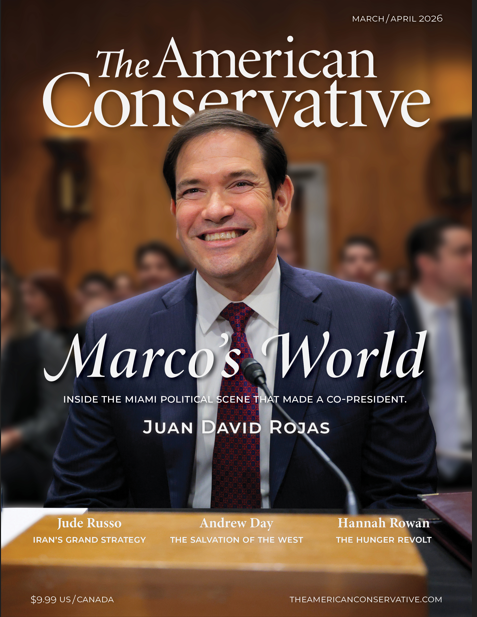
If not for my job at The American Conservative, I couldn’t live here in my hometown. One of the reasons I was so excited about taking this job at TAC was the commitment of its editors show to the alternative tradition in American conservatism. TAC aims to be the leading magazine for communitarian conservatism, the place where conservatives who recognize in the works of Kirk, Nisbet, Lasch and others the kind of conservative values that they believe in. If you believe in this kind of conservatism, or if you would simply like to encourage it, and the communitarian conversation in American politics, we would love to have you as a reader and subscriber, and we welcome your tax-deductible donation. TAC believes that this school of American conservatism has been neglected for far too long, and we want to revive it as a force in American culture and politics.

And if you would like to e-mail me, I’m at rod.dreher(at)gmail.com.

UPDATE: A friend reminds me of this piece I did for National Review Online a decade ago about Roy Dale Craven, a poor boy from our town who played baseball on our Dixie Youth League team, and who was golden. He was a good kid from this little Louisiana town. Excerpt:

No one had his dedication, either. After the second inning of one game, the coaches broke Roy Dale’s heart by refusing to let him return to the mound. He was vomiting up his supper in the dugout. All he’d had to eat before the game was pickles. No one could be sure whether he’d eaten so badly because he had chosen to, or because that was all the food his family had in the house that day. No one wanted to ask.

On the afternoon of July 15, 1974, well into the season, Roy Dale was crossing Highway 61, hoping to catch a ride with Allen Ray to the ballpark. He never made it. The driver who hit and killed him was not charged. I found out about the tragedy sitting in the back of my dad’s pickup, headed to the game, when we got stuck in traffic backed up from the accident scene. It was just like Roy Dale, my dad said later, to be so excited about a ballgame that he couldn’t pay attention to anything else.

The star pitcher for the John Fudge Auto Parts Angels was buried with his glove in his hand and his uniform on his back. This may have been the nicest set of clothes the child owned. That funeral was the first time most of us kids had seen death so close. At some point, someone on the team stepped into the aisle and went forward to pay respects to our fallen pitcher, lying in his open casket. Then we all followed, a dozen or so six-to-nine-year-old boys, telling Roy Dale goodbye. “When that happened, there wasn’t a dry eye in the place,” Mr. Pat says.

That night, I remember hearing my dad and Mr. Pat out on the back porch, talking. I stood by the screen door to listen, and realized these grown men were weeping in the dark. Startled and embarrassed, I went away. Yesterday was the first time in the 28 years since Roy Dale’s death that my father has been able to talk to me about the events of that summer without breaking into tears.

leave a comment

Wall Street’s fake conservatism

Daniel Larison has a good post up highlighting the clash between Hugh Hewitt and National Review’s Kevin Williamson, over the so-called conservatism of Wall Street. Williamson, a guest on Hewitt’s show, pointed out that the big-money folks on Wall Street don’t give a damn about the kinds of things most American conservatives care about. Most of them are actually social liberals who are only interested in making money. Larison writes:

It’s blindingly obvious that most people working in the financial sector have no strong attachment to social conservatism or small government political principles. For one thing, neither of them is particularly relevant to them or their interests, and they correctly see both of them as obstacles or distractions from what they believe government should be doing.

Mike Huckabee, in his 2008 incarnation, tried to point this out, to a certain extent, and was dumped on by Establishment conservatives for being a populist. Anyway, I’m glad to read this piece in NR by Williamson, in which he explores the cultural differences between Wall Street and Main Street. Williamson edges into things by listing all the top Obama administration people, and Democratic elites, who are mobbed up with Wall Street elites. The idea that the Democratic Party is on the side of the little guy against the cigar-puffing Monopoly tycoons of Wall Street is a cartoonish fantasy. Then this bit of elegant writing:

When President Obama opined during his 2011 State of the Union speech that a corporate tax-rate cut might be just the thing for America after a year of record corporate profits, his left-wing base was shocked and dismayed. Heck, some conservatives were caught off guard, too. Perhaps they hadn’t noticed who was running the Obama administration: In large part, the same guys who plan to be running the next Republican administration.

What Williamson is saying here, in a way delicate enough for NR readers to digest, is that Wall Street owns the leadership of both parties. More:

If Wall Street has done pretty well by investing in Washington, the more despair-inducingly germane fact is that Washington has done pretty well by investing in Wall Street. A catalogue of recent congressional insider-trading, self-dealing, IPO shenanigans, and inexplicably good investment luck would fill an entire volume, and in fact it has: The book has the Tea Party–bait title Throw Them All Out: How Politicians and Their Friends Get Rich Off Insider Stock Tips, Land Deals, and Cronyism That Would Send the Rest of Us to Prison, by Peter Schweizer of the Hoover Institution. That’s a lot of title for a fairly slim book (176 pages of reportage, plus end notes), but, despite its relatively slender dimensions, it cost me an entire night’s sleep: I spent half the night reading it in a single sitting and the other half having nightmares about it. It’s the most offensive and disturbing thing I’ve read since sampling the oeuvre of the Marquis de Sade as an undergraduate.

And, about the relationship between Wall Street, the broader economy, and the conservative movement:

[Wall Streeters are] hoping that conservatives can be buffaloed with a bit of cheap free-market rhetoric into not noticing that something is excruciatingly amiss here.

Read the whole thing here.  You go, Kevin Williamson! Keep hitting the Democrats hard, and don’t let up on the Republicans either. I’ve got to get my hands on Peter Schweizer’s book, too. This exchange from Williamson’s interview with Hewitt encapsulates the kind of argument that conservatives ought to be having among ourselves:

HH: Wait, but that’s a diversion. Isn’t your argument, didn’t I just distill it correctly? We should be suspicious of Romney because Wall Street supports him?

KW: I think we should ask ourselves what they’re hoping to get by supporting him, yes.

HH: And so, in doing that, you are telling Republicans, it’s sort of a Ron Paul critique, and I find it very anti-free market. And I’m actually kind of stunned that a conservative would find, would launch a polemic against finance. Finance is what makes the world…

KW: We’re not talking about free markets here. We’re talking about firms that have been bailed out by the government, that rely on political handouts, that rely on special favors from Washington, that helped Nancy Pelosi and her husband get their hands on all sorts of IPO’s that are normally closed to the general public.

HH: Oh, no, you’re mixing up many different things here. I’m talking about pure finance. Isn’t pure finance a good thing for the world? People who make money go round…

KW: Well, look, where are you going to find any pure finance on Wall Street? Show me a firm that wasn’t bailed out by the government that’s still out there. Show me one that’s not taking politics into consideration in every decision it makes.

leave a comment