








Acadiana: Happiest Place on Earth
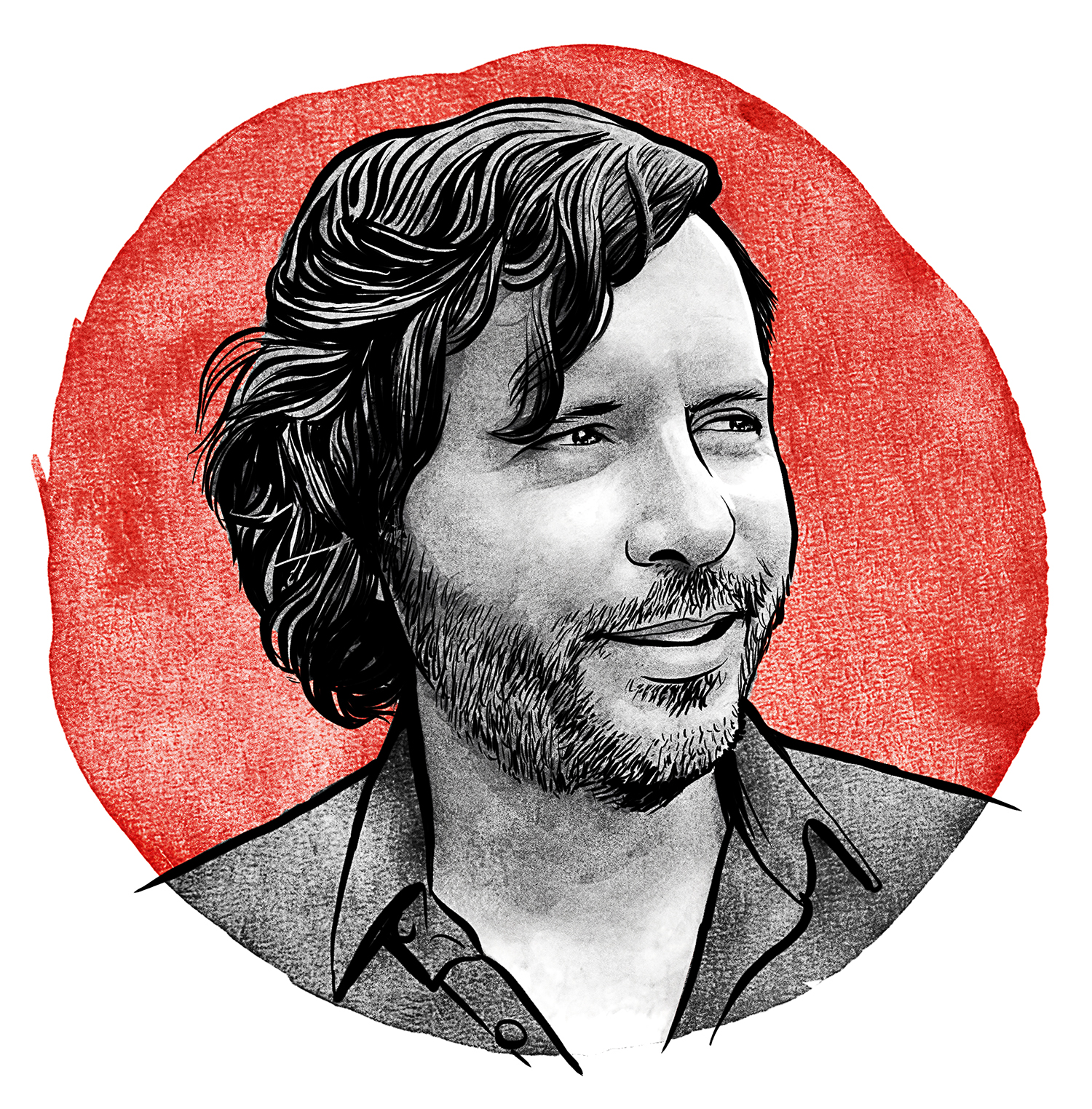
This is Joe Poitier, the very best dancer on the floor this morning at the Cafe des Amis in Breaux Bridge, Louisiana. And if you had seen how good these dancers were, you’d know that I’m really saying something by calling Joe the best. He is there every Saturday, dancing with all the ladies, they tell me. Read below the jump for my report from my Saturday road trip to Cajun country.
So, James showed up at my house in St. Francisville right after six this morning. You have to get to the Cafe des Amis before 7:30 if you want to get a seat at the zydeco breakfast, he said. Cafe des Amis is in Breaux Bridge, about 70 miles away, so we had to get an early start. Breaux Bridge is so close, but it really is another world away. St. Francisville is a town on the east bank of the Mississippi, in English Louisiana. French Louisiana begins on the other side of the river. The cultures are significantly different — so much so, in fact, that I have never been to Breaux Bridge.
Boy, has that ever been a mistake, but one I enjoyed making up for. On Saturday mornings, the Cafe des Amis in downtown Breaux Bridge features a zydeco band for a few hours. You can have breakfast and listen to music, and dance if you want to. This morning’s band was Leroy Thomas and the Zydeco Roadrunners. Here is a video clip of Leroy and his band playing the zydeco breakfast at Cafe des Amis a couple of years ago:
Listen to that and look at that. It was just like that this morning, except the dance floor was more crowded. Anyway, James and I arrived before the band started, so we found a seat at a communal table. We started with drinks and coffee, and split a big beignet stuffed with boudin and sprinkled with powdered sugar. I texted this picture of me eating the glorious thing to Julie, who texted back, “You look like you’re drunk on pork fat.” Well, yeah, kinda:
Then we ordered our breakfast entrees: for James, a tasso (spicy smoked pork) and onion omelet; for me, and omelet with crawfish etoufee. We both had andouille grits. There are no words! Actually, there are words, but Calvin Trillin has used them all up in his rapturous writing about the food of this part of the world. I sat there under the high ceilings of the cafe, next to the red brick wall, eating that fine food and thinking that I was in a pretty good place for a Saturday morning. But I was off the mark. I was, in fact, in the very best place on earth this Saturday morning, as I realized the moment the zydeco band started. It is impossible not to smile when you listen to this music. The dance floor instantly filled up. A tall, muscular black man with a straw cowboy hat stood out — that’s Joe Poitier, above — as the best dancer, but really, nobody was even a mediocre dancer here. There were old dancers, middle-aged dancers, young dancers, black dancers two-stepping with white dancers, dancers who looked like lawyers, dancers who looked like farmers. It was a “here comes everybody” kind of morning. After we finished eating, we moved to the bar. James, who, unlike Your Working Boy, can dance, found a partner and off they went. I stood with my elbow on the bar, drinking an icy Abita Turbodog, and letting the joie de vivre roll over me like cane syrup on a stack of pancakes. James came over and said, “Here it is 9:30 on a Saturday morning, and you’re on your second beer. This is living.”
Yes, this is living. Why would you want to live anywhere else? After the 2000 census, I read somewhere that the region of America that has the least out-migration is Acadiana, the Cajun country. People just don’t leave this place. When you see how you can spend a Saturday morning here, it’s not hard to understand why they remain.
Take a look at this bizarre decor at the Cafe des Amis. Russian Orthodox icons! Have you ever?
After we’d had about as much beer and dancing as a couple of middle-aged guys could stand, we went back out onto the Main Street, and tried to navigate to Poche’s (PO-shays), a Cajun meat market outside of town, where we intended to fill our cooler with boudin, chaurice, andouille, and all kinds of good things. On the way there, we stopped at a particular shop to see if the owner, an acquaintance of James’s, was there. He wasn’t, but we got to talking to the saleswoman. Turns out she’s from a town near to St. Francisville. She moved to Acadiana 20 years ago, she said, “and I’m not moving back.”
I asked her why it was so easy to find places like Cafe des Amis and its zydeco breakfast here in Acadiana, but 70 miles to the east, you don’t see these places. “It’s totally different over here,” she said.
How? I asked.
“These people, they live to eat, to drink, and to have fun. And to be Catholic,” she explained.
There is an entire worldview, an entire culture, in those two lines. The lady said that she’s not Cajun, but she’s been adopted by the Cajuns, and she doesn’t ever want to leave. The nearby city of Lafayette, she said, is smaller than Baton Rouge, but it’s got so much more life in it. “You’ve got to come back for the Festival International in Lafayette,” she said. “It’s the greatest.” OK, sold.
James and I said our goodbyes and headed out of town to Poche’s. On the way, we stopped at a gas station. James went inside to buy a Coke, and when he came out, he said three old black men were standing around inside the market, speaking French. (Did I mention that Leroy Thomas sang mostly in French?) Even though I grew up in south Louisiana, it was the English part, so it’s so unusual to me to hear black people speak French. In fact, aside from zydeco musicians singing, the only black-skinned people I’ve ever heard speak French were African francophones. And there it was this morning, in a gas station outside of Breaux Bridge.
Poche’s was nothing fancy, not remotely. But it was a treasure trove of Cajun gastronomy. James and I loaded a big ice chest with sausage, boudin, and seasoned pork roast. James bought a link of fresh hot boudin, and had torn into it before he had his seat belt fastened. The heavy bruised sky burst open with a torrential downpour as we motored down Highway 31, trying to find our way to Lafayette, and Johnson’s Boucaniere, where we were going to have lunch. By the time we saw the sign outside of Johnson’s, the skies were still gray, but the rain had slacked off:
Greg Walls, the owner and master meat smoker, greeted us, and told us after we finished our lunch, he would show us his smokers, which he designed and built himself. James and I each had the rib plate. These aren’t real ribs, but rather slices of beef butt, slow-roasted for five to seven hours, and served with homemade barbecue sauce on the side. They’re so tender they fall apart if you merely stare at them hard. Look at this, would you? Just look:
Greg brought out some of his pulled pork and his brisket for us to taste. It was delicious, but by this time, my head was starting to swim. The boudin that came with the rib plate was more peppery than I’ve had it at most places, which I like. I wanted to have more, but by then I couldn’t possibly have eaten another thing. Fat and happy, that was me.
Greg took us out in back of the restaurant to show us his smokers. There is no incensed altar in all of Christendom more glorious than the perfumed smoky meat closets behind Johnson’s Boucaniere. Here is Greg with a rack of his homemade sausages:
I don’t know if there’s much that can make a man feel more satisfied with his vocation than to know that you make your living cooking delicious food and making strangers happy with it. That’s what Greg does. It’s hard work, but man, to be able to be that kind of artist! In some parts of the country, you have to pay a lot of money to have a dining experience as thoroughly sublime as eating smoked meat on the wooden side porch at this little joint in Lafayette. Sated and silly with delight, we drove east, back across the Atchafalaya Swamp to our homes in the hills. I think these Cajun people are among the richest in the world, because they know how to eat, and they damn sure know how to live. I am not prepared to be gainsaid on this, or at least not until I have slept the day’s repasts off.
UPDATE: Now that I’ve awakened from my nap and eaten another of Greg’s smoked ribs, I feel moved by the Spirit to make two religious observations. First, this slow-smoked meat is an excellent metaphor for the regenerative work of sanctifying grace on a human soul. These ribs haven’t been cooked as much as they’ve been thoroughly converted by the holy smoke, which suffuses every tender fiber of their being.
Second, I think I’m ready for the vegan agonies of Great Lent. No, really. It’s time.
On the Boudin Trail
So, I’m waiting here in my kitchen before the sun comes up for my friend James to pick me up. We’re headed over to Lafayette to go on a boudin hunt. First stop: the zydeco breakfast at the Cafe des Amis in Breaux Bridge, home of the legendary (to me!) oreille de cochon, a boudin-filled beignet. A dispatch from the Boudin Trail, via Garden & Gun:
I first started eating boudin some seven years ago, once I’d lived in New Orleans long enough to need a breather from urban living and began exploring outside the city’s limits. I experienced my first link ever at Poche’s Market in Breaux Bridge, a town I’ve since come to regard as a boudin hotbed because of its several irresistible destinations: Poche’s for livery links; Charlie T’s for milder, green-onion-spiked specimens; the restaurant Café des Amis for boudin-stuffed omelets; Babineaux Slaughter House for increasingly difficult-to-find boudin rouge (blood boudin); and Bayou Boudin & Cracklin’ for innovative white bean and tasso boudin, as well as fantastically seasoned cracklins.
Some newcomers to boudin country require periods of palate adjustment. The liver component is too exotic, or the soft texture is off-putting, or the deliberate seasonings are challenging (for seasoning-phobes, Floyd Poché, the market’s proprietor, suggests trying a balanced Cajun seven-course meal: one pound of boudin plus a six-pack). Perhaps thanks to my late grandfather’s liverwurst-and-raw-onion sandwich habit, or perhaps because eating in New Orleans had prepared my palate for boudin’s riches, my affection for the sausage was immediate. Acadiana is rural and removed enough—from New Orleans, as well as the rest of the country—that even its largest town, Lafayette, has an old-fashioned charm; the liver in Poche’s boudin seemed to be an edible expression of that. Ditto the boudin’s simple wrapping, its made-today freshness, and its take-it-or-leave-it seasoning. I took to it without condition.
And then, for us today, it’s on to Johnson’s Boucaniere for lunch. Lent is bearing down upon us like a freight train, so I’d better get as much boudin and ribs and stuff eaten while there’s time. Seems prudent, yes? Then, who knows? We are told that NuNu’s in Arnaudville has good food. We’re taking coolers to bring back bounty for our wives and children. It’s the least we could do. I will report back later today. There will be pictures.
(Are you not subscribing to Garden & Gun? What’s the matter with you?)
leave a comment
Welborn Griffith, Hero of Humanity
I’m looking forward to a return trip to the cathedral in Chartres, one of the great buildings of the world, and an incomparable masterpiece of Gothic church architecture. It was a visit to Chartres, stumbling off a tour bus as a 17 year old, that I walked into a new life. My religious imagination came alive inside that cathedral. I had never imagined, much less seen, any building like it. It made me rethink everything I thought I knew about God, and about Christianity.
I’m planning to study the Chartres cathedral before going there in April, so I will have some real insight into what I’ll be seeing this time. Tonight I was googling around a bit, and came across an amazing piece of information, via Jay Nordlinger:
My wife’s maternal grandfather was a colonel in the U.S. Army in WWII. They were closing in on Chartres from the southwest, and they came under heavy artillery fire from the Germans in the town. An order was issued to shell the cathedral on the assumption that the Germans were using the tower to locate the Allied forces. My wife’s grandfather questioned the strategy of taking out the cathedral on a hunch and volunteered to go behind enemy lines to find out whether the Germans really were occupying the cathedral. His offer was accepted, and he found himself climbing the cathedral tower alone, not knowing whether an enemy unit was a step or turn away. After finding the tower unoccupied, he rejoined his forces, reporting that the cathedral was clear. The order to shell the cathedral was withdrawn, and the Allies took the town. During the gunfight, my wife’s grandfather was killed. He is buried in St. James Cemetery in Brittany.
The American who saved the Chartres cathedral by risking his own life was Col. Welborn Griffith of Quanah, Texas, who was posthumously awarded the Distinguished Service Cross (for extreme gallantry and risk of life in armed combat) for what he did in Chartres.
Just think of what France, and what all of us, would have lost if not for this man’s courage and discernment. I am going to light a candle for him at the cathedral. Somebody should make a movie about war, inhumanity, and Col. Griffith’s decision to risk all to save this glorious cathedral that represents the pinnacle of the human spirit, standing as it did with the worst of mankind’s evil raging around it. I suppose we’ll never know what exactly Col. Griffith, a country boy from small-town West Texas, saw in the cathedral that made him risk his life to save it from destruction. But it’s awesome to contemplate.
leave a comment
The Silence(d) of the Chaplains
Last Sunday, the US Army ordered Roman Catholic military chaplains not to read a pastoral letter from their Archbishop to their parishioners, relenting at the last minute, and granting permission to read an edited version.
Wow. This happened.
leave a comment
Psychoanalyzing a Painting
Study this painting above for a minute, if you have the time. Think about it, and what you see in it. What do you think it says about the artist, and his worldview? Go below the jump; I have something funny to tell you about it.
The artist is me, age 3. This watercolor is hanging on my parents’ wall. I finger-painted it for my dad, who pinned it to the wall in his office at the time (this was 1970). He worked for the public health service at the time, and his supervisor was so disturbed by the painting that he suggested my parents make an appointment with a child psychiatrist. So they did. My mother said when the doctor asked me why I used all these dark colors in the painting, I told him, “Umm, because I ran out of all the bright ones.” That was pretty much the end of the evaluation.
leave a comment
Komen & The Cost of Free Money
Daniel Foster at NRO nails it:
Look, the beauty of free speech is that, if you’re inclined to do so, you can write a check to PP in an act of solidarity, or write a check to Komen as an expression of moral approval. That’s all fine. But there’s something quite a bit different, something creepy and not a little despicable, about the Planned Parenthood set’s besmirching Komen’s good name across a thousand platforms for having the audacity to stop giving them free money. And I don’t care why that decision was made, frankly.
More:
Imagine I volunteered to run a cub scout troop, and for years, when the annual soapbox derby came near, I knew I could count on Joe’s Deli as good for a hundred dollar donation. If one year Old Man Joe decided he didn’t want to donate any more — because he didn’t like the design of our racer, or because he thought his hundred bucks was better spent on a little league team, or because he disapproved of the scouts’ stance on gays — what on earth would justify me going on public access TV to grill Old Man Joe on why he hates kids? What would justify me hacking the Joe’s Deli web site or maliciously editing Old Man Joe’sWikipedia page? What would justify me goading a handful of my city councilman into standing up at the next town meeting and publicly calling on Old Man Joe to reinstate his donation?
Nothing, says Daniel Foster, would justify that. And he’s right, because his is the decent position to take.
leave a comment
The Traditionalist Prince of Wales
I’ve just finished writing an essay for an upcoming issue of TAC about the Prince of Wales’s cultural conservatism. I’m broadly sympathetic to him, even on those facets of his character and his activism that typically irritate Tories. One thing I did take a dim view of, though, was what I considered to be his squishy ecumenism. Charles once said that when he is king, he intends to be not “Defender of the Faith,” which is one of the British monarch’s titles, but rather “Defender of Faith.” That seemed to me to be a kind of surrender, especially in light of his very public enthusiasm for Islam. Nothing against Islam per se, but he is to be the Supreme Governor of the Church of England; shouldn’t we expect more spine?
Researching this piece has led me to modify my views. I still wish Charles had held the line, but I understand better his thinking. I had not fully appreciated the extent to which Charles is a philosophical Traditionalist. That is, he is a follower of a metaphysical school of thought that, broadly speaking, rejects Modernity because, in this view, Modernity has lost sight of the essential unity of all creation, and its rootedness in the Divine. To these Traditionalists, Western civilization definitely took a wrong turn at the Enlightenment, and even earlier; Charles, like the American Richard Weaver in 1948, identifies the demise of Scholasticism as the key turning point for the West. Here is a quote from a speech Charles gave to a Traditionalist gathering in 2006:
However, the teachings of the traditionalists should not, in any sense, be taken to mean that they seek, as it were, to repeat the past – or, indeed, simply to draw a distinction between the present and the past. Their‟s is not a nostalgia for the past, but a yearning for the sacred and, if they defend the past, it is because in the pre-modern world all civilizations were marked by the presence of the sacred. As I understand it, in referring to Tradition they refer to a metaphysical reality and to underlying principles that are timeless – as true now as they have ever been and will be. And, by way of contrast, in referring to Modernism they refer to a particular (though false) definition of reality; a particular (though false) manner of seeing and engaging with the world that, likewise, is distinguished not by time, but by its ideology.
In an article written in 1983 for the traditionalist journal Studies in Comparative Religion, Professor Nasr put it this way:
When we use the term “modern” we mean neither contemporary nor up-to-date… Rather, for us “modern” means that which is cut off from the Transcendent, from the immutable principles which in reality govern all things and which are made known to man through revelation in its most universal sense. Modernism is thus contrasted with tradition…; the latter implies all that which is of Divine Origin along with its manifestations and deployments on the human plane while the former by contrast implies all that is merely human and now ever more increasingly subhuman, and all that is divorced and cut off from the Divine source.
Most especially, therefore, we can see that it is the very timeless quality of these immutable principles of Tradition that makes its teachings so timely. For me, the teachings of Tradition suggest the presence of a reality that can bring about a reality of integration, and it is this reality that can be contrasted with so much of Modernism‟s obsession with dis-integration, dis-connection and de-construction – that which is sometimes termed the “malaise of modernity”. Cut off at the root from the Transcendent, Modernism has become deracinated and has separated itself – and thereby everything that comes within its thrall – from that which integrates; that which enables us to turn towards and reconnect with the Divine.
In this way, the loss of Tradition cuts to the very core of our being since it conditions that which we can “know” and “be”. For Modernism, by its unrelenting emphasis on the quantitative view of reality, limits and distorts the true nature of the Real and our perception of it. Whilst it has enabled us to know much that has been of material benefit, it also prevents us from knowing that which I would like to refer to as the knowledge of the Heart; that which enables us to be fully human.
There is a great deal that traditionalist conservatives — Christian or otherwise — can and should affirm. Anyway, this sort of Traditionalist — as distinct from the way the word is used among Roman Catholics — believes that there is one spiritual truth that expresses itself in an essentially coherent way across a variety of civilizations. Trad followers of Rene Guenon believed that we in the West had gone so far from the Great Tradition that the only way to reconnect with it was through initiation into one of the Eastern religions which preserved it (Guenon left Catholicism and became a Sufi Muslim). Obviously for any Christian trad, there is a danger here of universalism, that is to say, seeing all religions as basically the same. That cannot possibly be reconciled with Christian teaching. On the other hand, historical Christianity (e.g., the Catholic natural law tradition) certainly recognizes that truth can and does exist outside of the Christian church, as the patrimony of the Creator God to His creation. The fullness of that Truth is only found in Christianity, the teaching goes, but that is not to say that non-Christian religious believers are alien to the Truth. C.S. Lewis makes the same point in “The Abolition of Man,” with his appendix titled “Illustrations of the Tao.”
I know from people close to him that the Prince of Wales is a regular communicant of the Church of England, and takes his faith seriously. I do not know the content of that faith. I don’t know whether he endorses a New Age universalism, or whether he believes as Lewis did. In either case, I can see why, from a big-t Traditionalist point of view, it makes sense to think of himself as a Defender of Faith in the current age. To Trads in postmodernity, the loss of religion and a sense of the sacred pervading the cosmos is a far greater threat to the things that make life worth living, and that ought to be conserved, than is competing religious traditions. In other words, the godless City of London banker may well be seen by Charles to be a greater threat to Britain’s future than the pious Muslim shopkeeper in Bradford. In this way, what looks at first like Charles’s squishiness on the question of religion might actually be an expression of a very deep conservatism. Worth considering, anyway.
If you have the time, please do read that 2006 speech. It may tell you some things about the Prince of Wales you probably did not know, and could not have guessed.
leave a comment
Romney: An Authentic Phony
Oh gawd. Mitt Romney says that Americans are the only people in the world who put their hands over their hearts when they’re singing the National Anthem:
Buzzfeed, which posts photos of all kinds of foreigners, including Fidel Castro, doing this, snarks:
He ran the Olympics, he should know better.
This is not going to get any better, is it?
UPDATE:Daniel asks the obvious, but still head-smacking, question.
leave a comment
Komen Collapses, Reverses Course
Can’t say I’m surprised. I’m calling my credit card company and rescinding my donation. Let Komen do what it wants to do, but if they think they’re going to get any respect from the pro-choice mob now, they’re deluding themselves.
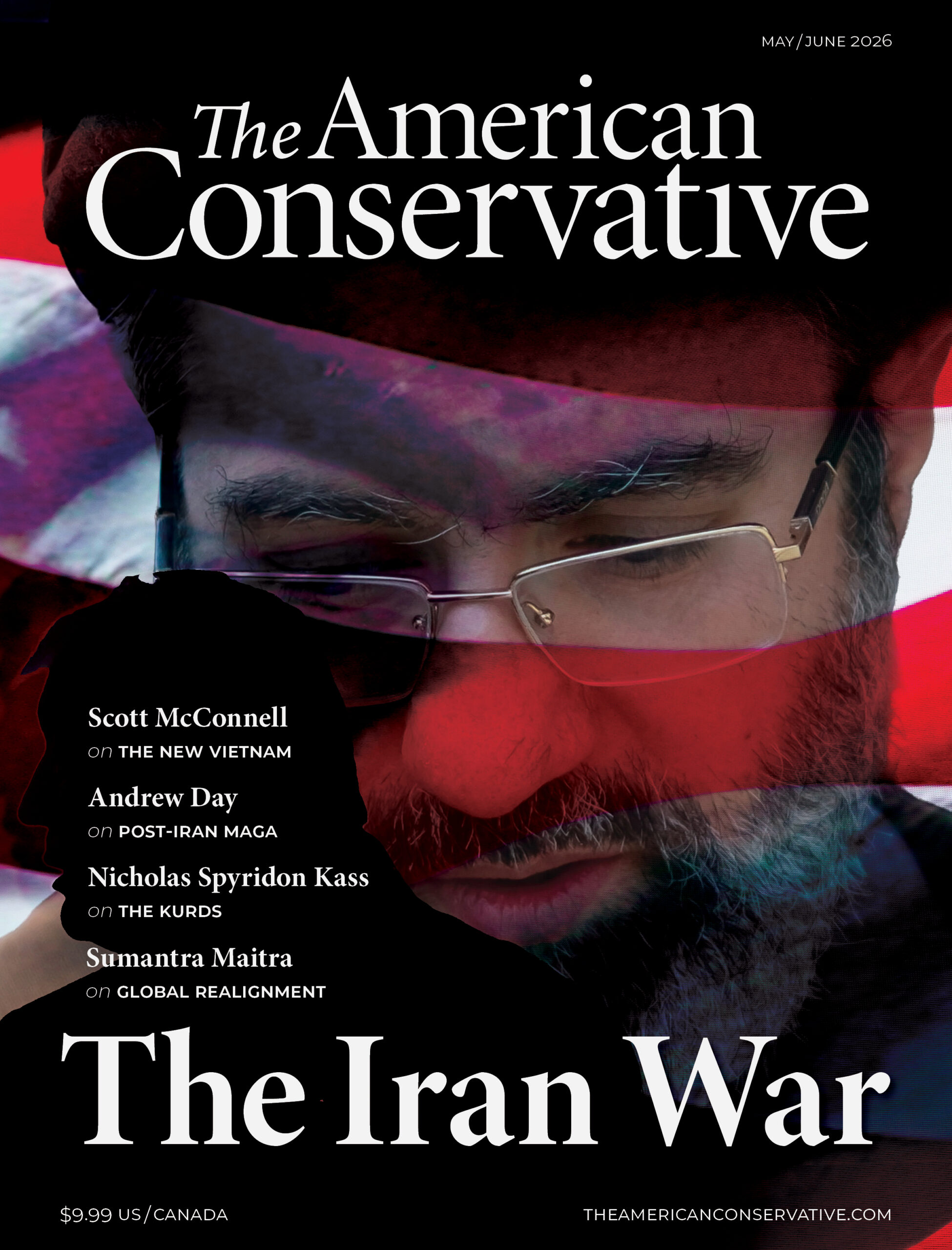
To me, the most important fact in all this controversy is how utterly unrestrained many in the media have been in its biased reporting. It has been disgusting. All the things liberals routinely blast Fox News for have been on flagrant display in coverage of this issue. This, not Komen’s moral collapse, is the thing to note, and to remember, about this debacle. There are two issues the mainstream media sees absolutely no reason to be fair and balanced in covering: gay rights and abortion rights. Sexual autonomy is the one great sacrament of the Left, which is to say, our mainstream US media. See Mollie Hemingway’s latest for more.
UPDATE: The bank says I have to ask Susan G. Komen to cancel or return the donation. So I’ve just done that.
UPDATE.2: A wise friend observes that Nancy Brinker, the Dallas socialite who founded and runs Komen, could have withstood the pressure from the media, but she folded under pressure from her social class.


leave a comment