













Solidarity Revisited
Richard and I are in agreement that monetary policy is the concern of elites and has little or no direct connection to popular attitudes, but I think he has misunderstood my references to social solidarity and citizenship. I mentioned these things as bulwarks against both personal irresponsibility and the related recourse to dependency on government remedies. If inflationary policies serve the interests of debtors, which encourages them to endorse such policies at the expense of the commonwealth and their less-indebted fellow citizens, repudiating these policies will require an understanding of the common good and the mutual obligation that fellow citizens owe to one another. No small part of the housing crisis is the result of defaults that result from people who abandon mortgages without any concern for how this affects their “neighbors,” whom they do not actually see as their neighbors except in the most minimal, physical sense. An ethic of remaining in a place despite hardship, rather than walking away to satisfy immediate desires, would teach us to resist this. This is why discussions of place, limits and restraint are essential to correcting many of the disorders afflicting our country today.
Huntsman To China
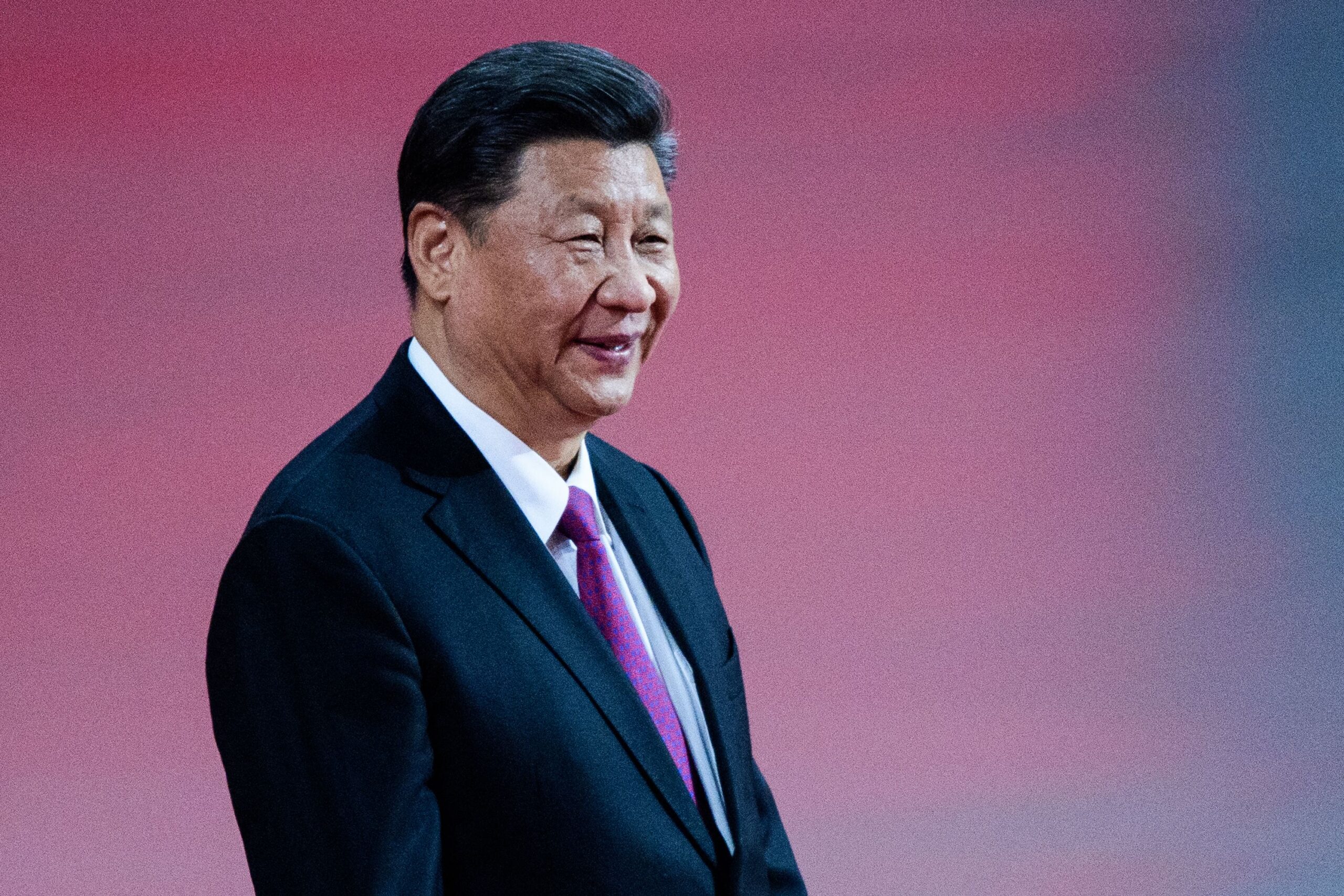
Everyoneseemstoagreethat the appointment of Utah’s Gov. Jon Huntsman as ambassador to China is a wise and politically brilliant move. I plan to have more to say about this, but one thing I will say now is that the nomination is a fascinating intersection of the Obama administration’s flirtations with foreign policy realism, the GOP’s increasingly unreasonable definition of what passes for a “moderate” (Huntsman’s heresies, such as they are, are actually quite mild), the enduring (and perfectly predictable) resistance to Mormon politicians in presidential politics, and the absence of credible high-profile Republican leadership on foreign policy in opposition to the administration. Related to foreign affairs, Huntsman may have been the most qualified and credible Republican office-holder outside of Congress, and he has now joined the administration. This suggests not only that the administration has captured the foreign policy center, as I was arguing earlier this week, but that those Republicans who might be best qualified to try to take it away from Obama are moving out of electoral politics and into diplomatic service on behalf of Obama’s administration.
P.S. Regarding the Giordano remark about Steele’s Romney gaffe, I would repeat that Steele’s gaffe was a true Kinsley gaffe in that it was an accidental statement of an impolitic truth. Mormonism was, and remains, a real political liability for Romney, as it would have been for Huntsman had he considered running in ’12. This makes all kinds of people uncomfortable for different reasons, but the main reason seems to be that East Coast elite conservatives have developed this strange habit of anointing prominent Mormon politicians who stand no chance of winning presidential nomination as future leaders of the party and they are finding it quite irritating that most Republican voters aren’t going along.
As for the Mormon outreach the Obama campaign did in early ’08, I would note that this yielded nothing in real electoral terms for the reasons that Romneyites are always telling us about–Mormons tend to be social conservatives and they usually back socially conservative politicians, and Obama was decidedly not one of those. Obama’s evangelical outreach yielded no meaningful gain for much the same reason. Evangelicals have been dissed and dismissed inside the coalition for decades, but they keep showing up and backing the party more actively than any other single group, so it is unlikely that Mormon voting patterns are going to change dramatically in the near future. Ironically, it is partly because of the stubborn loyalty of evangelicals to the Republican coalition that Mormon candidates are never going to win presidential nomination on the party’s ticket.
leave a comment
Recapturing The Center
My new column for The Week is now up. Here is the main point:
The faction most responsible for the GOP’s political failure is national security conservatives. Yet within the party, they remain unscathed, their assumptions about the use of American power largely unquestioned, and their gross errors in judgment forgotten or readily forgiven. Among the mainstream right, the foreign policy of the Bush administration is barely a subject of debate. Rather than reorienting Republican foreign policy towards a political center defined by realism, humility and restraint, the GOP’s leadership and activists have redoubled their commitment to Bush and Cheney’s hawkish stances and to a lock-step defense of the Bush administration’s policies.
This situation creates a strange incongruity. In one breath, conservatives will invoke a baseless claim that Bush’s excessive spending lost them the country, and in the next they will defend to the last Bush’s decisions as Commander-in-Chief. Yet these were the decisions that, more than anything else, led to Democratic victories and the GOP’s now toxic reputation. What is more, everyone outside the conservative bubble knows the narrative that mainstream conservatives tell themselves is false, which makes conservative professions of fiscal austerity and continued hawkishness even less likely to win public support.
leave a comment
Stop Talking About Earmarks!
In the year of our nation, 2005, “earmark,” a term of trade known only to political technicians, became a household word. The Bridge to Nowhere, a mere outlay of $320 million in that year’s $2.5 trillion federal budget, led to the decline and fall of the Republican Party [bold mine-DL]. In 2006, a disgusted American electorate threw Republicans from office, and transferred House control to the Democrats. ~Daniel Henninger
None of this is true, except that there was an appropriation for the bridge a few years ago and the Republicans did lose control of the House (and, one might add, the Senate). There was no “year of our nation” 2005, but the Year of Our Lord, I very much doubt earmark was or is a household word, and the Bridge to Nowhere did not lead to the fall of the GOP. It coincided with that fall, which was happening for other reasons, and it certainly didn’t help prevent the fall, but it had no significant effect on the 2006 (or 2008) elections. The electorate was disgusted, but for the most part it was disgusted over other things, including the response, or lack thereof, to the ruin of New Orleans and the disaster that was unfolding in Iraq, and to the extent that the behavior of members of Congress entered into it at all it was the criminal behavior of so many House members resulting in indictments and convictions for corruption.
Having deemed earmarking to be corruption, its monomaniacal foes would like to conclude that the electorate’s revulsion against actual corruption that violated the law has something to do with objections to pork-barrel spending. Of course, Duke Cunningham wasn’t sent away because he directed some federal money to his district for some construction project, but because he used his office to acquire gifts and favors for himself. Henninger is so preoccupied with Jack Murtha’s wheeling and dealing that he seems to have forgotten all about DeLay, Abramoff and the K Street crowd who represented the real criminal and unethical excesses of the GOP majority. Who can take seriously an argument that concludes, “The whole system has become an earmark”? What does that even mean? That is like saying that the federal government has become an amendment. It is nonsense. If the “whole system” were somehow “an earmark,” that would mean that there would be some degree of accountability and transparency, so that we would know how and where our money is being spent. Instead, especially as it relates to the actions of Treasury and the Fed and the money appropriated for the TARP, that has not been the case at all.
leave a comment
No Good Reasons
Cathy Young was making a lot of sense in this column, and then she said this:
The “Good War,” like the Good Book, can be put in the service of any agenda. Conservatives invoke it to justify military action: “What about Hitler?” is a devastating, if cliché, rebuttal to the pacifist insistence that there is never a good reason to start a war [bold mine-DL].
No doubt pacifists are also against starting wars, because they are theoretically against all wars, which is why very few people even claim to be pacifists. In any case, this is an odd thing to say. Why is the insistence that there is never a good reason to start a war a pacifist one? The example of Hitler does not provide support for the idea of starting a war. Indeed, a large number of his crimes involved starting a war and unleashing all of the evils that follow from that, which one might think would provide support for an argument against starting wars. When it comes to discussing whether or not a state should start a war, can anyone actually offer a good reason? This seems unlikely, as there is nothing good in aggressive warfare. So the response in this case doesn’t seem devastating at all.
leave a comment
The Crucial Val Kilmer Question
Conor is overthinking this. The question is not whether Val Kilmer is qualified to be governor of New Mexico, but why someone so relatively sane as a method actor would want the job. Frankly, a crazy actor transplant who lives in Pecos is probably overqualified and would have to be turned away to avoid embarrassing everyone else in Santa Fe.
leave a comment
Great News
Great news–John Schwenkler’s Upturned Earth will now be at the TAC site. John is one of the best bloggers around, and I am extremely pleased that he will be one of our regular colleagues and fellow bloggers. We are lucky to have him and his colleague J.L. Wall, and I look forward to the future discussions with them. If you somehow haven’t been reading John’s blog before now, I recommend that you begin today.
leave a comment
Policy And Culture
A successful Alternative Right strategy might be to accept no compromise whatsoever on a constellation of key issues—mass immigration, monetary and fiscal policies, and foreign policy being key—and wait patiently for objective conditions to change in a way that these matters are thrust to the fore. What can’t go on forever won’t [bold mine-DL], and as we’ve seen with the monetary issue, an opportunity in the form of a major crisis will come. ~Richard Spencer
At the risk of repeating myself in response to Jim Antle’s interesting article, fiscal responsibility and a tight monetary supply, to say nothing of reintroducing a currency backed by specie, have few or no constituencies behind them. If people voted their individual or household interests, such policies would in all likelihood never be accepted by very many. The trouble with these policies is that they are, in fact, sound and serve the common good and the well-being of the country, but they probably would inflict temporary hardships and would require some serious understanding of citizenship and social solidarity* to keep their effects from provoking a harsh backlash. To the extent that people do not vote their interests, but vote because of emotional and visceral responses to rhetoric and symbolism, such policies seem abstruse and irrelevant. It is important to understand that no matter how long one waits, and no matter how disastrous the crisis and the effects of the supposed remedies being used now, these are going to continue to be realities we have to face. Changing foreign policy involves facing similar obstacles, chief among them the emotional and psychological attachment to American power that American nationalists have cultivated over the last half century and their acceptance of the triumphalist story of American “leadership” in which any critique of U.S. policy abroad is portrayed as disloyalty, weakness or crypto-leftism. Changing immigration policy is arguably the most immediately practicable, because the effects of mass immigration are more apparent in everyday life and affect the interests of Americans in a direct way, while the others remain almost entirely the province of elites of one kind or another and seem far removed from personal experience.
It is encouraging that auditing the Fed has many backers in the House, and it is a credit to Ron Paul that he has held fast to his critiques of inflationary policies throughout his entire career. I trust that I do not need to rehearse my agreement with Rep. Paul’s ideas. However, in a country of debtors ruled by a debtor government, we would be delusional if we thought that shoring up the dollar and radically reducing spending are going to have a moment for which we can wait, or that the public will come to recognize that our ideas were the ones they were waiting for. Objective economic conditions have been changing for decades: household savings are gone, personal debt has shot through the roof, and dependency on government and government-subsidized enterprises has increased, which means that the objective political conditions have hardly ever been worse when it comes to dismantling entitlements and the Federal Reserve. What is unsustainable will fail, but the experience of nations that have suffered such collapses tells us that the people who prevail politically in the wake of such failures are going to be left-populists.
* The allergy to Catholic and more broadly Christian social thought, including language of the culture of life, that some of our friends seem to have not only blocks off many potentially valuable sources of knowledge, but it also cuts us off from many of the people on the right who are most likely to be inclined to give our ideas a hearing. If Republican politicians treat the idea of the culture of life as nothing more than a cheap slogan, much as they inflict many other abuses on the proper meanings of words and ideas, that is hardly any reason for us to do the same.
Let us consider how valuable and even necessary some of the insights of such social thought can be in making our arguments. This is from John Paul II’s Evangelium vitae:
This reality is characterized by the emergence of a culture which denies solidarity and in many cases takes the form of a veritable “culture of death”. This culture is actively fostered by powerful cultural, economic and political currents which encourage an idea of society excessively concerned with efficiency. Looking at the situation from this point of view, it is possible to speak in a certain sense of a war of the powerful against the weak: a life which would require greater acceptance, love and care is considered useless, or held to be an intolerable burden, and is therefore rejected in one way or another. A person who, because of illness, handicap or, more simply, just by existing, compromises the well-being or life-style of those who are more favoured tends to be looked upon as an enemy to be resisted or eliminated. In this way a kind of “conspiracy against life” is unleashed. This conspiracy involves not only individuals in their personal, family or group relationships, but goes far beyond, to the point of damaging and distorting, at the international level, relations between peoples and States [bold mine-DL].
The relevance of this understanding of cultivating a culture of life to combating policies of perpetual war is only too obvious.
leave a comment
Localism And Cosmopolites
Remarking on Jeremy Beer’s article on meritocracy, Patrick Deneen concludes with this grim, but correct, observation:
This, in a microcosm, is a central paradox of our political system: our cosmopolite meritocrats theoretically admire localism but abhore [sic] the idea of living within the confines that such life would entail; our Red-State locals tend to despise cosmopolites, but support (and vote for) an economic system that encourages borderlessness, placelessness, and a profoundly abstract economy that has the effect of eviscerating those very localities. This arrangement is one of the central features undermining the localist cause today, and it’s difficult to see how it will be reversed.
Could it be that this paradox is unavoidable? Is the paradox the product of human craving and the inevitable disappointment and dissatisfaction that follow from desire? If so, the answer could lie in the self-denial of humbling oneself exceedingly in imitation of the Lord’s kenosis, which would entail forsaking status and honor to take, as it were, the form of a slave. That probably sounds bizarre, but it points to what Caleb Stegall has been saying about the centrality of love in all of this and, I might add, the right ordering of loves, which would tell us not to seek greener pastures but rather cultivate the ground where we are. A culture in which kenosis, self-emptying, was the highest ideal rather than self-fulfillment would be one in which mobility and flight might be possible but would very rarely be considered desirable.
The paradox Prof. Deneen describes is the result of wanting to have things both ways, to enjoy only the benefits and experience no losses, but as the paradox makes clear neither the “locals” nor the “cosmopolites” can sustain the fiction that they can have it all. At some point, the local indulgence in the benefits of globalization destroys their local way of life and replaces it with the homogenized mass culture in which they have been increasingly participating for years and decades but which they somehow thought might be kept in check. At the same time, the cosmopolites sense the long-term unsustainability of their way of life, and so have become obsessed with biodiversity, ecological balance and conservation to address the material costs without significantly addressing the moral, cultural and human costs that are also imposed.
The cosmopolites, as Prof. Deneen calls them, see many of the advantages of localism but want none of the obligations. They are starved for what it provides, and so wish to escape the confines of their way of life, but they are unwilling to enter into the confines of the local, perhaps because they prefer status rather than happiness or perhaps because they have become so accustomed to the life of the displaced tourist that they cannot imagine being still for any prolonged period of time. The locavore and organic food habits that serve as proof that their way of life is in important ways unsatisfying are themselves a temporary remedy that serves to fill in the gaps and mask the costs of their way of life. The locals, meanwhile, want the products that the world of the cosmopolites can provide, and, as Jeremy argued, many of them want to enter into that world, never fully understanding that their homes will change dramatically and often for the worse as a result of their departure.
Cross-posted at Front Porch Republic
leave a comment