












Words, Words, Words
Michelle Obama has received some bad publicity for her “for the first time in my adult lifetime I feel really proud of my country” remark, but I have the solution for her: she can dismiss the entire controversy by saying that they were “just words.”
A Stereotype, Not A Paradigm
In an unusually tiresome lecture from Christopher Buckley, there is this line:
It’s also true — odd — that Mr. McCain is popular among Hispanic voters, who are themselves paradigms of cultural conservatism [bold mine-DL] and without whose support any “conservative” candidate for president may be doomed to failure.
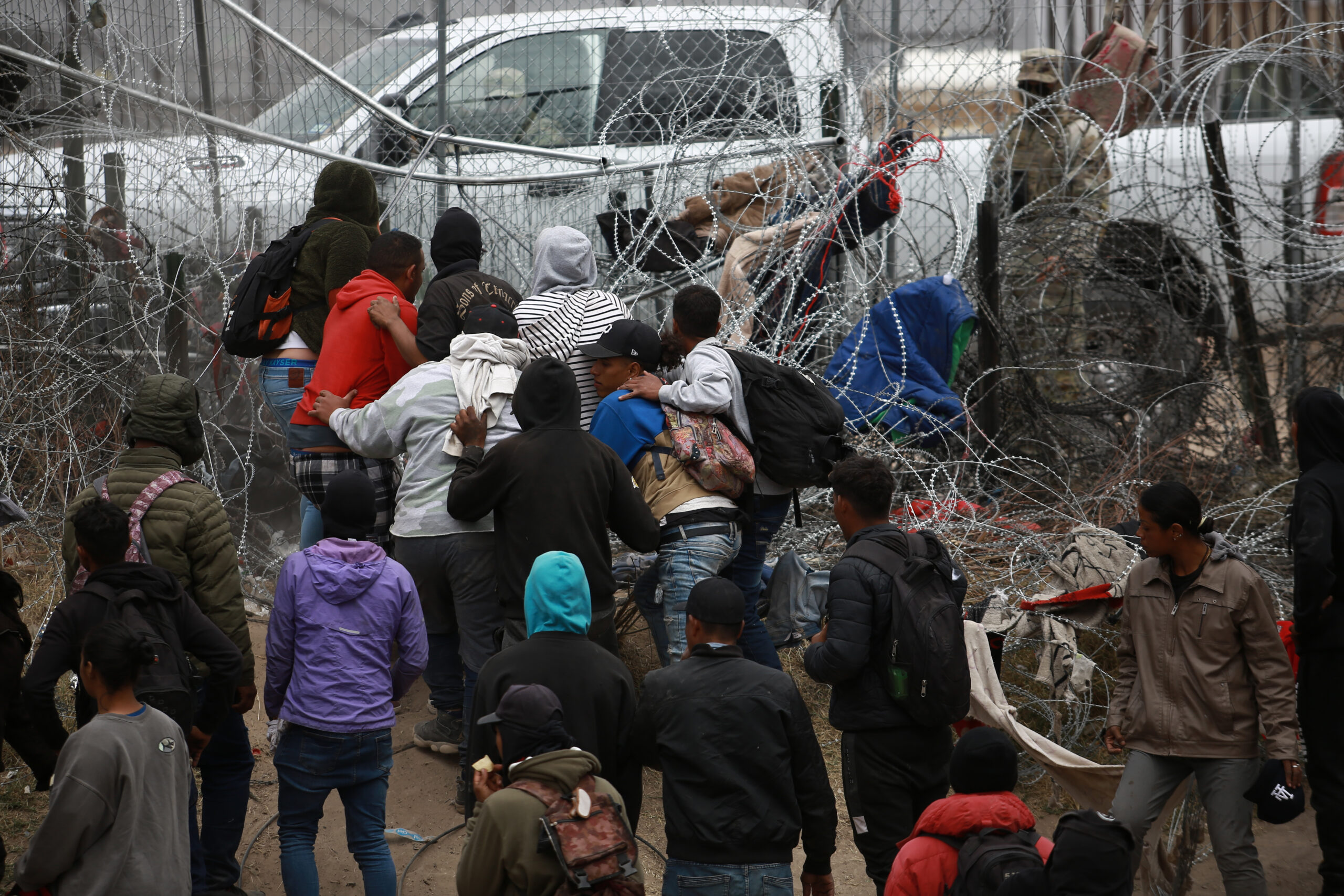
No doubt McCain’s immigration position accounts for his popularity with some Hispanic voters. I remain very skeptical that selling out on this issue will yield the electoral benefits promised when there are many native-born Hispanics and other naturalised citizens who take just as dim a view of amnesty as anyone, but there is certainly a constituency for what McCain offers. What is absolutely wrong about this sentence, as you can see for yourself, is this claim of “paradigms of cultural conservatism.” (Arguably, this same criticism could be leveled at some key voting blocs of the GOP with respect to divorce rates and the like.) Of course, particularly in the context of the immigration debate the phrase “cultural conservatism” is ambiguous, since there is no clear agreement about which culture it is that is being conserved. Even when separated from this phrase and recast in dubious “family values” language, the claim does not seem to be true. As many others have observed before me, the flip side of assimilation is assimilation to the sorts of “values” that cultural conservatives would not recognise as their own. What do I mean? Specifically, I mean this:
Nearly half of the children born to Hispanic mothers in the U.S. are born out of wedlock, a proportion that has been increasing rapidly with no signs of slowing down.
And this:
Conservatives who support open borders are fond of invoking “Hispanic family values” as a benefit of unlimited Hispanic immigration. Marriage is clearly no longer one of those family values.
And again:
As Mona’s family suggests, out-of-wedlock child rearing among Hispanics is by no means confined to the underclass. The St. Joseph’s parishioners are precisely the churchgoing, blue-collar workers whom open-borders conservatives celebrate. Yet this community is as susceptible as any other to illegitimacy.
If Steve Sailer is right and voting patterns coincide closely with being married and, importantly, the stability of marriage, these Hispanics are very likely to be Democratic voters. On the other hand, as Reihan has observed, many so-called “values voters” are often concentrated most heavily among those that suffer from the most family instability, so it might be that these same Hispanics would make reliable Republican voters if you assume the exact opposite of what all open borders advocates have been saying for decades, which is that they are obvious GOP voters because they are natural, habitual conservatives. Instead, you would have to assume that they are going to become Republican voters because they are drawn to the symbolism and rhetoric of social order that they find lacking in their own surroundings.
However, I think even this would be a serious misreading of this particular set of voters, since there are any number of non-immigration economic and social policies that the GOP is not likely to modify or abandon that do not or do not seem to serve their interests. Of course, once voting patterns in a family or community become established they are not easily broken. If it is true that the political preferences established in youth endure throughout one’s lifetime, and if it is true that children tend to inherit their parents’ political views, and we know that 18-29 year olds are now trending Democratic by a huge margin (a phenomenon that is even more acute among minorities), the odds of Hispanic voters becoming a reliable source of Republican electoral strength at any time in the next half century are extremely poor.
leave a comment
Important Questions!
The Politico continues to impress by reporting on the utterly trivial. Obama’s haircut bills must have eluded their grasp.
The really crucial question that the Clinton campaign pack of clowns has so far failed to ask: did Obama plagiarise his kindergarten essay? His words from back then have a familiar ring to them, almost as if other children had expressed themselves in a similar way. “When I grow up, I want to be President”–see, it’s a pattern of plagiarism! He has probably also copied other expressions used by Gov. Patrick, such as, “Remember to vote on Tuesday” and “I need your support.” Clearly, this is an issue of vital importance for Wisconsin voters as they go to the polls.
Until this “plagiarism” charge, I still thought that Clinton could pull off a surprise win tonight. Even her own voters, who have to have a pretty high tolerance of idiocy to start with, have to be embarrassed by this latest maneuver.
P.S. What can the Clinton people possibly hope to prove with this “attack”? That Obama’s rehashed bromides about hope and unity are…rehashed bromides that someone else has used? We already know that. We have known that for over a year. The problem that Clinton has is that she is both platitudinous and boring. If you must send out a lot of hot air, it might as well be sent out in a memorable way.
leave a comment
Me, Too
In what was probably supposed to be a searing critique of Republican Me-tooism, Jeffrey Lord decided to choose to emphasise what was probably the worst example of all the Republican losses of the 20th century, the 1960 election. Not Wilkie, not Dewey (who both receive honourable mention later), but Nixon is his main target. Remarkably, he gives Nixon credit for his ’72 win as a “conservative” after Nixon ran one of the most left-wing administrations on domestic policy of the previous fifty years. Bush in ’88 won virtue of being Reagan’s successor, albeit by a narrow margin, but was actually a moderate, which he demonstrated during his administration and in the ’92 campaign. Dole is blamed essentially for running on his record as a moderate Republican against an incumbent President (when incumbent Presidents have lost only three times in the last century), rather than engaging in the illusionism of Bush the Younger’s campaigns that portrayed him as a conservative. In fact, what several of the moderates on Lord’s list have in common was that they were running against incumbent Presidents. Two of the three others were incumbent Presidents who were punished either for their decisions (Nixon’s pardon, anyone?) or the perception that they were neglecting domestic policy and “out of touch.” The conservative objection to all these campaigns was and ought to have been that the policies they were embracing or acquiescing in were bad policies, and not particularly that they have had a poor electoral record.
The other part of “the legend” of the Nixon-Kennedy televised debate in 1960 was that, according to the radio audience who listened to the same debate, Nixon was ruled the clear winner. Another problem with this line of criticism is that Eisenhower had won two major victories by running as a Me-too Republican, so Nixon might have reasonably concluded that Me-tooism was fairly popular. Also neglected in this treatment is the extent to which JFK was engaged in his own kind of Me-tooism, trying to run to Nixon’s right on anticommunism. (Incidentally, it is Eisenhower‘s successful example McCain has started citing as his model for this election, regardless of how inapt the comparison is.) Finally, there is the small matter that JFK almost certainly stole the 1960 election, which makes the failure of Nixon’s campaign in that year rather more understandable.
leave a comment
Obama's Psychotherapy
Barack Obama is the only person in this race who understands that, that before we can work on the problems we have to fix our souls. Our souls are broken in this nation. ~Michelle Obama
Many people have commented on this line already, but let me just add a few remarks. In one sense, this makes sense, inasmuch as a well-ordered polity will flourish only when the citizens have well-ordered souls (that was and remains one of the original themes of this blog, hence the name), but where this is deeply, terribly misguided is the implication that a politician has something to do with this “soul-fixing.” To the extent that this statement shows a recognition that the state cannot “solve” problems that derive from people’s ingrained habits, and that lasting political change derives from the reform of habits and that human flourishing in politics broadly defined depends on a sane ethical life, there is nothing necessarily wrong with this statement. Qualified in the right way, I might say something similar in terms of disordered passions. However, I have absolutely no confidence that this is what Mrs. Obama meant. Taken together with her and her husband’s other remarks over the months, it seems clear that this statement implies that Obama’s “new politics” is the cure for what ails your soul, which is as worrisome as it is silly, or rather it is worrisome because it is so silly, yet it is being taken very seriously by millions of people.
As Christians, we should acknowledge that the souls of all people everywhere are broken, and we should understand that they will not be healed by activism nor by any secular hopes, because just as the earthly powers cannot touch the soul to control it they are equally incapable of providing wholeness and redemption.
leave a comment
The Meme Lives On (II)
Here’s the rub: As anyone who has listened to Sen. Obama knows [bold mine-DL], the substance of policy positions takes a decided back seat to the more ephemeral ideas of hope and inspiration when he addresses voters. The basic Obama argument is that America can solve its problems, that the country can transcend partisan divides, that Washington can overcome gridlock and that he, as a new leader unbound by the debates of the past 20 years, is the one who can make all those things happen. ~Gerald Seib
As one of the commenters has observed, and as I was arguingrecently, this is exactly right. In her recent remarks, Michelle Obama said that “hope is making a comeback.” As I was driving to work this morning, I thought about that line and then asked out loud, “What does that even mean?” Presumably there is alwayshope, or so the elpidolaters would tell you, so how can hope make a comeback if it has always been here? The Obamas have saying things like this for over a year and they expect people to regard such statements as serious.
Along the same lines, Brooks beat me to the punch with his column today:
For example, His Hopeness tells rallies that we are the change we have been waiting for, but if we are the change we have been waiting for then why have we been waiting since we’ve been here all along?
I prefer His Great Expectancy myself, but you get the idea. Come to think of it, since the motto of the cultglorious people’s revolution campaign is “Yes, We Can,” doesn’t there come a time when someone has to say, “Yes, But Should We?” We’ve all heard the old saw that having the power to do something does not imply that we should do something. Indeed, the emphasis on being able to do something is strange. No one really doubts that “we can” do many of the things that Obama talks about, but what is not at all clear in many cases is whether we ought to do them. It’s as if this sheer potency is what matters for this campaign, as if to answer the question why by saying, “Because We Can.”
There is another problem. Obama risks doing to the word and concept hope what Mr. Bush has done to “freedom,” which is to rip it out of any meaningful context, deprive it of its proper meaning, set it up as an idol and then make terrible sacrifices to it. Politicians use the idea of the future and hopeful rhetoric to justify all manner of abuses and demand concessions from citizens. It’s not just that we shouldn’t trust them (though we shouldn’t), but that this kind of rhetoric feeds and builds ever-rising expectations. These expectations not only will not be met, but cannot be met, because some of the things Obama promises (e.g., transcending partisanship) are structurally impossible and also undesirable in an adversarial, nominally representative system. It sets up Obama for inevitable failure on his own terms, as his fans will soon turn on him and decry him as a “sell-out” the moment that he does not somehow remake the political fabric of America, and it offers America at least four years of a different kind of “distracting politics,” one that will continually take us down blind alleys of optimistic overkill. As I have said before, you can advance some kind of “reform” agenda, or you can work fruitlessly to reorganise the political system. No one can realistically do both, at least not legally, and if Obama chooses to pursue the latter course his administration would accomplish little or nothing. From my perspective, that might be the best outcome available coming out of this election, but it will yield such intense disappointment that the millions of people who have been riding on their hope high for all this time will crash and become the most embittered ex-optimists you have ever seen.
This idea of “post-partisanship” is itself so very strange, since this is not really what most Americans want. The thing that frustrates independents and many partisans alike is not a lack of unity, but the deadening, stifling consensus of the parties in ways are profoundly unrepresentative of most citizens. On many major policies, we have two factions that seem more interested in collaborating with each other against us than we have representatives serving our interests–that is the frustrating thing that many of us would like to see ended.
leave a comment
Withdrawal Symptoms
But they found that as the weeks went on, they needed more and purer hope-injections just to preserve the rush. ~David Brooks
This makes sense to me: the optimist as the psychological equivalent of a heroin addict.
leave a comment
The Meme Lives On
Sophisticated commentary now notes the growing creepiness of the Obama campaign: Its aversion to substantive policy discussions. ~Froma Harrop
Naturally, Obama fans (and I do mean fans, not supporters) will dispute the label “sophisticated,” since the truly sophisticated understand Obama’s ability to move outside of linear time and reverse entropy. They will say, “Haven’t you read his policy booklet? It’s amazing! Even his policy booklet will reunite America!” They will also insist that the people saying this about Obama’s campaign just haven’t looked closely enough, but how is it that so many observers, regardless of their politics or stake in the Democratic race, keep coming up with the same conclusion?
P.S. I would note that this Harrop column supports my guess that Clinton might perform reasonably well against McCain, but Obama would fail. I admit that it hadn’t occurred to me that his happy hopemonger routine would be one of the causes, but the result will be the same.
Update: David Brooks makes use of the same word Harrop used to describe Obama: “vaporous.”
leave a comment
More On "Isolationism"
Not to beat this into the ground, but on a second reading Ross’ concluding remarks in his post on McCain caught my attention:
But, um, Senator McCain, you did notice that Ron Paul topped out at about 5-10 percent of the vote, didn’t you? And that every other candidate in the race (allowing for certain variations) took roughly the same foreign-policy line as you? Doesn’t that at the very least suggest that there might be more pressing battles awaiting a politician looking to reinvent the Republican Party than a crusade against the isolationist menace? Please?
Here’s some speculation for you: maybe McCain’s concern isn’t so much about the people who voted for Paul as it is about the unbelievably large numbers of antiwar voters who voted for McCain in the primaries. Perhaps McCain noticed this, even if his pro-war admirers ignored it, and became anxious about all these antiwar McCainiacs, making him think that beating back the brushfires of “isolationism” was one of his major tasks. Okay, probably not. More likely it derived from McCain’s annoyance at being asked how long American forces would be in Iraq (the origin of his “100 years” remark). Perhaps McCain has become so geared towards intervention and U.S. power projection that even mere questions about bringing our forces back at some point in the future strike him as evidence of the rise of “Fortress America” politics. If that is the line he wants to take, he may find that when he begins rattling off the list of all the places where we have soldiers and bases he will eventually encounter the rejoinder, “Why do we still have soldiers in all these other countries, too?” This has struck me as one of the main weaknesses of the argument for permanent bases in Iraq: likening a continued presence in Iraq to bases in Germany, South Korea and Kuwait draws attention to just how unnecessary those deployments are as well.
Another possibility is that McCain found the presence of even one antiwar candidate in the GOP field deeply troubling. In a party in which even Sam Brownback was found to be lacking in sufficient zeal for the war in Iraq, because he dared question certain aspects of the “surge,” the idea that there was any antiwar constituency was probably very shocking to McCain. Perhaps his thinking is this: even one extreme long-shot House member garnering 10% of the vote is one antiwar candidate too many, and so perhaps he views Paul’s candidacy as evidence of “isolationism” that has to be squashed before it can grow. Who knows? The good news is that this revelation tells us that McCain’s political judgement is terrible, which means that he will probably make a terrible VP selection and lose the general election by a large margin.
Another point: according to that 2007 Fabrizio survey I like to come back to every so often, approximately 8% of Republicans are the so-called “Fortress America” sort and 8% are the so-called “Free Marketeers,” but the latter have vastly outsized influence within the party despite their relatively small numbers and the “Fortress America” voters have even less influence than their nominal one-tenth of the party would suggest. If these different parts of the coalition were representing proportionately in Congress, you might have 15 antiwar Republican members of the House rather than a handful. It is likely that these two groups made up the core of Ron Paul’s support among Republicans (his support among independent voters was typically as great if not greater), which means a couple of things: there was always something of a built-in ceiling within the GOP for a campaign focused heavily on the war and foreign policy plus a strong small-government, spending-cutting message, which Paul reached or nearly reached in many primaries, and the power of “isolationism” within the party that McCain thinks he has found was never very great. What should worry McCain is that three or four times as many Republicans oppose the war as belong to this so-called “Fortress America” type of Republicanism, which means that many of his strongest supporters are at odds with him over the main issue of his campaign.
leave a comment