















The Perfect Metaphor For The Lebanon War
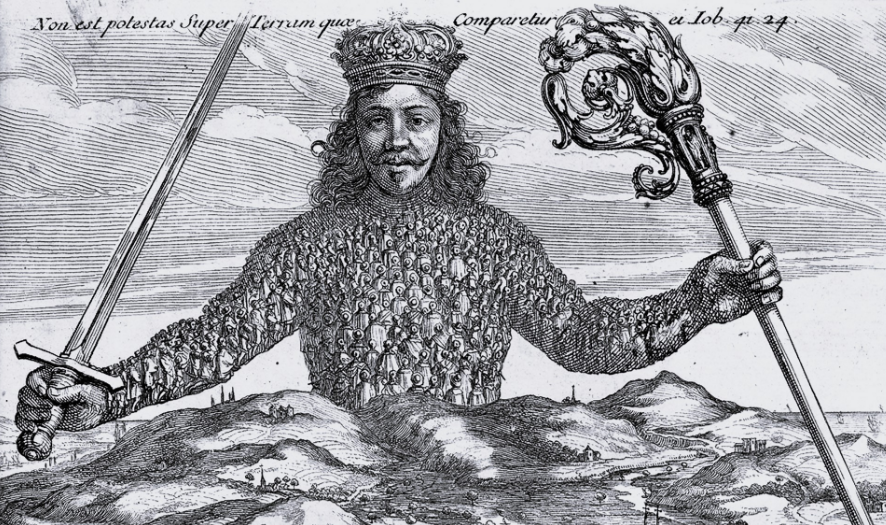
Israeli Defense Minister Amir Peretz scans the horizon, keenly surveying the front. Watch out, Hizbullah–he’s watching you! Or not, as the case may be.
The jokes about Olmert’s government and its foreign and military policies write themselves.
Update: I half-expect one of the usual suspects to write an article saying, “See? Compared to defense ministers in other countries, Rumsfeld is a genius! We should feel blessed to have had someone as SecDef who was relatively so much more competent than Amir Peretz. Obviously, this episode proves that the Rumsfeld-haters are evil traitors–as we always knew they were!”
Anti-Kerry Blogger: Why Do The Media Obsess About A Flip-Flopping Politician?
Why do the media go after Mitt Romney? It may be that they don’t like his new politics (which reminds us once again just how new and different they are!), which might explain the extra close scrutiny they are paying to him, but it might also have to do with their ability to easily catch him in contradictory or simply false statements:
Romney: “Ronald Reagan was pro-choice, and became pro-life. I understand that George W. Bush was pro-choice before he came pro-life. Zell Miller was pro-choice before pro-life. And I was effectively pro-choice before I became pro-life. I don’t think anyone questions the commitment on the part of those other gentlemen for pro-life principles. And, in my case, you don’t have to take my word for it. You can look at my record as governor, because I made the move to pro-life some time ago. I’ve been governor. I’ve had several bills that came to my desk that raised the question of abortion or life, and I came down on the side of respecting the sanctity of human life every time.”
The White House said Bush has always been “pro-life.” During the presidential race of 2000, Dan Bartlett – then a spokesman for the Bush campaign, now the White House counselor – was asked about a quotation from a Texas newspaper in 1978 suggesting Bush’s position had been unclear. Bartlett told The Washington Post: “The governor was pro-life before he ran for Congress, during his run for Congress and after he ran for Congress.” A White House official said Friday that Bartlett’s quote is still accurate today.
Romney’s campaign said the comment was off the cuff and was based on a National Review article, which remained on Romney’s Web site Saturday morning, asserting that “George W. Bush ran as a pro-choice politician in his 1978 congressional campaign.”
So when Romney’s in a tight corner, he blames NR–what will K-Lo say?
My guess is that many journalists are having a field day with Romney because his political odyssey makes for such great copy and creates an easy target for people who would just as soon settle for the “gotcha” stories as do nose-to-the-grindstone investigative reporting. When they can catch a politician in a contradiction or a falsehood, it makes them feel as if they engaged in a high-minded civic duty to keep the politicians honest, so in addition to saving them work it boosts their sense of mission.
Delving into the past of Giuliani or McCain would be, by comparison, a lot of work. All the media need to do with Romney is wait a few minutes for him to say something else they can document as a radical change of position from something he said two or three years ago. The old anti-Clinton conservative media were great about doing the exact same thing, and Clinton was so obliging with his daily deceptions and half-truths that he made it easy for them to churn out story after story. Romneyites, like Clintonistas, don’t like the extra attention paid to their candidate’s flaws not just because it’s “unfair,” but because they’re well-aware of just how many flaws their guy has. They have decided to overlook all those flaws and back him anyway, but they get awfully nervous when these flaws are exposed to the rest of the world. After all, they can’t be sure that the rest of us will be as easily taken in by Romney’s nice smile and big hair as they have been.
In fact, Romneyites are almost sure that we won’t be fooled, which is why they have to moan and complain about the media constructing a “narrative” (i.e., reporting what Romney said five years ago and then reporting what he said today and drawing obvious conclusions that these two things are different) about their preferred candidate. That way, we will think that the identity they are constructing for Romney has no basis in reality and is simply a product of interested parties. Who knew that literary theory would catch on with the Republican blogging crowd?
Of course, the trouble with talking about narrative–especially if you are a lawyer who probably doesn’t quite understand what all this deconstruction stuff is anyway–is that, like every theory that can reduce things to their barest elements and explain away many phenomena as rationalisations or “mere” expressions of deeper urges or forces, it is equally devastating to the counter-narrative that you create to oppose the reigning narrative. It turns out that your counter-narrative is “just” the expression of your Romneyphilia, so why acknowledge it as being any more meaningful? This leads us to something of a dead-end, where we assume that everyone who reports something negative about Romney must be doing so only from hostile ulterior motives (i.e., they hate conservatives) and everyone who says anything positive about it him is one of his partisans or in his employ. Recognising that people do create narratives and often do so to advance their own interests is interesting only to the extent that you are also able to recognise that this is not all that people do when they are describing things or acting in the world.
There is something deeply satisfying about watching the tiresome GOP bloggers who crucified Kerry for his flip-flopping, which was perfectly fair game, now whine when someone does the same thing to their guy out of equally partisan, interested motives. Back then, pointing out these contradictions and inconsistencies was truth-telling and holding Kerry to account. How proud those bloggers were in 2004 when they were fighting for the integrity of the political process! Today, making the same charge based on equally egregious changes is the fictive creation of a narrative that Romney’s enemies are weaving around him–poor Romney! Yesterday, a politician who demonstrated thoughtfulness and reconsidered his opinions with new evidence was an untrustworthy swine, partly because he came from the wrong party, but today the same behaviour proves that Romney is a serious and nuanced fellow who is able to learn from his mistakes. The difference, besides party loyalties, is that Kerry learned that the Iraq war was a mistake, which is not considered permissible by the screaming meemies of the GOP, for whom the Iraq war has some kind of totemic value, while Romney supposedly “learned” the “right” things about the right kind of issue. Somehow I don’t think Barnett would be deeply interested in defending the integrity of someone who “evolved” in the other direction in his abortion views.
leave a comment
And Then There Were Nine (If You Insist On Counting Dodd)
Tom Vilsack has dropped out. I wonder if Vilsack voters in Iowa will now migrate to a new fourth candidate, such as, say, a slightly portly New Mexican. It’s worth noting that there are now no other candidates running as centrist Democrats besides Richardson. Is this the cycle where being the boring, “electable” centrist is actually a disadvantage? Maybe.
Update: I guess my confident declaration that Iowa was a “lock” for Vilsack was a bit off.
leave a comment
Well, John, This Is Awkward
IRAQ will remain beset by sectarian violence and terrorism even after coalition forces leave it, Defence Minister Brendan Nelson has warned.
“There is no such thing as victory in Iraq,” the minister declared in a speech to a defence conference yesterday.
He made the extraordinary admission just hours before US Vice-President Dick Cheney arrived in Australia last night on an official visit, and the day after Britain announced it was cutting its Iraq troop commitment by a quarter.
In his speech, Dr Nelson said people should not be thinking in terms of “conventional victories or success” in Iraq.
Success would “essentially mean that the democratically-elected Iraqi Government, supported by its own Iraqi security forces, will be able to provide economic and defence security to its own people for the forseeable future,” he said.
“It will, however, be a country that will continue to be characterised by degrees of sectarian and other violence and al-Qaeda and other terrorists who so desperately want to make sure they prevail in Iraq will do everything to frustrate and undermine it.” ~The Age
No, no, silly boy! Hasn’t he read all of the grave warnings from Mr. Bush that the terrorists will “follow us home” when we leave Iraq? (Come to think of it, this rhetoric has the odd effect of portraying jihadis as being rather like stray puppies.) Islamic terrorists won’t stay in Iraq–why would they want to stay in a poorly governed country with lax security where they speak the language and have access to many new recruits? That’s just crazy. The flypaper will be all out of its adhesive by that point in any case.
But I’m sure we all eagerly await PM Howard’s denunciation of his minister’s claims, which he will condemn for their facilitation of the triumph of Al Qaeda. Right? Somehow the world has become so bizarre that an Obama-like view has unexpectedly triumphed with one of the chief members of the Australian Cabinet.
Speaking of Obama and Iraq, I wonder why he doesn’t take his spiel on an international tour. He could say things like, “We’ve had plenty of soldiers and post-invasion plans in Iraq. What we’ve been missing is hope.” Or he could say, “We aren’t fighting against insurgents or terrorists or militias. We’re fighting against hate.” Oh, wait, Bush already used that line. How about this one: “At every stage of this war, someone has said, Yes, we can! and I’m here to tell them, No, we can’t!” With this last one he might even be able to make a decent point, but I wouldn’t bet on it.
leave a comment
Actually, It’s Almost The Opposite
Over at Tapped, Janna Goodrich points out the following quote from Glenn Beck:
More and more Muslims now hate us all across the world, and it really has not a lot to do with anything other than our morals.
The things that they were saying about us were true. Our morals are just out the window. We’re a society on the verge of moral collapse. And our promiscuity is off the charts.
Now, obviously, as Janna points out, this argument is appealing to conservatives because it’s a way of condemning social liberalism. It’s an unusually loathsome way of condemning social liberalism, but hey. Strange bedfellows and all that.
However, there’s another reason that this argument has generated a certain amount of conservative appeal lately: it perpetuates the trope that “they hate us for our freedoms.” And if they hate us for our freedoms, guess what? It means they don’t hate us for our actions. And that means there’s no need for us to change anything we’re actually doing in the Middle East.
And that’s a pretty comforting thought for conservatives, isn’t it? ~Kevin Drum
Drum has caught on to a small part of the answer, but it is naturally the one that serves the interests of his “side.” U.S. foreign policy, the actual projection of power and the use of force in and against other countries, is the fundamental cause of anti-American terrorism. That is, or ought to be, blindingly obvious. This isn’t to say that jihadis haven’t been killing people for a very long to spread the domain of Islam or that they won’t keep killing people to that end and for the sake of purist interpretations of Islamic law. They will. But the reason why any jihadis have made a point of starting to kill Americans is very simply that we have made it our business to base our armies in their countries and dictate the political futures of their countries. Other Westerners have come under attack, for the most part, to the extent that their governments have aided us in wars against them or occupations of Muslim countries. Any analysis of the problem that fails to acknowledge this overwhelming factor–as D’Souza’s famously fails to do because of his own weakness for hegemonism–will miss out on a lot.
The “they hate us for our freedoms” line is pure garbage. I don’t know how else to put it. Sayyid Qutb didn’t like how Coloradoans danced in 1949, but he didn’t make it his life’s goal to attack Americans or to urge others to attack Americans and drive us out of the Near East…because we weren’t in the Near East and Muslims around the world had no reason to feel any particular animus towards America. Things that our government started doing in the last thirty-odd years have brought us to this sorry predicament, so it is only fitting that people in our government who keep getting us deeper into that predicament will tell us that they and their predecessors had nothing to do with the problem. However, people who note the difference between the counterculture of the ’60s vs. pop culture of the ’40s to argue against D’Souza’s use of Qutb also miss something important: it was not the cultural modernisation already taking place in the ’40s or the greater cultural radicalism of the ’60s that provoked the discontent and outrage of traditional societies around the world, but rather it was the export of American pop culture to the world in the decades that followed that lit the fuse. In many respects, the export of that culture has triumphed over local resistance (I have strong doubts that this is a desirable thing), but it has generated hostility to the general experience of globalisation and rapid cultural change and those processes are unavoidably associated with the United States because so many of the largest multinationals are associated in the minds of people around the world with this country.
It seems to me that any analysis of anti-Western and anti-American sentiment and actions that does not take into account the corrosive and dislocating effects of commercial (and cultural) globalisation will fail to understand why there is resentment and resistance. Reaction against the displacement and economic and cultural insecurity created by globalisation acts as the oil that keeps the gears of more specifically political and violent protest moving. If people in other nations have experienced rapid cultural change or even dissolution of their old traditions and habits because of modernisation and a demagogue or cleric or intellectual can take advantage of that and point to a combination of Western economies driving globalisation, Western moral decadence and overweening Western governments using their political and economic supremacy to meddle in and/or destroy other states, these voices can make plausible arguments that their nation’s woes can be laid at the door of America and the West while at the same time reinforcing their own convictions in their moral and, often, religious superiority and putting themselves on the side of the weaker nations that are being trampled under by hegemonic policies in a kind of solidarity. Most powerfully of all, hegemonism actually gives these voices tremendous credibility, because hegemonic policies actually are unjust and destructive, and the West has become in many respects morally decadent by any meaningful standard, all of which comes together to make resistance seem not only desirable but absolutely essential to their cultural and national survival.
But Drum stumbles here pretty badly when he tries to link what Beck said (basically, “they hate us for our immorality”) to the “they hate us for our freedoms” trope. The latter is the product of people who think that there is basically nothing fundamentally or even incidentally wrong with America or its policies in the world, and that the only conceivable reason why anyone would want to do us harm is that we are free. This would be funny if it were not so dangerously detached from the real world.
Whether or not you define that freedom in a way that allows for license and hedonism, casting terroristic violence as an attempt to repress our freedoms makes that violence seem both purely irrational, and therefore impossible to contain or quell except by superior firepower, and absolutely limitless (i.e., it cannot be deterred, undermined or cut off at the source). It is the perfect justification for perpetual war and a perfect justification for a perpetual war fought in the most ham-fisted, counterproductive way possible (thus guaranteeing that the “Long War” will be very, very, very long indeed). It also helps to distract critics who have legitimate complaints about state encroachment on actual freedoms by constantly warning civil libertarians that they are helping to facilitate the establishment of shari’a in this country by weakening the government’s ability to spy on the general population and bomb Arabs with impunity.
However, this trope that “they hate us for our freedoms” is almost exactly the opposite of what Beck said. To say that millions and millions Muslims around the world hate “us” for our immorality and decadence is to make hatred of us have some plausible, explicable cause. Worse yet, it suggests that the cause of this hatred is remediable, which is exactly what the “they hate us for our freedoms” crowd cannot stand–the idea that “we” should or can do anything to stop anti-American hatred and violence is, as far as they are concerned, not only ludicrous but is itself immoral “appeasement.” Liberals like Drum don’t like that the ox of social liberalism is being gored in all this talk of immorality, obviously, but nothing could be further from saying “they hate us for our freedoms” than to accept, however, indirectly or vaguely, some responsibility for anti-American sentiment. Indeed, the two positions would have to stand in sharp contradiction, since the solution that Beck might propose would involve the curtailment of things that today fall under the overly broad rubric of freedom. Far from agreeing that “they hate us for our freedom,” this Beck position as it is stated above would say, along with D’Souza, “they hate us for how we misuse our freedom” or perhaps even “they should hate us for some of these so-called freedoms that are actually just forms of rampant immorality.” Those who say “they hate us for our freedom” believe that everything is basically fine with America just the way it is in every respect (yes, there might need to be a little tinkering here or there, but fundamentally there are no real problems), while anti-hegemonists and cultural conservatives alike are able to recognise that there are things that are deeply awry with government and society. Naturally, maintaining both of these positions tends to make one unusually unpopular, since it flatters the prejudices of neither major bloc.
What is potentially quite interesting is what might happen if we could somehow miraculously get together the large constituency on the left that focuses specifically on U.S. policy and the fairly large and, I think, growing constituency on the right that focuses on cultural decadence to create a popular cause demanding the dismantling of the hegemony and moral renewal. The only problem is that the two groups generally regard each other’s America as the heart of the problem that “their” America has with the rest of the world. I promise a nice steak dinner to anyone who can come up with the plan that unites these two basically mutually antagonistic groups together in a force for anti-imperialist cultural regeneration.
Now, because D’Souza’s book stated a very similar argument to Beck’s in a way that was bound to irritate everyone there is a tendency for everyone of all political leanings to reject it in its entirety. I tend to give his diagnosis (i.e., traditional societies are appalled and outraged by low Western morals, and Islamic societies are outraged to the point of contempt and violence) a little more credit while rejecting his solution (i.e., ecumenical jihad), but I disagree with his diagnosis to the extent that he thinks that the entirety of the Islamic world will somehow become pacific and cease all hostility towards the West that it has demonstrated in the past if we start giving serious thought to Tertullianesque plans to veil our women.
People on the right object to D’Souza because he “blames America first” (not that these folks would be satisfied if someone blamed America fifty-ninth–America is never to blame for anything ever in some folks’ minds, and especially not for anything that the U.S. government does) and people on the left, well, they don’t much care for the whole “your godless liberalism brings down the wrath of jihad upon us” idea. Almost everyone is getting something pretty important wrong in this “debate,” but the main stumblingblock to acknowledging that each side has something worthwhile to say seems to stem from what I might call the Larison Amendment to the Dougherty Doctrine (Mr. Drum may be familiar with the doctrine, since it first appeared in the pages of the Monthly): jihadis want to kill us because we tolerate your cultural and political preferences, but they would stop wanting to kill us if we all followed mine. Now it just so happens that some people are much more right about this than others, and the trick will be to find some way to convince most of the main groups contesting this claim that most of them are partially correct.
Drum calls the kind of argument embodied in the Larison Amendment “unusually loathsome,” but it is, in fact, an argument that everyone uses at some point in every foreign policy argument. Neocons use it when they say that the only way to defeat jihad is to engage in massive foreign wars and spread democracy (with relatively less emphasis on the latter), which is basically to say the only way to defeat jihad is to endorse the insanity of neoconservatism, and every other group can be found saying something similar: only we can defeat jihad…by doing the things we’ve always been proposing that we do anyway.
Put another way, it comes down to whose America you “blame first” for foreign hostility. Many on the left blame “Red America” first because of military and foreign policy (even if these are policies that their elected representatives also endorse), and cultural conservatives such as D’Souza will blame “Blue America” first, while the people inured to both trashy popular culture and the warfare state refuse to accept any responsibility for backlashes against Western cultural degeneracy broadcast throughout the world or for destructive hegemonic foreign policy conducted in their name. People horrified by both (people like me) tend to blame the America of the megalopoleis of New York, Washington and L.A. (i.e., not the bulk of the real America, but the other, rather dreadful America that most of the world encounters in one way or another), while people who live in the megalopoleis regard our problems with the world as a product of excessive Christian fundamentalism, Southern militancy and heartland chauvinism. So, basically, we all continue to believe that the usual suspects (whoever our usual suspects are) are responsible for the problems in this country. One group of us is much more right about this than the others–guess which one I think has the right answer.
If Drum’s reaction is any indication, however, the people in the megalopoleis are not going to be inclined to accept the diagnosis of the anti-imperialist reactionary from flyover country.
leave a comment
Leavin’ On A Jet Plane, Don’t Know Which Country To Bomb Again
A very short story in The Politico (via Jim Antle) about Lieberman has gotten a fair amount of attention today, because it contains the hint that he might switch parties if the Dems defunded the war. Since we have good reason to think that they won’t do this, Joementum is just engaged in more public posturing about his alleged moral superiority. But the reaction to the story has been intriguing. For instance, Wlady at AmSpec‘s blog writes:
Jim, the only question is what’s taking Joe so long. The writing’s been on the wall for months that his own party at least has no use for Lieberman. Final confirmation came in Jeffrey Golberg’s cruel slap at at Lieberman in the New Yorker‘s February 12 issue. You could just see Goldberg and everyone else rolling their eyes over every defense Lieberman attempted of his Iraq views. For good measure, the piece closed with a self-satisfied reminder of how badly Lieberman did trying for the presidency in 2004, as if already then he was beyond the pale. As one Strafford County operative says in the article’s final sentence, making Joe’s excommunication official and irreversible: “People don’t think of Lieberman as a Democrat.” Again, what are he and the Republicans waiting for? Proof that he’s a bigger spender than they are?
This caught my attention because I read that New Yorker piece and didn’t come away with the sense that Goldberg was mocking or cruelly slapping Lieberman. I read this piece back during the period when I was pretending I was still on hiatus–I think we can all see that I have given up that particular pretense–so I didn’t write about it (what discipline!), but it certainly struck me then and now as a mostly sympathetic piece that showed Lieberman a lot more respect than he would probably get in any magazine to the left of The New Republic.
Most progressives today seem to assume that Lieberman is a profoundly malevolent man, at least when it comes to foreign policy, or at least unforgiveably mistaken about the war, and to give his self-perception anything like a fair shake would appear to them to be disgusting collaboration with the administration. The New Yorker did give Lieberman a fair shake, and in my view it was probably more than he deserved. Certainly, in the telling of the Iraq war in future years, Lieberman will, along with Blair and a few others, be judged for their special roles in lending this war a broader level of support and credibility than it would have otherwise had and so possess some extra responsibility for it in ways that many others do not. The days are coming when people will be amazed that anyone could have ever written so generously and kindly about Lieberman as Jeffrey Goldberg did. But I digress.
The treatment Lieberman received appeared so generous that it offended Matt Yglesias, who was so put off by it that he got a bit carried away and complained about a pervasive hawkish bias (the exact phrase was “bizarre hawkish monomania”) at The New Yorker (which he later heavily, heavily qualified). Now maybe being antiwar makes me have the same low opinion of Lieberman that many on the left have. It is certainly the case that I have become so accustomed to seeing neocon paeans to the man’s greatness that I can detect Liebermanliebe at fifty paces, so I am probably more sensitive to any positive treatment of Lieberman. Nonetheless, the profile highlighted his alienation from the Democrats, but it also gave him an opportunity to put forward his view of what he’s trying to do. The profile conveys how very sad Lieberman’s position is, and if you can set aside your fiery contempt for this appalling politician for a moment it is understandable how you can recognise the sadness of his story. Indeed, pathetic might be the best word for it, but not to be used in a simply dismissive way.
It is literally pathetic, something painful, and it is a product of the sort of experience that someone has when, whether rightly or wrongly, he believes that he has been abandoned and betrayed by virtually everyone he trusted. That it is almost always the person who has abandoned or betrayed everyone he trusted is beside the point–from his perspective, they have left him. He does not even fully understand the reason for why he has been abandoned, which always tends to encourage denial about one’s own faults and failures.
Those of us who grew up on the early wave of environmental PC education remember The Lorax as our moral lesson about the preservation of the environment, and so it is telling that Goldberg includes the quote from Lieberman where he likens himself to that character:
Lieberman says that he does, at times, feel isolated. He is a liberal on social policy and a conservative on defense, in the bygone style of the late Senator Henry (Scoop) Jackson. “I’m the Lorax,” he said. “I’m saving that one tree.”
It was obvious to me that a profile that included this line could not really be trying to mock Lieberman (though the image is laughable in its way). It allowed him to try to cast himself as a sympathetic guardian figure. Whether or not Goldberg or anyone else bought this idea, that they let this ridiculous comment past without any clever remark about how the Lorax probably wouldn’t support, say, aggressive war tells us that the author really wanted to humanise Lieberman and make him into a real person rather than either the hate figure he has become for antiwar activists or the ridiculous pseudo-Churchill that some on the right want to make him into.
leave a comment
He Was Actually For The Devaluation Of Human Life Before He Was Against It
The other maw of the Beast (the first being The Wall Street Journal), Investor’s Business Daily, takes up for Mitt Romney:
Is Mitt Romney a hypocrite and panderer for his position on embryonic stem cell research? No more so than Ronald Reagan and George W. Bush. And why is the Associated Press distorting the truth on the subject?
Conservatives are suspicious about Romney’s “sudden” move to the right on the subject as they continue their search for the next Ronald Reagan. But the Reagan they cherish was once a Democrat and as governor of California in 1967 Reagan signed a quite liberal abortion law, saying: “I’m fully sympathetic with attempts to liberalize the outdated abortion law now on the books in California.”
Reagan later became staunchly pro-life and backed the first pro-life plank in the Republican Party platform.
Similarly, George W. Bush ran as a pro-choice congressional candidate in 1978 but won election as a pro-life candidate for governor of Texas in 1994. His first and so far only veto was of a bill to expand federal funding of stem cell research on new embryos created and destroyed for that purpose.
The media are suspicious of Romney as well, but for a slightly different reason. They distrust him not because he has changed positions but because in their view he has chosen the wrong one.
Of course, it isn’t just his views on ESCR that have changed (which might be much more understandable, since it is a relatively new and slightly more involved subject with which many people are only passingly familiar), but his views of abortion itself, and what is more he would have us believe the implausible story that he decided–after 34 years or so of unwavering support for abortion–that it was because of a new understanding of ESCR that he came to the realisation that he should also oppose abortion. (It wasn’t because of any of his wife’s pregnancies or the births of his sons or anything that an average person might think would have some bearing on one’s views of the question, but because of a meeting with a couple experts when he was governor in Boston.) Better still, he wants us to believe that all this changed in the last two years or so, and that the timing of his changed view has nothing to do with his campaign. Maybe we could give him the benefit of the doubt about one of these things, but not about all of them. It’s just too much for a politician to ask all at once.
It may well be that the media are hitting Romney on his flip-flopping because they dislike his new view, or it could be that it is newsworthy that a presidential candidate is blatantly opportunistic and basically dishonest about something he is trying to make into an important plank of his candidacy. It could be both together: liberal journalists might be thrilled that they get to nail a pro-life “convert” to the wall for his double-dealing, but that doesn’t mean that the “convert” isn’t a fraud.
It is possible that someone “evolving” in the other direction would get a lot of sympathy, would be described as having been “thoughtful” and “engaged” and “serious” and would generally be given a break each time his deception was exposed to the world–in other words, the liberal media would be doing for the newly-minted pro-choice candidate exactly what the GOP-friendly media are doing for Romney now. Witness the IBD editorial as one example of this. But what of the argument of the editorial itself?
The argument is that Reagan used to be pro-choice and then learned the error of his ways, and the same is said about Bush, which is supposed to give us confidence that Romney will be all right, too. Okay, let’s assume for the moment that Romney really will be as committed a pro-lifer as these two were (whos records were, in fact, mixed or less than ideal). This gets me to thinking. Reagan might well have explained his change of position as a response to the excess and constitutional farce of Roe, which preceded his “conversion” on abortion by only a couple years, and Bush could presumably attribute the change to his religious awakening as an evangelical. By the early ’90s, when the culture wars were quite intense, both Reagan and Bush had become reasonably pro-life. Meanwhile, Romney persisted in the same position. Pre-Roe, post-Roe, all the way through the ’90s and right on through his gubernatorial race and, by his own account, for almost two years as governor, he was solidly committed to making abortion legal and available and state-funded (at least according to his questionnaire from ’02).
During all this time, the costs of abortion continued to mount while more and more evidence–that’s the what Romney the problem-solver is supposed to be so interested in–came in making it harder and harder to dismiss unborn children, even in the earliest stages of development, as “mere” masses of cells. (It occurred to me not long ago that this “mass of cells” line is a strange defense of abortion, since all fully-developed living creatures are masses of cells.) Yet it was supposedly at the moment that Romney was presented with what he regarded as a particularly callous dismissal of the ethical problems of destroying embryos that he discovered that life in the womb was not expendable. Until that meeting, when he would have been 56 years old, he was not so terribly concerned and supposedly hadn’t given it much thought.
Indeed, in his defense, his supporters will say that Romney had not given the question much thought before then. Yet he had given it just enough thought to take staunch pro-choice stances. So Romney can have it one of two ways: he is either someone who takes positions without understanding the significance and nature of what he’s supporting (which lets him off the hook for all those years of being unthinkingly pro-choice), or he is a problem-solver with good attention to detail who learns all the facts and makes his decision (which means that he familiarised himself with the subject and still came to a pro-abortion position, to which he held until it was no longer politically useful). He is either as curious and interested in information as he claims he is–which is supposed to be one of his admirable qualities–or he gets a pass for being incurious and unreflective for most of his adult life about all questions pertaining to abortion. He doesn’t get to have both.
Romneyites say that they support Romney in part because he is a problem-solver who learns a great deal about the details of a subject and then makes decisions according to what he has learned, yet these same supporters seem to glory in the fact that the man was, until very recently, oblivious to the ethical implications of abortion even though he quite passionately (or so it seemed) defended abortion rights in public during two campaigns. In other words, they are confirming that he embraced a position about which he had not given a lot of thought one way or the other because he deemed it the politically expedient thing to do back then, and now we are supposed to believe that he is being both principled and thoughtful, when his record in this particular area suggests that he has been neither.
Another way to respond to this editorial would be something like this: in the early days, when the pro-life cause was still fairly new and only just getting organised politically, it was reasonable to exhibit far greater flexibility in order to bring it to a national audience and to try to make it an important priority of public policy. Twenty-five years later, it should not be nearly as acceptable to pro-lifers to have to settle for a candidate who is making a virtue out of the fact that he has only just now gotten to the point where the movement was 25 years ago. It might have been acceptable, even necessary, to embrace recent converts for leadership roles twenty-five years ago, but if that is what pro-lifers are reduced to accepting today it begs two questions: has there been any significant progress in the last generation and was the previous trust placed in these other converts was as well-placed as everyone seems to think that it was? If the answers to these questions are no, maybe it is time to acknowledge that this old strategy of embracing convert politicians as leaders has simply failed to achieve as much as might be achieved with a much more consistently committed sort of leader. Maybe it would show that rushing to embrace someone who happens to say the right things right now at a highly advantageous moment after having been wrong for 30 years is almost certain to result in disappointment and betrayal. It seems likely that someone who has come only recently to this new understanding will not have the right experience and perspective of someone who has been a reliable, proven defender of life for at least a decade or more.
Romney wants us to believe that the kid who just picked up a baseball a couple of years ago is ready to be a starting pitcher in the big leagues. He’s still not entirely clear on all of the rules, and until recently he was firmly against ever playing and regarded the sport as a bad idea, but now he’s really fired up and excited about it, so we should put him in the starting rotation right now. What would a smart manager say to this kid? He’d say, “Go learn the game and come back when you can play at our level.”
leave a comment
There’s Really Nothing That Vague About Their Impiety
There is no “subtle, inclusive context” that you are missing. You openly described conservative Christians as “authoritarian bullies.” CWA makes clear on its Web page what the organization supports in terms of public policy issues. they frankly acknowledge that their positions are informed by Biblical principles, which means CWA takes its Christianity seriously. They also include a Gospel page that oulines a plan of salvation for any who want to partake. There is no linkage between particular public policy stances and spiritual salvation, other than the one you constructed, which was an illogical leap. An honest reading of CWA’s Gospel page shows this. For you to tell Times readers that CWA promises hell to people who disagree on social issues is a gross distortion of CWA’s message. ~Robert Knight
Mr. Knight writes in reply to Gary Rosen’s slap at the CWA (Concerned Women for America) in TheNew York Times Magazine. (I know I read this piece earlier a while ago, but I filed it away in the back of mind as “Not very interesting Gary Rosen article,” where so very, very many Gary Rosen articles go.) Knight wrote a column denouncing the remarks about the CWA. Then Rosen, writing at Commentary‘s blog, replied to Knight, prompting Knight’s latest response (cited above), which has made the episode a bit more interesting.
Now why would the managing editor of Commentary, writing for the Times,take lazy pot-shots at conservative Christians? The two periodicals are usually so effusive in their enthusiasm for Christianity, after all, that it’s a puzzle. Ahem.
Mr. Rosen did some real heavy lifting in this article–he dragged out Falwell and Robertson, kicked them around for a little bit before getting to the CWA, and then praised Hart, Mac Donald and Sullivan for taking on the “authoritarian bullies” in the movement. These three have taken on the “bullies” mostly, I’m sorry to say, by whining, calling conservative Christians names and engaging in exceedingly creative reinventions of what it means to be conservative that would have struck (and does strike) many a traditional conservative as unfamiliar and antithetical to what they believe. Two of these three (Hart and Sullivan) do not object so much to religion in politics as the religion of most conservative Christians itself (Mac Donald seems to wish it would all go away), which boils down to a Weisbergian contempt for anyone who would be so uncouth and regressive as to take seriously the teachings of his religious authorities such that he would feel compelled to oppose policies that advance and approve profound moral errors.
Rhetorically kicking Falwell and Robertson is virtually a national pastime, including among conservative Christians. These days if you want to raise up a “new” kind of evangelical or Christian politician, such as Rick Warren or Sam Brownback, it is apparently necessary to tear down the Falwells and Robertsons. I have no great admiration for either man, but there is hardly any daring or insight in taking shots at them. In the hunt of political polemics, taking aim at Falwell is like shooting a wounded deer–there is no challenge and no great achievement in doing so. Some of us kick them to prove to someone or other that “we” are not stupid and offensive like “those people” and some of us kick them because we find their style and their allegiance to the GOP rather dreary (and they surely are), but it is the easiest thing in the world to do, because it is essentially consequence-free. Your liberal and moderate friends will nod in agreement, and nobody else will feel troubled to rise in defense of these two.
But insulting and evidently misleading the public about the CWA are different matters, and Mr. Knight was having none of it. Good for him. Of the CWA (representatives of the “culprits” of unhealthy religious fundamentalism on the right) Rosen wrote:
For a taste of their views, you can visit the Web site of Concerned Women for America (C.W.A.), which bills itself as the “nation’s largest public-policy women’s organization.” Its mission is “to protect and promote biblical values among all citizens,” the Bible being “the inerrant Word of God and the final authority on faith and practice.” As for dissenters from C.W.A.’s stand on issues like the “sanctity of human life,” a handy link to Bible passages explains “why you are a sinner and deserve punishment in Hell.”
Clearly Rosen intends to say that the CWA declares anyone who disagrees with their positions to be damned to Hell. Besides the obvious Christian responses (we are called not to judge and sending people to Hell is not up to us), one might note that their “concerns and goals” page shows that there is no mention of hellfire anywhere in the policy section of their website. It is specifically and strictly in their Gospel page, as Mr. Knight said, that the CWA talk about Christian teachings on salvation. In other words, they are spreading the good news and engaging in advocacy on public policy that, if you look at their policy page, seems to be set forth in just the sort of universally accessible, secular language that critics of Christian conservatives, including Mr. Rosen, repeatedly insist they would like to hear. In response, Mr. Rosen has told a rather big lie that can easily be checked by anyone who takes just a few minutes to do so.
Mr. Knight had explained where Rosen erred:
Rosen’s reference comes from CWA’s Gospel page, which begins by reminding us that “all have sinned and fallen short of the glory of God” (Romans 3:23). Nowhere does CWA state or imply that people will be sent to hell because of their views on public policy.
Rosen still didn’t seem to get it:
Clicking on these links, you quickly discover that CWA’s “Biblical principles” are exclusively concerned with winning salvation through trust in Jesus, with hellfire held out as the consequence of refusal.
Of course, that is what Christians would be concerned with, and since Christians believe that damnation is what awaits those who are not saved it remains fairly unclear what point Mr. Rosen thinks he is making here, except that this is a Christian organisation involved in politics and that this is more or less inherently undesirable. The implication of his statement in the article (where he begins, “As for dissenters from C.W.A.’s stand on issues like the “sanctity of human life”…”) is that the CWA responds to disagreement on policy with threats of hellfire, for which he doesn’t seem to have real evidence, when the CWA are saying very plainly what pretty much all conservative Christians believe: there is no certainty or real hope of salvation except through Jesus Christ, the salvation of our race. That is the belief that motivates and informs their public policy advocacy, and this is the belief that they are trying to encourage and apply to the problems they see in the world around them.
What has gotten the CWA in trouble here is that they have spoken the truth about what the Gospel teaches about soteriology, which can only strike the “vaguely impious Republicans” among us as “authoritarian” and “bullying,” because it insists that faith in Christ, or the lack thereof, has ultimate, real meaning for the fate of all people. To say that this perspective is not widely shared by the Commentary crowd would be to understate things dramatically.
It is possible that Rosen simply fumbled badly and became confused with all of the unfamiliar references to God and the Bible overwhelming his senses, but it seems all together more likely that he distorted and conflated what he found on their website to reinforce his attack on religious conservatives, for whom he obviously has little respect or affection. There is nothing better for Mr. Rosen’s own “vaguely impious” brand of Republicanism than to keep the Christians in the coalition in line and marginalised, where many in the elite of the party and movement seem to prefer them to stay.
Rosen’s shots at conservative Christians were actually by way of talking about the state of religion and politics in the country with respect to the current presidential field. He noted at the beginning the Democratic turn towards more religious language (my favourite one so far this year is John Edwards’ reference to his “faith belief”). He concluded:
At our present cultural moment, it is hard to think of a more edifying prospect than a campaign that will feature a running debate between churchgoing Democrats and vaguely impious Republicans.
Mr. Rosen has heroically staked out the mushy center–let us have neither Rorty nor Dobson! Gosh, that’s a new one. As if those were the only alternatives besides the anti-Christianity of Sullivan, the atheism of Mac Donald or the high table disdain for superstitious country folk of Mr. Hart! But what would we expect from the managing editor of Commentary?
Consider this just another exhibit in the long-running scapegoating of religious conservatives for Republican political woes and a move to marginalise and weaken religious conservatives still more by the secular-cons who have never much cared for their Bible-toting associates.
Back to the resistance against the “authoritarian bullies” for a moment. Certainly, Mac Donald and Sullivan are under the impression that they, as skeptical and secular conservatives, are terribly repressed, bullied and put-upon in the present-day movement. That must be why someone at a flagship neocon journal is taking their side–because the “Christianists” have such a death grip on the movement!
leave a comment
That Silver Lining Looks A Little Tarnished
In these early days of the election cycle, Romney is playing the role of Ali and the press is Foreman. Although it’s easy for us political obsessives to forget, there can be no knockouts a year before Iowa. The flip-side of that coin is also informative – Howard Dean had a perfect 2003 and wound up a distant also ran to political titans like John Kerry and John Edwards.
The press and other entities who are hostile to the Romney campaign feel like they’re landing haymakers about his purported flip-flopping. Big deal. When the press is all punched out, Romney will have $100 million and his own formidable political skills available to make his rebuttal. ~Dean Barnett
This is certainly wishful thinking, as Jim Antle notes, and it comes off sounding a bit like someone in the 7th Cavalry saying, “Well, General, it looks like we have them right where we want them.” To believe this, we would have to assume that the blows that have been landed so far are not really devastating blows. Apparently getting hit with two op-eds declaring him to be a fraud in a nationally circulated newspaper and suffering from a viral video outbreak are good for a candidate’s chances.
We would also have to assume that these things will not continue to haunt his candidacy all the way through the primaries. Most people don’t even know who Romney is yet, and someone will have to tell them. Political junkies can fool themselves into thinking that some stories are already old news, when most people haven’t even heard about them. These revelations will enjoy second, third and fourth incarnations in an election season this long. For many primary voters, these stories about Romney’s flip-flopping will seem brand new next winter and spring.
The media will have to reiterate several times all of the stories about Romney’s multiple position changes, and then they will run the feature stories about evangelicals who don’t want to vote for Mormons and the network and cable news will start running these tapes of Romney’s old statements on a regular basis. The 24-hour news cycle demands journalistic busywork, and the blogosphere never sleeps. The resources of corporate and independent media are vast, and Romney is just one deeply flawed candidate. Dean got the kid-glove treatment and enjoyed a relatively decent relationship with the media. He stumbled not because of negative press coverage (prior to the Scream, did he actually have any negative press coverage?), but because his organisation was weak and he couldn’t get people to turn out for him when it came time to vote. A blogger’s love is very different from the love of a voter, as Mike Judge might say.
Romney has his loyal supporters among Republican bloggers and activists, and they can help slow the bleeding, but it cannot help that all of this negative publicity has scarcely raised his national visibility at all. He is getting hammered (and rightly so), but he’s not even getting that much free coverage for all the damage he’s taking. Ask George Allen if having The Washington Post on your case is the secret of electoral success, Romneyites, and then get back to me.
leave a comment
Marcotte’s Sweet Voice Of Reason: “Abortionists Are Heroes”
The “I’m pro-choice but I think abortion is wrong” thing crops up a lot in these discussions, and while I understand the urge to feel like a complex person that lays behind it, I seriously don’t get why people think that it helps anything to hand wring about how terrible abortion is if you’re supporting the right to have one. Suggesting that abortion is immoral just reinforces the anti-choice claims that abortion should be banned and it strongly reinforces the anti-choice notion that women who get abortions are moral children who are too stupid to know what they’re doing. The belief that women are too stupid to really understand what they’re doing is evident in anti-choice measures like requiring sonograms and requiring that women spend a day to think it over before they get an abortion.
Having the notion that women are moral midgets and that abortion is an evil, even if you think it’s one that should be tolerated, being reinforced by pro-choicers does the pro-choice argument no good. So I’d like to argue against it. I think that abortion is not only a good thing, but I’d like to posit that it seems to me that in the vast majority of abortions, the choice made was the most moral choice for that woman. [bold mine-DL]
To see that abortion is moral, you just need to look at women as human beings with lives that have value. When a woman chooses abortion, she’s not indulging some guilty pleasure, like sneaking in a round of adultery at lunch, to bring up a genuinely immoral action that should not be criminal. She is probably thinking about her family’s well-being and yes, her own well-being. Taking your own well-being into consideration is called “selfish” by anti-choicers, but I think valuing yourself is a moral good, even if you are female. In fact, especially if you are female, since you live in a world where having self-esteem can be an act of moral courage that requires some defiance. If I got pregnant, I wouldn’t even have to suffer much mental strain to realize that abortion would be the best choice for myself, my family, and my relationship. Abortion, not just the right to abortion but the actual procedure, is a moral good that helps women and families and should be honored as such. Women who get abortions should be recognized as people who can accurately weigh their choices and make the most moral one.
Updated to add: Also, saying that abortion is morally questionable, even if you’re pro-choice, is a huge insult to the brave men and women who risk life and limb to perform them. Being an abortion doctor is a pretty thankless task, because a bunch of “Christian” men who have emasculation issues are gunning to kill you in hopes that brings their huevos back. Meanwhile, other anti-choicers are running around claiming that being an abortionist is like this super great career that people only indulge in for the money. This is horseshit and pro-choicers need to push back and remind everyone that abortionists are heroes, who put up with all sorts of abuse because they want to help women. ~Amanda Marcotte
Behold, progressives, the cavernous abyss that is the moral vacuum of the pro-abortion fanatic. I’ll give her this–she cuts out all of the Obamaesque, saccharine garbage about how “pro-choicers” are deeply concerned about the moral dimension of the problem and want to reduce the number of abortions in this country. She doesn’t insult our intelligence with obligatory remarks about how much she respects our deeply held convictions, because she doesn’t respect them–she would have to regard pro-lifers pretty much as villains and she’s not afraid to say so. I can’t imagine Amanda Marcotte wanting to reduce the number of abortions in America–why would you want to curtail something as morally good as abortion?
Note how perverse this is–she doesn’t say abortion is necessary or unavoidable or even the least bad option in a range of options. She says it is good. In the interests of the self, pure utility dictates abortion.
To see that abortion is moral is to believe that unborn children aren’t human beings and that their lives have no value. Marcotte has premised the positive valuation of women’s lives on the annihilation of others’ lives: their humanity can only be fulfilled by the denial of someone else’s humanity. This is implicit in all pro-abortion arguments, but Marcotte is so far gone that she proudly embraces this heinous view.
Marcotte is hardly the first person to advance a supremacist logic that justifies the murder of other people, but most supremacists nowadays at least cushion the blow of their hideous ideas with euphemistic language. Give Marcotte credit for this much–no one will ever accuse her of rhetorical subtlety or nuance.
leave a comment