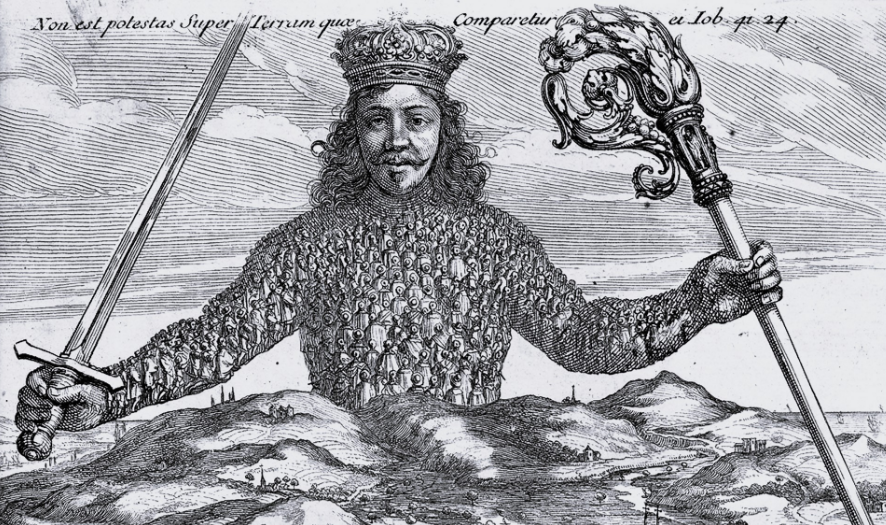
















The Unfree Get Richer
But in the 21st century, things look different. Dictatorships, as in China, appear to have learned from the failure of the Soviets. While they continue to oppress political opponents, they allow a high level of economic freedom within their borders. ~Kevin Hassett
For some people, this seems difficult to accept, but I’m not sure why it should be. Providing goods and services and participating in government are two very different things. If the government permits the former, but prohibits the latter, that might even help boost productivity (imagine how much more productive political bloggers would be at whatever they did for a living if they weren’t spending all their time blathering about politics!). As a matter of resources, time, energy and attention, it could easily be argued that participation in politics and the exercise of political freedoms are a drag on economic activity. We could acknowledge this and still say that we prefer to expend our energies on these other goods, but it makes sense that those who have no such political freedoms and no participation in government to worry about will probably devote more energy and attention to work. Authoritarian governments may decide to do economically stupid things (such as the Thai junta clamping down on moving bahts out of the country), but democratically elected governments may make their countries commit prolonged economic suicide (e.g., Venezuela) to pursue ideological and political goals. It certainly doesn’t follow that giving more people the right to vote will ensure better economic policies–to believe this is to assume that the mass of voters knows something about economic policy and can gauge and discern wisely which proposals are better than others. Usually, voter preferences tend to be very blunt: they tend to overreact to perceived failure with extreme swings to the opposite side, or they find themselves confronted with a two party consensus on economic management that permits no real change no matter what the people may or may not want.
It isn’t as if the thesis that societies with less of a participatory government could be economically more productive was entirely unsuited to the 20th century. Singapore has stood as a brilliant, shining repudiation of all theories that insist political freedom and economic freedom are somehow inextricably tied together. Arguably, Singapore is exceptional in many ways that could make it a weak example, but time and again you can find evidence that both less free and less democratic societies (not always the same thing) will enjoy greater productivity and wealth. The post-Cold War era has seen this happen on a consistent basis, as the graph in Mr. Hassett’s own article demonstrates. The disparity between unfree-but-productive and free societies has actually widened during the 2001-05 period. Of course, this involves including Malaysia (which at least plays at having elections) and Russia (which has elections that produce outcomes that liberals don’t like) among the “repressive” societies, which will definitely boost the numbers against the free and the democratic.
Be Like Ike
Will the 2008 election pit an Eisenhower Democrat against a Truman Republican? Now that would be an interesting debate. ~Michael Lind
Yes, it would be, if there were any Eisenhower Democrats. One actually searches in vain for such people in the current presidential field. Jim Webb might qualify, but he isn’t running.
Mr. Lind’s article is right in its analysis of the GOP’s abandonment of most of its inherited views about foreign policy and war, and he offers a useful political explanation for why the GOP’s foreign policy has shifted as its constituencies and membership have changed over the decades. Though the incorporation of traditionally more non-interventionist Southerners and fundamentalists into the coalition should have blunted the influence of interventionist foreign policy thinkers on the GOP, the “Jacksonian” constituencies can be counted on to back a war to the hilt once it has started and so have functioned as the main supporters of the sorts of policies that they would have decried as wasteful and crazy just ten years ago when carried out by the other party. Neocons and Southerners don’t explain everything, either, since much of the GOP leadership remains in culture and background very much the product of the Eastern Establishment and possesses the same meddlesome internationalist perspective of the old Northeastern Republicans. If the party leadership were the product of Middle America–fat chance, that–it is less likely that the same policies would have gained as much of a following among them. The establishment types tend to be the “realists” in the party, but even as “realists” they are not really any less committed to hegemony and serve as rational enablers of the more dangerous enthusiasts for foreign adventurism.
leave a comment
Dialectic, Universalism, Propaganda
Dr. Dalrymple, sometimes TAC contributor and a thoughtful man, has an article in The New English Review comparing the thought of Marx and Qutb. He does hit on some similarities, which are the similarities of all utopianisms, but I am concerned that this sort of argument pave the way for the invention of the no less ridiculous idea of “Islamomarxism.” Are we really unable to approach the thought of a Sayyid Qutb without relying on the clumsy and inappropriate frameworks of 19th and 20th century European political thought? Are we incapable of seeing Qutb as an exponent of a religion? Of course, part of his religion involves a call to political power and the exercise of that power, but all of these things he advocates for reasons of his religion based on the requirements–as he sees them–of his religion. Trying to interpret it through the lens of secular ideologies will not get us very far.
But then there was an item that caught my attention. Dr. Dalrymple writes:
Is this Marx or Qutb speaking:
[there] is a natural struggle between two systems which cannot co-exist for long.
The answer is Qutb, but Dr. Dalrymple also notes the striking similarity between this statement and those of Marx and Marxists down through the years. However, this is not really evidence of some deeper affinity between Qutb and Marx. It is a reflection of the Manichean rhetoric employed by all fanatics and modern gnostics who insist on realising their version of the Kingdom here and now. You can see it in Lincoln’s claims that the Union cannot endure “half slave and half free.” Why couldn’t it endure? Because one side is going to insist that the other half cannot continue as it has been going. The impulse of the Freisinnigen is to “rationalise” everything and make uniform standards everywhere they can. (The same mentality appears whenever someone believes that such-and-such an issue is “too important” to be left to the states or local communities, which is basically a statement that federalism and decentralism are only good for handling minor and insignificant things, which is to doubly insult both.) If such-and-such a thing is intolerable or unacceptable in Maine, it must be considered so in Mississippi, and not just in Mississippi, but also eventually even in Mauritania and the Maldives. Presumably, infant car seat regulations in Bolivia are not up to code–taken to an extreme, the freethinker will consider this his problem, just as Obama believes that there is nothing on earth that is not related to the national security of the United States.
The entire notion of Iraq serving as the model of democratic reform leading to the regional transformation of the Near East is based on a related view that if there is one “successful” case of democratisation in a region, it will automatically spread and reproduce itself in neighbouring countries, as if political ideas and institutions were like viruses that could spread in this fashion. Indeed, democratists almost have to think of democracy as a kind of blight that will attack a monoculture of uniform despotism, simply wiping it out wherever it goes, which naturally takes no account of the diversity of cultures and peoples in the countries that they are trying to democratise. It might seem strange that democratists are probably the least qualified to spread democracy around the world, but it seems to be the case. Why? Since they don’t seem terribly interested in the rest of the world for what it is, but simply as a platform where they can demonstrate their ideology in action, they are uniquely ill-suited to conveying democracy as anything other than a universalist project that aims to obliterate local customs and institutions. This has very often been the flaw of advocates of democracy, who often express some degree of contempt for the customs and traditions of peoples who do not have democratic regimes. They vaguely sense that the local culture has inhibited the establishment of democracy, but instead of finding some way to adapt their model to local circumstances they will often seek to uproot whatever they regard as an impediment, ensuring that democracy is thereafter associated in the minds of the locals with cultural and political radicalism that deeply offends them.
The old joke that the puritan is the person who is worried that somewhere someone is having a good time is only partly right. It is not just the enjoyment of others that such people cannot stand. The real freethinking Yankee is the person who is worried that somewhere someone is thinking in a way that is not identical to his own thinking. Difference troubles the freethinking mentality, and the untidiness of non-systematic views of the world drives the freethinker crazy.
You can see the same “no coexistence” rhetoric in WWII propaganda films that claimed that the world cannot be partly enslaved and partly free, which is even sillier, since it was entirely possible for decades and decades for a few free republics and constitutional monarchies to exist and coexist with the rest of the world that was subjected to some form of autocratic rule. This would have continued to be true, regardless of the outcome of WWII, but as with all good propaganda the message had to be one that related distant, abstract dangers in immediately threatening ways. If Germany attacks Russia, how does that concern you? In reality, it often doesn’t concern you. But if you are convinced of the danger of Germany eventually attacking you, then you become very attentive to the problem of Germany.
Most people are unconcerned if there is or is not freedom on the other side of the planet–what concerns them is when that lack of freedom supposedly endangers their security. If someone could plausibly argue that inaction with respect to Darfur would lead in a fairly direct way to a bomb going off in their local mall, people would become a bit more anxious about helping Darfuris. This is actually a fairly normal response; people who lie awake at night worrying about Darfuri villagers are highly atypical and frankly rather odd people.
In a related way, this is why–indeed it must be why–interventionists continue to spout the obvious lie that “they hate us for our freedom” and the associated falsehood that “democracies don’t war.” Wasting time, money and lives on democratisation only makes sense if it is seen to serve a larger purpose of security. Constantly babbling about spreading freedom only seems reasonable to national security-focused citizens if they are made to believe that we have enemies because of who we are and that we can only eliminate those enemies by making their own societies more like how we are. The government needs to make the conflict ideological and promise that it has an ideological solution, which theoretically reaffirms domestic confidence in our own ideals and also links what is an entirely security-related matter to ideological definitions. Security threats have not come about because of certain policies or lapses in defense, but because of people opposed to our very existence and way of life. In other words, as the propagandists tell it, the only reason why these other societies produce hostile forces is that those societies are insufficiently identical with us in their political norms and institutions. If we make them more identical with us, there will have to be peace! It is so logical that the stupidity of it doesn’t seem to occur to all that many people who support the government’s decisions. The problem arises when policymakers believe their own propaganda and think that they actually can solve the problem of jihadi hostility by promoting democracy and freedom, when the lack of these was never the cause. They mixed up the domestic propaganda message with the actual policy analysis (assuming that there was any analysis with which to confuse it), and hijinks ensued.
The end of the Cold War with all its attendant resurgences of nationalism, ethnicity, religion and political diversity–things that had been largely artificially suppressed or managed by the two rival systems–should have put an end to this kind of homogenising, rationalising thinking once and for all, but instead the democratists took the collapse of communism as an invitation to make the world in the democratists’ image. Incidentally, there are two principally ideological reasons why democratists are so furious with Putin and Chavez: they have shown that real mass democracy can and will yield authoritarian, illiberal governments in societies that do not have a politically liberal culture appropriate to constitutional government and, furthermore, that the cookie-cutter model the democratists would impose all around the world is wildly unpopular in large parts of the world. Left populism in Latin America is a very public repudiation of everything democratists have claimed about democracy: that it is inherently peaceful, prone to encouraging freedom and likely to produce more pro-American regimes. To maintain the obvious contradiction between their ideology and reality, they must massage the reality and describe Russia and Venezuela as “failed” democracies, because it can never be admitted that fully functioning democracies can create what is being created in Russia and Venezuela. (Occasionally, some democratists will see the flaw in this sort of argument and acknowledge that when they say democracy they don’t just mean ‘majority rule’ and political equality of citizens–which is what democracy actually means–but include under that label the whole array of liberal constitutional arrangements that have, of course, absolutely nothing to do with democracy.) This is fine, except that their democracies are doing what the ancients knew democracies were best at doing: attacking the rich, creating chaos and leading directly to despotism.
The impulse to homogenise and unify on the home front and eliminate rival systems elsewhere is the impulse of every kind of ideologue, which is why conservatives and men of the Right who love variety, the local, the particular and the differences of place, custom and culture are dead-set against every kind of ideology and pursue a persuasion, a mentality and a way of life that will not be governed by the dreadful categories of ideological thinking.
leave a comment
Predictable
Has Hitchens devastated religious faith, as he plainly thinks he has? I’m glad he’s entertaining – but is he persuasive? Does his book confirm you in your nonbelief, or leave questions unaddressed? Hitchens takes these questions seriously – shouldn’t the reviewer, whether an atheist, a believer, or somewhere in between, have the decency to do the same?
Ah, but it’s Kinsley on Hitchens. Brilliant! ~Ross Douthat
Ross covers quite well the bizarre quality of Kinsley’s review, which is that it doesn’t actually review the book very much at all, but instead uses the book as an excuse to chat about what a very “interesting!!!” person Christopher Hitchens is. As far as the book is concerned, the main thing that interests Kinsley about it is that it does not fit the pattern of deliberately provocative self-contradiction that makes so many journalists and pundits swoon, which may just be the most deliberately provocative act Hitchens could have done. Here he is, a political columnist and writer, and he has written a book in which he does not reinvent his entire worldview, so that he remains more “unpredictable” than if he had. Earnestly consistent conviction is the new authenticity. Interesting!
But Kinsley’s review flops in more ways than this. He describes Hitchens’ recent career as if many of his moves have been surprising or counterintuitive:
Hitchens had seemed to be solving this problem by turning his conversion into an ideological “Dance of the Seven Veils.” Long ago he came out against abortion. Interesting! Then he discovered and made quite a kosher meal of the fact that his mother, deceased, was Jewish, which under Jewish law meant he himself was Jewish. Interesting!! (He was notorious at the time for his anti-Zionist sympathies.) In the 1990s, Hitchens was virulently, and somewhat inexplicably, hostile to President Bill Clinton. Interesting!!! You would have thought that Clinton’s decadence would have positively appealed to Hitchens. Finally and recently, he became the most (possibly the only) intellectually serious non-neocon supporter of George W. Bush’s Iraq war. Interesting!!!!
There is something strangely, indescribably fitting in the allusion that compares Hitchens to a morally insane woman who murders the man she loves (at least as Salome tells the story), but after that Kinsley doesn’t do very well. Except for the abortion bit, there is nothing particularly interesting about any of these things. They only seem strange if you believe that to acknowledge Jewish ancestry entails a duty to become Zionist or if you think being on the left entails supporting Democratic politicians and opposing aggressive war, which hard-core leftists of Hitchens’ sort have never believed.
Is it strange or “interesting!!!” that a man who venerates the memory of Leon Trotsky should be disgusted by the legendary centrist triangulator and ultimate politician of convenience? Hitchens has quite open admiration for the Bolshevik murderer, so he could hardly be impressed by the milquetoast liberalism of Clinton. I remember how much he hated Clinton’s attack on the Sudan, not so much because he opposed military adventurism (he quite likes it) or random violence against civilians (if it’s in a “good” cause, he’s not bothered) but because I think he saw it simply as Westerners beating up on a Third World country. His loathing of the West at that time seems to have outweighed his loathing of Islam, but recent years have managed to make them about the same. As tempting as it might be to make his Trotsky admiration into an explanation for why he embraced the Iraq war, that certainly doesn’t do it justice. Hitchens has long been obsessed about the Kurds, just as any good leftist should be (sympathy for the Kurds unites such diverse lefties as Peretz and George Galloway), and this has coloured his entire view of Iraq policy; he wrote, no doubt quite seriously, of the “anti-fascist” character of the Iraq war. In fact, the only thing remarkable about Hitchens’ support for the Iraq war is that he should be one of the very few leftists who still support it in one way or another. Hitchens has remained faithful to the export of revolution and death to a degree that makes him seem strange and unpredictable to liberals who have suddenly discovered their inner realist only after a Republican has embarked on a classic liberal interventionist project. Hitchens’ grim, remorseless consistency on killing people for their own good reveals the opportunism and rather crass partisan reflexes of so many center-left war critics. If it has aligned him more with the neocons, this is simply because they also routinely agree with interventionist wars regardless of the party affiliation of the President launching them.
leave a comment
Language Matters
Max Boot actually makes the right, if obvious, point that we need more trained linguists in the government and in the military. How far away is the goal? Pretty far:
We won’t close our knowledge gap until a Foreign Area Officer—an officer who has dedicated much of his career to understanding a particular region—gets at least as much respect within his service as a tank commander or fighter pilot.
If we were speculating about why “we haven’t launched a crash program to teach thousands of young people Near Eastern languages” (Dari, Pashto and Urdu aren’t really Near Eastern*, but we’ll let that go this time), a few answers present themselves.
One is that the administration has remained in many ways so tied to the earlier “liberation” approach that it does not think there is a real need to teach Americans these languages. Why go to the trouble to learn Dari or Pashto, when Afghans are glorying in democratic freedom and don’t need us to talk to them? This would be a result of the contradictory impulse to dominate a region as hegemonists, but to insist all the time that there is no hint of colonialism at work. You probably don’t teach a lot of people to learn these languages unless you see your involvement in the relevant countries being very long-term. So perhaps no one is preparing for the “Long War,” because they don’t think the war will actually be all that long (or perhaps they hope to project power via bases, but avoid local entanglements as much as possible). Perhaps they still expect, in spite of everything, for the local people to figure out alien systems of government, effective administration and establish some reasonable level of order and security without much in the way of assistance and advice (except as can be given in English to prominent exiles or those among the locals who can speak English). However, this seems a less likely answer.
Another possibile answer for the lack of extensive language training programs is simply that the administration is filled with officials either so contemptuous of the rest of the world or so ignorant of much of it that they do not appreciate the importance of having an expanded corps of linguists in these languages. Mr. Bush is famously intellectually incurious, so the initiative wouldn’t come from him. One can almost imagine him saying to Secretary Rice, “Why can’t all those people just speak English?” Secretary Rice would seem at first like the better candidate to push for improving language training, at least as far as her responsibility at State goes, but she is famously not a Near or Middle Eastern expert and might not have given a lot of thought to the variety and range of different languages that need to be sponsored to support operations across these regions. You would think a Robert Gates (no stranger to collaborating with foreign rebels is he) would press for this more. Perhaps he has privately tried and run up against the uncomprehending, baffled looks of other members of the administration?
The third answer is simply that of incompetence: everyone in the administration knows how important this is, they really want to take it seriously, but haven’t much sense of how to go about training a lot more linguists. Unfortunately, given the track record of this administration, this seems the most likely explanation, as attractive as the other two might seem.
Reporters have had fun quizzing top officials on the differences between Islamic sects and the affiliation of relevant jihadis, showing in the process that many of the top people in relevant areas of policy and oversight have no idea what goes on “over there.” I think they should go back and corner top officials on these language questions. Corner the heads of Senate Foreign Relations or House Armed Services. “Mr. Chairman, what are the major languages that they speak in Afghanistan?” If one gets even one of them right, ask: “What kind of a language is that? What other languages is it related to? Which groups speak that language?” And so on. This would be very elementary, but it might just embarrass enough prominent people that they would feel the need to make more of an effort in boosting these language training programs.
I like foreign languages. While I am probably too much of dilettante and not really good enough at many of the languages I have worked on, I would like to think that I know something about their value and importance, not simply for the immediate purpose of communication, but for understanding how other peoples around the world think and understanding what other peoples think is important. The apparent initial indifference of the government to this matter, and its sluggish response up till this point, is just one more indictment against the competence of the administration and the entire apparatus of the federal government.
*I have typically referred distinctly to the Near East and the Middle East as different regions, because they are different regions. This follows an older, European categorisation of the Orient into Near, Middle and Far. This is reflected in many modern European languages: the Near Eastern region is still described as der naehen Osten, le Proche Orient, etc. For whatever reason, Americans collapsed the Near and Middle East together, so that we are treated to the bizarre descriptions of places in the Levant as being “Middle Eastern” and frequent references to Israel-Palestine negotiations as pursuit of “peace in the Middle East.” Perhaps Americans call the Near East the Middle East because some of us already regard Europe as the “Near East”? Who knows?
It has become so widespread and conventional that it is a bit hopeless to try to change the usage, but Boot’s usage above is doubly odd, since it conflates everything in the opposite direction and makes everything–including languages found principally in Pakistan and India–“Near Eastern,” which is no more correct than the other confusion. It seems to me that the logical point dividing the two would be somewhere between modern Iran and Pakistan. Arguably, Iran might be classed as part of the Middle East instead, except that I believe Oriental Studies has usually taken Persia to be Near Eastern. Yes, there is a certain arbitrariness in drawing the line, but for the sake of geographical accuracy it does need to be drawn somewhere.
leave a comment
If Iraq’s Parliament Was On Vacation, Would Anyone Notice?
So Cheney went over to Iraq to lay down the law, er, consult with the sovereign and democratic government of an independent and free Iraq recently liberated from the cruel grasp of the tyrant (cue inspiring music in the background). While he was on his proconsular tour, I mean, diplomatic mission, U.S officials complained about the plans of the Iraqi parliament to adjourn for two months. Arkin from the Post gives some details:
“For the Iraqi parliament to take a two-month vacation in the middle of summer is impossible to understand,” U.S. Ambassador Ryan Crocker said. Secretary of Defense Robert M. Gates also said that he pressed for the recess to be canceled. Sen. John Warner (R-VA) said a two-month recess is “not acceptable.”
This news of proposed adjournment will come as something of a shock to many Americans, who were scarcely aware that the Iraqi parliament was ever in session, since they seem constitutionally incapable of doing anything at all. At last notice for those who do follow Iraqi politics closely, there was the development that the Sunni bloc was finally fed up with waiting to vote on the amendments that they want for the constitution as a way to guarantee relatively less federalism and to ensure some oil-sharing from the oil-rich regions that they do not control. They were so frustrated that they were prepared to withdraw entirely. This makes it less clear how remaining in session during the torridly hot summer months in Baghdad will accomplish anything, except that it will maintain the illusion that the Iraqi government is trying to fix the unfixable and solve the intractable. As Arkin points out, however, there is nothing about this parliament that suggests that the main problem is the forthcoming summer break. The main problem is the structure and political makeup of the Iraqi parliament, which is an extension of the bigger problem, which some people like to call “Iraq.”
Iraq has become one of those cases that vindicates the old saw that “if there is no solution, there is no problem.” Optimists need to stop expecting solutions, and they need to stop trying to force solutions to things that have no solution. Above all, they need to stop being optimists.
leave a comment
Politics!
Shorter Podhoretz: “The 11 House Republicans who met with Bush on Iraq were motivated by politics, and this is entirely normal for politicians. Did I mention that they are motivated by political concerns, which tend to be political in nature?”
leave a comment
Petraeus Gets It
In everything we do, we must observe the standards and values that dictate that we treat noncombatants and detainees with dignity and respect. ~Gen. David Petraeus
leave a comment
Who Can Forget The Encyclical “Salman Rushdie Must Die”?
Religious leaders from all the major faiths, who disagree on some of the most fundamental questions, managed to put aside their differences to agree that Rushdie had it coming. ~Michael Kinsley
Right. I believe the Catholics began collecting a tithe to pay for hitmen to take him out. This is insane. It is one thing to say that many other religious leaders may have said (I have no idea whether they had anything to say about the matter one way or the other, but I am extremely skeptical that they said anything) that Rushdie was incredibly stupid to engage in militantly public apostasy from his inherited religion, given what he knew about that religion’s prescriptions for apostasy, but to say that leaders “from all the major faiths” agreed that Rushdie “had it coming” is just ridiculous.
Did the Dalai Lama say, “Rushdie really had that fatwa coming!”? Did Pope John Paul II send a note to Khomeini saying, “Nice fatwa–I agree!”? Presumably the United Methodists burned his image in effigy out of solidarity with their Muslim brethren, yes? Give me a break!
Incidentally, in the wild and wacky world of liberal religious tolerance, it would normally be considered a move of ecumenical generosity to side with Islamic religious authorities against those who denigrate their teachings, except when they supposedly side with those authorities against someone who has discovered the evils of religion. Ayaan Hirsi Ali, si, Western critics of Islam, no. One is an enlightened visionary breaking out of the oppressive coils of patriarchal oppression, and the others are “Islamophobic” nuts, even though they often say more or less the same things.
leave a comment
Religion: Christopher Hitchens’ Undiscovered Country
How could Christ have died for our sins, when supposedly he also did not die at all? Did the Jews not know that murder and adultery were wrong before they received the Ten Commandments, and if they did know, why was this such a wonderful gift? On a more somber note, how can the “argument from design” (that only some kind of “intelligence” could have designed anything as perfect as a human being) be reconciled with the religious practice of female genital mutilation, which posits that women, at least, as nature creates them, are not so perfect after all? Whether sallies like these give pause to the believer is a question I can’t answer. ~Michael Kinsley
For in that sleep of death what dreams may come
When we have shuffled off this mortal coil,
Must give us pause: there’s the respect
That makes calamity of so long life;
For who would bear the whips and scorns of time,
The oppressor’s wrong, the proud man’s contumely,
The pangs of despised love, the law’s delay,
The insolence of office and the spurns
That patient merit of the unworthy takes,
When he himself might his quietus make
With a bare bodkin? who would fardels bear,
To grunt and sweat under a weary life,
But that the dread of something after death,
The undiscover’d country from whose bourn
No traveller returns, puzzles the will And makes us rather bear those ills we have
Than fly to others that we know not of?
Michael Kinsley can often be interesting (or is that “interesting!”?), but here his credulity undoes him. No, these points give believers no pause, because they are not serious points. They are the sorts of points one expects to hear from Jodie Foster’s character in Contact or a fifth grader who thinks he has discovered–for the first time ever–that there are differences between the different Gospels. It’s a good thing we have folks like Hitchens to pick up on the loose threads, since no Christian has ever thought about any of this, but has gone about in mindless “god-worship.” Personally, I prefer the phrase “god-worship” to religion, since it makes it very clear what cannot be included as religion.
Are these questions from Hitchens’ book, as related by Kinsley, actually at all interesting? Are they even accurate statements about the beliefs he purports to destroy in a solvent of Hitchensian ridicule? Well, no and no. Leave it to an atheist to not understand the purpose of the covenant, which was not primarily ethical lesson-giving (rather obviously, murder was considered a grave sin from the time of Cain, but why worry yourself over details after having thrown back a few too many drinks?). The covenant, represented in the giving of the Law, was the establishment of what was to be an eternal bond between God and His People. The Law was the limit or the boundary set for those who would distinguish themselves as the chosen of God. That is one point of the Law and the giving of the Law. The keeping of the Law involves not murdering and not committing adultery, but the far more significant and prioritised Commandments concern the worship of the One God, reverence for His Holy Name and the rejection of idols. Obviously, the Israelites did need to be told about these things, because they had either never known them or had forgotten them during the sojourn in Egypt. Try to keep up, Hitchens.
Christ, of course, did die in His humanity, and the reality of His death is a point that the Gospels go to some lengths to insist upon. Again, it is the paradox of the God-become-man dying that formed one of the great difficulties of Christian theology, but it was not some blind spot that Christians have never noticed. Christians have come to account for it by stressing that it was in the flesh that Christ suffered and died, but it was nonetheless the Word’s own flesh that suffered and died. Paradoxically, it can be said by traditional Christians that God died upon the Cross, but it will be said at the same time that God qua God is impassible and immortal. It’s a complicated idea, and no doubt it causes trouble for Hitchens, but one thing it isn’t is some unaccounted for contradiction. Hitchens’ objection isn’t new or clever or interesting; it is a sort of inverted Docetism, where he denies the reality of the Incarnation by attacking the divinity of Christ rather than the reality of the flesh. Are African and Muslim practitioners of female gential mutilation paid-up members of the Discovery Institute? That would be interesting if it were true, but we all know it isn’t. When female-genital mutilators begin citing the “argument from design,” then we can start heeding something that Hitchens says.
Why not argue against real adversaries rather than strawmen? Why not take on the main challenge, rather than kick around the easy targets of Mormonism and Islam, as he does in the other excerpts available at Slate? Could it be that the bold and flamboyant Hitchens cannot hack it against real opposition?
leave a comment