It’s Not Springsteen’s America Anymore
The “affordability crisis” is also a crisis of national unity.
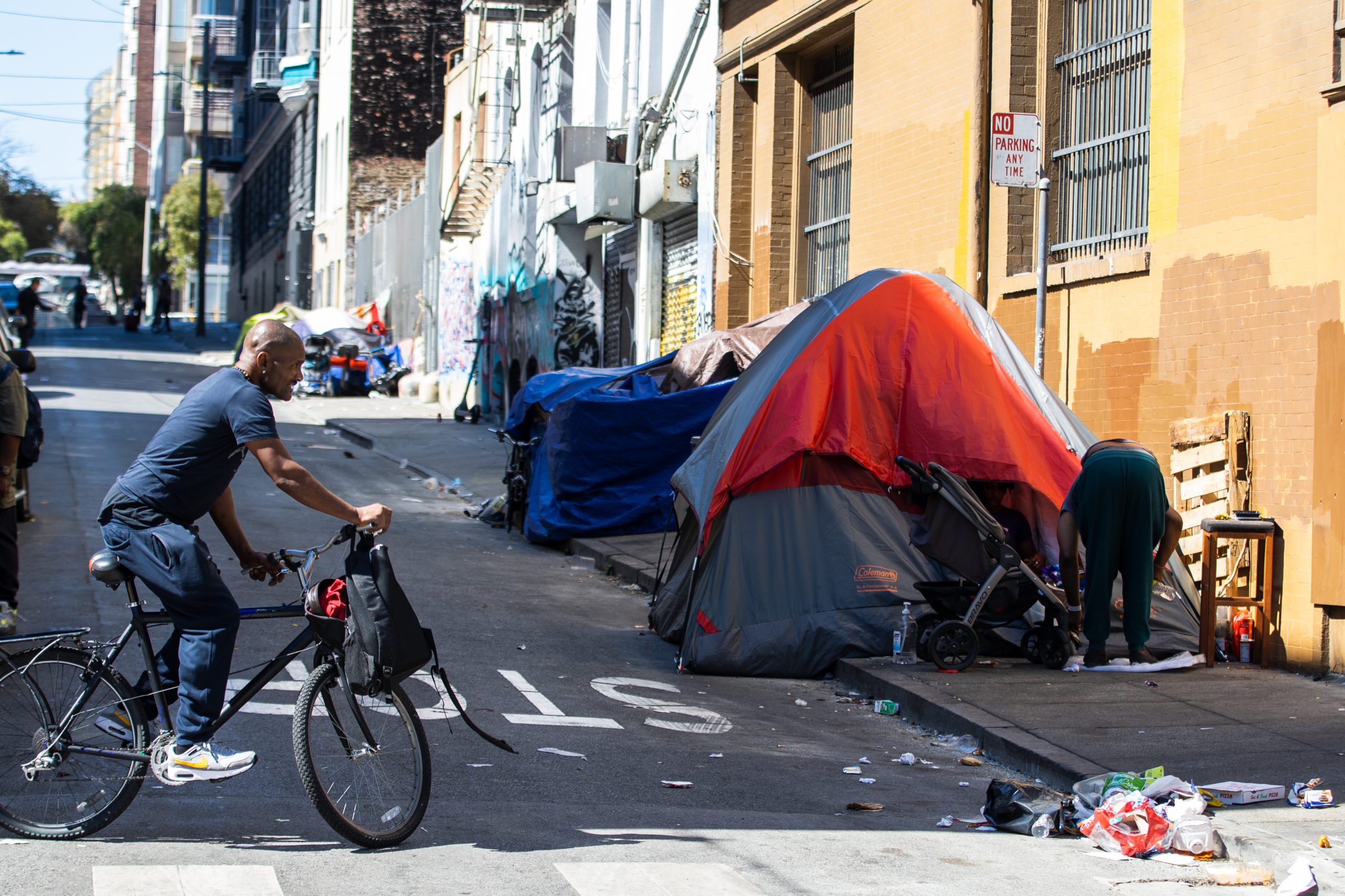

Everyone’s talking about “affordability,” and for good reason. Too many Americans die of fentanyl overdoses because it is better than acknowledging their lives had fallen somehow even another level closer to hell. This isn’t Springsteen’s America anymore.
These ghosts of our nation drove overdose deaths to record highs during the pandemic. More than 100,000 Americans ODed in a 12-month period ending in April 2021, up almost 30 percent from the prior year. The majority of these deaths of despair, about 70 percent, were among men between the ages of 25 and 54, men who should be creating or influencing or building cars or welding high steel. Fortunately, fatal overdoses are in decline, though they still claim more Americans each year than they did in decades past.
Babies are dying too. Overall, the U.S. has the worst infant mortality rate in the industrial world. If the country’s five worst states made up their own nation, it’d be a world “leader,” where one out of five women of reproductive age live with a high risk of death and other poor maternal health outcomes, such as postpartum hemorrhage, pre-eclampsia, and preterm birth. It’s unsurprising that the places where babies die also have poor overall health, high rates of substance abuse, and mental health problems. No one mentioned race, but you're thinking it. Hold that thought.
I know a maternal healthcare worker in a “border zone,” a so-so neighborhood near a very rich city. She has two broad groups of clients, roughly half middle-class women with an education and insurance and half women on Medicaid.
One group starts prenatal care as soon as they learn they are pregnant (and they test at home to learn ASAP), and one group shows up in the second trimester for a first visit after they can’t ignore the baby bump anymore. One group has been eating healthy since trying to conceive, while the other drinks and takes drugs and got pregnant by “accident.” One group takes their prenatal role as a duty, the first step in a journey that will lead through enrichment classes and Mandarin lessons and a “good school,” and one sees it as an inconvenience. If you were to parse infant mortality statistics along this divide, one group would rank below many developing nations. There are now two Americas.
Many people who talk about the “two Americas” will at this point invoke race. “To solve a complex problem like maternal mortality, we must better understand why mothers, especially those of color, are dying at higher rates,” says the NGO which compiled some of the latest maternity data. In its own reporting, the New York Times tries hard not to make it all about race, but they just can't help themselves. They see everything through that lens.
But while you can draw racial lines, the reality is that, as in the developing world, we have two disparate economies living near but not with each other. They have very little in common other than geographic proximity. They may be coded by race but they are separated by money and education and the presence of hope. Assigning causality by race is as speculative as it is attractive to those who want that simple answer for everything from how Trump got elected to whether one can move more Nikes by hiring Colin Kaepernick as a spokesman.
Hawaii is a fine laboratory example for looking deeper into the economic roots of Third World America because it removes race as the easy, go-to driver of all things bad. Hawaii has no racial majority. The largest group consists of the collective Asians at 38 percent, comprising Chinese, Japanese, Korean, and others, who often have little in common other than the census category. Only 24 percent of the population is white and 10 percent native Hawaiian, with the rest a broad spread of ethnicities including 23 percent who are multi-ethnic. It is hard to find a simple BLM answer here, or to isolate the mythical “POC” when almost everyone is of color.
That’s the new world here in Hawaii, where abject poverty (some call the place West Virginia with better weather) lives alongside incredible wealth. The stark disparity (a bad joke would label it black and white) makes broad poverty statistics suspect; a millionaire and a homeless person have an average net worth of $500,000. But there is plenty to see off the beaches: large homeless encampments right out of Grapes of Wrath.
For the last nine years, Hawaii spent more on public welfare benefits, about 20 percent of the state budget, than it did on education. More than one out of 10 people in Hawaii get food stamps (SNAP), though the number is higher for free food if you include free lunches at school and those for the elderly. Fewer working people means fewer tax-paying people, and Hawaii already vies with California for the nation’s highest state income tax. The state’s populace exists in parallel economic realities where segregation happens not by color but by income. The cops have devolved into a militarized force that essentially manages the social results of the inequality.
If you want to see it for yourself, do some grocery shopping in Honolulu. At Whole Foods in swanky Ward Village, nearly everyone has Amazon Prime and pays electronically. There is a huge cheese and wine section and a meat counter where the butcher chats with you. A sign explains how the cows were raised. At the nearby seen-better-days Times Market, the signs say “no checks” and “we take SNAP,” and the ground beef of unknown origin comes in five-pound packs, the meat tinged slightly greyish-green. If Whole Foods has anything in a can, it came from Italy. Times has very limited fresh anything.
You could walk from one store to the other in 10 minutes, but no one would. You could investigate the infant mortality rates for each clientele, but it’s pretty clear your guess would be roughly correct. You could do the same with reading levels for the public high schools on the island and the Punahou School, the private high school Barack Obama graduated from, his tuition paid by his well-to-do grandparents. You could visit the “nice” CVS where someone asks if they can help you, and then the one where they lock up the deodorant and watch you from the aisle cap to make sure you don’t steal something else.
Subscribe Today
Get daily emails in your inbox
And if you think Hawaii is unique in featuring economic inequality that doesn’t reduce to racial difference, check out Nantucket, where the rich spend vacation time. Joe Biden as president dropped by the $30 million Nantucket estate owned by private equity billionaire David Rubenstein. Meanwhile, outside the mansion’s gates, half the local population who are not multi-millionaires struggle to pay their rent. They are close to 90 percent white.
So, how to account for inequality problems in diverse Hawaii and almost all-white Nantucket? Hawaii is what liberals say we’re supposed to be aiming at, a fully diverse world where whites are a minority, while Nantucket is what the hard right longs for America to be. The same problems of economic inequality exist and can't be conveniently blamed on the grievance narrative of choice.
If you are waiting for the solution paragraph here, you will be disappointed. There’s probably a polysyllabic German word for what all this is: a set of problems without a solution because no one really wants to resolve them. It would be a word that describes modern America, a country where some bake bread and play board games to pass the time and others OD on fentanyl and lose their children during their infancy. Every day we blame all this on the ravages of slavery or on systemic racism, we simply allow that gap to grow wider. Almost as if someone wanted it that way.