Boris’s Big Brexit Wedge
Yesterday’s UK general election saw Boris Johnson win in a landslide, and Jeremy Corbyn, that socialist “beardie-weirdie” (as the conservatives of the 1960s used to say), surely bears some of the blame. His approval ratings are so underwater you need James Cameron to see them: 61 percent of the British public view him negatively, according to YouGov. His brushes with antisemitism, his refusal to sing Britain’s national anthem, the repellant fanaticism of his online supporters—all of these things surely took their toll on Labour, allowing the Tories to amass their greatest share of the vote since Margaret Thatcher won in 1987.
Still, there’s something else at work here. Certain elites on both sides of the Atlantic have seized on Corbyn as a scapegoat. Look away from Brexit, they say, the real reason Britain was deluged in Conservative blue is because Corbyn’s crunchy radicalism turned off key Labour working-class constituencies in the north. And again, that’s true to a point. Corbyn appears to be the most calamitous Labour leader since Michael Foot. But this explanation alone is too facile. It allows centrist elites, who have long disdained Corbyn, to wriggle out from under the full significance of last night.
The fact is that this election was an affirmation of the Brexit referendum taken in 2016, in which Britain chose to depart the European Union by a margin of four points. The polling on this subject has admittedly been mixed (some surveys have found buyer’s remorse, while others show that most Brits still want to leave). But the tenor of the campaign, at least from the Conservative standpoint, has been stark and unmistakeable. As even The Guardian admits:
Boris Johnson’s message that he would “get Brexit done”, repeated over and over again, appears to have resonated with a public weary of the lack of resolution over the UK leaving the EU.
He stressed throughout the campaign that he would sort out the issue quickly with his “oven-ready” deal, even though the UK is heading for years of trade negotiations and uncertainty at the end of next year when the transition period comes to an end. And he repeatedly stressed the prospect of a Labour government leading to another referendum.
Also worth a glance:
a couple of basic things to remember when looking at this chart
– Leave voters live in both remain and leave areas
– More leave voters live in leave areas
– Polls ahead of the election suggested Labour had mostly hung onto remain voters but lost ground amongst leavers pic.twitter.com/lkmAdlRS25— Jon Stone (@joncstone) December 13, 2019
If Britain is really lousy with Remainers who couldn’t quite bring themselves to vote for Corbyn, as is being suggested, then they had another option: the Liberal Democrats. The Lib Dems actually backed Johnson’s call for an election, hoping to turn the contest into another Leave/Remain duel. Their candidates, under party leader Jo Swinson, campaigned unabashedly against Brexit, promising to scrap the Article 50 invocation altogether. If you wanted Brexit halted in its tracks, this was the party for you—and they got wiped out. The Lib Dems will return to Parliament with fewer members than they had before. Swinson lost her seat.
The political trend at work here was the same as it was three years ago, that of the political left being yanked between its working-class and metropolitan constituencies. Having detected this and thrown the dice, Boris has now benefitted from this bifurcation even more than Trump did, with Brexit the lethal wedge driving Labour apart. And he knows it. “With this election I think we’ve put an end to all those miserable threats of a second referendum,” he said this morning. And he has. The reason is that a second referendum just happened, in a sense, and his side won.
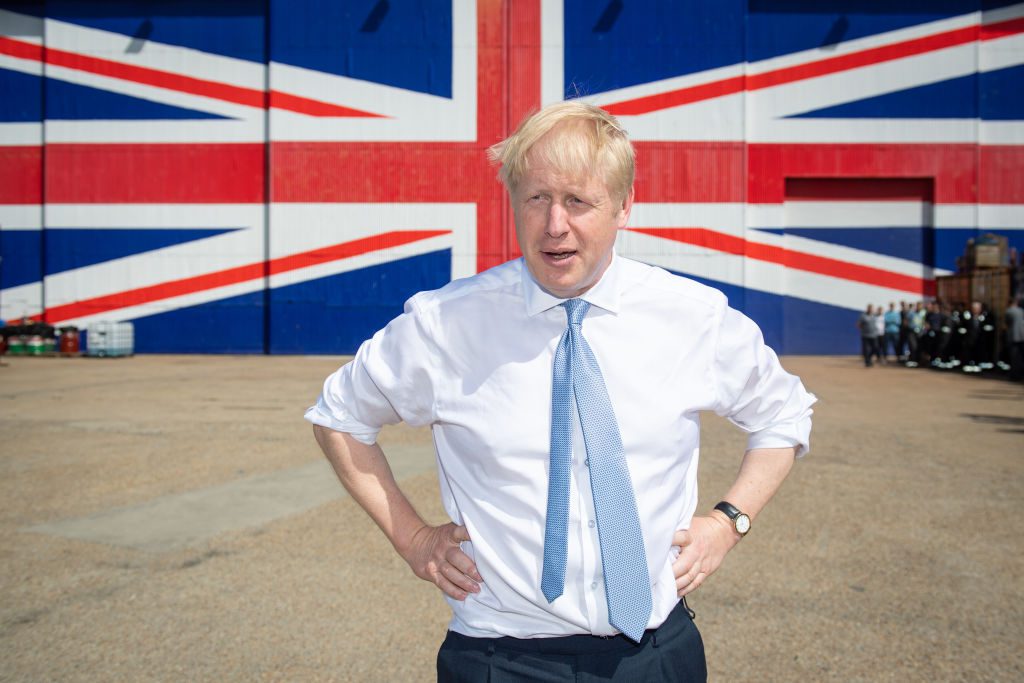
This election should underscore the obvious: at least in the short term, the political left and center are in far worse positions than the political right. In the meantime, the mother country has a new fearless leader. All hail: