James P. Pinkerton is an author and contributing editor at The American Conservative. He served as a White House policy aide to both Presidents Ronald Reagan and George H.W. Bush.
Facebook Hands the Keys to Uncle Sam
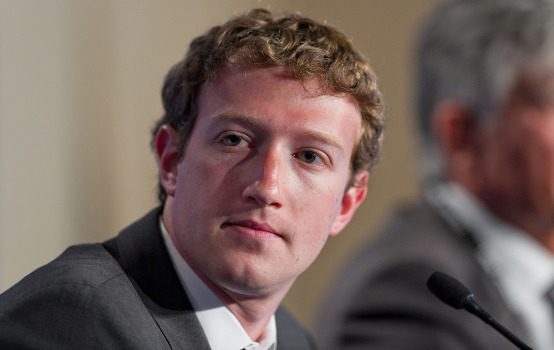
Mark Zuckerberg now says Big Government needs to regulate social media speech and norms. Why now?
So Apple, too, wants to stream everything to you. The company has created Apple TV+ to compete with Netflix, Amazon Prime, and all the other streaming outfits. In addition, it wants to stream music, the printed word, and even games.
These days, it seems that everyone but the Amish are living their lives online. That is, they go there to find not just news and entertainment, not just e-commerce, but also digital assistance (Siri and Alexa), physical assistance (Task Rabbit, Fiverr), and transportation (Uber and Lyft). Why, there’s even Meural, which brings fine art into the home—digitally, for a monthly fee. And in each instance, of course, the digital company knows exactly what you’ve bought, done, or otherwise been up to.
Indeed, even those who don’t use any of these services are still Netizens, through their credit cards, their smartphones, their web browsers, their cable TV subscriptions, and other digital devices, including security gadgets in their homes, GPS and black boxes in their cars, security cameras in public spaces, keystroke monitors in the workplace, and the greatest data grab of them all, the Internet of Things.
Come to think of it, even the Amish, seemingly pastoral in their analog autonomy, can’t truly stay off the grid. They’re being tracked any time they interact with the government, which in turn puts their data, such as it is, in the same bucket as everyone else’s.
All this digital subsuming, of course, is legal. As for what’s illegal, just in 2018, the top 10 data breaches affected 2.5 billion people, or at least that many accounts.
Speaking of illegality so common as to barely be newsworthy, we might consider the little-noticed case of Harold Thomas Martin, the former National Security Agency employee who just pled guilty to stealing some 50 terabytes of data from the NSA over two decades. (A terabyte is 1,000 gigabytes, if that helps.)
Interestingly, Martin doesn’t seem to have done anything with the data. Unlike his former NSA colleague, Edward Snowden, Martin seems to have been content to simply hoard it, packrat-style. And so it’s also interesting that Martin—who obviously has had mental health issues—managed to get and keep multiple security clearances over the years, even as he was piling up a stash 300 times larger than Snowden’s. As one expert observed: “What has changed over the past several decades or so is that the scale of the breaches has increased tremendously. Instead of individual secrets being compromised, it often turns out that entire databases or libraries of information.”
Such is the power of digitalization, sweeping away all those analog islands of privacy, making it easy to move whole Alexandria Libraries with a click of the mouse.
So we can ask: if even the NSA can’t adequately police its data, what are the chances that the average data company hiring temps and other nomads—here in the U.S. and in scores of countries around the world—is keeping its data in good order?
In fact, data are so sloshy that one is tempted to say that these days a data leak is comparable to seawater flowing from the North Atlantic to the South Atlantic. Given the adjacency, what did you expect?
Of course, it can certainly be argued that most people don’t truly care about their privacy—or perhaps have simply given up. Moreover, it appears that many people, especially the young, see “sharing” as part of the digital deal.
For instance, there’s Venmo, the e-payment system that’s part of Paypal. According to a report in Gizmodo last year, its users didn’t seem to understand that they were “sharing” their transaction histories not just with their friends, but with the entire internet. Or maybe users did know and they were fine with such disclosure. Perhaps, in the spirit of Andy Warhol, they were happy to think their digital lives would be famous for 15 minutes. In any case, Venmo is still in business.
Yet at the same time, there’s been plenty of pushback from the political system. That is, for reasons best explained by political scientists—it often goes under the name of social choice theory—personal choices are not the same as political choices. So even those whose personal actions bespeak a laissez-faire attitude toward privacy might nonetheless be militant about it in the political sphere.
On that score, the hottest digital button these days is Facebook. Looking back on the company’s last decade of tumultuous growth, one might conclude that while it was okay for the 2008 Obama campaign to use Facebook to access everyone’s information, it was not okay for the 2016 Trump campaign to do so.
Yet for a while there, Facebook’s Mark Zuckerberg didn’t seem to understand that the ’16 election was being viewed differently from the ’08 election. Immediately after Trump’s victory, Zuck insisted that there was nothing to worry about. Yet within a year, he acknowledged the need to do something. Furthermore, in April 2018, he found himself testifying on Capitol Hill, touting his new commitment to good digital citizenship.
In fact, Facebook had by then launched a fascinating political science experiment of its own—a worldwide instant shadow government. That is, it hired lawyers to determine appropriate speech codes, and then it contracted with tens of thousands of low-paid content monitors to enforce those codes.
In other words, it was as if all the arguments about speech ever made anywhere—free speech, hate speech, speech that enlightens, speech that befogs—were summarized and then crammed into a thumb drive, so that mostly young people, consuming lots of energy drinks and pizza, could dope out appropriate rules for the planet’s digital discourse. (In a way, the nation-building hubris of the Coalition Provisional Authority in Iraq 15 years ago—all that planning for a better world—was weirdly recaptured in conference rooms in Menlo Park, California. Happily for them, Facebookers were spared the bloody folly that ensued.)
Still, nobody was happy with Facebook’s effort, and so now, Zuckerberg—a man known for his imperial ambition—is backing away from the once-beaconing vision of globe-girdling enforcement. Instead, he’s now anchoring himself in more realistic political wisdom. In particular, he wants to hand off the problem to others, taking the onus off his social network. That revised goal was clear enough in a March 30 op-ed in The Washington Post, in which Zuckerberg called for help on a number of issues, including content monitoring:
One idea is for third-party bodies to set standards governing the distribution of harmful content and to measure companies against those standards. Regulation could set baselines for what’s prohibited and require companies to build systems for keeping harmful content to a bare minimum.
So let’s recap. Once upon a time—that is, just a little more than two years ago—Facebook said there was no problem. Then it said that there was a problem, and that it was being handled. Now Facebook is saying that it wants third parties to handle the problem. So here’s a cinchy prediction: those third parties will turn out to be governments, starting with the U.S. government—and that will be just dandy with Facebook.
The idea that companies actively want to be regulated is a familiar one. A half-century ago, economic historian Gabriel Kolko published a classic text, The Triumph of Conservatism: A Reinterpretation of American History, 1900-1916, which argued that it was the political progressives of the era who inspired the creation of the Federal Trade Commission, which, in Kolko’s view, was a conservative—as in status quo-oriented—bureaucracy.
To be sure, the status quo is not so bad if you’re on top. Thus from the vantage point of the commanding heights, it’s tempting to have the government enforce common standards for an industry, thereby keeping “order” in the marketplace. Moreover, it’s not hard for said industry to help set the standards for itself. And yes, political scientists have a phrase for this, too: “regulatory capture.”
Indeed, this phenomenon is so predictable that it’s barely even regrettable. It’s just the way things work out, as abuses pile up and the political system decides that the industry in question needs to be protected and even nurtured. As this author wrote last year, “Someday Facebook could start to resemble the old broadcast networks, under the watchful eye of the Federal Communications Commission, or maybe even a bit like the old Ma Bell.”
It’s a safe bet that the same sort of regulatory drapery will soon adorn not just Facebook, but the entire digital sector. Although, of course, a few decades down the road, it’s likely that some new entrepreneurial or technological force will jolt the system, thus starting up the political cycle all over again.
In the meantime, there’s the issue of privacy. As we have seen, there isn’t much of it: that Rubicon was crossed decades ago when the world went digital and thus transparent to the techsters.
And now, to supervise, here comes Uncle Sam.