The Mysteries of Butler
A new book examines the assassination attempt that changed the course of our recent history

The Trump Assassination Plots: What the Investigations Missed and Why it Matters, by Ken Silva, The Libertarian Institute, 215 pages.
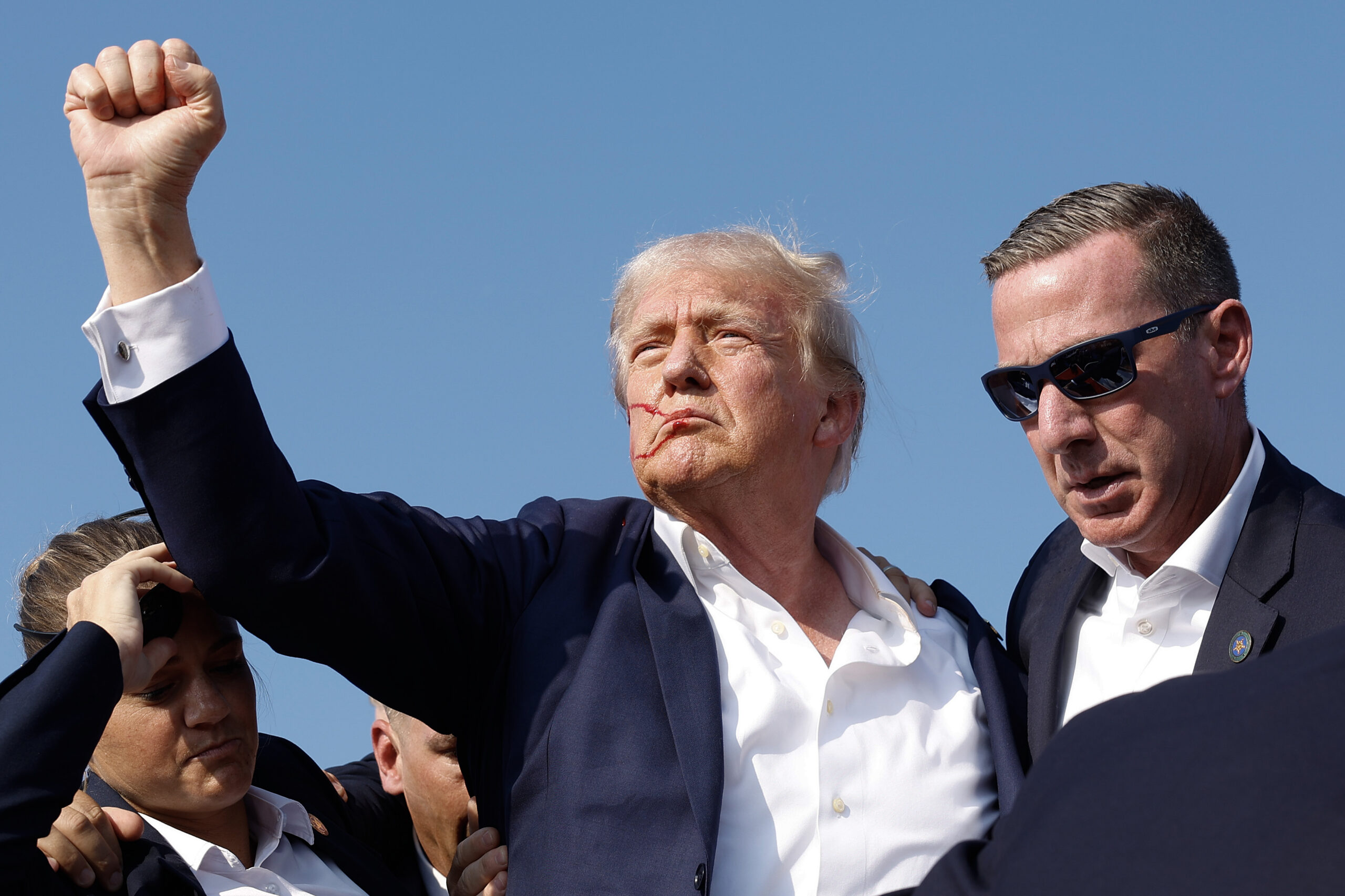
More than two years after the most high-profile political assassination attempt since John Hinckley shot Ronald Reagan, remarkably little is known about Thomas Matthew Crooks, a seemingly model student with future college plans and normal political views who decided one summer evening to take aim at Donald Trump during a rally in Butler, Pennsylvania. Why he did it, how he was able to, and whether any wider conspiracy was afoot all remain open questions.
Ken Silva’s latest book, The Trump Assassination Plots, is the first public forensic investigation to attempt to answer these. Drawing on thousands of pages of congressional transcripts, exclusively obtained records, and interviews, Silva’s book digs into matters like who really stopped the shooter, which agents were responsible for the security failures at Butler, who Crooks and the later would-be assassin Ryan Routh actually were, and what motivated them.
As typically occurs in the absence of meaningful answers from federal authorities, conspiracy theories have emerged to explain what exactly happened on July 13.
And in the case of Butler, there are even two flavors of conspiracy theory.
The unofficial theory holds that the shooting never happened at all, and that the entire spectacle was faked. Outside some corners of TikTok and the liberal app BlueSky, the idea that the Biden administration coordinated with the Trump campaign to fake an assassination attempt on Trump is (deservedly) given short shrift.
But the official conspiracy theory, what Silva calls the “government conspiracy theory,” has had actual political consequences; it is part of a foreign propaganda campaign which has successfully convinced its main target, President Donald Trump, that Iran was responsible for attempts on his life. Disseminated by the Israeli government and its American proxies, this theory holds that Iran was behind the plots against Trump, and that the Iranian government continues to make attempts on his life. The narrative relies on the case of Asif Merchant, a Pakistani national arrested on July 12, 2024, the day before Butler. The circumstances around Merchant’s arrest and charging, per Silva’s previous investigatory work, were the result of a tightly controlled FBI sting, executed in a manner that is highly dubious. Merchant had been under FBI surveillance before he even entered the United States, and the one friend he allegedly confided his plot to was already a government informant, which, as I wrote in March, “would make the federal government not only the architect of the sting operation, but the sole witness to Merchant's purported expression of criminal intent.”
Silva’s The Trump Assassination Plots investigates the matter even further, discovering that the alleged Trump assassination plotter Merchant was let into the country in April 2024 on “significant public benefit parole,” a program, Silva notes, “used for recruiting federal informants,” despite Merchant showing up on a DHS terrorist watchlist that flagged his previous travel to Iran. When he arrived in America, FBI agents who posed as “hitmen” met him and “bought ‘exotic dancers’ for a nervous Merchant” at a strip club. When it came to the plot itself, Merchant struggled to assemble a $5,000 down payment for the supposed hit, with Silva writing that Merchant “had to beg for it from an unnamed ‘associate’ in the U.S., promising to repay the debt.” Making an already murky set of circumstances even more difficult to follow, prosecutors invoked “the state secrets privilege to block the public and defense teams from having access to evidence that is potentially exculpatory.” Using this evidence, Silva concludes that Merchant “may have been the patsy in a case manufactured by the feds.”
Despite the dubious circumstances surrounding the alleged Iranian plot, and because corporate media failed to apply sufficient scrutiny to the official claims, the narrative that Iran tried to kill Trump seems to have produced the outcome its authors wanted. After the U.S.–Israeli assassination of Iran’s Supreme Leader Ayatollah Ali Khamenei, Trump told ABC News that he ordered the unprecedented assassination because “they tried twice. Well, I got him first.”
But apart from blaming Iran, the president has notably made few recent public statements on the attempts on his life. Trump’s silence about that day’s events, Silva writes, “perhaps more than anything else, has puzzled supporters and critics alike.” Asked by Newsmax’s Greg Kelly in March, 2025 whether an independent commission should be formed, Trump appeared uninterested, saying of alleged shooters Crooks and Routh, “they don’t seem to think there was anything other than abnormal people. I’ll assume that's true.” The FBI and Secret Service, Silva points out, have been equally “tight-lipped.” FBI Director Kash Patel told Fox News that the Butler case is effectively closed, and the Secret Service has ended its internal probe into the incident. “I don’t know that there’s more to know,” Patel said in May, 2025.
Silva’s reporting suggests that is false. Butler was, in Silva’s words, “a disaster waiting to happen,” starting with a series of security failures that appear to be the result of poorly selected and trained personnel. The agent running counter-drone surveillance for the venue, Eduardo Castro, only had training that “amounted to an hour-long session at Mar-a-Lago” and “admitted that he hadn't even operated a drone before that.” The Secret Service’s countersurveillance division, meanwhile, Silva writes, “was entirely absent”—a team that “according to whistleblowers… almost certainly could have prevented the shooting, given its specific job: patrolling outside the site’s security perimeter.” They had been sent to guard Jill Biden’s indoor event in Pittsburgh, because the Secret Service prioritized her as the wife of an active government official, while Trump was a former President.” But as Silva points out, a Congressional “review of Secret Service documents showed that headquarters had previously approved countersurveillance teams for Trump twice in 2024.”
Among other startling revelations in his book, Silva reports that 16 of the federal security agents assigned to Butler were part of a Homeland Security Investigations “jump team” whose security training, according to a whistleblower who spoke to Senator Josh Hawley’s office, consisted of “a single two-hour webinar on Microsoft Teams” during which “the Secret Service instructor couldn’t figure out how to get the audio working on the prerecorded videos” and whose “content was not helpful.”
One of the most significant and still-unsolved mysteries of the Butler assassination attempt remains the colossal failures of the Secret Service counter-sniper team—which has nonetheless been credited with stopping the shooter, including by Trump himself. Trump, crediting Secret Service Agent David King with the shot that saved his life, said he “did a fantastic job… he got him perfectly from a very long distance,”.
But Silva finds that King did not fire any shots until the tenth and final shot of the day. The .300 Winchester Magnum round from King’s rifle came 15 seconds after Crooks opened fire and 10 seconds after Crooks had already stopped shooting. The ninth shot of the day, which Silva, citing Representative Clay Higgins (R-LA), says is the shot most likely to have stopped Crooks, was actually fired by a Butler SWAT officer, Sgt. Aaron Zaliponi, on the ground of the event. Pittsburgh SAC Kevin Rojek later directly disputed Higgins’ claim, saying that there was no forensic evidence indicating that Zaliponi hit Crooks or his rifle.
“Missing bullet fragments might have helped resolve the controversy of who shot Crooks, and when,” says Silva, who explains how the medical examiner, after recovering one bullet fragment from Crooks’s shoulder, left several bullet fragments still lodged in his body which “would be lost forever after Crooks’s body was released to a funeral home for cremation” 10 days after the shooting.
And though King has been portrayed as a hero who stopped Crooks, statements made by the agent himself raise questions about that narrative. In notes he wrote immediately after the shooting, King writes that he saw Crooks “crawling” into position before any shots went off. “I noticed an individual, white male, white or gray shirt, low crawling on the roof. I noticed an AR-style weapon in his hands,” he wrote.
But when he later spoke to House investigators, King stated that he didn’t see Crooks at all before the shooting. “I was observing the rooftops, didn't see anything… When the first shot rang out, I identified the location that Crooks was at,” King said later, making a significant change to his story.
Silva raises questions about the Secret Service counter-snipers beyond King’s own alleged failure to stop Crooks. When Crooks opened fire at the rally, many of the Secret Service agents who were tasked with preventing that from happening, either failed to acquire a line of sight to the threat or seemingly froze up. One of the counter-sniper teams, Hercules 2, was “partially blocked” from the AGR rooftop from which Crooks fired by a large tree, while iPhone videos posted to social media show Secret Service snipers flinching as Crooks shoots his first rounds. Silva documents how explanations from the Secret Service as to why the teams failed to cover the AGR rooftop and missed Crooks—much like King’s own account—have shifted significantly since the event.
When it comes to the various mysteries around the suspect Thomas Mathew Crooks, Silva is careful not to insinuate, but does present evidence that federal authorities have not revealed all they know about Crooks. He writes that Crooks “did not seem like a man planning to die in a presidential assassination attempt,” having graduated from the Community College of Allegheny County with an associate’s degree in engineering in May 2024. Silva also flags that on June 14—less than a month before Butler—Crooks emailed his college to ask, “When can I expect the diploma to be mailed?”
Silva reports that the FBI seized about 4.5 terabytes of data from Crooks's laptop, phones, and drives, and according to CBS found more than 14,000 images on his phone. Almost none of this material has been made public. Crooks’ “vast digital footprint,” which Silva argues has “yet to be revealed,” was partially uncovered by Tucker Carlson, who gained access to Thomas Mathew Crooks’ Google Drive account.
In November 2025, Carlson published a video of Crooks dry-firing a pistol in his bedroom, along with screenshots of Crooks’s YouTube comment history. The comments showed Crooks exchanging ideas about armed resistance with an anonymous user, @Willy_Tepes, who told Crooks, “If a gun and a badge is all that is needed, then authority obviously comes from the barrel of a gun. We have more guns than they do. There is no way we can avoid a war at this point, so you better just get used to the idea.” Looking at his online comment history, Carlson concluded that “it’s hard to imagine that Thomas Crooks, who was making these posts publicly and in his own name, had not been identified and looked at closely by federal law enforcement. In fact, it’s impossible to imagine.”
Subscribe Today
Get daily emails in your inbox
Silva considers Carlson’s theory, observing that Rod Swanson, the former FBI agent who led Nevada’s investigation into the 2017 Las Vegas massacre, came to the same conclusion, but does not attempt to definitively answer the question of whether the government had in fact flagged Crooks before the shooting.
The DOJ also appears to have restricted other entities’ access to at least some of the relevant documents and witnesses. The House Task Force on the Attempted Assassination of Donald J. Trump, for example, has complained of obstructions to its investigative efforts, with members like Representative Pat Fallon (R-TX) describing the FBI as having “stonewalled” them.The House Task Force report says that “the FBI provided the Task Force with access to only 81, out of over 1,000, witness 302s, comprising roughly 180 pages. These 302s vary in length, breadth, scope, and detail, and unfortunately contain significant redactions, which sometimes limited their usefulness to the Task Force.”
Thomas Matthew Crooks remains largely a cipher, one that cannot be understood without additional disclosures by the federal government. Unless and until we get that transparency, Ken Silva’s The Trump Assassination Plots will serve as an excellent starting point for journalists, investigators, and lay readers looking for answers to one of the least understood events in our lifetime.