The Letter Wars
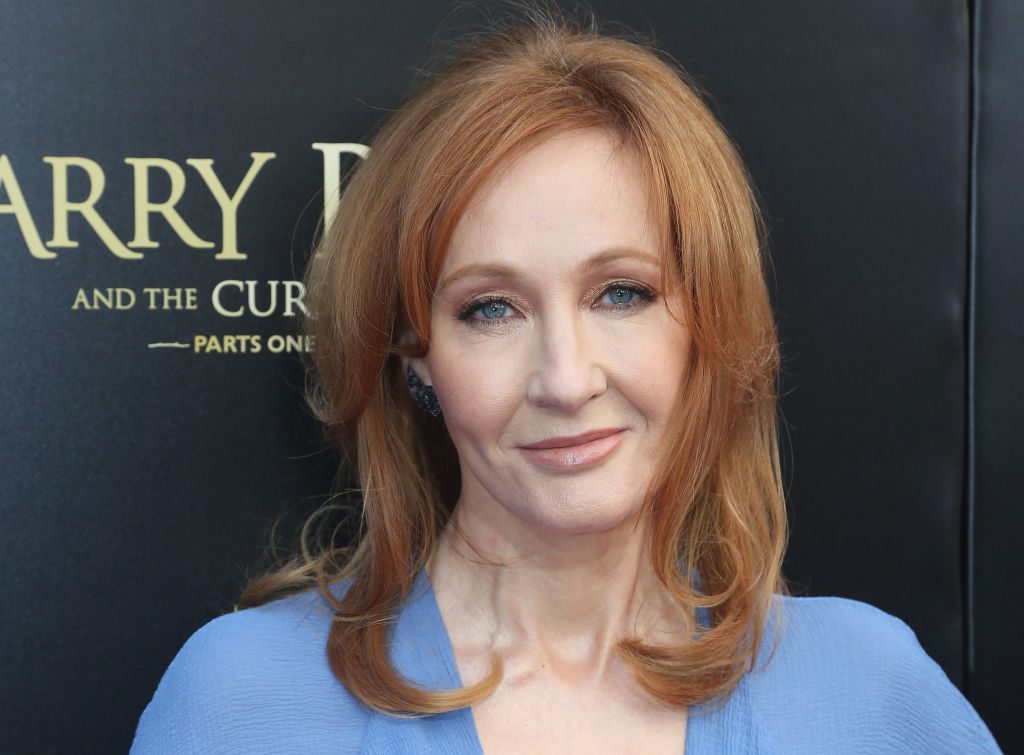
Welcome to the letter wars. On Sunday, 58 writers signed a letter supporting J. K. Rowling after fans pummeled her on Twitter for her comments on transgenderism. Those who signed the letter included Ian McEwan, Tom Stoppard, and Lionel Shriver. Now 200 writers, publishers, booksellers and marketing assistants have responded with a letter of their own, supporting “the wellbeing and rights of trans and non-binary people.” “Non-binary lives are valid,” the letter reads, “trans women are women, trans men are men, trans rights are human rights.”
Politics aside, I understand why people sign letters like these. Something terrible has happened, and something must be done. But you don’t have the power to do anything, so you sign a letter . . . and nothing changes.
This is why, generally, I don’t sign letters of protest or support, though I have been asked. If you want to change something but don’t have the power to do it, well, you don’t have the power to do it, and signing a letter rarely brings about the change you want.
At the same time, letters can do other things. They can call attention to injustices or failures of public trust that might otherwise go unnoticed. They can also make one feel less alone, which perhaps makes one a little bolder in fighting against insidious cultural trends in small ways—in one’s sphere of influence or responsibility—and that’s a good thing.
From the-news-that-stays-news desk: Ptolemy Tompkins writes in praise of Dover paperbacks: “I soon became a careful student of grades of paper, of the different varieties of glue that the different paperback publishers used. Signet, for example, the publisher of most of my Mad Magazine anthologies, used a paper grade that was a little on the stiff side — something that made accidental spine breakage more likely. (I saw adults do this intentionally all the time, ‘cracking’ their books open with the casual brutality of a farmer snapping the neck of a chicken.) Most paperbacks were like that: cheaply made and intended for mass consumption, with no thought to their lasting longer than it took to read them. With one exception. Dover Publications, founded during the paperback boom of World War II, when light, easily portable books were popular with soldiers, was different. Predominantly a reprint company, Dover focused on titles in the public domain and used the money saved to create a genuine anomaly: a paperback built to last.”
Edward Hopper’s earliest paintings are copies of other works, The New York Times reports: “Most grad students in art history dream of discovering an unknown work by whatever great artist they are studying. Louis Shadwick has achieved just the opposite: In researching his doctorate on Edward Hopper, for the storied Courtauld Institute in London, Mr. Shadwick has discovered that three of the great American’s earliest oil paintings, from the 1890s, can only barely count as his original images. Two are copies of paintings Mr. Shadwick found reproduced in a magazine for amateur artists published in the years before Hopper’s paintings. The reproductions even came with detailed instructions for making the copies. Mr. Shadwick spells out his discovery in the October issue of The Burlington Magazine, a venerable art historical journal.”
Julia Harte tells the story of the mysterious kidnapping and murder of Leon Trotsky’s American bodyguard in Mexico: “In a sultry May night in 1940, two dozen Stalinists wearing police and army uniforms, goggles, and fake mustaches approached the villa in Mexico City where Leon Trotsky lived in exile. They disarmed several officers in a nearby police booth. One of the former Soviet leader’s bodyguards stood at the compound’s gate; the posse strode up to him and asked to enter. Once inside, they tossed a homemade bomb into the room of Trotsky’s grandson and fired submachine guns into the bedroom of Trotsky and his wife Natalia. The elderly couple dove to the floor shortly before seventy shots pockmarked their bed and walls. After twenty minutes, the assailants withdrew. Trotsky and his entourage were virtually unharmed. But the bodyguard who had been on duty at the gate was gone. From where they had been tied up, the real police officers said they had seen him protesting as the shooters marched him to a stolen car and sped off.”
Alexandra Hudson revisits Bowling Alone at 20: “Two decades ago, Robert Putnam published a book that provoked a small cottage industry’s worth of responses from pundits and scholars alike. Bowling Alone, based on an essay of the same title Putnam had written for the Journal of Democracy five years earlier, made a claim that cut to the quick of American identity: Americans just aren’t doing things together anymore. By choosing to engage in activities individually rather than communally, he asserted, we were putting at risk America’s capacity to build social capital and undermining our national character . . . Two decades on, the condition of American civil society is more complex than a modern reader of Bowling Alone might imagine. Yet the book’s core insights remain essential.”
George Bernard Shaw was a key supporter of the Royal Academy of Dramatic Art in its early days. A theater on campus was named after him. However, students—as you may have heard—want his name removed. The students also demanded that “all paintings, sculptures, pictures and room names that celebrate racist figures” be removed. Theodore Dalrymple wrote a nuanced reply in City Journal: “My own feelings about George Bernard Shaw are equivocal. He was a high-profile, publicity-seeking crank who espoused many bad causes, and in general preferred a bon mot or notoriety to the truth. He called Louis Pasteur and Joseph Lister frauds, and to the end of his life did not believe in the germ theory of disease. He likened marriage to legalized prostitution and said many other destructive things to draw attention to himself. How far he believed in his worst pronouncements and expected anyone to be influenced by them is moot. On the other hand, he was one of the few playwrights in English whose plays can still be performed for the pleasure of an audience a century later. One or two of them might even, without absurdity, be called great . . . His achievements in the theater can hardly be denied. He is virtually the founder of the modern drama in English.” Now Robert Gore-Langton weighs in: “Shaw is an indelible part of RADA’s history (of which it is officially no longer proud). The place was established in 1904 by the actor Sir Herbert Beerbohm Tree as a London school ‘founded by the industry for the industry’. Shaw was elected to RADA’s council in 1911 to replace W.S. Gilbert who died that year. He was a great catch. Shaw urged the school to stay open during both world wars, stumping up £1,000 when it was reduced to rubble during the Blitz — a loan he made clear he didn’t expect to be repaid. He bequeathed a third of his royalties to Rada, a steady river of cash since his death in 1950. How perverse that the place should ever want to disown him. You’d think Shaw would be well within the radius of trust of even today’s wokest students. He was after all a vegetarian, deeply pro-women’s rights, pro-homosexual, pro-interracial marriage and anti-war.”
Photo: The fields of Kaisersbach
Get Prufrock in your inbox every weekday morning. Subscribe here.