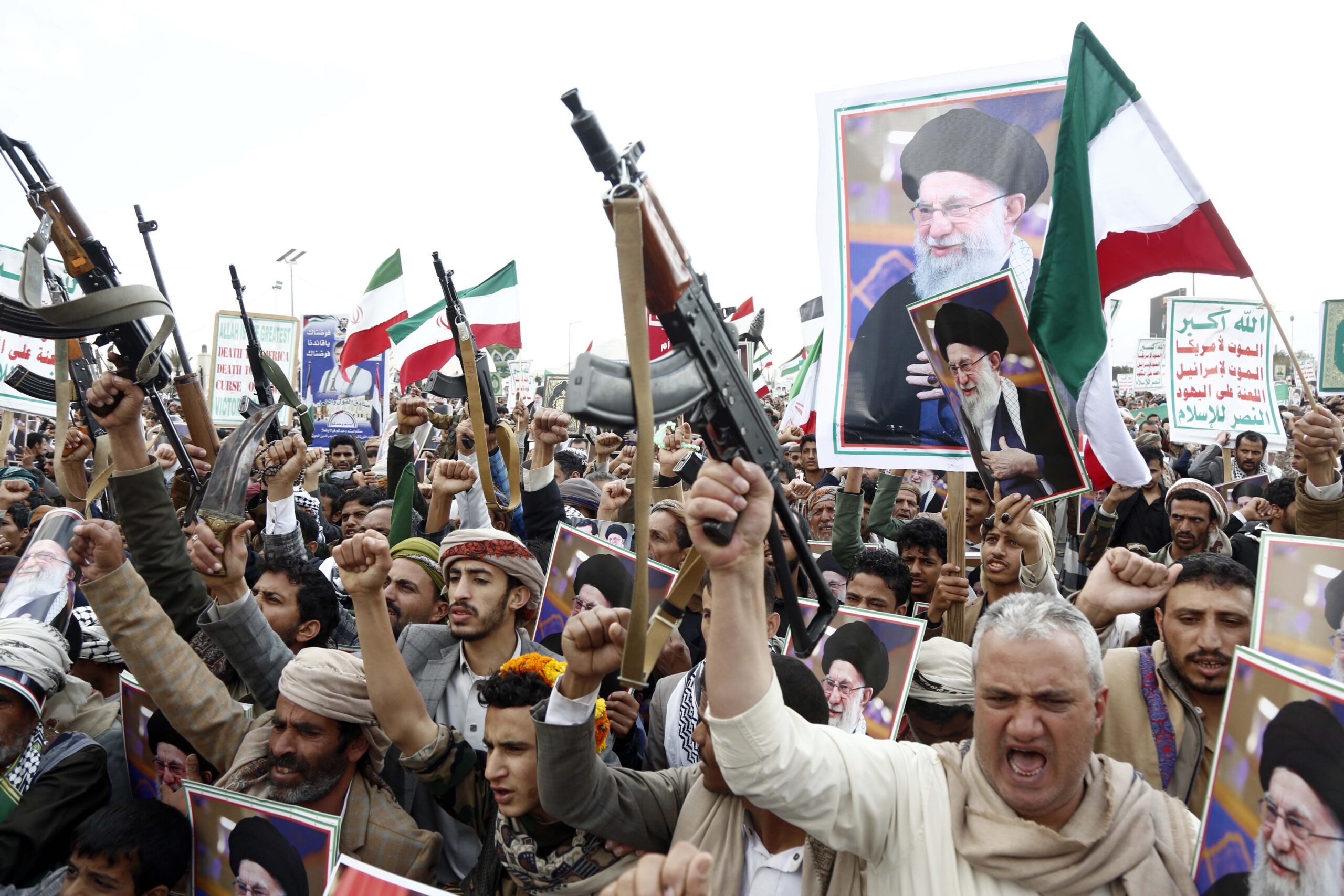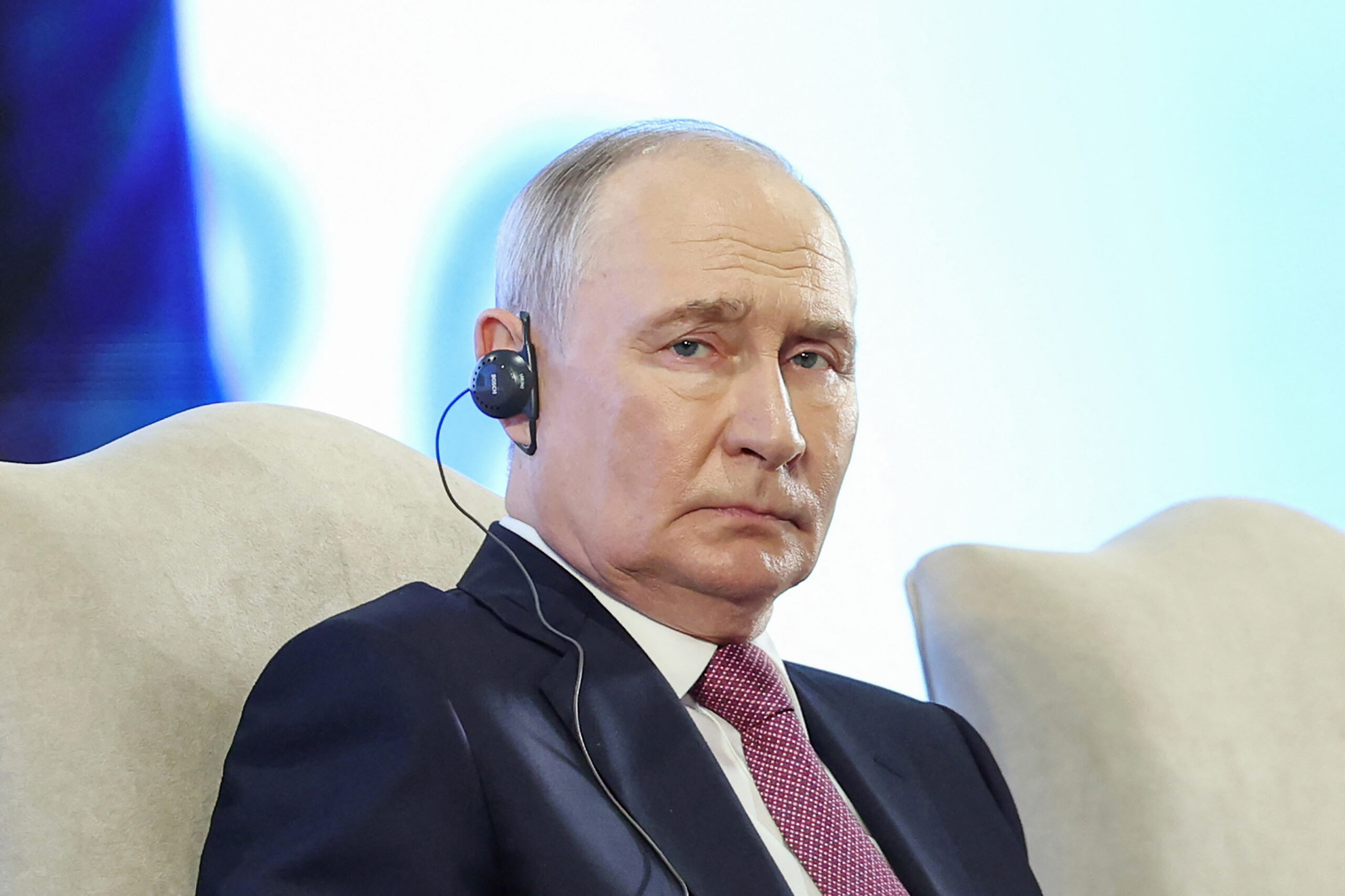
Over seven months after Operation Epic Fury started on February 28, it’s difficult to avoid the depressing conclusion that the United States has been exposed as something close to the “pitiful, helpless giant” President Richard Nixon warned of 56 years ago. Nixon, of course, used the phrase to rally an American public disillusioned with the Vietnam War. But the descriptor also applies to today’s ongoing war against Iran—a war the majority of Americans thought was a mistake at the outset.
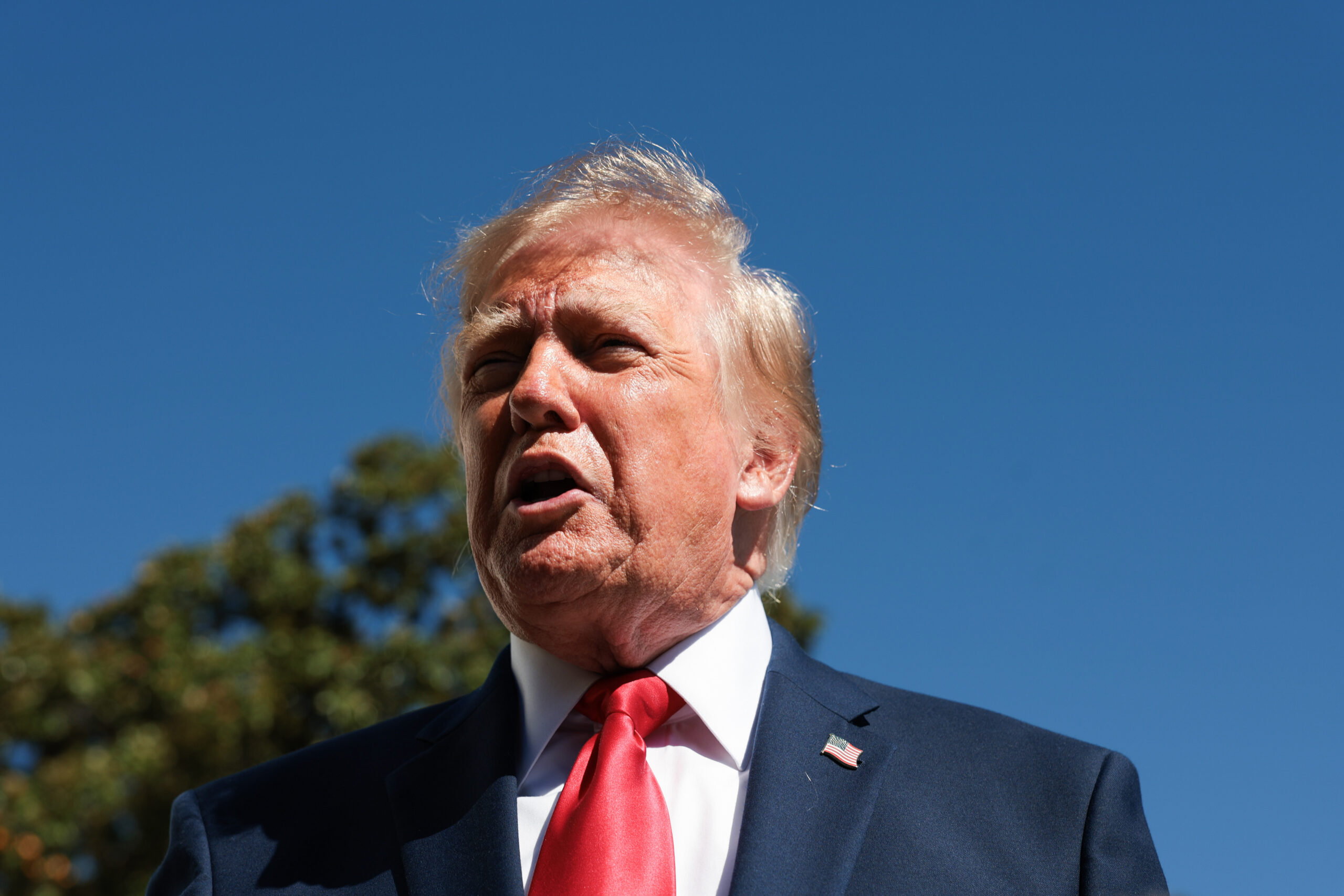
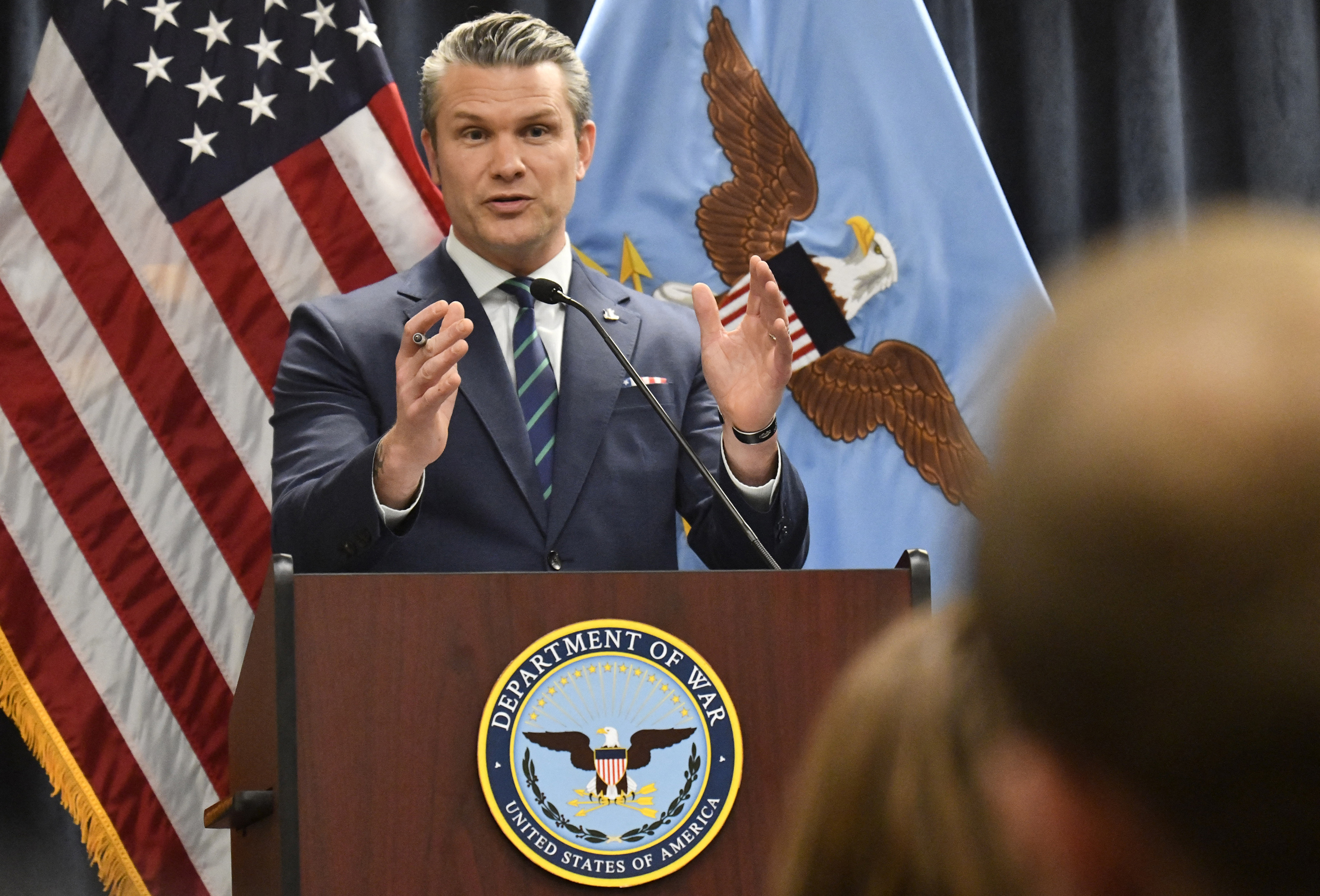
In its eagerness to defend the decision to go to war and spin a narrative of victory, the Trump administration has spent months explaining to the American people (and our allies abroad) just how much damage has been inflicted on Iran’s military infrastructure. When he is not assuring the nation that the war will be over after the midterm elections, President Donald Trump repeatedly claims that the Strait of Hormuz, the strategic waterway the Iranians have turned into its greatest source of leverage, is under complete U.S. control. Defense Secretary Pete Hegseth is quick to note the Islamic Revolutionary Guard Corps’s diminishing capacity. And Treasury Secretary Scott Bessent, in his quest to throw around Washington’s considerable financial heft, speaks as if the Iranian economy is only a few short weeks away from total implosion.
Yet it’s been glaringly obvious for a while now that the administration is wearing rose-colored glasses. The reality is the geopolitical equivalent of a smelly dumpster-heap of economic costs, military strain, and strategic malfeasance. By now, the list is long and well-known to anybody even vaguely paying attention to the news. Oil flows through the critical Strait of Hormuz have been throttled by Iran for months. By the Pentagon’s own admission, the war has cost U.S. taxpayers over $40 billion (and that’s a low estimate, since it doesn’t account for the extensive damage Iran has inflicted on bases in the region). Our munitions cupboard is running empty, with the U.S. military using up over 60 percent of its entire stockpile of air defense interceptors and many of its high-end (“exquisite”) precision munitions, including the all-important Army Tactical Missile System (ATACMS). Washington’s Asian allies and partners, including Japan and Taiwan, are seeing their own orders of U.S.-manufactured missiles delayed for months, if not years. Others, like South Korea, watch as U.S. air defense equipment normally stationed to defend the region is moved to the Persian Gulf.
The blows to U.S. credibility can’t be swept under the rug either. Although foreign policy analysts tend to assume the worst whenever the U.S. is compelled to end its involvement in overseas conflicts—the U.S. withdrawals from Vietnam in 1973 and Afghanistan in 2021, for instance, didn’t precipitate the irreversible decline of U.S. power in Europe and Asia many predicted at the time—the “little excursion” Trump opted to wage in the Persian Gulf has thrown more than a few wrenches into the U.S.-sponsored order the conventional Beltway establishment is so fond of defending. Gulf Arab leaders, once confident in the strength and durability of U.S. security guarantees, are now sitting in their opulent palaces wondering whether the United States is truly the best horse to back. With Iranian missiles and drones slamming into buildings in Dubai and oil pipelines damaged, the very U.S. bases and outposts in their respective countries that were constructed to strengthen deterrence against Tehran are looking more like antiquated museum pieces.
Yet all hope isn’t lost. With every setback comes an opportunity to reassess the situation and plan next steps accordingly. As pointless as the conflict has been on its own terms, it also has the potential to serve as a moment of positive transformation for the Middle East and America’s military presence there. For if the Iran War has underscored anything, it is that the regional order our foreign policy establishment has pursued for the past three and a half decades—one in which the United States acts as the Mideast’s chief external referee and security provider—has outlived whatever usefulness it once had.
That is just as well. The last quarter-century is chock full of examples of this approach undermining rather than bolstering geopolitical stability. Ultimately, what the Middle East and America need above all else is less of each other. When it comes to security commitments, each is better off without the other.
The United States currently operates a constellation of long-standing bases and smaller facilities stretching from the southeastern tip of the Arabian Peninsula to Western Turkey. Although it depends on how one counts, there are over 20 sites in the Middle East to which the U.S. military maintains access, with many of these—Al-Udeid Air Base in Qatar, for instance—serving as major, permanent bases. Despite repeated efforts by U.S. presidents over the last 15 years to downsize American military presence, tens of thousands of U.S. servicemembers remain deployed in the region. U.S. defense officials try their best to keep at least one U.S. aircraft carrier in the vicinity during peacetime.
Today, the large U.S. military posture in the Middle East elicits a mere shrug. But it wasn’t always so. During the Carter and Reagan administrations, the Middle East was only considered vital to the extent that its energy resources were threatened by the Soviet Union, America’s superpower rival at the time. U.S. naval maneuvers in the Persian Gulf and Red Sea were hardly as intense as they are now. (The one exception was the 1987–88 U.S. Navy operation, dubbed Operation Earnest Will, which escorted Kuwaiti oil tankers during the Iran–Iraq War.) On some occasions, the mission flared into violence, such as when a U.S. Navy ship hit an Iranian mine on April 14, 1988 and retaliated by destroying several Iranian oil platforms.
The genesis of the current U.S. force posture can be traced back to the 1991 Gulf War, when roughly a half a million U.S. troops, in coordination with a multilateral coalition including Arab states, expelled the Iraqi dictator Saddam Hussein’s army from Kuwait. After approximately a month of heavy U.S. airstrikes and a U.S. ground war that lasted 100 hours, President George H.W. Bush announced the conclusion of major combat operations.
Still, the end of the war didn’t bring an end to the large U.S. military presence. The March 1991 U.N. Security Council Resolution that formalized the ceasefire mandated tough terms on Saddam: destroying all of Iraq’s weapons of mass destruction programs; eliminating all Iraqi missiles beyond the range of 93 miles; bringing all of its nuclear-related materiel into the custody of the International Atomic Energy Agency; and mandating Baghdad’s unconditional cooperation with a special U.N.-authorized commission. Thus it virtually guaranteed that the Iraqi dictator would try to skirt his obligations. And sure enough, that’s precisely what happened, giving the George H.W. Bush administration reason to keep U.S. forces around Iraq to compel its compliance. By August 1992, U.S., French and British combat aircraft were patrolling no-fly zones in roughly two-thirds of Iraq.
Throughout this period, the United States struck multiple defense agreements with Gulf Arab states that remained petrified about more Iraqi aggression. Although Saddam’s army was bloodied and defeated, Bahrain, Kuwait, Qatar and the United Arab Emirates still viewed U.S. troops on their soil as the best insurance policy. In October 1991, seven months after the Gulf War ended, Bahrain struck a deal with Washington, which allowed the U.S. military to stockpile defensive equipment on the island and granted U.S. servicemembers access to its naval and air facilities. A similar deal was signed with Qatar in 1992 and with the UAE in 1994. This, combined with the Clinton administration’s “dual containment” policy of both Iraq and Iran, two adversaries that Washington believed could upend the regional balance of power, virtually guaranteed a continuous U.S presence there. George W. Bush’s war on terrorism after the 9/11 attacks, which culminated in a trillion-dollar occupation of Iraq whose reverberations are still felt 23 years later, only brought the United States deeper into a swamp so sticky that his successors have failed to get out of it.
If the United States was once believed to be the Middle East’s chief stabilizer, the war with Iran has turned this image into a caricature. Rather than keeping the peace and preserving a stable regional balance, its self-defeating actions churn up conflict. Instead of maintaining deterrence, it attracts the very kinds of attacks a forward U.S. military deployment is designed to prevent. U.S. bases, which Washington’s Arab partners bet were key enablers of stability for their countries, are not strong points, but vulnerabilities. Based on satellite imagery and public reporting, hundreds of buildings on U.S. military bases in at least eight Mideast countries have been damaged by Iranian fire during the course of the conflict. Facilities long presumed to be impenetrable to disruption, like the headquarters of the U.S. Navy’s Fifth Fleet in Bahrain, are now seen as so vulnerable to Iranian assaults that re-supply operations have to be undertaken at Diego Garcia, more than 2,000 miles away.
For defense planners, the war is forcing a much-needed reevaluation of how the U.S. military conducts operations in the region and whether the juice of an unending presence there is worth the squeeze for U.S. security interests. Damaged U.S. military infrastructure, which would cost billions to repair, has generated conversations in the Pentagon about whether continuing with the status-quo is the right move. The same outposts in Kuwait, Bahrain, the UAE and Qatar that were seen as sound investments in the 1990s and early 2000s no longer look so wise in 2026. When the war is all said and done, there is a decent chance of U.S. forces re-deploying from the Persian Gulf to areas further west, perhaps to western Saudi Arabia, Jordan and Israel. There are likely some officers in the office of the Joint Chiefs of Staff, as well as on the staffs of the various U.S. combatant commands, who would prefer the Trump administration to kick the Middle East further down its list of priorities. They have a point. The war has not only laid bare the fallacy of America’s grand ambitions in this part of the world but also depleted the Pentagon’s stockpile of munitions to such an extent that U.S. defense officials have had to beg defense manufacturers to speed up the production process.
The Arab states are highly unlikely to sever their defense relationships with the United States anytime soon. Qatar, for instance, deepened its own ties with Washington in September 2025, a decision that came about in part due to Israel’s attempted assassination of a senior Hamas official in Doha weeks earlier. Saudi Arabia continues to spend tens of billions of dollars on U.S. defense platforms; according to the Stockholm International Peace Research Institute, 77 percent of Riyadh’s defense imports between 2021–25 came from the United States.
Even so, the Trump administration’s rush into a war no country in the Middle East outside of Israel wanted, and the inability of U.S. bases to provide much protection, is a giant red-neon warning light to Gulf states that for decades have relied on Washington for external protection. The message: New security arrangements must be made, or at least explored. In August, Saudi Arabia, Turkey and Pakistan signed the Mecca Joint Defense Agreement, whose central tenet—an attack on one is an attack on all—is identical to NATO’s Article 5. Weeks later, Kuwait, one of Iran’s most persistent targets, clinched its own defense accord with Pakistan, with a focus on bolstering security at Kuwait’s borders. The UAE has even strengthened relations with Israel and reportedly allowed the deployment of Israeli air defense systems in its territory early in the Iran War.
The U.S. foreign policy establishment will likely look at all these moves as a reflection of American weakness. Trump, some will argue, has degraded U.S. credibility to the point where some of its most longstanding security partners now see Washington as part of the problem rather than the solution.
But so what if they do? The reality is that the United States and the Middle East could use a divorce. From the 2003 invasion of Iraq and the 2011 air campaign over Libya to U.S. involvement in Syria during that country’s 14-year-long civil-war, the record of U.S. interventions is one of hubris, failure, and unanticipated costs.
In the process, Washington winds up creating a whole slew of additional stressors that the people of the Middle East ultimately have to live with. During the invasion and occupation of Iraq, those unwanted repercussions included the growth of Al Qaeda branch that in later years turned into the Islamic State, a sectarian civil war that killed tens of thousands, and the growth of Iranian influence in a country that had historically served as Tehran’s chief balancer. In Libya, it was the implosion of the state, the proliferation of warlords and militia groups, and ultimately a massive surge of migration to Europe. America’s most recent war of choice is no different in this respect—just ask the Kuwaitis, Iraqis and Qataris, all of whom have seen their energy exports and associated revenues plummet as the Strait of Hormuz remains bottlenecked by the Islamic Revolutionary Guard Corps.
The United States hasn’t learned much of anything from its previous follies, so you can’t blame the Gulf Arab states in particular for changing how they do business. After all, who wants to put their faith in a clumsy actor who has the power to upend the regional equilibrium? Thanks to Trump’s war, lessening dependence on what’s left of the U.S. security umbrella is now an acknowledged goal in Mideast capitals; across the region, countries are pursuing solutions ranging from developing their domestic arms industries to building regional alliances.
Subscribe Today
Get daily emails in your inbox
Many inside the Beltway will likely seek to discourage these conversations from happening. Worried about the loss of U.S. power, Washington may seek to offer even more military assistance to these states as a desperate form of compensation.
But this would be a mistake. Instead, we should let the chips fall where they may. Rather than squelch discussions over a post-American Middle East, Trump and whoever comes after him should encourage them. Ideally, the United States should force the issue by removing its own forces, particularly the assets in large, permanent bases that are so vulnerable to Iranian strikes. This will all come as a big shock to the current orthodoxy, which typecasts any retreat as a defeat of epic proportions. But it would not be the first time a U.S. president decided to boldly cut the country’s losses, and it will not be the last either.
The sooner Americans abandon their quest to police the Middle East, the sooner the region will achieve lasting geopolitical stability.