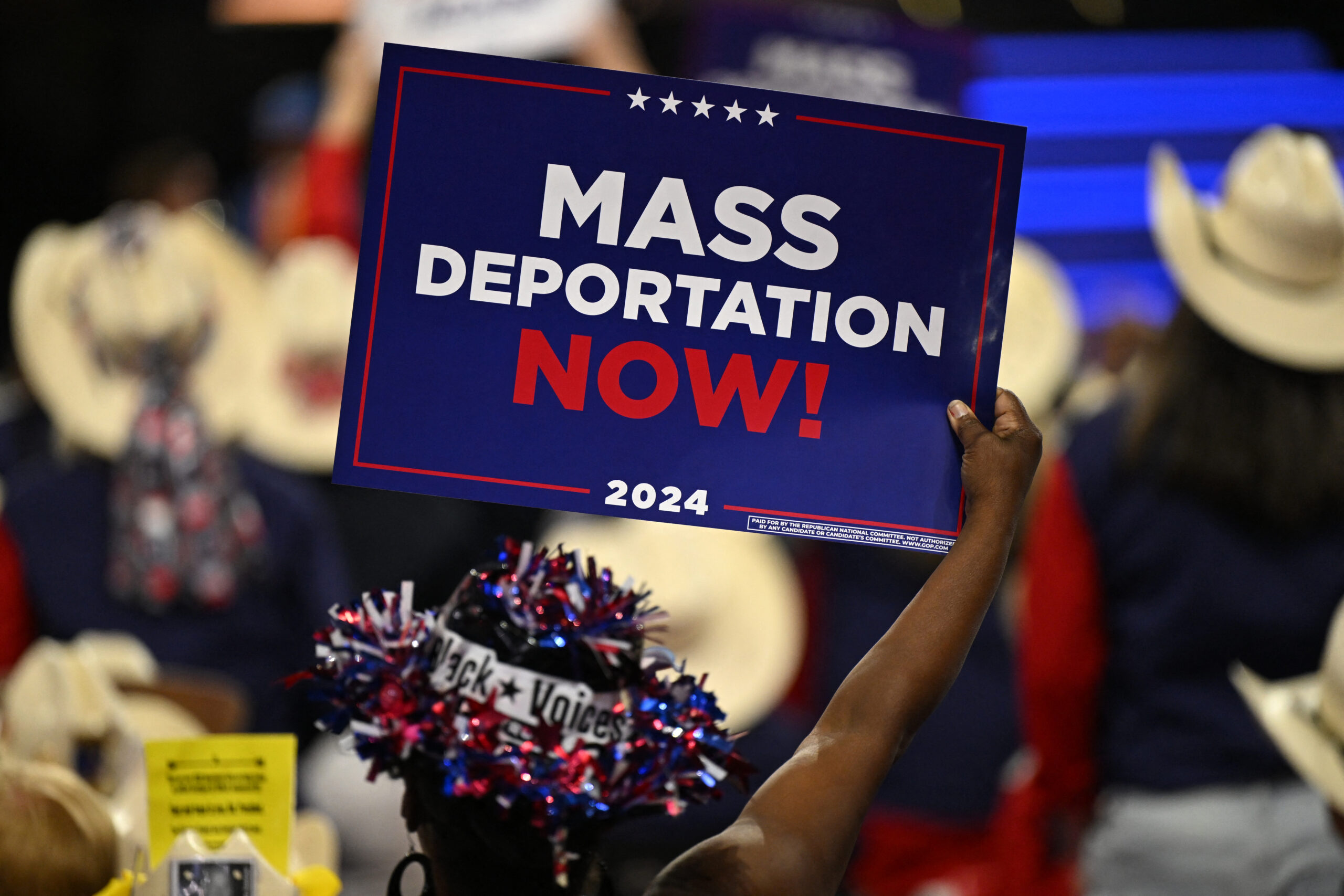
While the left humiliates itself by being unable to define a woman, Republicans are having their own definitional crisis: deciding who has to leave the country under “mass deportation.”
There is nothing “mass” about narrowing enforcement to the “worst of the worst.” There is nothing populist about shifting the focus exclusively to criminals. There is nothing honest about pretending that this is what voters meant when they demanded action on immigration.
What is unfolding with ICE in Minnesota is a familiar genre in American politics: Republicans try to implement a campaign promise. Then, the media panics, protests erupt, and the Republican establishment starts searching for an off-ramp.
We have seen this before.
It is the same impulse that produced the RNC’s Growth and Opportunity Project—the so-called autopsy—after Mitt Romney’s 2012 loss. Rather than conduct an honest assessment aligned with the populist direction the party would soon take, establishment Republicans used Romney’s defeat to sell the base two catastrophic falsehoods: first, that the immigration status quo was somehow good for America; and second, that even if it wasn’t, removing millions of illegal aliens was either impossible or politically suicidal.
In Minnesota, it looks like that error is resurfacing in real time.
At the heart of both moments is the same fundamental misdiagnosis. Illegal immigration is principally a crisis of quantity, rather than quality. Systems buckle under the weight of accumulated foreign populations long before any immigrant commits a headline-grabbing felony.
At mass levels, illegal immigration suppresses wages for American workers, especially those without college degrees, overwhelms schools and hospitals, and expands welfare systems quietly and permanently. Worse, it degrades national cohesion. Illegal immigration leaves American culture a third-world imitation of itself. None of this is primarily about violent felonies.
Reducing deportations to a criminal-justice framework tells millions of Americans who absorb these costs that their losses and communities do not matter. Unless they can point to a mugshot, their grievances are politically irrelevant.
This is why immigration politics for MAGA has always revolved around scale, not individual cases.
In 2016, President Donald Trump’s promise to “Build the Wall” was more than an argument for a construction project. Properly understood, it was a declaration that borders matter and enforcement is nonnegotiable. The so-called “Muslim ban” followed the same logic: broad, unapologetic, and focused on outcomes rather than elite approval.
In 2024, “mass deportations” became the successor slogan for the same reason. Voters understood that half-measures had failed. There were no asterisks, no consultants’ caveats saying “only the worst of the worst.” Yet these are exactly what are now being introduced.
We are going soft on deportations at the precise moment we should be going harder—against illegal alien employers, the NGO-industrial complex that facilitated mass entry, and the Biden-era officials like Alejandro Mayorkas who engineered the crisis in the first place.
To avoid repeating this failure, Republicans must confront the logic of the autopsy head-on.
The report framed immigration as a perception problem rather than an issue of national sovereignty: “If Hispanic Americans perceive that a GOP nominee or candidate does not want them in the United States (i.e. self-deportation), they will not pay attention to our next sentence.” The conclusion was explicit: soften enforcement rhetoric, signal welcome, and assume electoral gains would follow.
The autopsy reiterated this logic elsewhere, warning that “if our Party is not welcoming and inclusive, young people and increasingly other voters will continue to tune us out.”
Donald Trump did the opposite—and won.
There was nothing “welcoming” about “Build the Wall,” nothing inclusive about mass deportations. Yet Trump took over the GOP by rejecting euphemism, insisting on enforcement, and proving the autopsy wrong on its own terms. He won by clarifying, not by softening.
Subscribe Today
Get daily emails in your inbox
The autopsy’s fear was always misplaced. Illegal immigrants do not vote. “Welcoming” rhetoric caters to elite opinion and corporate labor interests, rather than the concerns of everyday Americans.
The autopsy’s most revealing line came when it urged compromise, noting that disagreement on “20 percent of the issues” should not prevent unity. But that allegedly marginal 20 percent is where MAGA took the hard line—and, with it, the victory. Immigration is nonnegotiable and foundational. America First works only if America is clearly defined.
As Minnesota becomes the next test case, Republicans should be clear-eyed. They cannot allow deporting the “worst of the worst” to become the 2024 version of “comprehensive immigration reform.” America’s future hangs in the balance.