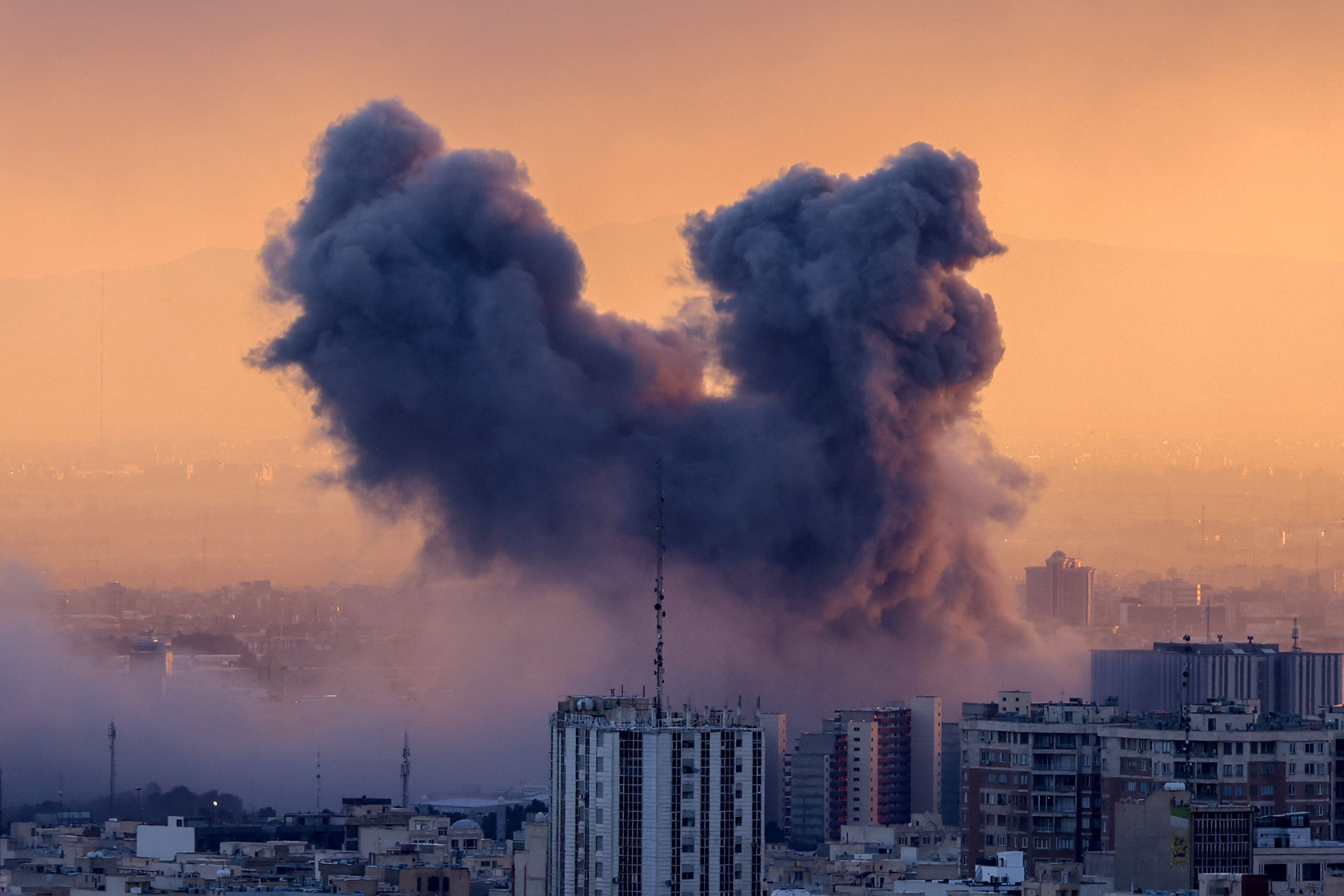
The United States is not going to win this war with Iran. The good news is that we do not need to.
There was no good reason for the Israeli–U.S. attack in the first place, and American security does not require us to win anything new from Tehran—not the regime change President Donald Trump fantasizes about, not the militarily-crippled Iran his defense secretary describes as the goal, not even the nuclear deal Washington might have had before it chose war.
The United States can simply stop. It can declare a phony victory and even call it the “unconditional surrender” Trump demands.
The U.S. would no longer be burning billions of dollars a day on a new Middle East war, expending scarce weapons, putting its troops in needless danger, and making Iran desperate enough to strike oil shipments.
True, withdrawing U.S. participation might not immediately end the war. Israel could keep attacking, and Iran might hit more regional targets to try to restore deterrence. But that need not be America’s problem. The one thing Iran is doing that truly harms regular Americans is hindering oil shipments and thereby driving up gas prices. So long as ending the U.S. role in the war stops that, U.S. interests will be served. And if ending the U.S. role is not enough, Washington should force Israel to stop too.
Iran is not a serious threat to the U.S. It is a middling regional power with a military designed more to prevent coups than to conquer neighbors. It has not launched an offensive war in the four-plus decades since its revolution, and regional rivals constrain whatever territorial ambitions it may harbor.
Even if Iran were the destabilizing aggressor its critics claim, it still would not be much of a threat to the United States. Middle Eastern stability is not, in itself, vital to American security. A prolonged disruption in oil production that causes a major price shock is another matter, but that is unlikely. The region’s chronic instability has rarely interrupted oil flows for long.
What about Iran’s ballistic missiles, support for proxy forces such as Hezbollah, and nuclear program—the standard charges against Iran, lately used to justify aggression? These are best understood as tools of deterrence, albeit not especially effective ones. Iran’s missile program grew out of the Iran–Iraq War, when it was under attack by its neighbor, and is now aimed mainly at deterring Israel. Those missiles cannot reach the United States, and contrary to administration claims, there is no indication they’re developing missiles of that range.
Iran’s support for its so-called proxies has several motives, including extending its influence. But the central purpose appears defensive: to hold Israeli and U.S. forces at risk and make them think twice about attacking.
Much the same is true of nuclear weapons. The United States has never tried to regime change a nuclear weapons state—as opposed to Libya, Syria, and Iraq. So, it is easy to see why Iran might want them.
Yet Tehran has actually shown an odd aversion to building nuclear weapons. Instead, it’s advanced its nuclear program just enough to try to trade restraint for sanctions relief and diplomacy. This half-pregnant strategy has not served Iran well, but the pattern is clear. After Trump withdrew from the nuclear deal despite Iran’s compliance, Tehran gradually violated the agreement to pressure Washington back to the table. Weeks ago, Iranian negotiators reportedly offered Trump what he claimed to want: a deal that would have meant no bomb. It would have preserved Iran’s treaty right to enrich uranium but surrendered control of its enriched stockpile, all under IAEA monitoring. Tehran wanted sanctions relief in return. Trump preferred war.
Bombing has made any deal much less likely. The White House’s belief that it could quickly batter Iran into accepting a stronger agreement ignored a basic lesson of military history: Airpower rarely coerces states into giving up core interests. Instead, it inflames nationalism, which hardens resistance. Killing Iran’s supreme leader, who issued the famous fatwa forbidding nuclear weapons development, and its lead nuclear negotiator, only amplifies this effect. Iran’s remaining leaders are more likely to risk death than submit to U.S. demands under fire, not only out of pride but because their own public would punish visible humiliation.
And while the war is destroying much of Iran’s missile stockpile, it also shows Iranians why they need to rebuild it. As in the 12-Day War last spring, Iranian leaders see the ability to threaten Israeli and U.S. bases as essential to their defense. This time, after earlier efforts failed to establish durable deterrence, they widened the target set, as they had warned they would.
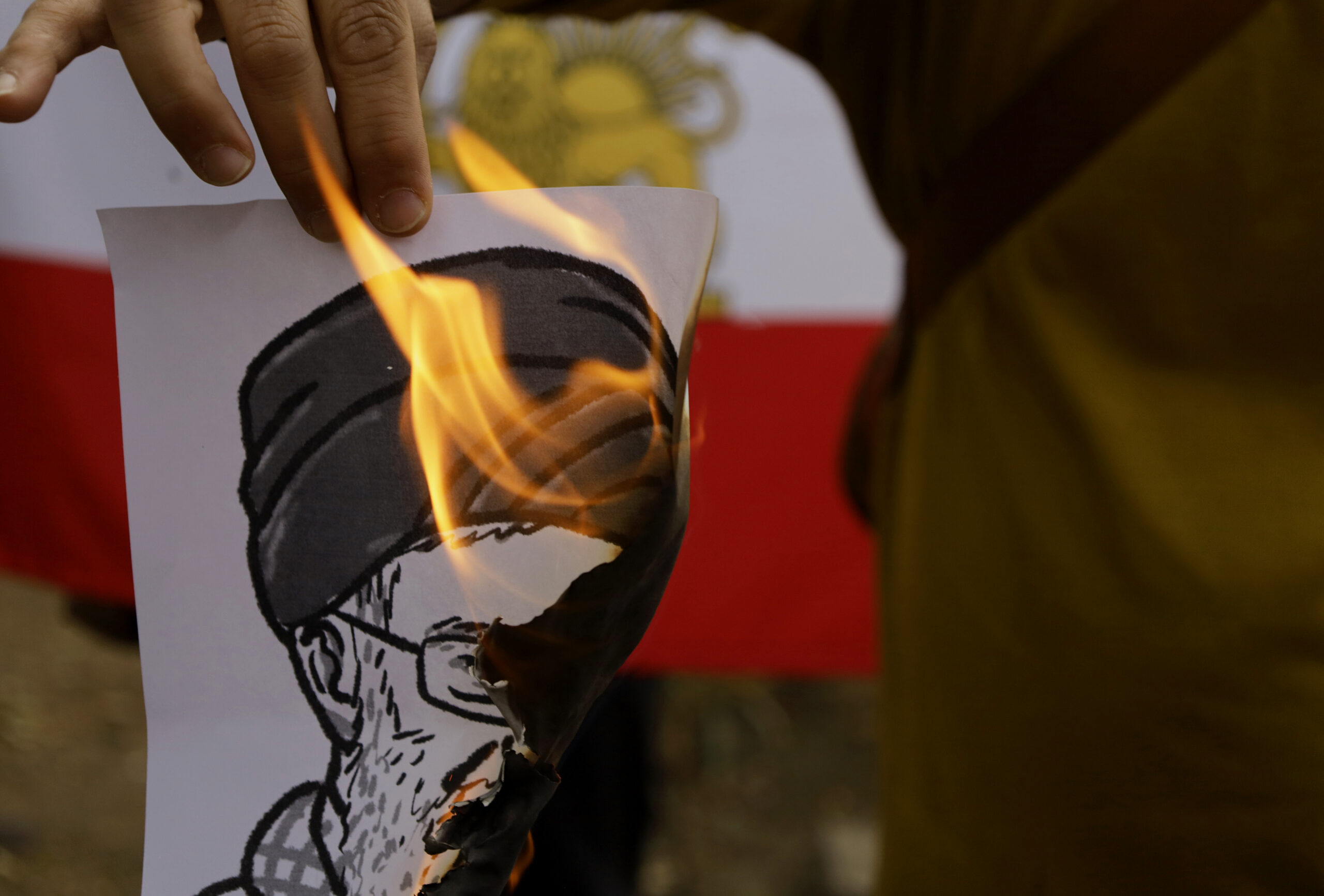
As for Trump’s talk of regime change, it reflects an Israeli misconception that the Islamic Republic is brittle and murdering the right people will produce pliable successors. Predictably, however, the assault on the top of Iran’s government is empowering a harder-line version of the regime, especially the Islamic Revolutionary Guard Corps.
The United States can keep attacking Iran with escalating brutality without winning anything. It can achieve tactical success in degrading Iran’s military while falling well short of its strategic aims. It may even settle into a grim pattern—one the current Israeli government prefers for its neighbors—of periodically bombing Iran to weaken and perhaps destabilize it.
Subscribe Today
Get daily emails in your inbox
Or we could just stop the war.
Will the U.S. ceasing its attacks cause Iran to let oil shipments flow? Maybe. After all, Iran did not attack oil infrastructure during the 12-Day War when Israel was the principal antagonist. But if Iran keeps targeting oil to push Washington to restrain Israel, then Washington should do exactly that. It could threaten to reduce or even end the missile defense, financial support, and other backing that insulates Israel from the consequences of its aggression. After some grumbling and delay, Israel would likely comply thanks to its resource constraints.
This war is unlikely to end in an arms-control agreement or an Iran so broken that it renounces self-defense. It certainly won’t produce a nice, friendly regime there. Any peace will be cold and rest on a harsher regional balance of power. But that is now largely unavoidable—and still preferable to the bleeding wound we inflicted on ourselves. The sooner we make Iran someone else’s problem, the better.