Know the Realist by His Fruits
Two new books on Henry Kissinger and Zbigniew Brzezinski attempt to relitigate the ranks of both statesmen.

Zbig The Life of Zbigniew Brzezinski, America's Great Power Prophet, by Edward Luce. Simon & Schuster, 560 pages
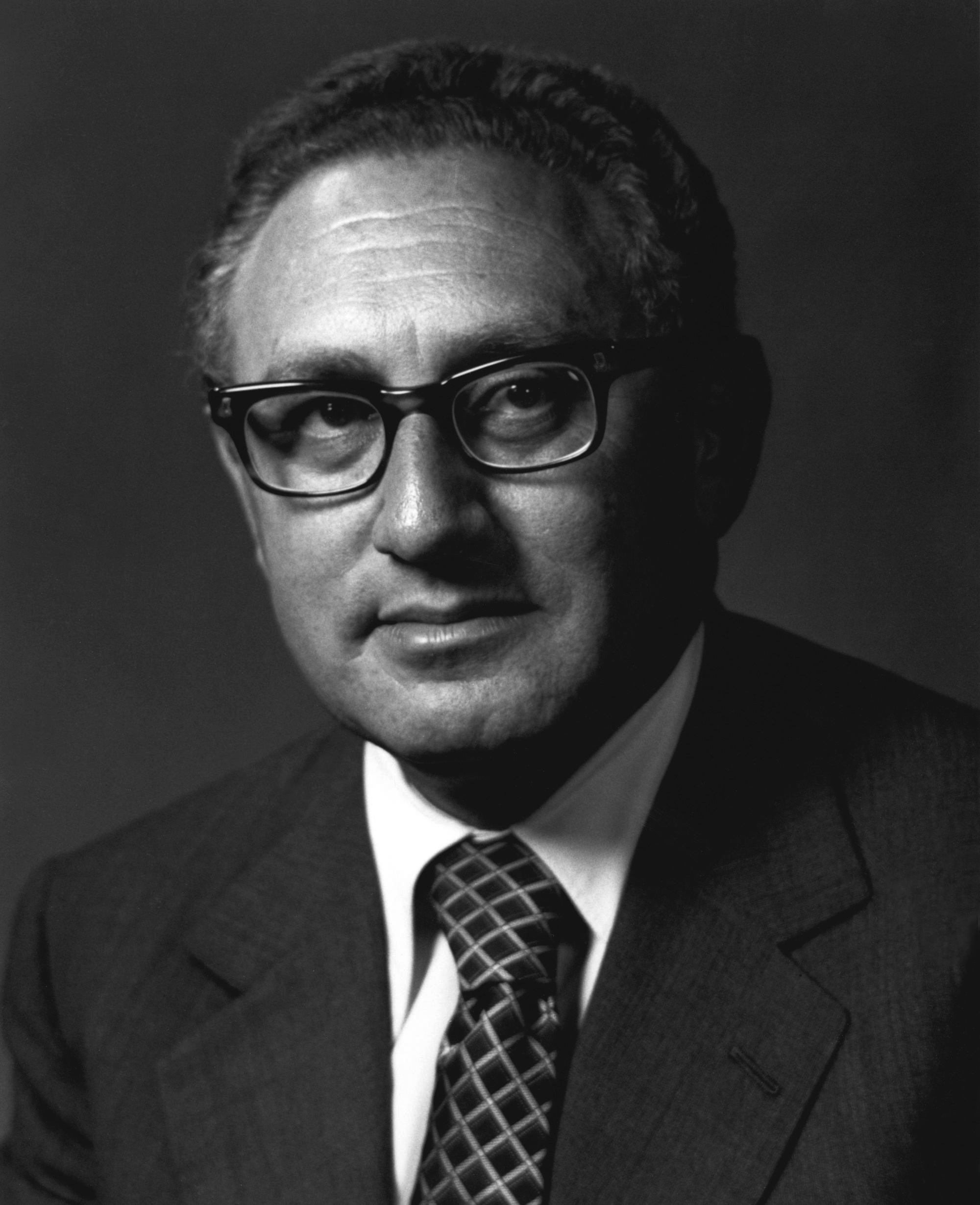
Henry Kissinger, the European, by Jérémie Gallon. IPS Profile Books, 240 pages
There is an absurd modern tendency to call every statesman a realist. It is of course not possible for Mike Pompeo, Donald Trump, and Barack Obama all to be foreign policy realists. But google, and you will find that all three of them have been so called and assumed into the intellectual lineage of, say, George Kennan. This is obviously preposterous. You can support whatever you want, but you don’t get to claim the mandate of a word that has a very specific meaning and core concepts, around a century of academic writing in the discipline of history and statecraft, and an even older and more formidable worldview that stretches back to Thucydides and Kautilya. Better men than us have defined the word already.
Two new books, Zbig The Life of Zbigniew Brzezinski, America's Great Power Prophet (Simon & Schuster) by Edward Luce, and Henry Kissinger, the European (IPS Profile Books) by Jérémie Gallon, attempt to relitigate the two American titans and their respective statecraft. In the arena of page count, Zbig, at around 560 pages, wins over Henry’s mere 240. Nor is it the only point in favor of Zbig. Luce is at least thorough, and also a better writer, compared to the more polemical Gallon, who straight off the bat argues that his book isn’t a typical biography but an “intellectual portrait.” I am sure it sounds posh in French.
A.J.P. Taylor wrote that Joseph II ensured that Vienna turned properly meritocratic and imperial by breaking connection with the state church, freeing the Protestants and, most importantly, the Jews. “By freeing the Jews,” Taylor wrote, Joseph freed the most loyal and intelligent realists of the imperial official class. They were not worried about the pesky arbitrary debates about nationality or ethnic or clannish connections; they cared about their empire above all, the first true such post-national imperial officer class in modernity. “The Jews alone were not troubled by the conflict between dynastic and national claims: They were Austrians without reserve,” per Taylor.
Any discussion of Kissinger and Brzezinski should start similarly with the question of identity. Both were outsiders, as were many brilliant men who came to these shores. Kissinger was a Jewish refugee from Germany who saw the aftermath of the collapse of the Austro-Hungarian empire and the rise of Nazism in Europe. Brzezinski, a Catholic, was the son of the Polish diplomat Tadeusz Brzezinski, himself born in the dying days of the Austro-Hungarian empire. Revolutionary and nationalistic upheaval in Europe affected both of them personally, and both drew very different conclusions from that unleashing of the enormous civilization-destroying forces beyond their control. Kissinger’s realism was predicated on great-power equilibrium over pedestrian questions of morality. Brzezinski’s “realism,” such as it was, was about power and imperial stability.
Consider Brzezinski’s reactions to the principal European question of our time, what might be called the Russian sphere of influence. When George H.W. Bush warned against any rash nationalist movement in Ukraine that might antagonize Moscow, Brzezinski supported Bill Clinton. Brzezinski, like Madeline Albright, was an early and strong proponent of NATO enlargement and the accession of Poland, the Czech Republic, and the Baltic states, arguing that it was a one-time opportunity to provide stability in a region beset by nationalist rivalry. Brzezinski, always worried about Ukraine (the bread basket of Europe, in his words) falling into the hands of Russia, urged the “Finland option” for the country in 2014. He subsequently urged arming Ukraine to the teeth, even while warning not to induct Ukraine into NATO. “A major country like the United States has to have a broadly conceived program for effective international action, influence, and cooperation with others,” Brzezinski said in 2017, discussing Donald Trump.
Contrast Kissinger. “Ukraine has been independent for only 23 years; it had previously been under some kind of foreign rule since the 14th century. Not surprisingly, its leaders have not learned the art of compromise, even less of historical perspective,” Kissinger wrote on Ukraine. “The West must understand that, to Russia, Ukraine can never be just a foreign country.” While he considered it a defensible fait accompli in his final years, he opposed NATO enlargement that includes the post-Soviet space, and as late as 2022 urged Ukraine to cede territory to find a negative equilibrium and peaceful coexistence with both EU and Russia.
Unlike Brzezinski, Kissinger, one can assume, had no personal ethnic or historical animosity towards a satiated Russian power in the east of Europe. That detachment gave him a necessary strategic clarity that others lack. He was, like Austro-Hungarian Jews before him, an American imperial officer first and foremost. Of all his memorable quotes—and Kissinger was a phenomenally gifted and witty speaker compared to a more dour Brzezinski—one stands out as the most interesting, and also perhaps the most controversial. “The emigration of Jews from the Soviet Union is not an objective of American foreign policy,” Kissinger said in the Nixon tapes, “It is not an American concern. Maybe a humanitarian concern.” Nixon agreed: “We can’t blow up the world because of it.” Great-power equilibrium above all was then, and remains, the signature of realism.
It is understandable why a British romantic such as Luce prefers the provincial idealism of a second-tier aristocrat such as Brzezinski to the elite, detached, and completely amoral realism of Kissinger. “Over Vietnam,” Luce writes, “[Brzezinski] was more than willing to exchange blows with realists. One of the war’s leading critics was Hans Morgenthau.” On Russia and identity, Luce is even more explicit. Luce quotes Brzezinski: “I was aware that a large part of my identity is formed by what follows from Polish history. Therefore Poland was with me every step of the way—also when I served as a high-ranking official of the United States government.” Luce comments, “Dread of Russia was a nonoptional piece of that Polish identity.”
It is also likewise understandable why Gallon chose Kissinger as a subject of reinterpretation and study in Europe. The European Union is reinventing its own imperial project, as the world returns to the familiarity of multipolarity, spheres of influence, and territorial conquest. Characteristically French and quintessentially European in orientation, Gallon’s monograph interprets Kissinger through a pronounced ideological prism, positioning him as an exemplary archetype for a prospective unified, post-ethnic, secular, meritocratic, and amoral European imperial foreign policy. “Kissinger’s life and work contain many lessons that could allow us to build a strong Europe”, Gallon writes, lamenting that “there is something tragic in the fact that it was not in the service of Europe that Henry Kissinger deployed his vast talents.”
Both Kissinger and Brzezinski understood that the breakdown of peace among great powers and a total war is the most destructive phenomenon in foreign affairs. Kissinger’s instinct was balance of power: His doctoral thesis, which was turned into his first and possibly the best book, was on Metternich and the Concert of Europe, the balancing of ethno-nationalist urges and revolutionary instincts across the continent. Kissinger is temperamentally closer to historic Anglo-Austrian imperial realists than Brzezinski, who was at his core a reactionary minor aristocrat.
Performance-wise, however, the debate should be concluded.
Subscribe Today
Get daily emails in your inbox
Kissinger, during his term as the national security advisor and later secretary of state under Presidents Richard Nixon and Gerald Ford, orchestrated the historic opening to China in 1971, secretly traveling to Beijing to pave the way for Nixon’s groundbreaking visit. This initiative not only laid the foundation for normalizing relations with the People’s Republic but also exploited the Sino–Soviet split to create a strategic triangle that pressured the Soviet Union and shifted global power dynamics. This maneuver ultimately led to détente; the easing of tensions with the USSR led to arms-control agreements and fostered a period of relative stability after a decade of nuclear anxieties. Around the same time in the Middle East, Kissinger’s shuttle diplomacy following the 1973 Yom Kippur war resulted in disengagement agreements between Israel, Syria, and Egypt, laying the groundwork for future peace efforts, including the Camp David Accords. He was instrumental in negotiating the Paris Peace Accords in 1973, which facilitated the American withdrawal from Vietnam, ending direct American military involvement in the conflict after years of stalemate and domestic unrest.
Compared to that, Brzezinski’s greatest achievements were merely continuations of Kissinger’s legacy: normalizing diplomatic relations with the People’s Republic of China and laying the groundwork for full recognition in 1979, brokering the Camp David Accords in 1978, helping bridge differences between Egypt’s President Anwar Sadat and Israel’s Prime Minister Menachem Begin to achieve a framework for peace that led to the Egypt-Israel treaty. His personal diplomatic initiatives remain questionable. He advocated for the transfer of the Panama Canal to Panama; completely misreading the situation in Iran, he shortsightedly supported the shah instead of the Iranian liberals and was left unprepared for the hostage crisis. He was the primary advocate of providing covert weapons to the Afghan mujahideen following the Soviet invasion of Afghanistan in 1979. While the opportunity to give the Russians their own Vietnam was tempting, with the benefit of hindsight, the long-term unintended consequences are debatable.
There is no comparison. Kissinger’s record speaks for itself. To institute détente while simultaneously wrecking global communism as a force by first initiating and then exploiting the Sino–Soviet split, withdrawing from the most ruinous martial stalemate in American history in Vietnam, and achieving a long-term equilibrium in an oil-rich region are the acts of a proverbial great man of history. Kissinger’s genius was achieving them in the mere span of five years. By contrast, Brzezinski’s first original idea resulted in the Panama handover in 1999. The impact of the second original idea is still being written in blood in the land south of the Hindu Kush.