Hegseth ‘Double Tap’ Brings Legality of Entire Narco Campaign Into Question
The latest scandal engulfing the Pentagon highlights questions that have been there since the beginning of Caribbean operations.
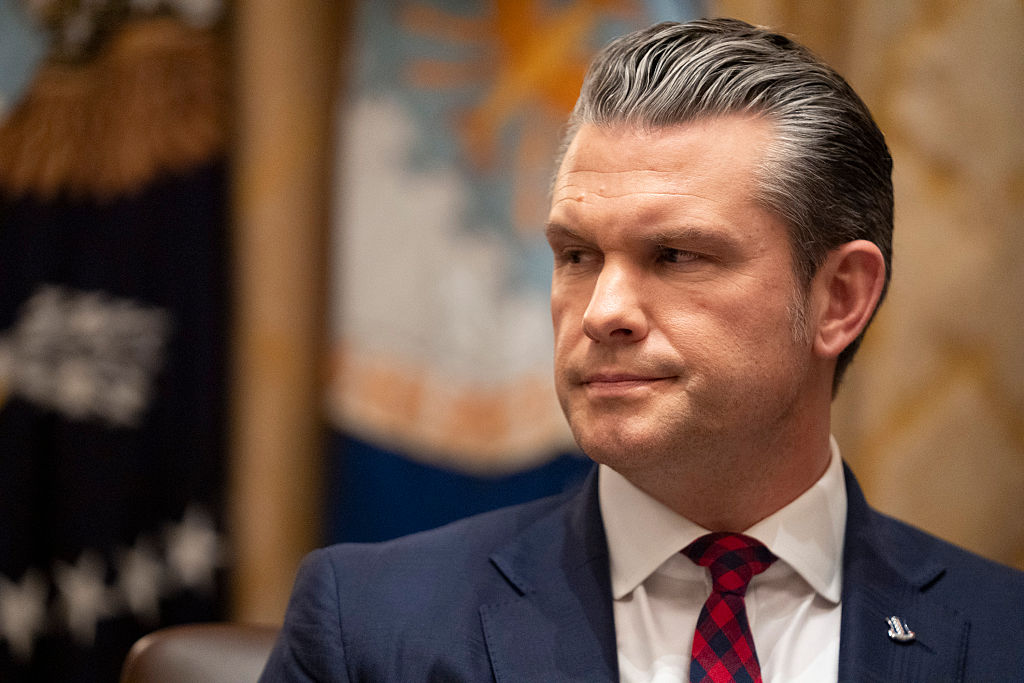

A firestorm over whether the Defense Secretary Pete Hegseth ordered a second strike on survivors after their “drug boat” was bombed back in September has brought the legality of the entire campaign out of the so called “fog of war” and more widely into the public court of opinion. And that’s a good thing.
“Hopefully, members of Congress will take this opportunity to reexamine the entire boat bombing scheme as a whole,” said Brian Finucane, a former counterterrorism legal advisor for the U.S. State Department. “The White House has been using military force at sea without congressional authorization and in defiance of the War Powers Resolution. More lawmakers should join the bipartisan pushback against this unauthorized killing spree as well as a potential unauthorized war with Venezuela."
The episode involving the killing of survivors has also spurred investigations, led by top Republicans on each of the armed services committees—a rare breaking of ranks. They have been publicly questioning Hegseth’s behavior and culpability in what is widely considered by legal experts to be a violation of international human rights law—that is, if you believe that the U.S. is engaging in a legal armed conflict with drug cartels. If you do not believe the United States is in an armed conflict (Finucane’s position), killing the survivors would still be a violation of the U.S. Code of Military Justice—premeditated “murder on the high seas.”
“You don’t have to have served in the military to understand that that was a violation of ethical, moral and legal code,” Sen. Thom Tillis (R-NC), said this week. Admiral Frank Bradley, head of U.S. Special Operations Command, who was in charge of the September strike in question, briefed senators in a closed door meeting on Thursday. It is the second with senators since they have asked the administration to explain their strategy and authorities for the strikes overall. They left that one unimpressed, too, according to reports. In making the case, the administration has referred to a still-secret memo that assures that the U.S. is legally in a formal state of armed conflict with “narcoterrorist” drug cartels and their boats are carrying drugs to finance that conflict.
Several lawmakers who were in the closed door hearing shared that they were more concerned than ever after hearing what the admiral had to say. This wasn’t a wholly partisan response. According to Axios, senior member of the House Armed Services Committee Rep. Mike Turner (R-OH) said that he was particularly “concerned” and wondered aloud why the survivors weren’t captured, tried, and convicted and instead “subject to capital punishment.”
Even the traditionally hawkish Wall Street Journal editorial board has weighed in on the matter with circumspection.
“The charge of deliberately killing the defenseless is serious enough to warrant a close look from Congress,” the editors wrote, continuing:
Our view is that the Commander in Chief deserves legal latitude as part of his constitutional war powers. But that doesn’t extend to shooting the wounded in violation of U.S. and international rules of war. The Pentagon’s own law of war manual prohibits “hostilities on the basis that there shall be no survivors.” Such excesses will also turn the public against allowing a President the power he may someday need to defend the country’s interests quickly.
Ahead of the closed-door meeting Thursday, defense officials said Bradley would be telling members of Congress that he had ordered a legitimate second strike because the survivors, accused drug smugglers, had called for help from another boat and looked to be securing the drugs on the ship (which had been earlier reported by Hegseth to be so consumed in flames that he could not see if anyone was alive).
In any case, it is a political and professional squeeze for Hegseth, who also faces scrutiny this week for his role in “Signalgate” earlier this year. According to reports, a Pentagon inspector general report has found that he violated security protocols and endangered U.S. troops and objectives by using the Signal messaging app to chat about the operational details of U.S. strikes on Yemen in March.
Rep. Michael McCaul (R-TX) played down the implications of the findings in an interview Wednesday night, but nonetheless acknowledged that “we have a duty both in Congress and the Executive to ensure … every time you send troops in harm’s way ... you want to keep [communications] as close to the vest as possible. I think overall I think the perception is it was a bit reckless…You don’t want to give the enemy advance notice of your intentions.”
"All of this adds up to very, very poor judgment,” Senator Jack Reed (D-RI), ranking member of the Senate Armed Services Committee, told CBS Wednesday night. “As I said at his confirmation hearing, I did not believe he had the competence, the temperament, and experience to be secretary of defense, and he has proven that.”
In addition to legal experts like Finucane, military veterans and lawmakers, including Reps. Thomas Massie (R-KY) and Ro Khanna (D-CA), told The American Conservative Wednesday that the diminishing confidence in Hegseth’s helming of the Pentagon invites a much bigger reckoning of Trump’s campaign to bomb so-called narco boats in the Caribbean and Eastern Pacific, of which there have been more than 20 incidents and more than 80 people killed to date.
“I do think this is turning the debate,” Khanna said of the “double-strike” or “double-tap” imbroglio. “Listen, I don’t think the people want an American government killing on their behalf when there is no explanation of why or standards being set. People in this country are very proud of their national defense but they have a great sense of a moral compass and they don’t like that people are being killed that may or may not be guilty. There is a rule of law.”
The increasing scrutiny could breathe more oxygen into efforts on Capitol Hill to rein in what the president is doing. Massie joined Democratic House members to introduce a war powers bill this week to block the administration from engaging in strikes against Venezuela. It is one of several (so far failed) attempts in Congress this year to curb Trump’s powers to engage military force without congressional authorization, which both Massie and Khanna believe is unconstitutional.
“We can debate the finer points of whether they're allowed to do a second strike... but the reality is, the first strike was illegal, and all of the other strikes were illegal, and you're saying it's terrorism that authorizes them to do this, but that's quite a stretch,” Massie told TAC Wednesday. “There’s not even an AUMF [authorization for the use of military force] like when they typically talk about the Global War on Terror. Congress hasn’t even declared a Global War on Narco Terrorism, yet, right? That doesn’t exist.”
Critics who take this view are concerned the forest is being missed for the trees, that all the talk about the legality of killing survivors ignores the bigger picture.
“Those rushing to their partisan corners to condemn or defend Secretary Hegseth on the narrow grounds of this latest news cycle have lost sight of the fact that this whole campaign is an unlawful enterprise built on obfuscation, executive overreach, and a largely supine Congress,” said Brandan Buck, an Afghanistan War veteran who is now a foreign policy fellow at the Cato Institute.
“The scandal that has unfolded from the alleged ‘double tap’ incident elides the real scandal with ‘Operation Southern Spear,’ that the Trump administration is waging an air and naval war against noncombatants who don’t pose an immediate threat to Americans and is doing so without Congressional authorization,” he added.
Matthew Hoh, also an Iraq and Afghanistan veteran, said he too, would like to see the lens of the debate around Hegseth widened out for a full airing of the Executive Branch’s unaccountable, illegal use of military force over the last 25 years.
Subscribe Today
Get daily emails in your inbox
“I am glad this conversation is coming up and I am pleased to see some of the critique coming from Republicans. Of course I would have preferred to see this conversation occur when the Obama administration was doing double tap strikes against first responders and hitting funerals,” not to mention U.S. culpability in Israel war crimes in the recent war in Gaza, he told TAC.
“To say that what the Trump administration is doing without acknowledging the precedent that has allowed it to conduct such actions means such actions are likely to occur again in the future, regardless of what action is taken against this administration,” Hoh added.
“I should add I think that ultimately any real action, in terms of proscriptions on drone warfare for example, is unlikely as I think this is more ultimately about the administration, than about the policies and infrastructure of American overseas warfare that have been in place for decades.”