Greenland Is a Punishment for Europe’s Role in Ukraine
Europeans can expect more of the same until they get with the peace program.
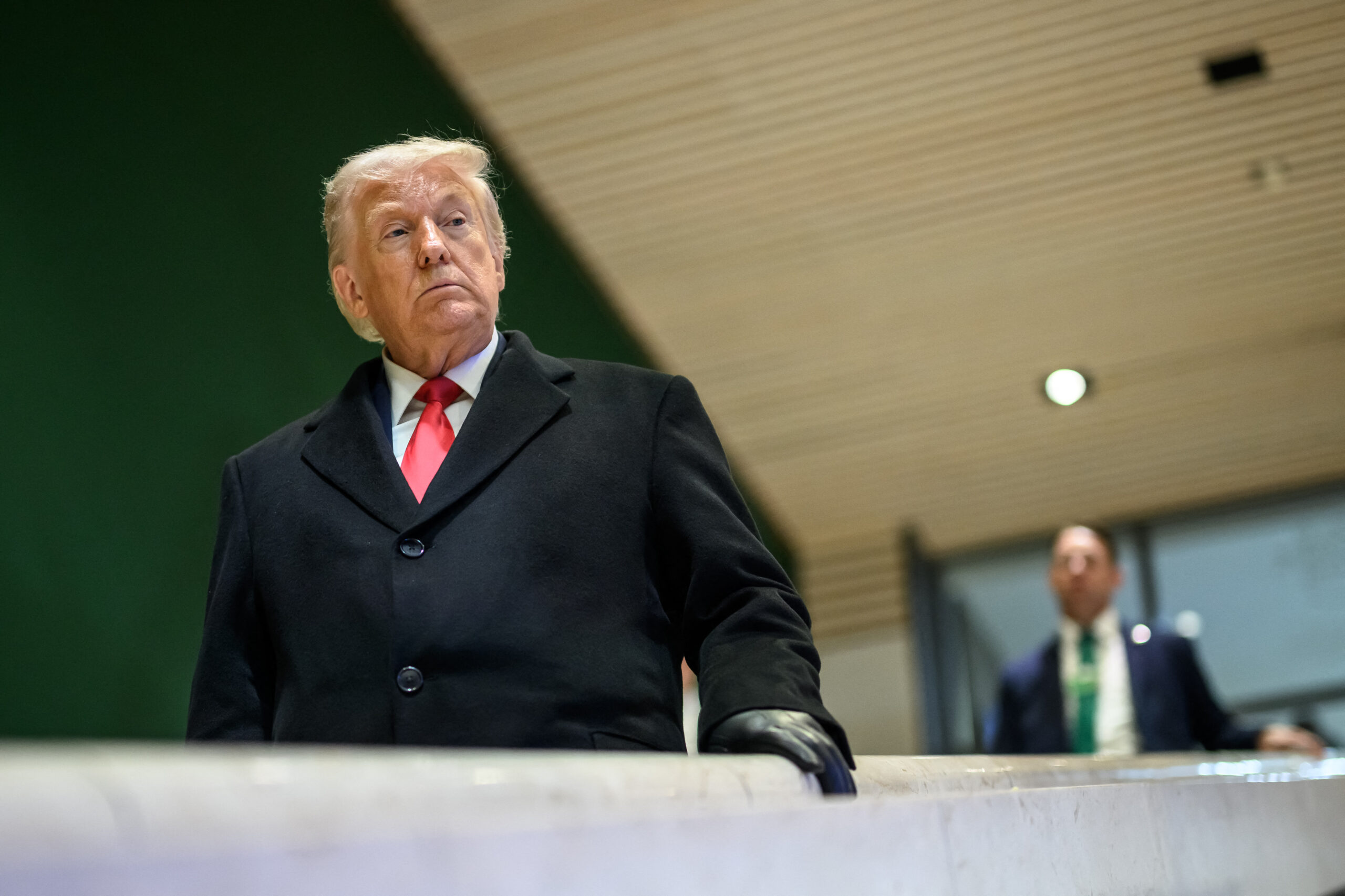
President Donald Trump’s Greenland rhetoric has knocked European leaders completely off balance. Whether this was the intended effect of Trump’s threats or the president simply wants to take the island matters little at this stage—the most important objective impact that the Greenland discussions have raised is the impact that it is going to have on NATO, the so-called “transatlantic Alliance,” and the Ukraine war.
Although it is almost besides the point, it is probably worth addressing the moral-legal question first. For what it is worth, I feel sorry for the people of Greenland who have gotten caught up in a game that they were not prepared for. Nevertheless, the hypocrisy that is oozing out of the European capitals is odious. They act as if a unilateral action by the United States against a territory that does not belong to them is a challenge to the Mandate of Heaven. Yet only a few days ago these same leaders were cheering on Trump’s so-called “police action” in Caracas, Venezuela.
Recall that when the Secretary General of NATO, Mark Rutte, called Trump “daddy”—giving the world a glimpse into the sordid relationship that has developed between the United States and its masochistic vassals in Europe—Rutte was referring to the Trump administration’s strikes on Iran’s nuclear facilities. Laying aside judgment on the actions in Venezuela and Iran, the point is that the Europeans are perfectly fine with military interventions in other countries so long as these countries are outside the sacred alliance. One is reminded of European Commission Vice President Josep Borrell’s comments in 2022 that the world outside the European “garden” is effectively a “jungle”—and so, one infers, the laws of the jungle apply.
Yet this is not just a case of the current crop of European leaders’ almost nostalgic, neocolonial racism—a grubby little fantasy they live out vicariously through “daddy’s” interventions in their old stomping grounds. The European leaders care just as little for the populations in Europe. There was no outcry when the Obama administration bombed Libya, which resulted in a migration wave that destroyed the European social fabric. Nor were they outraged when the Nord Stream pipeline mysteriously exploded, setting in motion the deindustrialization of Europe. They cheered all of this on. They are only opposed to Trump’s Greenland intervention because it rubs up against their egos and exposes them as the weak subordinates they have long been.
The Greenland drama is a narcissistic European drama in every sense of the word. The European leadership class is a global joke, laughed at in capitals around the world. They can tolerate this, however, because they still see their deindustrializing, politically unstable, war-ravaged continent as a “garden” to the rest of the world’s “jungle”. This is a delusion of the sort not seen in Europe since Hitler whiled away his final days in the Berlin bunker, and it is seen for what it is from Washington to Moscow to Beijing. But it is a delusion sufficiently strong that it allows the European elite to keep their composure at their self-important events—events that grow smaller and less relevant by the day. The problem with Trump’s Greenland overtures is that they intrude on these little Potemkin villages that the ailing elite have built for themselves.
In the language popular amongst the European elite steeped in recent European philosophy and culture: Trump threatening to take Greenland shows the Europeans that the “Big Other” does not exist. In the structuralist language popular in Europe, the “Big Other” is a symbolic system of social assumptions, norms, and codes that exists to structure the social environment. The key nodal point in the European “Big Other”—which holds together the social environment in Europe that we might call, drawing on Borrell, “the garden”—is the idea that America always looms in the background as a benevolent father, a daddy that ensures order in the garden and keeps the jungle at bay. By threatening to take Greenland, Trump has offended the European elite at the deepest level by suggesting that, perhaps, Europe itself is part of the jungle and that the garden is an illusion.
Whether the entire Greenland saga is designed to wean the childlike Europeans from the American teat, I do not know. If I were to guess, I would say that the Greenland discussion started to catch wind, and the Trump administration saw it as a perfect opportunity to sabotage the toxic relationship that has developed between the United States and Europe—especially since the beginning of the war in Ukraine. Whatever the aetiology, it is now perfectly clear that the Americans are using the Greenland issue as a stick that they are wielding to give the Europeans a violent and very public beating.
Why does the Trump administration feel the need to thrash the Europeans in public like a misbehaving servant? Because the Europeans will not listen. The President and his entourage have told the Europeans repeatedly, in no uncertain terms, that the war in Ukraine must end and Europe must find some way to live in peace with Russia. But the Europeans have reverted to their usual catty form and used every means at their disposal to sabotage any negotiations—much less any future security architecture—at every turn. Their strategy appears to be to try to keep the war going until 2029 when a Democratic challenger will rise to power and fight the Russians on behalf of the Europeans.
Subscribe Today
Get daily emails in your inbox
This position is not just immoral; it is also delusional. From a moral perspective, the liberal elite in Brussels and in other European capitals have cultivated a cynicism about Ukrainian lives that borders on ritual blood sacrifice. It is disgusting and will be viewed by civilized people in the future for what it is. But even from a purely pragmatic political perspective, the prospect of a Democratic white knight riding to the rescue is unlikely. The Democrats are not remotely interested in the Ukraine war or in Europe. The war has failed to defeat Russia; it was the defeat of Russia that was of interest to the post-Russiagate Democrats; ergo, the war is now uninteresting. In the Epstein files, the Democrats have found a new toy to play with—one that implicates one or two key figures on the European side, including at least one prominent former ambassador appointed precisely to deal with Trump.
Are Trump’s threats to take over Greenland serious? Are they moral? Who knows. But what is serious, what is immoral, and what is extremely dangerous—indeed, threatening the world with conflagration if not managed properly—is the blasé European attitude toward a collapsing war on their borders. The European leaders are too weak, too decadent to deal with the problem themselves, and they refuse to allow anyone else to deal with it for them. For this reason, we should expect the humiliations to continue until the Europeans swallow their pride (if they have any left), admit that the war is lost, and wake up to the fact that they need to live beside the Russians.
If they cannot do this, we should expect the humiliation rituals to get increasingly aggressive, until eventually the European population can no longer stand by and watch their leaders pour the dignity of the European peoples down the drain. At that point, European leaders will start to see the “jungle” that they have created across Europe start to seep into the little “garden archipelagos” that they continue to jealously inhabit. It would be strongly in the self-interest of the European elite class not to let things get that far.