Your $20 Burrito Was Made in Washington
President Trump’s Iran War leaves him politically exposed amid the affordability crisis.

The Flying Burrito Brothers were a classic country rock band that was at its best in the late 1960s and early 1970s. Evidently, later configurations persisted for years afterward even without the participation of key original members.
There is now a new reason for the band, in whatever form it currently exists, to retire the name: It more accurately describes members of the very online conservative movement in the year of our Lord 2026.
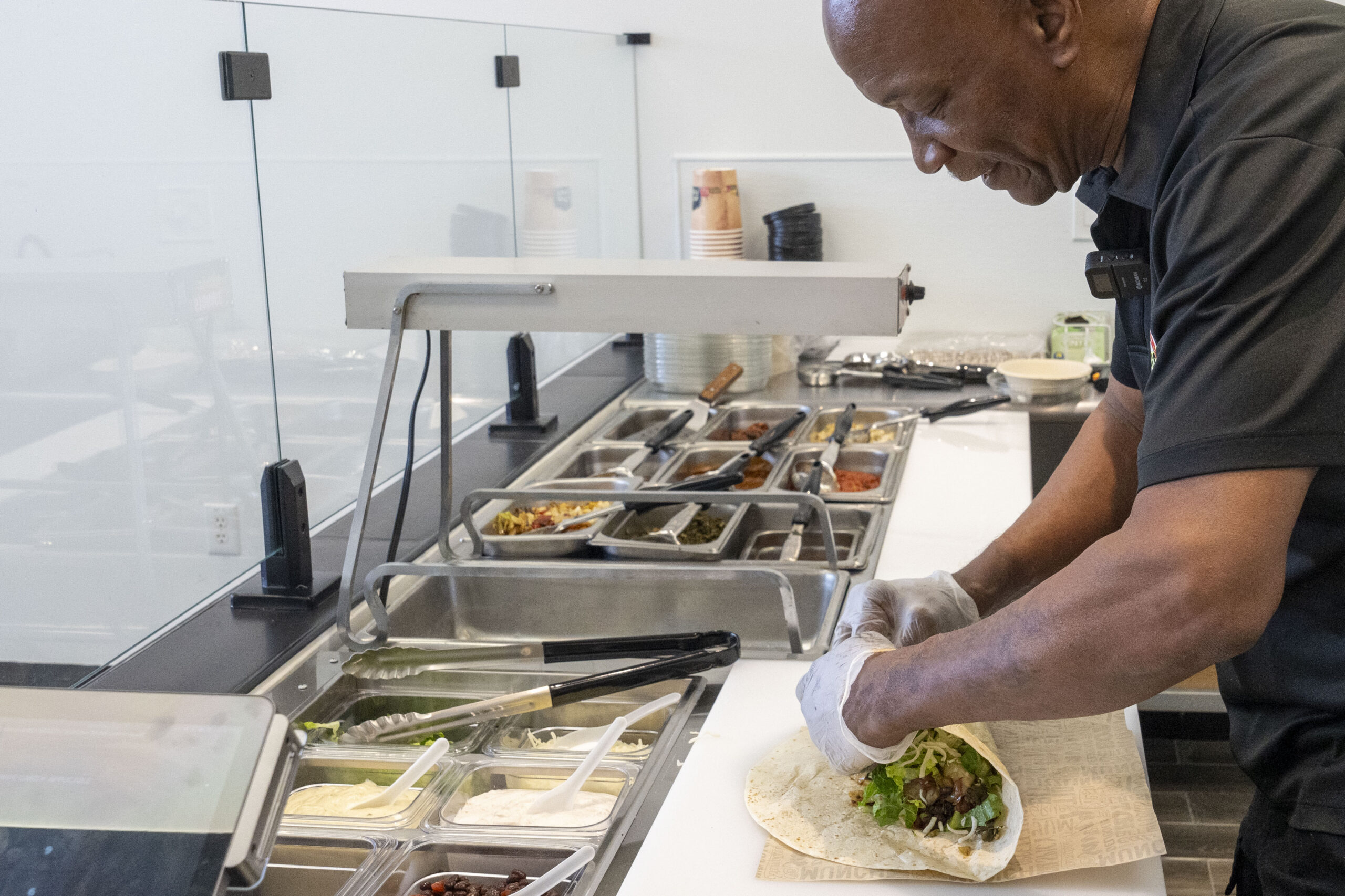
Having anticipated the great burrito debate many months before the meat, beans, and cheese went flying across social media, I had little interest in reheating and rewrapping the tortilla around my caliente take a second time. Yet the food fight persists and the result has been unsatisfying.
Especially since many of the pundits who are proof-texting tweets about Chipotle make technological innovations like the iPhone and the widespread availability of consumer goods central to their defense of free markets against the rising tide of socialism.
Once again, it is not that the personal financial advice being dispensed in the name of fixing what we’ve taken to calling the “affordability crisis” is necessarily wrong, at least not in every particular. (Though if we’re going to approach the issue from a “kids today” perspective, the only generation with entirely clean hands is still too young to vote.)
But even the most sage counsel, accompanied by detailed studies of fast-casual menu prices, ignores the macro-level problems. The country did not Door Dash its way to the highest inflation rate in 41 years under former President Joe Biden. Nor did it Uber Eats its way into a quagmire in Iran that has begun to consume the second presidency of Biden’s predecessor-turned-successor.
And while the Nixon-maxxing lads of the New Right can be forgiven for not remembering this, we fusionist old-heads ought to recall that better personal budgeting is not how inflation was resolved the last time it defined American politics more than four decades ago.
It was Jimmy Carter who urged Americans to turn out the lights and accept new limits on what was economically possible, favoring personal (as opposed to fiscal) austerity measures as the solution to the rising cost of living across multiple administrations of both parties. Ronald Reagan asked voters in 1980 if they were better off than they were four years ago, and pointed to the misery index—also apparently a band name—to illustrate that they were not. He won in a landslide victory.
By the time Reagan left office, inflation had largely been eradicated as an economic and political problem, never to return again in a broad-based way until the pandemic. And this happened without Reagan balancing the budget, paying down the national debt, or making more than modest reforms to entitlements, three problems he most certainly did not solve (though his deficits sure look manageable in retrospect).
Milton Friedman, rather than some crazed postliberal trying to squeeze every ounce of common good out of the government’s economic powers, famously said inflation “is always and everywhere, a monetary phenomenon. It’s always and everywhere, a result of too much money, of a more rapid increase in the quantity of money than in output.”
“If you listen to people in Washington talk, they will tell you that inflation is produced by greedy businessmen or it’s produced by grasping unions or it’s produced by spendthrift consumers, or maybe, it’s those terrible Arab Sheikhs who are producing it,” Uncle Miltie continued. “Now, of course, businessmen are greedy. Who of us isn’t? Trade unions are grasping. Who of us isn’t? And there’s no doubt that the consumer is a spendthrift. At least every man knows that about his wife.” (Ooh, based!)
Having previously established that “inflation in the United States is made in Washington and nowhere else,” Friedman added that “neither the businessman, nor the trade union, nor the housewife has a printing press in their basement on which they can turn out those green pieces of paper we call money.”
Just as we tell drug addicts there is no chemical solution to a spiritual problem, there is no apolitical solution to a problem caused by the government. And while it is true that the voters would scream bloody murder if real fiscal discipline was imposed, that didn’t for the most part happen under Reagan or at all during President Donald Trump’s first term, when inflation often ran at less than 2 percent a year.
Trump in his second term has other priorities, apparently, besides lower prices. He is understandably frustrated that Democrats are eating his $20 burrito lunch on affordability even though most of the cumulative inflation occurred on their watch, between his two terms, and they are increasingly nominating candidates advocating policies more inflationary than Biden’s.
Subscribe Today
Get daily emails in your inbox
But Trump is also the actual head of the Republican Party, so when he says higher gas prices must be endured for the sake of preventing an Iranian nuclear weapon he has claimed more than once to have already prevented, it is going to leave a mark politically. Especially when voters can see that whatever the real state of Iran’s nuclear program, the Strait of Hormuz is neither as open as it was before the war nor yet a U.S. territory.
Although the war with Iran allegedly really began under the 39th president’s watch, Trump seems in danger of Jimmy Cartermaxxing, as do conservative scolds in the great burrito debate. Even if some of the newer economic ideas on the left and right are half-baked, Republicans are failing at a basic Reaganite and Friedmanite level.
With friends of free markets like these, there is hardly a need for socialist enemies.