Why Britain Banned Hasan Piker
The UK is using its borders to create a nation-sized “safe space.”
What connects the rapper Kanye West, pick-up artist Julien Blanc, and left-wing broadcaster Cenk Uygur of The Young Turks YouTube channel? All three are Americans who have been banned from visiting the UK, as their presence has been deemed “not conducive to the public good”—which is essentially British bureaucrat-speak for “they have expressed views that some might find offensive.”
The UK has a notoriously lax approach to illegal migrants who traverse the English Channel on small boats. On arrival, even hardened criminals are regularly offered free accommodation, access to public services, and “human rights” protections that ensure they won’t be deported. Expressing controversial opinions, in contrast, may be the one thing that spurs the British government to pull up the drawbridge.
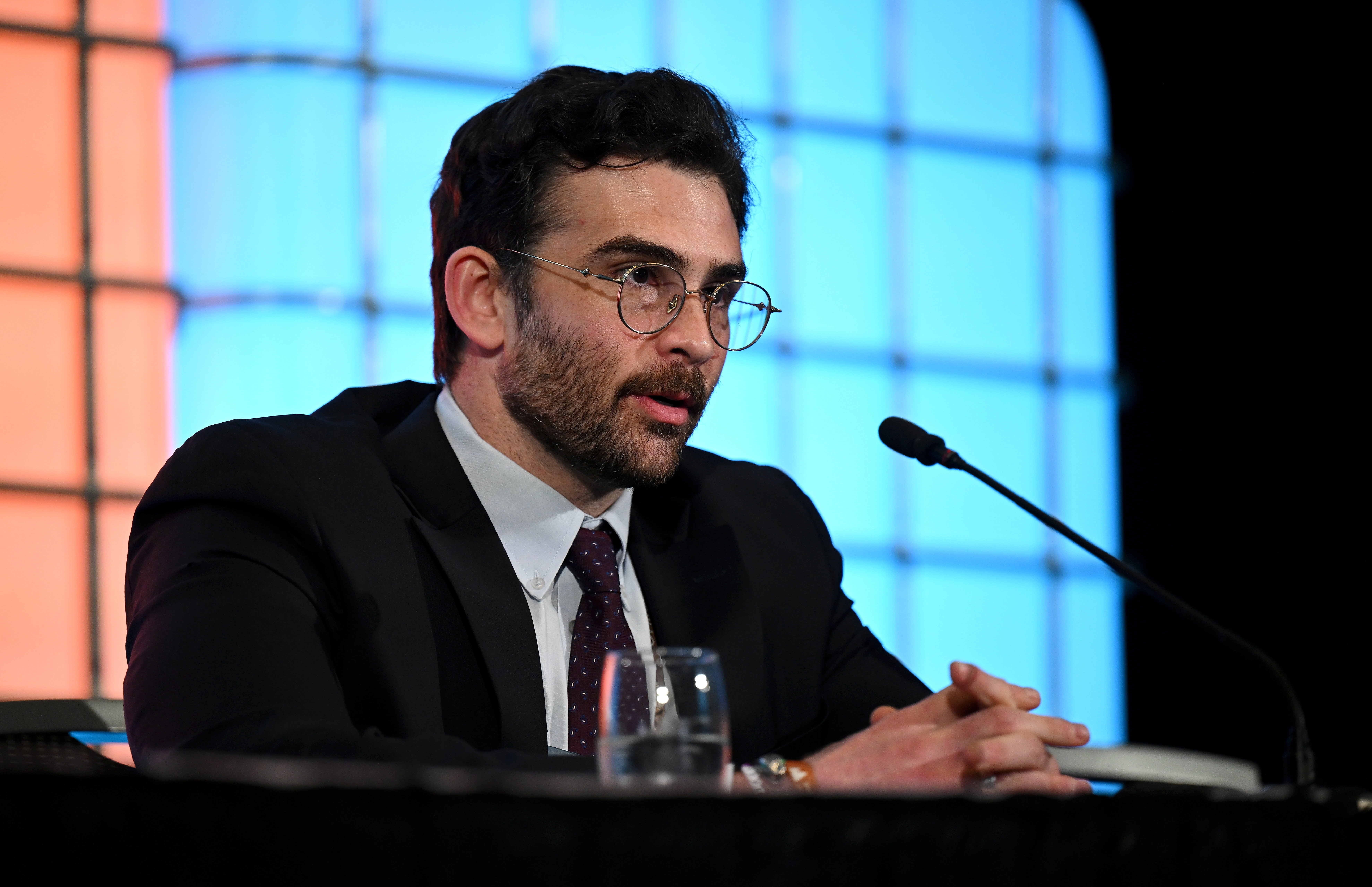
Uygur and his nephew, the livestreaming mega-star Hasan Piker, are among the latest alleged troublemakers to be blocked from entering Britain. The Home Office confirmed in early June that both have had their electronic travel authorization revoked, scuppering their plans to speak at the London arm of the SXSW arts and technology festival. Uygur had also been due to appear in person on Piers Morgan: Uncensored and Piker at the Oxford Union, a debating society founded in 1823.
Of course, like any sovereign country, the UK has every right to decide who it lets in and who it turns away at the border. Yet these powers are clearly being used in a way that is both needlessly illiberal and ultimately irrational. Home Office policies that were developed with criminals and terrorists in mind seem to increasingly be applied to activists, artists, and public figures deemed merely to be irritating to the government.
Legally, the power to revoke or refuse a UK visa, beyond rules barring entry for serious criminal conduct, rests with the UK Home Secretary—currently Labour’s Shabana Mahmood. She need only decide that a person’s presence in the UK is “not conducive to the public good because of their conduct, character, associations or other reasons”—a deliberately vague condition, granting her broad powers and a great deal of personal discretion. There is no right to appeal a visa revocation (although it is possible to reapply for a visa or an electronic travel authorization for a future visit). In fact, there is no legal obligation at all for Mahmood to set out her reasons for blocking a visa, either publicly or privately, to those affected.
In Piker and Uygur’s case, Mahmood has let it be known to journalists that she fears they could stir up antisemitism, and such fears are not baseless. Of course, both insist they are merely critics of Israel and its treatment of the Palestinians. Yet, as even the left-wing, zealously anti-Israel Guardian concedes, Piker has referred to Orthodox Jews as “inbred” and said he would support “Hamas over Israel,” while Uygur is accused of “propagating antisemitic tropes in his criticism of Israel.”
Still, if the aim of the visa ban were to deny oxygen to such views, then this has backfired spectacularly. For one thing, in our age of online live-streaming, opinions and beliefs are not bound by national borders. All Mahmood has really succeeded in doing is generating publicity for her targets. Piker and Uygur were set to address a narrow crowd of media elites—a “festival pass” to SXSW London costs a staggering £1,200. Yet now they have become the talk of the town, and their bans have been covered in every major British newspaper and on every news channel.
Worse, Piker and Uygur have managed to exploit the Home Office’s lack of explanation to advance their conspiratorial brand of so-called anti-Zionism. “I didn't get banned for criticising the UK, but for criticising Israel,” Uygur has since claimed. “They broke the irony record by saying it was because I said Israel might control other governments.” Piker was here claiming to see the hidden hand of the Jewish State behind Mahmood’s decision. He added, with no ambiguity, that she had acted at “the behest of Israel.”
Anyone who follows British politics will understand why this claim is manifestly ludicrous. Mahmood herself is a pro-Palestine Muslim, and the Labour government she serves in has been at loggerheads with Israel for some time now. It has suspended arms exports to Israel and recognised a Palestinian state. Downing Street has even hinted that it would be willing to have Israel’s Prime Minister Benjamin Netanyahu arrested on behalf of the International Criminal Court. These are not the actions of a government under “Zionist occupation,” as a Hamas fanboy might put it.
The truth is that the UK does not need Israel’s influence or insistence—or that of any other nation, for that matter—to behave in such a censorious manner. Britain’s universities “no platform” people for offensive speech. The police arrest people for offensive speech. And the government bans people from the country for offensive speech, too. Effectively, the whole UK is being turned into a nation-sized “safe space.”
What is undoubtedly unusual about Uygur and Piker’s bans is that they are men of the left. The majority of visa bans (at least those that the UK government chooses to publicize) are directed either at Islamists or the hard right. Among those banned in the past decade or so include the Stormfront founder Don Black, the Hezbollah spokesman Ibrahim Moussawi, and the Islamic preacher Zakir Naik, who infamously argued that “every Muslim should be a terrorist.”
Subscribe Today
Get daily emails in your inbox
In fact, only a few weeks before Uygur and Piker were banned from Britain, the Home Office revoked the visas of 11 figures who were due to attend the right-wing activist Tommy Robinson’s “Unite the Kingdom” rally in London. It is hard not to suspect that this played a role in Mahmood’s decision. The UK government is currently under enormous pressure over accusations of “two-tier policing” (that is, cracking down disproportionately on right-wing speech and white working-class protesters). It is also widely seen as insufficiently robust in dealing with antisemitic threats. Banning two left-wing Israelophobes must have felt like an easy way for the home secretary to deflect some of these criticisms.
The upshot of all this is that Britain’s border policies now seem to be based entirely around virtue-signalling and gesture politics. We welcome tens of thousands of illegal migrants to exploit our generosity and kindness. At the same time, we ban American livestreamers to show we have zero tolerance for anyone who might disturb the peace in our multicultural utopia.
Enough. Britain’s borders should be used to protect the British people from genuine harm—from criminality, the undercutting of wages, extreme competition for housing and resources, and other genuine ills—not to save us from naughty words or to be used as a tool for political grandstanding. Maybe following those priorities might be more “conducive to the public good”?