Trump’s Venezuelan Oil Deal Is a Big Gamble
The president is anxious for a win, but taking over Venezuela’s oil reserves might prove a poison pill.

At the end of August, President Donald Trump announced a major deal with the government of Venezuela. The agreement would give the U.S. functional control of about 20 percent of Venezuela’s oil, which equates to over 65 billion barrels—or almost one and a half times more oil than the United States has in its own current proven reserves (which total approximately 46 billion barrels).
The vehicle for the deal is the North American Blue Energy Partners (NABEP), a corporation controlled by Venezuelan businessman Alejandro Betancourt that has concessions across 17 of Venezuela’s oil fields. The U.S. government, acting through the Pentagon’s Office of Strategic Capital, will assume a 35 percent stake in Betancourt’s company; additionally, it will have veto power over appointments to NABEP’s board of directors (the majority of which positions will be required to go to U.S. citizens). Washington will also be guaranteed 20 percent of the concession fields’ production, as well as the right of first refusal for the remaining 80 percent. According to the White House, this will allow the U.S. to refill the Strategic Petroleum Reserve and guarantee American energy security.
Trump, ever the dealmaker, appears to view this as the capstone of his Venezuela policy. Superficially, it bears the hallmarks of a triumph for a kind of crude foreign policy realism: American hard power, deployed narrowly, forced cooperation from a previously hostile neighbor and secured material benefits for the United States.
And right now the Trump administration is eager for any wins it can get. An unpopular war in Iran and a simmering cost of living crisis have left Republicans in a grim spot as November’s midterm elections approach; touting a military victory, complete with the spoils of war, is therefore an attractive proposition. The booty even promises to fill the pockets of everyday Americans and relieve some of the costs of military failures elsewhere: Black gold from Lago Maracaibo and the Orinoco Belt, on this optimistic read, will shortly begin flowing in, replacing the supply trapped in the Persian Gulf and bringing down prices at the pump.
Despite the president’s enthusiasm, however, the Venezuelan oil deal is a clumsy instrument that introduces significant risks. Indeed, the very qualities that make it an attractive target to show off to American audiences at home render it a ticking time bomb for the Trump administration’s Venezuela policy.
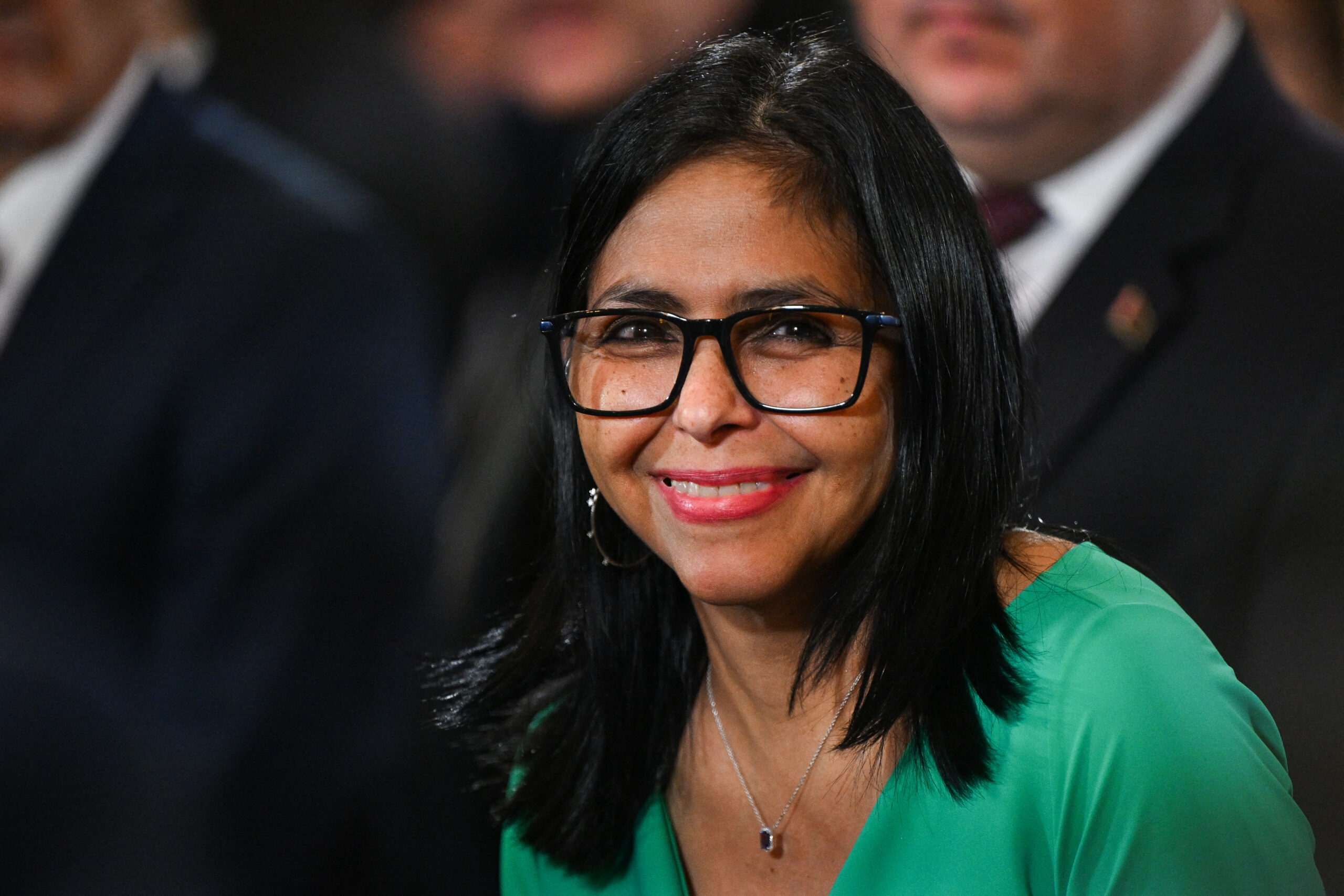
First, and most obvious, the deal is big and flashy, transferring a major chunk of Venezuela’s natural resources directly into the hands of a foreign government. That may provide great optics for Republicans in the United States—particularly with midterms looming—but it makes the deal far more objectionable to Venezuelans. (People are generally unhappy when a neighboring superpower decides to plunder their country.) It will almost certainly weaken Delcy Rodriguez’s government, which, for all its apparent enthusiasm for the deal, is clearly playing along only because it has no other choice. Given that the Trump administration has opted to prop up Rodriguez—and clearly favors her rump Chavista administration to a government led by opposition figures like María Corina Machado—this is something of an own goal. The Venezuelan government is already in a very fragile position with unclear prospects for the future; depriving the state of what little legitimacy it has could have dangerous repercussions.
In the long run, the deal is a political boondoggle that will delegitimize any Venezuelan government or party that supports it—it is too blatantly selling out Venezuela’s own interests to the United States. The U.S. will not be running the country forever; eventually an administration with different priorities will assume control, and the land of Bolívar will again govern itself. When that happens, this agreement will be a major liability, one with which any political force that hopes to govern Venezuela will have to reckon. Altering or unwinding the deal, either in negotiations with the U.S. or unilaterally, will probably be a major feature of Venezuelan politics in the coming decades. Ironically, it may even set the stage for the next Hugo Chavez, who will probably not look terribly unreasonable for saying that Venezuelans are being robbed.
There are other reasons to doubt the wisdom of the deal’s structure. The principal beneficiary so far is Betancourt, a Venezuelan businessman who has worked closely with the Trump administration in its dealings with the country. Betancourt is a bolichico, or a “Bolívar Boy,” as Venezuelans call the new class of businessman that came to prominence after Hugo Chavez’s Bolivarian Revolution. He made a fortune building less than satisfactory power plants at more than satisfactory prices before becoming the owner of some of Venezuela’s most productive oil fields. Though he’s never been prosecuted for a crime, allegations of bribery, corruption, and money-laundering have accompanied Betancourt at every stage of his career—indeed, the Trump administration reportedly stepped in to save him from a Swiss investigation that threatened to impede his travel, and the Justice Department only recently closed its own investigation of him.
Subscribe Today
Get daily emails in your inbox
The administration has relied heavily on Betancourt’s connections and his knowledge of Venezuela’s oil industry as it seeks to ramp up investment and get oil flowing quickly. And, to his credit, Betancourt’s own operations in Venezuela are amongst the most productive in the country. But it is one thing to use a businessman of considerable talent and questionable moral fiber as a fixer; it is quite another to establish him as the de facto head of a massive quasi-governmental organization with the imprimatur of the Pentagon.
Notably, none of this risk was necessary. There are many ways that the Trump administration could have advanced U.S. interests in Venezuela without staking everything on a megadeal centered on a single, shady oilman. A series of smaller deals and partnerships, conducted with the assistance of the Rodriguez government, would almost certainly have secured concessions of comparable value, allowing the administration to avoid the political fallout and reap the advantages of diversification. More partners and a variety of deal structures would have increased resilience, helping to secure U.S.-Venezuelan partnership against the vicissitudes of both politics and markets.
Prudence, however, has never been the president’s forte. Americans will have to hope that his dealmaking efforts meet with more success in Venezuela than they have in Ukraine and the Middle East.