The End of the Carter Doctrine
Do Americans still believe in the importance of the Persian Gulf region?
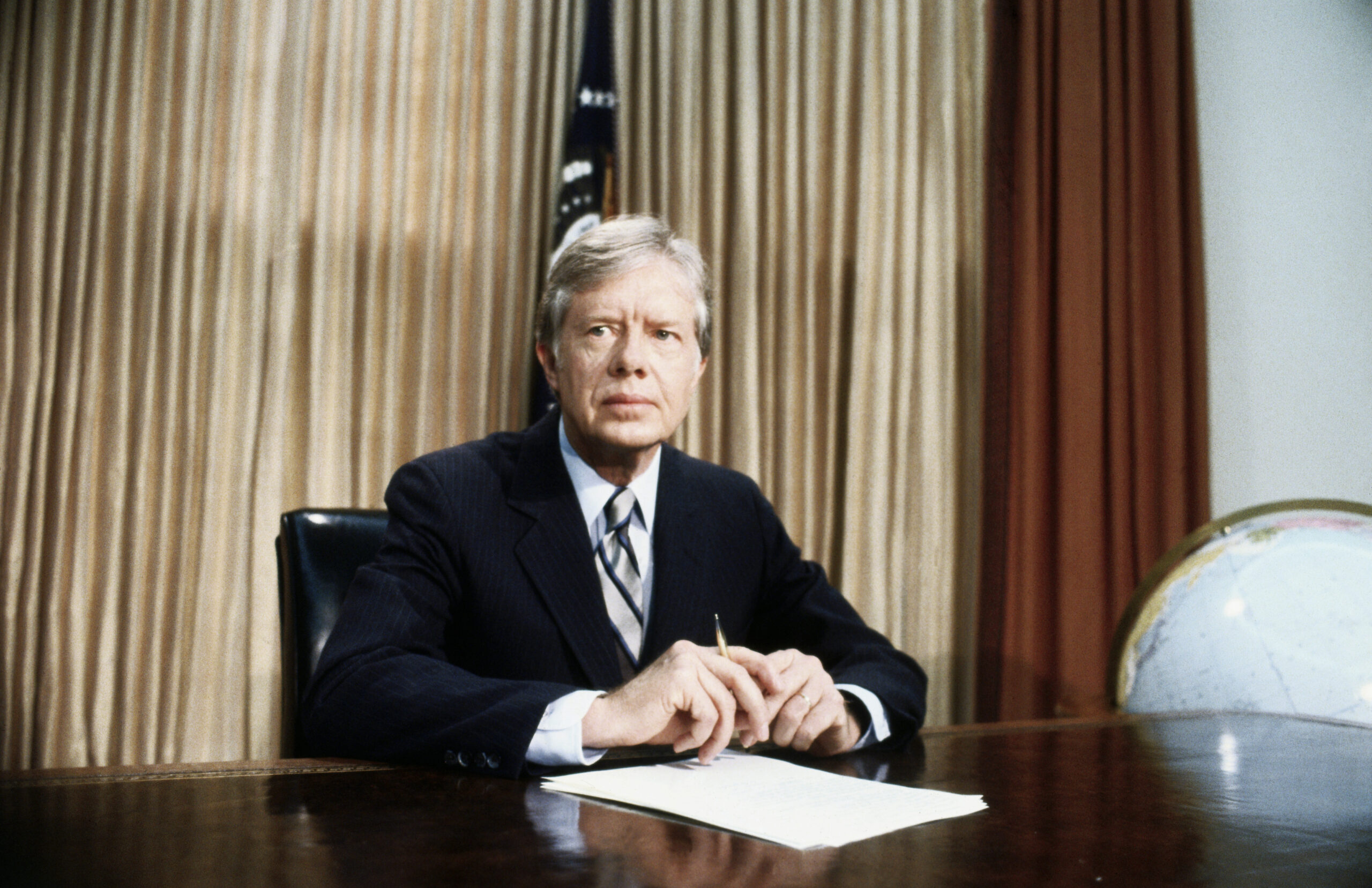
After the Soviets invaded Afghanistan in 1979, the United States under President Jimmy Carter decided to take a more active role in the region. This manifested in numerous ways, among them the birth of the Rapid Deployment Joint Task Force, which later evolved into CENTCOM. This led to the establishment of the Carter Doctrine: Carter’s National Security Advisor, Zbigniew Brzezinski, helped draft Carter’s State of the Union address that stated “An attempt by any outside force to gain control of the Persian Gulf region will be regarded as an assault on the vital interests of the United States of America, and such an assault will be repelled by any means necessary, including military force.”
When Ronald Reagan was elected, he reversed a number of Carter’s initiatives, but this was one area where he instead doubled down. The Reagan corollary to the Carter Doctrine expanded it: Whereas Carter pledged to defend the Gulf against outside forces, Reagan pledged to defend it against regional threats to oil fields along with an active commitment to Saudi Arabia. This in some sense set the stage for the next several decades of increased U.S. involvement in the region.
The defense against regional threats has loomed large in America’s involvement in the Middle East since the Reagan years, from the first Gulf War through the more recent wars in Iraq and Afghanistan to the rise of ISIS and the ongoing Iran War. Yet the American public’s support for it has drastically decreased. The first Gulf War was fought to liberate Kuwait and was remarkably popular, in large part due to that well-defined and well-prosecuted mission. George W. Bush’s wars started off very popular as well. Yet by 2008, the public was getting sick of it. Obama won his campaign based on two key issues: first, the economic meltdown, but also a desire to pull back from the Middle East, reflecting a recognition that people’s interest in the region was waning. Almost a decade later, the Republican primary electorate endorsed the same message when they voted for the one person who got on stage and said the war in Iraq was a mistake. (This makes his decision to invade Iran another decade later especially ironic.)
Subscribe Today
Get daily emails in your inbox
The American population has consistently been far less hawkish than those who represent it in Washington, DC. At the same time, there has been a willingness to tolerate that hawkishness—but as previous campaigns have shown, this has a limit. Bush’s 2005 inaugural address defined a muscular freedom agenda; two years later, Nancy Pelosi claimed the speaker’s gavel running a campaign in large part against the war in Iraq.
The recent invasion of Iran has less support than Iraq or Afghanistan did at the outset, and it seems unlikely to go up in light of historical precedents. Despite a goal of shock and awe, it seems far more probable that this will be a long, costly grind that will cost billions of dollars and drive oil prices sky high for Americans who are already unsatisfied with the economy. The rest of the world is unlikely to escape the economic consequences, which will probably extend well past the formal end of hostilities. Oil capacity cannot be turned off and on like a light switch, and it takes time to rebuild bombed-out refineries and reestablish global supply lines. The longer the war goes, the longer it will take to get back to stable energy markets and sustained oil production and output.
America entered this war to prevent the domination of the Persian Gulf, and the broader Middle East, by an opponent, and thus far has succeeded in part by inflicting a significant amount of economic pain upon its own citizens and allies. If this is the cost of defending the Gulf, it’s worth considering whether it’s worth it—since, in addition to the usual blood and treasure expended in Middle Eastern campaigns, this time the cost includes sacrificing the future of American defense in Asia.