Taiwan Isn’t the Flashpoint for War that Analysts Say It Is
Washington and Beijing have managed the difficult issue much better than you might realize.
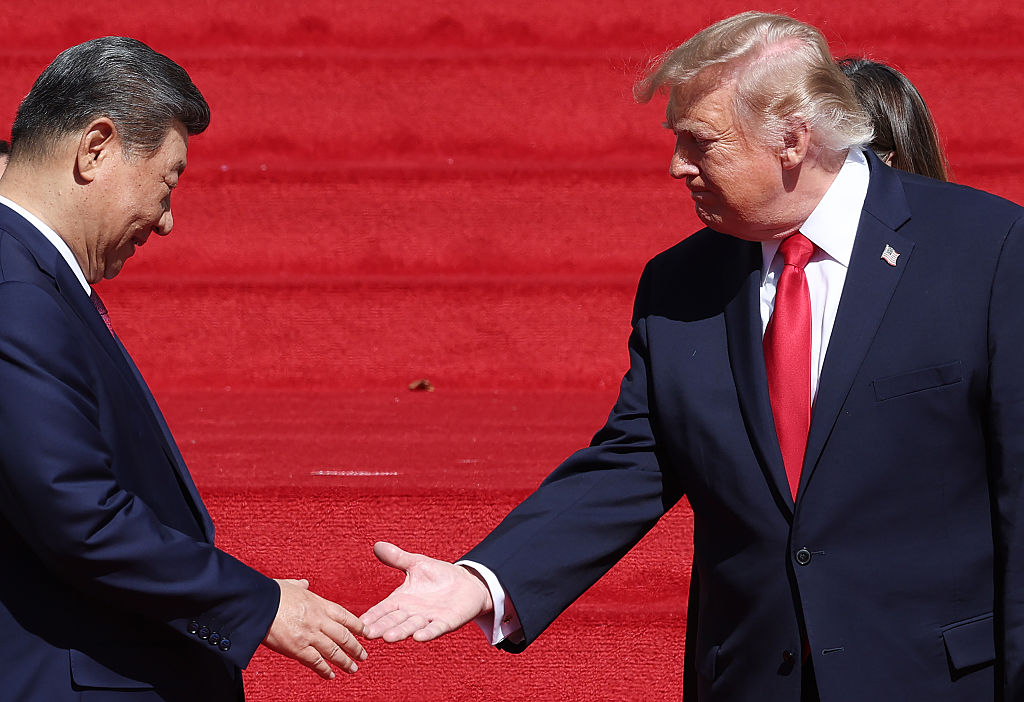

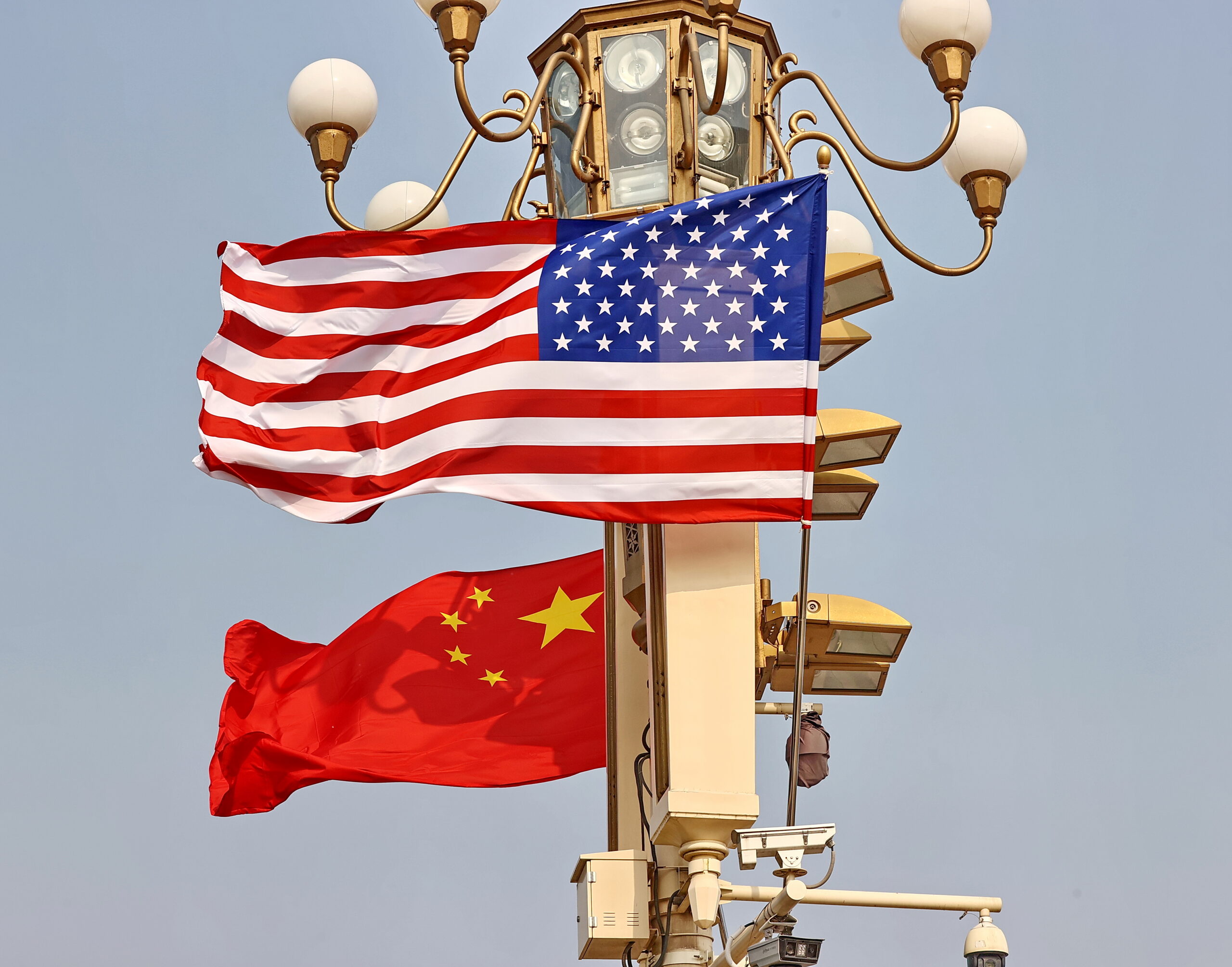
During the recent Trump–Xi summit in Washington, there was something of an awkward silence over Taiwan. That’s probably for the best. The issue did not need to be talked about, because Taiwan is what an international lawyer might call “settled diplomacy.” The genius of the longstanding diplomatic arrangement is that it does not resolve the Taiwan question. Instead, it settles how three governments—Washington, Beijing, and Taipei—will live with the fact that it isn’t resolved. In other words, the U.S. and China got it more or less right in the 1970s, when they came up with the current modus vivendi, and there’s little reason to tinker too much with it now.
Wipe away what is often read as Tom Clancy fan-fiction to understand the true nature of China–Taiwan–U.S. relations. The Republic of China (that is, Taiwan) was founded on the mainland in 1912 and survives on the island, where republican forces retreated in the face of Mao’s Communist revolutionary victory in 1949. Taiwan is a vestigial limb left over from the greater conflict in Asia, including the Second World War, and was kept alive by the strategic demands of the Cold War. It is as if the American Civil War somehow left a tiny corner of Georgia slave territory secured by Britain.
In the process of shifting the focus of its relationship with China from Taipei to Beijing, the U.S. signed with the People’s Republic of China (that would be the country we just call “China”) several diplomatic communiques, most importantly the 1972 Shanghai Communique. Years later, in 1979, the U.S. enacted the Taiwan Relations Act. These documents contain the carefully constructed language asserting (in the 1972 wording) that “there is but one China and Taiwan is a part of it.” That marvelously ambiguous phrase allowed all sides to “acknowledge” Taipei’s and Beijing’s competing claims to be the rightful rulers of the Middle Kingdom. The occasional rhetoric about reuniting the two Chinas (more out of Beijing than Taipei these days) is not a threat. It is a restatement of the status quo.
Few pieces of Cold War diplomacy have aged so well. While the Middle East blows up in new and ever-more deadly ways, and somehow Russian tanks again roll across the Ukrainian plains as if it were still 1943, China has not tried to take Taiwan by force in the almost 50 years since the current framework has been in place. There were some sparks before the communiques and the act, and to be sure, each side continues to find the need for provocative acts every now and then, but the peace has held.
This fits with China’s worldview that history will slowly but inevitably right all geopolitical wrongs, which in said worldview includes Taiwan’s becoming a renegade province. China has spent decades threatening Taiwan, yes, but without invading or blockading it. The Chinese government has good reason to expect that a more or less peaceful approach to the issue will bring it benefits in the long run. China never moved militarily against British Hong Kong from 1841 on, nor against Portuguese Macau from 1557. It peacefully regained control of both areas from their colonial conquerors. China has proven to be a patient, pragmatic negotiator, demonstrating that it can wait even hundreds of years when it believes historical circumstances are moving in its favor.
And despite the near-industry which has developed in America among the military, the China hawks in Washington, the media, and some academics, the U.S. hasn’t pushed for Taiwan to declare formal independence nor to become integrated into an American alliance. That would be as unnecessary as it would be bad for business. President Donald Trump and Chinese leader Xi Jinping still have much to discuss about the evolving nature of the world’s most important bilateral relationship when they meet twice more before the end of the year, but the status of Taiwan probably won’t be on the main agenda.
China has enormous financial reasons not to invade Taiwan. Between 2019 and 2024, Taiwan’s investment in China totaled $210 billion. In 2019, the value of cross-strait trade was $176 billion. Meanwhile, total U.S. investment in China has passed $1 trillion, all of which would be at risk if China moved against Taiwan. Economic integration has not only helped preserve the peace, it has proven darn profitable. China and Taiwan have spent years doing something strange for two governments supposedly preparing for war: getting rich together.
Still, China regularly refers to a redline on Taiwanese independence. The definition is very tolerant. Beijing lives with Taiwan as one of Asia’s most robust democracies, with a multi-party system, regular and fair elections, its own courts, laws, and army, its own passports, currency, and national airline, and even its own Olympic team. Most countries have steady albeit unofficial diplomatic relations with both entities; foreign embassies in Taipei usually go by something vague, such as “the American Institute in Taiwan,” and which has a “director” rather than an ambassador. In my experience working for the State Department in Taipei, Beijing, and Hong Kong, the nomenclature often seemed more consequential politically than operationally.
The Taiwan Relations Act makes clear that Washington will “consider any effort to determine the future of Taiwan by other than peaceful means, including by boycotts or embargoes, a threat to the peace and security of the Western Pacific area and of grave concern to the United States” and that the U.S. will “maintain the capacity to resist any resort to force or other forms of coercion that would jeopardize the security, or the social or economic system, of the people on Taiwan.” The language, unchanged for decades, is designed not to be weak, but flexible. Each of the three parties’ diplomats understand this.
What has changed since 1979 is AI, and the super semiconductors which power it. Founded in 1987, the Taiwan Semiconductor Manufacturing Company (TSMC) produces some 90 percent of the world’s cutting-edge semiconductors. Those chips underpin nearly every advanced technological product that matters, from AI to smartphones to weapons systems. Like Saudi oil was in the 19th and 20th centuries, TSMC is an institution without which the world cannot function in the 21st. Doesn’t that make it—as oil once was—a resource a world hegemon must control? Won’t China invade Taiwan and seize control of the means of production as the West moved into the Middle East? Not necessarily.
Subscribe Today
Get daily emails in your inbox
An oil field can be captured. A semiconductor ecology cannot; destroying TSMC would be a terrible way to acquire TSMC. An invasion of Taiwan to seize the plants would more likely end in the severe damage or destruction of the company’s facilities. It’s possible, if not likely, that the U.S. and Taiwan itself are prepared to spike the works at TSMC if necessary. In addition, much of TSMC’s sophisticated manufacturing equipment comes from the Netherlands, and the ultra-pure chemicals it needs from Japan. Those two U.S. allies could certainly cut off supplies. You can control the factories with boots on the ground, but soldiers can’t manufacture chips. And Taiwan’s educated and technically skilled chip workers probably wouldn’t do their difficult work at Chinese gunpoint. TSMC is currently building massive plants in Arizona and other world locations for the first time. Meanwhile, China is in the early stages of building a large domestic semiconductor industry to reduce dependence on Taiwan. Long term, the significance of TSMC will diminish, even as commercial relations between the U.S. and China will continue to reduce the odds of a war over Taiwan.
Trump and Xi have much to sort out, not the least of which is how to jointly manage AI. Their future agenda will no doubt also include a lot of talk about when oil can flow again freely through the Strait of Hormuz. And there are those pesky islands in the South China Sea that are claimed by multiple nations, as well as rare earth minerals. But, unlike in the dark days of the Cold War, the U.S. and China are more competitors than enemies. And, unlike the Soviet Union, China swims in the same economic and technological ecosystems as the U.S. and Taiwan. Their supply chains, shipping, capital sources, and markets are fully intertwined. During the Cold War, the Americans and the Soviets were disconnected to the point where every minor cultural exchange needed to be negotiated at high levels. That kind of thing hasn't been part of U.S.–China relations since the ping-pong diplomacy of 1971.
The world has evolved, and on this matter, for the better. It is time to see the status of Taiwan as something that has bloomed well and may only need occasional pruning. The remarkable thing about Taiwan is not that the dispute is barely discussed, if at all, at Chinese–American summits. It is that despite regular predictions and preparations for conflict, three governments have spent nearly half a century learning how to live with the arrangement forged almost a half century ago.