China’s Gray-Zone Options Against Taiwan
Beijing could send a message by seizing an island claimed by Taipei.
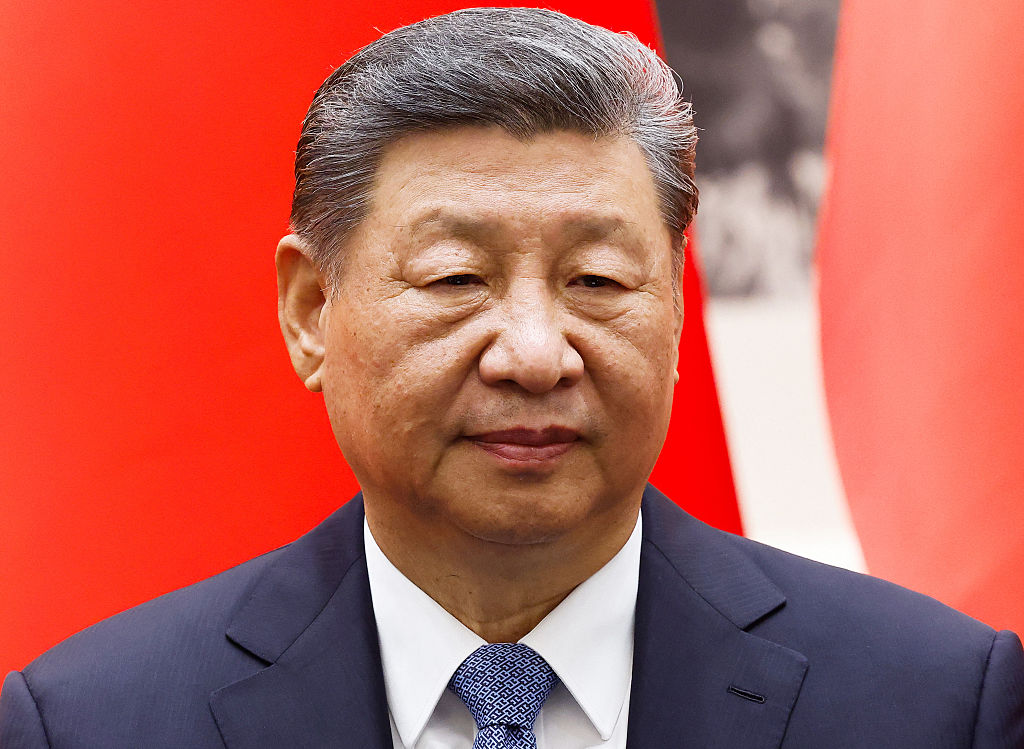
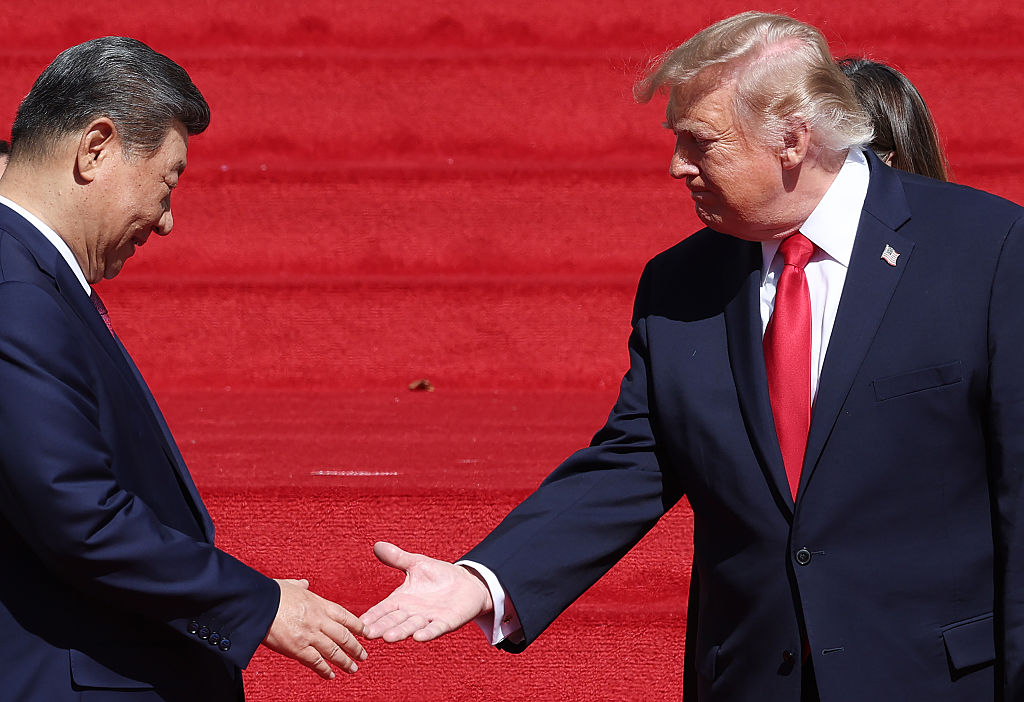
Worries in the United States that the People’s Republic of China (PRC) might launch a full-scale military assault on Taiwan have diminished since President Donald Trump returned to the White House in January 2025. Both Trump and Chinese leader Xi Jinping have sent strong signals that they do not want to disturb the status quo and create a crisis regarding the Taiwan issue. Trump seems to regard stable and cooperative bilateral relations with Beijing as a higher priority than Washington’s relations with Taipei.
The desire for stable relations between the two superpowers became quite evident during and immediately after the May summit in Beijing between Trump and Xi. The latter cautioned his counterpart not to become too supportive of Taiwan nor allow the current pro-independence government in Taipei to pursue reckless initiatives. The adverse consequences of such excessive tolerance, Xi emphasized, could be most unfortunate. Notably, Trump did not respond with defiant rhetoric stressing Washington’s firm support for Taipei. Indeed, shortly after the summit, he explicitly warned Taiwan not to push the envelope regarding formal independence.
Some conservatives in the United States fret that Trump already has been too accommodating toward Beijing and is thereby undermining the credibility of Washington’s longstanding commitment to Taipei’s defense. Hawkish analysts in the United States, led by former National Security Adviser John Bolton and the editors of the Wall Street Journal, have openly accused Trump of insufficient support for Taiwan. They pressure the administration to accelerate U.S. arms sales to Taipei and increase the quantity and quality of the weapons in future aid packages.
Thus far, though, Trump has remained consistent in wanting to avoid tensions with the PRC over the Taiwan issue. That became even more apparent during the recent September summit with Xi in Washington. Xi appeared to fully share Trump’s overall goal of fostering a stable period in Sino-American relations. At a minimum, Beijing wants such stability so that it can address an assortment of festering domestic social and economic challenges.
Given such developments, the prevailing belief that the PRC is unlikely to make a major military move against Taiwan in the near future is probably correct. But the desire of China’s Communist Party elite to intimidate or subdue the democratic-capitalist island located just off the mainland has not disappeared. Moreover, Beijing has numerous options milder than a direct military offensive against the Taiwanese homeland itself that could still create serious problems for both Taipei and Washington.
Such options run along a lengthy spectrum of so-called “gray-zone” warfare, including bullying or bribing small allies of the target country or conducting cyber disruptions of government agencies and private corporations. Some of the PRC’s military exercises also fit into that category: The number and scope of Chinese war games in the airspace and international waters surrounding Taiwan have noticeably increased over the past six years, during a time when Taiwan’s leadership has been in the hands of the officially pro-independence Democratic Progressive Party (DPP). Indeed, the presence of PRC aircraft and naval vessels has become substantially larger over that same period.
Most theoretical scenarios involving Chinese gray-zone operations focus on the possibility of Beijing imposing a selective or intermittent blockade on commercial ships entering or exiting Taiwan. Such measures would probably have a serious negative impact on the island’s economy. But the disruption would be deeply resented not only by the United States, but by nearly every other major player in the global economy. The negative consequences to high-tech industries would be especially acute. It is hard to visualize Washington and other key strategic actors standing by idly while such a PRC offensive proceeded.
In addition to that disincentive for Beijing, the Iran War has shown how difficult it is to close a key maritime transit point over the long term. Cutting off Taiwan’s connections to the outside world could prove even more difficult.
There is, however, another, less risky option for gray-zone action that may appeal to leaders in China. The option gained considerable attention a few years ago, and it remains quite viable today. The strategy would involve seizing one or more small islands, primarily in the South China Sea, over which the Taiwanese government claims sovereignty, but which lie far away from Taiwan itself.
Beijing has shown growing willingness over the past decade to challenge the competing territorial claims of neighboring countries in the South China Sea. Although most of the PRC’s quarrels have involved the Philippines, Malaysia, and Vietnam, there also is noticeable hostility toward Taipei’s lingering claims as the “Republic of China”—the political entity that communist forces on the mainland overthrew in 1949 before establishing the PRC.
Taipei claims sovereignty over two sets of tiny islands in the South China Sea, the largest of which is Taiping (Itu Aba) in the Spratly chain. Taipei also controls Pratas Island (along with some atolls) in another chain farther north. Those symbolic claims have served as a source of national pride for Taiwanese in general and followers of the DPP in particular.
Beijing thus has an opportunity to execute a gray-zone action that would humiliate Taipei and send a blunt message about its determination to prevent any additional manifestations of Taiwan’s de facto independence. Speculation among American foreign policy observers spiked in 2020 about that option for the PRC. The increase in speculation coincided with the rise of virulently anti-China public opinion in the United States due to Beijing’s clumsy, if not duplicitous, handling of the early stages of the Covid pandemic and the PRC’s possible culpability.
Most military observers dismissed the possibility of this gray-zone initiative in 2020, noting that the islands had lost most of their strategic value for Beijing when the PRC built several artificial islands nearby. Yet a takeover would not be primarily for military reasons; coercive political symbolism would be the driving motive.
Subscribe Today
Get daily emails in your inbox
Such a peripheral provocation would put Washington in a bind. Would there be sufficient congressional and public support for a U.S. military showdown with China to back Taiwan’s claim to a few miniscule islets in the South China Sea? Such a reservoir of support seems questionable at best.
Not only would PRC military pressure against any of those holdings create a dilemma for Washington, but it would put the Taiwanese government in a terrible bind as well. Could Taiwan mount an effective defense of such distant territorial holdings even if it wanted to? Would Washington be willing to assist Taipei in doing so, knowing that such aid might risk a dangerous military clash with the PRC?
Such scenarios may not be a major worry immediately, especially given President Trump’s rather conciliatory approach to overall relations with Beijing and the apparent determination that he and Xi share about keeping the Taiwan issue quiescent. But the PRC’s long-term ambitions to subdue Taiwan are not going away. A gray-zone initiative to seize Taiwanese-claimed islands on the periphery of Taipei’s area of control will very likely reemerge as a temptation for leaders in Beijing.