
Philip Roth Wasn’t a Great Novelist
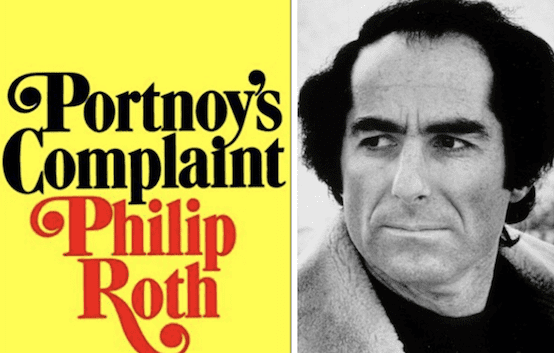
Despite regularly appearing on lists of favorites, Philip Roth never won the Nobel Prize in Literature. You know the story: how Roth would supposedly go to his agent’s office every year to wait for the call that never came? Some Americans—though I’ve never met anyone in all my years of reading who was a fervent Rothian—apparently felt that his failing to win the award was some great snub. But, as Joseph Epstein writes, it was right and good he never won. In fact, he shouldn’t have won any prizes:
Philip Roth, winner of the National Book Award, the PEN/Faulkner Award, the National Medal of Arts and the National Humanities Medal, the Man Booker International Prize, the Pulitzer Prize, author of no fewer than ten volumes in the esteemed Library of America, wasn’t, truth to tell, a very good writer. What he wrote about, chiefly sex and himself, is not all that interesting, and the way he wrote about it much of the time — through those interchangeable fictional narrator-incarnations of himself, Peter Tarnopol, David Kepesh, Nathan Zuckerman — not especially memorable. Nor is he re-readable. I recently tried, giving his novel Sabbath’s Theater (a National Book Award Winner for 1995) a second go, and found it so dreary that I could not bring myself to read it at night, lest I take the depression it so amply provided to bed with me. Neither could I read it in the morning, not wishing to begin my day with accounts of a white-bearded man masturbating over the grave of a dead mistress.
Roth claimed to shun all interest in ideas, being taken up only with the rich specificities and contradictions of quotidian life, but two ideas nevertheless dominate in his work. The first is the political idea that America at all times hovers on the brink of fascism (see his Our Gang, I Married a Communist, and The Plot Against America); the second, though he claimed to eschew any interest in Freudianism, is the distinctly Freudian notion that sex is the central preoccupation and motor force in human existence (see the Rothian oeuvre, passim). These coarse ideas — notions, really — floated Philip Roth’s literary career, but they are not the stuff of which enduring literature is made.
In other news: Dominic Green takes a closer look at the word “narrative”: “In politics, narrative is now less synonymous with events than with their exposure as a pack of lies.”
Beethoven was supposedly “curmudgeonly, friendless, loveless.” A new biography challenges that view: “How can anyone say anything new about a composer who ranks alongside Shakespeare and Dante? Beethoven biographies have poured forth steadily since his death: from Johann Aloys Schlosser’s in 1827, to key works by Alexander Wheelock Thayer (three volumes, published 1866-79), Maynard Solomon and, most recently, and massively, Jan Swafford. If you can’t add musicological novelty, fiction could be the answer. Paul Griffiths (former music critic of the New Yorker) and Jessica Duchen (the Independent critic, and a blogger) have produced novels to coincide with the inevitably thwarted anniversary: Griffiths’s Mr Beethoven (Unbound), with a formidable display of fantasy scholarship, depicts him living in and travelling to America. Duchen’s Immortal (Unbound) explores the enduring mystery of Beethoven’s unidentified ‘immortal beloved’, if she existed at all. Tunbridge’s pithy A Life in Nine Pieces is different and welcome: a biography presented through the focus of nine different compositions, each casting light on aspects of Beethoven’s life, character and, given equal and readily comprehensible attention, the music.”
Anthony Daniels reads Michel Houellebecq: “Asked what the post-COVID world would be like, the most famous of contemporary French writers, Michel Houellebecq, replied with his customary asperity, ‘The same—only worse.’ This is because, according to him, if I have read him aright, deterioration in our modern world never misses an opportunity to take place.”
The publisher Nan A. Talese plans to retire at the end of this year.
John Wayne is cancelled: “USC announced on Friday that its School of Cinematic Arts will remove an exhibit dedicated to John Wayne after student protests regarding the actor’s racist past.”
The band Lady Antebellum, who recently changed its name to Lady A because of the supposed racist connotations of Antebellum, sued an African-American singer who has been using the name for twenty years.
Photo: Ananuri
Receive Prufrock in your inbox every weekday morning. Subscribe here.