Lose the Battle, Win the Century
Iran doesn’t have to be America’s reckoning.

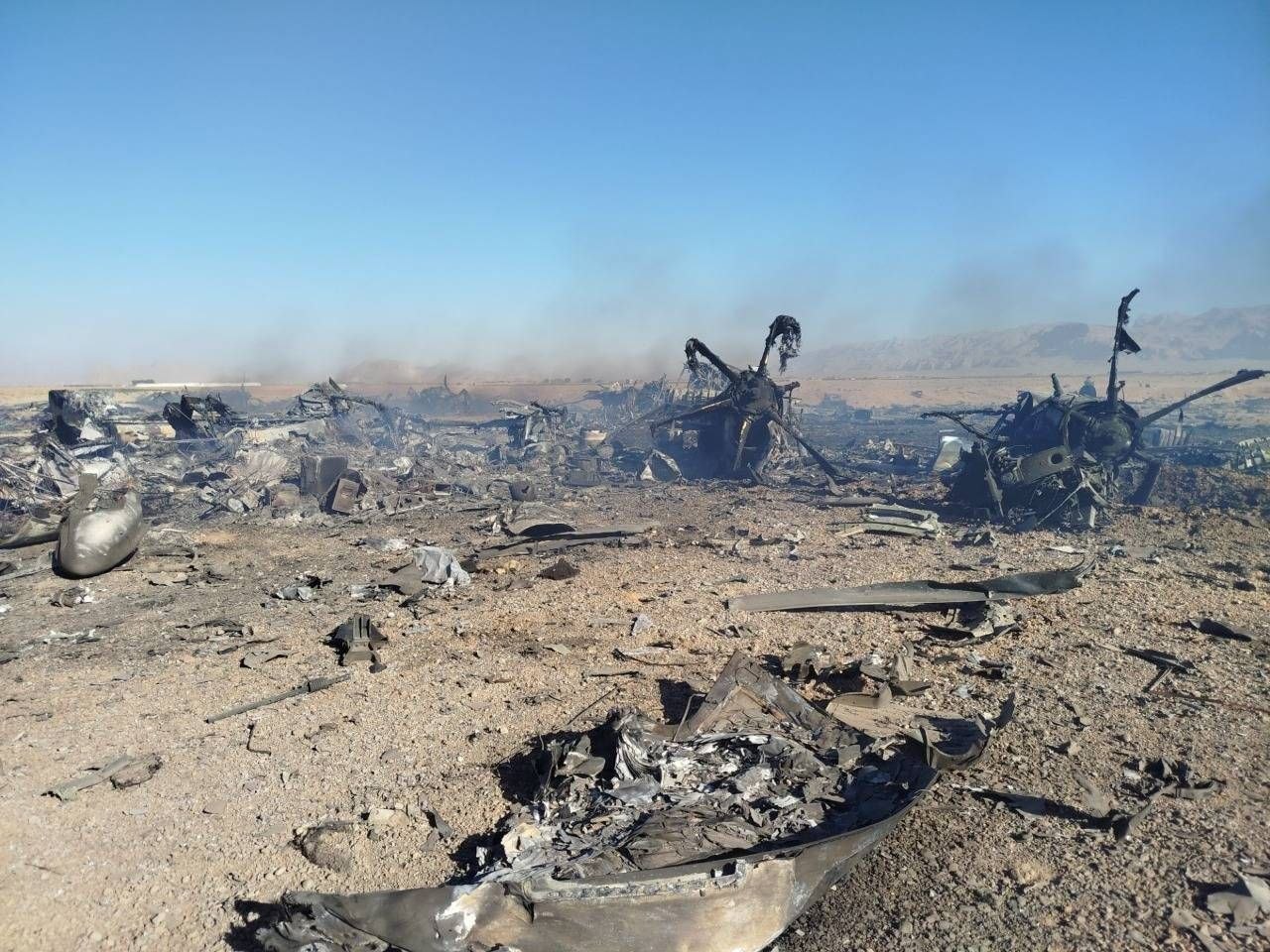
Washington is once again in the throes of a postwar autopsy. Did the United States win in Iran? America’s latest military operation was launched, seemingly, to achieve regime change and permanent denuclearization. It ended with a messy ceasefire, a still-defiant adversary, and a war powers debate Congress will never resolve. By the standards Washington set for itself, the campaign did not deliver. Tehran’s government did not collapse. The Strait of Hormuz blockade dragged on for months. And it was a negotiated ceasefire, not the final collapse of the Iranian regime, that brought the conflict to an end.
Iran, a middle power, stood its ground against the mightiest military on Earth.
The declinist argument that these results have inspired many to make is worth taking seriously. In its strongest version, this argument frames the memorandum of understanding that stopped the fighting as a surrender document: Iran financially rewarded, decades of sanctions architecture in ruins, and U.S. credibility seriously undermined.
Yet on closer examination, the notion that this setback significantly changes America’s global position does not hold up.
Consider what happened after previous military debacles.
The Vietnam War ended in a genuine strategic defeat. Saigon fell, an ally was abandoned, and American credibility took a real and lasting hit. The Iraq War cost over a trillion dollars and thousands of lives, all to produce a fractured state subject to enduring Iranian influence. And the Afghanistan War ended with the Taliban retaking Kabul faster than the Pentagon’s worst projections. Any clear-eyed observer would call those failures.
But what is also true is that 15 years after the fall of Saigon, the United States had won the Cold War. And the same country that had defeated American arms became a trading partner courting American capital by the 1990s. The 2000s and 2010s, despite Iraq, produced the iPhone, the shale revolution, and the rise of Amazon and Google. The 2020s, despite the Afghanistan debacle and the Covid-19 pandemic, produced an American economic recovery most of the developed world envied.
“America always bounces back” sounds like a cliché. It also happens to be true. The reason is not mysterious. American prosperity has consistently come from its resources, technology, capital markets, and demographics. None of those run through the State Department or the Pentagon, and battlefield setbacks do nothing to change them.
Start with our energy situation. America’s energy independence has been one of its most underappreciated strategic assets. When we fought in Kabul and stalemated in Tehran, we did so as a net energy exporter, largely shielded from the vulnerability to foreign suppliers that had bedeviled earlier generations of policymakers. The 1973 oil embargo was not just an economic problem. It was a demonstration of how energy dependence could hold foreign policy hostage. That leverage is largely gone.
Of course, this doesn’t mean America is entirely immune from energy shocks. The closure of Hormuz sent prices at the pump higher despite increases in domestic production, for the simple reason that global markets price crude oil as a single commodity. But there is a difference between consumers paying more for gas and a government being forced to the negotiating table because it cannot keep the lights on. The first is painful. The second is potentially existential.
On capital, the picture is similarly encouraging. Funds kept flowing into U.S. Treasuries and equities through Vietnam, Iraq, and Afghanistan. There is little reason to think Iran alters that equation. De-dollarization efforts, central bank gold accumulation, and China’s slowly deepening bond markets are real trends worth watching, but they are nowhere close to creating a rival system. Nothing can match the liquidity, legal infrastructure, or sheer demand that U.S. Treasuries command. The clock is running, but it has a long way to go.
Another positive sign is that allies are hedging, rather than defecting. NATO did not dissolve after the American withdrawal from Afghanistan. Gulf states did not abandon Washington after Hormuz reopened under blockade rather than victory. The G-7 backed the ceasefire agreement, albeit with some implicit reservations. While not exactly a ringing endorsement, these developments suggest that most of our partners are still content to live in an American-led order.
The most serious concern is China—and here the declinist case is strongest.
Beijing, having already forced a tariff climbdown by cutting off critical mineral exports, is now probing U.S. resolve on Taiwan. It is alert to America’s vulnerability to economic disruption, and the belief that market reversals inevitably force U.S. retreat may lead to a more assertive Chinese strategy.
The fact that Iran withstood America’s military onslaught hands Beijing a useful propaganda message. Washington’s behavior is erratic and its guarantees are unreliable, the argument runs, so hedge toward China. Partners across Southeast Asia and the Pacific will receive that message. Some may act on it. The question is whether they act on it in ways that are lasting or provisional, and whether Beijing can actually convert a propaganda advantage into strategic realignment.
History suggests that turning such an advantage into lasting strategic gains is harder than it appears. The Soviet Union made a similar case in the late 1970s, when the fall of Saigon, the oil shock, Watergate, and stagflation made the United States look weaker than at any time since before World War II. By almost every measure, the United States was then in a worse position to compete with its superpower rival than it is today. Yet 15 years later, the USSR collapsed—not because of battlefield humiliation, but because its planned economy could not sustain a contest increasingly defined by consumer prosperity and technological dynamism.
China’s own fragilities deserve the same unsentimental assessment. Its property sector is still deleveraging. Youth unemployment is high enough that the government stopped publishing the numbers. Demographic decline is arriving faster than in any major economy in modern history. And Beijing is forced to keep restrictive capital controls in place, because otherwise Chinese funds would flee the country. This is not to say that China is a paper tiger—far from it—but it does suggest that the conversion of a propaganda advantage into real, strategically decisive results is not guaranteed.
Subscribe Today
Get daily emails in your inbox
A superpower that loses a regional conflict is not the same as one whose underlying sources of power have eroded. America can move on from defeat in Iran. What would be harder to recover from is an overcorrection, a declinist panic that needlessly surrenders the advantages we still hold: technological leadership, a free and open society, and a belief in the future.
The argument for American resilience is not an argument against accountability. It is an argument against mistaking a limited military setback for a civilizational verdict. The United States emerged from Vietnam, Iraq, and Afghanistan not because it insisted loudly that it had won, but because the sources of its power endured and continued to grow.
Iran does not have to go down in history as the war that broke America. As was the case after the far worse defeats of Vietnam, Iraq, and Afghanistan, we have it in our power to mitigate and repair the damage. Whether we pull that off will depend less on the specific terms of the peace agreement and more on what Washington does with the next decade.