How Trump Should Handle the Hormuz
A Tehran toll is suboptimal, but it beats the alternatives.

If Washington truly wants peace in the Middle East (a rather gargantuan if, I know) it will need to accommodate itself to reality: The U.S. can’t force Iran to accept all its hardline demands, so the White House needs to make meaningful concessions.
For over a year now, the Trump administration hasn’t been in a concessive mood. That’s one reason the American–Israeli war with Iran kicked off in late February. And it’s one reason the U.S. and Iran are having trouble reaching a peace agreement now, in the middle of a two-week ceasefire. During the next round of talks—possibly as early as tomorrow, in Islamabad—they’ll have another shot to secure the peace.
The first round in Islamabad this weekend failed to produce a deal. That bad outcome wasn’t surprising, but comments afterwards by Vice President J.D. Vance, who led the American team, were nonetheless disappointing. Vance said that he and the other American negotiators had shown “flexibility” but that Tehran had “chosen not to accept our terms.”
Asked which American demands the Iranians had rejected, Vance answered, “The simple fact is that we need to see an affirmative commitment that they will not seek a nuclear weapon and they will not seek the tools that would enable them to quickly achieve a nuclear weapon.” Many analysts judged the statement was code for a de facto ban on uranium enrichment, which would foreclose Iran’s ability to produce nuclear fuel.
It would hardly be surprising if the talks had floundered on that demand alone. Iran has a right under the Non-Proliferation Treaty to enrich uranium for civilian energy purposes, and experts say Tehran won’t give it up. Joe Kent—a former Trump official who resigned last month, in protest of the war, from a top counterterrorism position in the White House—told The American Conservative that nuclear negotiations had been going well in early 2025 until the administration, under pressure from the Israel lobby, started to demand zero enrichment.
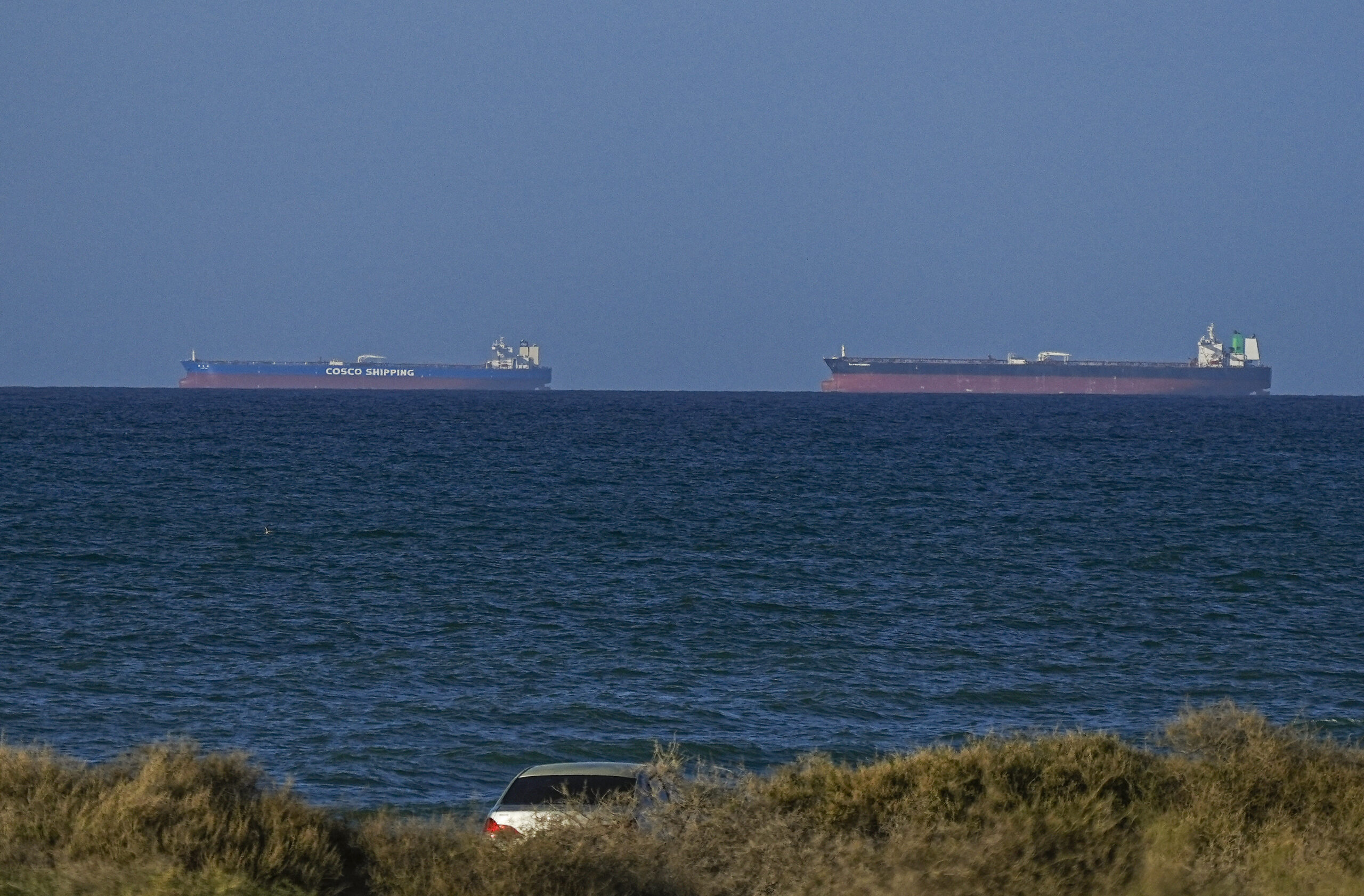
But another issue, newer and no less thorny, likely helped prevent the two sides from reaching an agreement this weekend: Iran’s control of the Strait of Hormuz, a key chokepoint for global trade. Tehran effectively closed the sea passage after the war began, to raise oil prices and thereby gain leverage over the United States. In recent weeks, Tehran has allowed some ships to pass through if they pay a toll.
Iranian officials told the New York Times that the Hormuz was a sticking point in the talks, along with the uranium issue and Tehran’s demand for the release of frozen assets. Meanwhile, an American official told Time magazine that Iran’s negotiators, during the talks, did not agree to fully open the strait and stop charging a toll.
The Hormuz crisis, and the mounting economic consequences, have been top of mind for many observers of the Iran war. As Vance left the podium at the end of the press conference, a reporter shouted, “Mr. Vice President, where does this leave the Strait of Hormuz?”
It’s a good question, and if the war will soon be resolved, the answer may prove an ugly one: The Strait of Hormuz will be left under the control of Iran. Experts told TAC that Tehran’s leadership won’t soon relinquish the waterway. But they also noted—and here’s the good news—that Iran’s hold on Hormuz, if it continued after the war, wouldn’t be catastrophic for the U.S., the Middle East, or the global economy. Indeed, it might even bring some benefits.
One such expert is Eldar Mamedov, a longtime European diplomat and commentator on U.S.–Iran relations (and frequent contributor to TAC). Last May, Mamedov attended the Tehran Dialogue Forum and met with numerous Iranian leaders, including Speaker of the Parliament Mohammad Ghalibaf, who leads Iran’s negotiating team.
In Mamedov’s assessment, Ghalibaf is open to making a deal with the U.S., but he puts a “strong emphasis on national sovereignty,” meaning he won’t simply bow to American demands. “Apart from not being a dove himself,” Mamedov explained, “he also needs to manage far more hardline elements in the IRGC,” a key force in the Iranian military. Mamedov thinks the U.S. would have better luck getting a peace deal if it showed true flexibility on uranium and Hormuz.
Of course, allowing Iran to become the Hormuz guardian would be embarrassing for the White House. Rosemary Kelanic, an energy markets expert at Defense Priorities, said, “If the Tehran Tollbooth outlives Trump’s war, it will be a lasting reminder of U.S. policy failure, leaving the world worse off than the pre–Iran War status quo.” But Kelanic also said such a scheme could become a workable modus vivendi: “As unfortunate as Iran’s geographic leverage over Hormuz is, the ‘tollbooth’ itself could have a stabilizing effect, because monetizing safe transit through the strait would incentivize Iran to keep traffic flowing.”
The journalist Robert Wright said something similar when TAC’s Executive Director Curt Mills and I appeared on his podcast earlier this month. “Right now, reportedly, they’re charging $2 million per tanker,” Wright observed. “That comes out to about a dollar per barrel. The current war tax on oil is like $35 per barrel.”
Moreover, Wright saw good reason to suppose that Iran wouldn’t charge exorbitant fees in the future. “These are rational actors, okay?” he said. “They’re not going to keep the price so high that the whole land infrastructure for transporting oil is rebuilt so it’s not dependent on the Persian Gulf.”
A Tehran tollbooth could even help the White House finesse other diplomatic challenges. Iran has demanded sweeping sanctions relief and U.S. reparations for the war. Both are politically difficult for the Trump administration, and the latter demand presumably impossible. But if the U.S. gave a tacit greenlight to a toll in the Hormuz, the revenue could serve as a form of economic compensation.
Subscribe Today
Get daily emails in your inbox
At present, however, Trump seems disinclined to compromise on Hormuz. After this weekend’s talks broke down, he announced a U.S. naval blockade of the strait. “At some point, we will reach an ‘ALL BEING ALLOWED TO GO IN, ALL BEING ALLOWED TO GO OUT’ basis,” Trump wrote. And on Sunday, he said that he had instructed his negotiators to seek Iran’s capitulation: “I tell my people, I want everything. I don’t want 90 percent, I don’t want 95 percent. I told them, ‘I want everything.’”
But Trump had previously said the war could end without first addressing the Hormuz. Ahead of the next round of negotiations, the Trump administration should figure out which is worse: the resumption of war or Iran’s continued hold on the strait. In my view, the answer is clear. Iranian control over Hormuz is suboptimal, but the concession could form part of an acceptable settlement, and U.S. military power has proved insufficient to reopen the strait anyway.
If the Iran hawks complained, as they surely would, we might remind them the strait was only closed as a result of their preferred policies. A permanent Tehran tollbooth—and any other unsavory elements of a peace deal—would be indictments of the war itself, not Trump’s efforts to end it.