Burnham Bets on Brexit Reversal to Consolidate Labour
The prime minister hopes to win disaffected pro-Europe voters in a possible early general election.
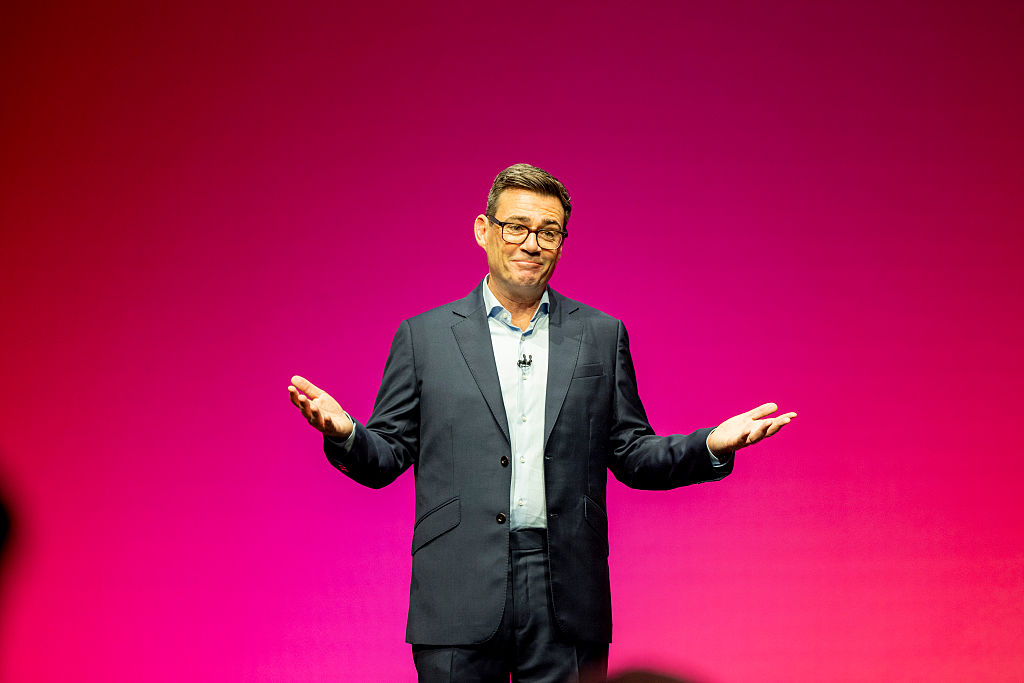
In 2016, Britain voted to leave the European Union, the 27-strong community of nations largely governed by the EU bureaucracy in Brussels. Now, 10 years on, the Labour Prime Minister Andy Burnham seems to be trying to reenter the EU by the back door. Friday’s summit was clearly, in his mind, the start of a great reset—a “historic moment” he said, and confirmation that the “status quo” brought about by Brexit “isn’t working” for Britain.
Yet, this is the same Burnham who said during the Makerfield by-election campaign in May that “the last thing we should do right now is rerun those arguments” about Brexit. He now says he thinks the mood of the nation has changed and that he can “go all the way” back to membership of the EU, including another Brexit referendum.
He was right the first time. Reopening the divisions over Europe is a reckless policy. The last referendum caused five years of chaos until Britain finally left at the end of 2020. British negotiators were comprehensively outmaneuvered by the Brussels machine and had effectively to cede a part of the UK, Northern Ireland, into EU regulatory captivity.
Brussels confined the rest of the UK in a suffocating net of trade restrictions that made it impossible, for example, to export British sausages to Europe, while highly processed European cooked meats, like chorizo sausage, were still sold in Britain. Supermarket lorries had to fill in hundreds of pages of blatantly anti-competitive red tape to cross the English Channel.
Brussels was just being Brussels. For the great myth about the European Union is that it is all about free trade. It never has been, as far as the rest of the world is concerned. Since the days of the European Coal and Steel Community and the Common Agricultural Policy, the EU has been about protectionism on a global scale.
It is now allowing a corner of this regulatory net to be lifted for Britain for food products. This may make life easier for exporters of sausages, but it comes as always with a cost. Britain will have to accept all EU regulations governing agriculture and food manufacturing. This is called “dynamic alignment,” but it is actually ruthless regulatory hostage-taking that could mean Britain halting development of gene-edited crops and abandoning long-used pesticides.
Britain has also agreed to let in 100,000 EU students and “young people” under 32 years of age. This comes at a time when the UK has been wrestling with the problem of youth unemployment. The union is also pushing for EU students to pay domestic rates for tuition rather than international rates, which can run up to tens of thousands of pounds a year.
But Burnham seems willing to accept Brussels’ “conditionality” in order to further his “lifetime” dream, as he has put it, of taking Britain back into Europe. He says, rightly, that public opinion has altered significantly since 2016, and a majority now accept that Brexit was a mistake.
But he cannot be naive enough to believe that this softening of anti-European sentiment will last. To rejoin the EU, Britain would probably have to commit ultimately to joining the European Single Currency, the euro, which has been at the center of repeated sovereign debt crises.
The UK would also have to accept free movement, allowing all 450 million Europeans, not just students, visa-free access to Britain and its generous benefits regime. And the UK would have to harness Britain’s burgeoning artificial intelligence sector to the digital slow lane. UK financial services, which have boomed since Brexit, would have to submit to EU rules.
And of course Britain would have to start paying many tens of billions a year into the EU budget. That was something that sealed the deal for many Leave voters in 2016. Remember that big red Brexit bus that asked why Britain should send £350 million a week to Brussels instead of the NHS? Now it would be £700 million a week.
Andy Burnham is not stupid, and he has an acute sense of how politics works. He surely realizes that reopening the Brexit arguments will divide the country just as the old wounds have largely healed. Leaving the EU was the most traumatic experience for Britain arguably since the great industrial recessions of the 1980s.
Moreover, Europe is not what it was. The days are gone when Europe was defined by the liberal German Chancellor Angela Merkel and the left-wing French President Francois Hollande. National populism has gripped Europe in the past decade, largely as a consequence of misguided open-borders immigration policies.
A right-wing nationalist, Marine Le Pen, looks likely to become the next president of France. Giorgia Meloni of the right-wing Brothers of Italy party governs Italy. The Alternative for Germany is breaking through the “firewall” that has excluded the so-called far right from federal power in Germany. Indeed, calling these parties “far right” is something of a misnomer, given how far the Overton Window has shifted right. They are the new conservatives.
Subscribe Today
Get daily emails in your inbox
So if nostalgic Remainers think Europe is still the Europe of mass migration, bold climate change policies, and pacifist foreign policy, they are in for a shock. Burnham must know this. So what is the prime minister’s game?
Well, some believe he has not given up the idea of an early general election. Burnham’s advisers believe that many Green Party voters, Liberal Democrats, and even pro-European Conservatives could be won to Labour by a commitment to rejoin the EU. In other words, he is using Europe as a wedge issue to consolidate Labour support and, hopefully, portray Reform’s Nigel Farage and the Tory leader Kemi Badenoch as out-of-date xenophobes.
So it looks like the general election, whenever it is, is likely to be dominated by Europe. Brexit 2.0: It’s going to be a bumpy ride.