Burgertown, Texas
Long live Amarillo.
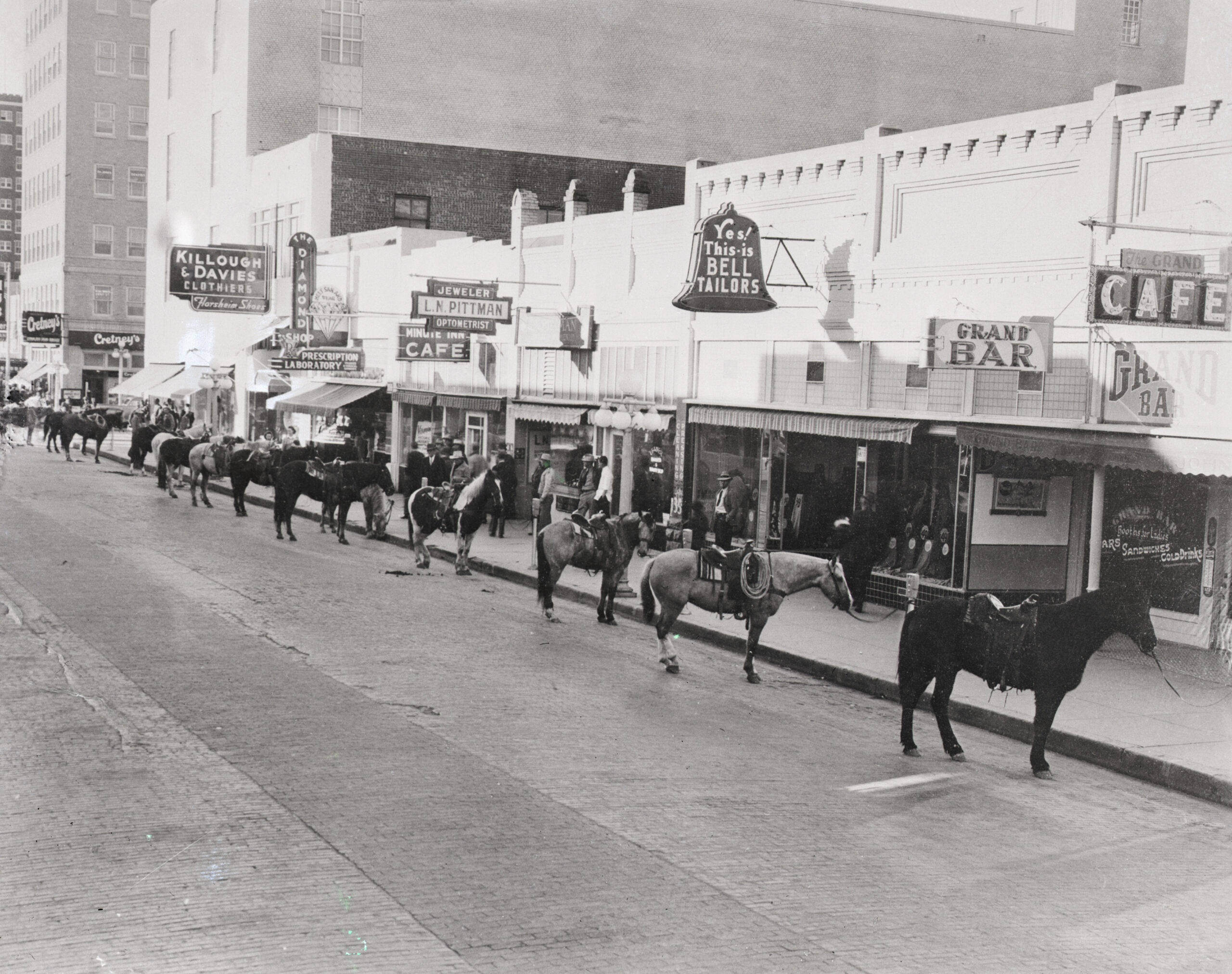

The country legend Terry Allen once wrote a great song about Amarillo and the energy of Texas: The pull of the long, sloped plains that fall away into the vast western horizon. Born in Wichita, Kansas, Allen was forthright about his outsider status, while at the same time making the definitive statement on what makes a Texan a Texan in “Amarillo Highway,” the lead track to his seminal 1979 album Lubbock (on Everything).
Singing proudly of his love of post-holing, dust-bowling, and the four-hard-lane run of the Amarillo Highway, Allen stripped Texas to its bare, cement core: a girl asleep in the backseat of a beer can-littered pickup, as the hot pavement keeps unspooling.
Although I had visited Amarillo a dozen times on my treks across the American heartland, Friday was the first time I arrived early. And after one full day in this town, I felt like I understood what Allen was getting at better than I had in the 15 years of listening to “Amarillo Highway” in places near and far.
Friday night, six o’clock, and I’m at the Golden Light Café on Sixth Street. It looks like a prison from the outside. Flat, low-hanging, and completely unconcerned with curb appeal. The inside is classic Texas dive—dim lights and old photos of sheriffs and mayors and families covering the walls. They cook the burgers on a high flame right there on a griddle behind the counter, and Shiner Bock is prominently featured on a menu which also tells the cafe’s story. It was opened in 1946—which, incidentally, makes it the oldest restaurant in this cow city—by Chester “Pop” Ray and his wife Luis, the pair of them born at the end of the 19th century.
I order a basic cheeseburger with mustard, onions, dill pickles, and a side of fries. The chef is a scrawny white kid wearing a Coors Light shirt and a black beanie even though it’s one of the hottest days of the year in West Texas. He’s rocking white Bluetooth headphones and a silver nose ring as he presses down dozens of beef burgers on a griddle the size of a pickup bed. If I’d met him at a trendy burger spot in New York City, I wouldn’t have blinked. A few stools down, a young Hispanic guy is finishing up at the bar, hunched over at his plate. I ask if I can snap a picture of the scene. He nods while inhaling a patty. “You like it here?” I ask. “Just moved here,” he replies. “Work. Feels like everybody’s been here forever.” His voice sounds strained, like he’s worried whether he’ll find a way into his new digs. “You gotta move somewhere to live there,” I reply with a shrug.
I’m still finishing up my plate when a middle-aged waitress behind the bar starts jawing with a young white cowboy in a Nudie Suit. Hank Williams and Buck Owens made the decorative, rhinestone-covered getups famous back in the ’50s before Gram Parsons and the cowboy angels outside Los Angeles took them to a stranger, acid-tinged place a couple decades later. Here, in a divey Amarillo burger bar, the suit fits like a glove. The young man says he’s headed across the street to Smokey Joe’s for some late-night music. His girlfriend is as pretty a blonde as you’ll find. She’s not the only one around here. I’ve been noticing them all night, one beautiful woman after another, in a town most people only pass through on the way to California.
The cheeseburger, for what it’s worth, is fantastic. If you ever visit Amarillo, they’re going to try to sell you on the Big Texan, a gimmicky steakhouse that promises a free 72-ounce steak if you can finish it in one hour. I ate there once. It’s not bad, but it’s not Amarillo. It’s America’s idea of the west. A big place for big eaters. The real Amarillo is down here on Sixth Street at the Golden Light Café.
But the idea that Amarillo is just one street in the historic part of the city would be misleading. And so, despite my desire to sit at the bar all night, drinking Shiner Bock until a mysterious, good-looking woman arrives late and tells me, unprompted, “there ain’t nothing to do in this town,” I pay my ticket and drive south, under the I-40 overpass, to another revered burger joint.
Shark Beach Burgers couldn’t be further from the fuzzy picture you might have of Amarillo, a town known for little other than being the West’s greatest truck stop and the unyielding, pungent smell of dung that emanates from neighboring beef plants. First, the crazy-hot waitresses. There are several thin, gorgeous blonde women with their hair styled in long, woven braids manning the counter and flipping burgers. They smile pleasantly and ask if I’d like to try the cheese curds for which the place is famous. I can’t help but think these beautiful women should be anywhere but here, in ketchup-stained work pants. Any of them could move to New York City tomorrow and do whatever the hell they wanted. Instead, here they are, slinging burgers on a Friday night at the end of summer. “Maybe Amarillo ain’t so bad,” I consider, as I watch the sun setting somewhere out west.
It’s hard to get to this joint, which is probably why I’d never been there in all the years I’d spent passing through Amarillo late at night on my way to the desert. It’s way down on the southern side of the city, and by the time I pulled in I was wondering if I’d made a wrong turn. I hadn’t. Tons of sand, tons of beer, surfboards, and mannequins propped up inside old, beaten Volkswagen vans. An ’80s cover band is playing for maybe fifty people scattered around in beach chairs. Not my scene, exactly, but there was something undeniably cool about how completely certain the place seemed to be of itself. A big, unique community of people hanging out together on another night in Amarillo, Texas.
And the burger? One of the best I’ve had in my life. I just powerhoused the thing. Could’ve been the long drive down from Jackson, Tennessee. I was tired and hungry. But, honestly, the meat was fresh, the tots were hot, and the vibe was immaculate. This, more than the Golden Light, felt like the Amarillo a tourist rarely sees. Real Texas. Weird Texas. The kind of place that makes it difficult to believe Democrat James Talarico really has a shot of winning the Senate race down here. I’ll put it this way: he sure doesn’t have a chance in Amarillo. If Texas is even one-tenth of what Amarillo is, this place is never going blue again.
I slink back to my hotel in a Honda Civic with 100,000 too many miles on it. I must’ve gained five pounds in four hours. Worth it. Every single bite. Would do again. I feel like if I made any mistake tonight, it’s only that I should have arrived here earlier and had three different burgers. For 15 years, I’d listened to that Terry Allen song about Amarillo and the great big, dust-bowling highway that rips through its heart. But I never truly understood what it was getting at. I knew the road and its long, empty horizon. I knew Amarillo as a rest stop on the way to somewhere better. But I’d never stuck around long enough to see the people who had decided it was good enough to carve a life out of.
Subscribe Today
Get daily emails in your inbox
You can’t understand a place by passing through it, and you certainly can’t understand it in one swing on a Friday night. But from what I saw, Amarillo is much more than its surface promises. Off the highway, at the counter, with a burger and the sun going down, the locals will tell you there ain’t nothing to do here, but that they like it that way. I, for one, believe them.
Maybe that’s the real Amarillo. Not the Big Texan, a steakhouse built for the Instagrams of tourists and empty stomachs of truckers. Not even the highway itself. The real Amarillo feels more like a bunch of people, some old and some new and some strange, all making a life in a weird, hot, beautiful stretch of West Texas that most Americans would struggle to point to on a map.
If there’s one thing I learned from my extended evening in Amarillo, it’s that next time I head west, I’m stopping in even earlier.