Keep the Kurds Out of the Iran War
It’s good for the U.S., and for them too.
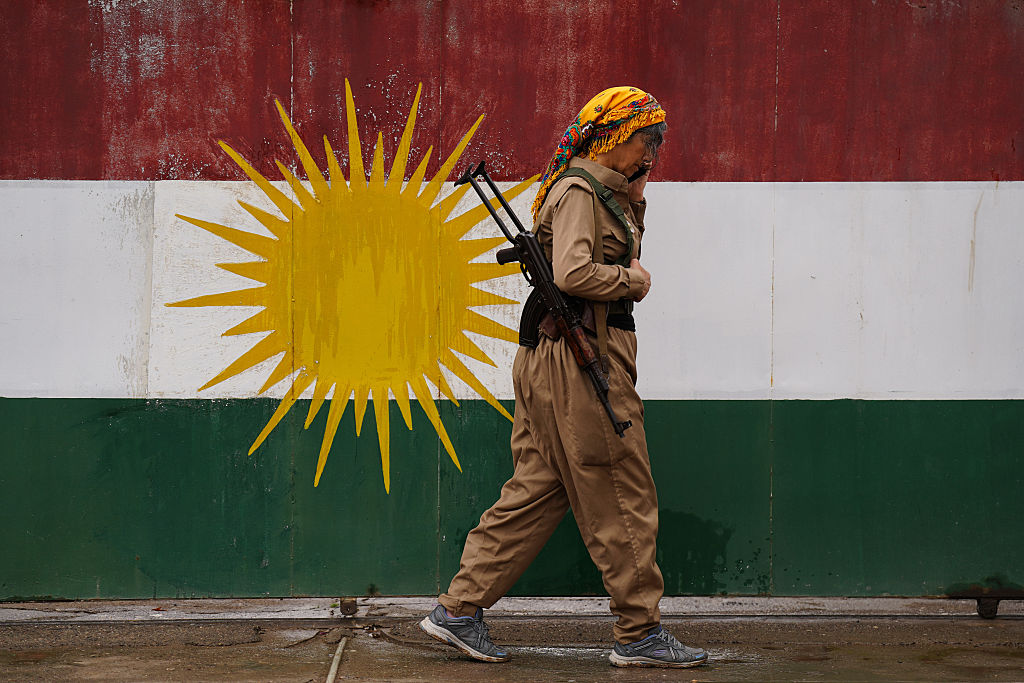
In early March 2026, mere days into the United States and Israel’s latest war against Iran, various news outlets reported that President Donald Trump had engaged directly with Iraqi and Iranian Kurdish leaders to promote an uprising spearheaded by Iran’s Kurdish minority against the Iranian regime. The White House denied these assertions. On March 6, a Reuters exclusive reported that Israel, which has its own contacts with Iranian Kurds, was backing their plans to seize Iranian territory. The next day, however, Trump declared that he had “ruled out” Kurdish participation in the war. “I don’t want to see the Kurds going in…we don’t want to make the war any more complex than it already is,” he said.
Naturally, the picture of who is doing what to whom, the tactical options, and questions as to whether and to what extent the U.S. and Israel actually have the same strategic objectives in this war, including with respect to Kurds, are murky and subject to change. But why the concern about complexity when it comes to the Kurds? After all, along with some skeptical reporting and analysis highlighting the dangers of supporting a Kurdish rebellion in Iran—in marked contrast to media cheerleading for the U.S. partnership, launched under President Barack Obama, with the so-called Syrian Democratic Forces (SDF)—there is a narrative in Western and Israeli outlets that Kurdish participation in the war would be crucial to success not only against the Iranian regime but for long-term Israeli security, and that Kurds can be deployed for precise war aims. From this perspective, it is almost as if “the Kurds” constitute an object of uniform density with immutable attributes and capabilities, to be manipulated at will.
Under the circumstances, it is perhaps a good time to look at some of those underlying complexities of the regional Kurdish issue, particularly characteristics that by and large have been only superficially covered or even ignored in Western media. What happens in the Iranian provinces of Kordestan, Kermanshah, and other Kurd-populated regions of northwestern Iran, known in Kurdish as Rojhelat, or the East—just as the predominantly Kurdish areas in northern Syria are known as Rojava, or the West, among Kurds everywhere—is unlikely to stay there. These dynamics could potentially have a profound effect on stability in Iran and across a vast swath of western Asia and the Middle East, with major implications for U.S. strategic interests in the region for decades to come.
First, some relatively recent history. For centuries, Kurds were a vital element of the neighboring Ottoman and Safavid empires. These two great Islamic, multiethnic states achieved stable bilateral relations in the 17th century following an era of geopolitical conflict and shrewd Ottoman diplomacy, ultimately establishing a border that delineates the territories of predominantly Sunni Turkey and Shia Iran even today. From then until the 20th century the great majority of Kurds lived under the Ottoman aegis.
But with the defeat and division of the Empire by the victorious Western powers at the end of the First World War—often referred to in shorthand, derisively, as the “Sykes-Picot” process—Ottoman Kurdish homelands were given over to what after the end of the postwar Mandate period became the new states of present day Iraq and Syria. Meanwhile, the new, modernized Turkish state, founded by Mustafa Kemal Atatürk in successful resistance to postwar foreign encroachments, retained most of the Kurdish areas. These states, and Iran, to one degree or another attempted with only limited success to terraform their societies along Western-influenced, rigidly secularist and nationalist lines. The “Kemalists” of Turkey were perhaps the most enthusiastic in pursuit of wholesale ideological, revolutionary change, fearful that any recognition of Kurdish interests posed an existential threat to the Kemalist state-building project.
For their part, Kurds never fully accommodated to the postwar order. They began almost immediately to rebel against the new authorities, whose suppression of Kurdish institutions and identity persisted at varying levels of intensity and ruthlessness throughout the 20th century. While recently there has been considerable change and improvement in the situation of the Kurds—notably the de facto end of the Kemalist ideological regime at the hands of the current Turkish President Recep Tayyip Erdoğan, the emergence of the semi-autonomous Kurdistan Region of Iraq (KRI) as a significant regional actor, and most recently in Syria with the agreements between Kurdish groups and interim President Ahmed al-Sharaa formally establishing Kurdish rights for the first time in that country—profound challenges remain, particularly in present-day Iran.
Today, of all the subplots of the Iran war, the Kurds and their political, cultural, and religious aspirations present among the most far-reaching implications not only for Iran but also for Iraq, Syria, and Turkey, a NATO ally and an increasingly important regional power. These countries have sizable Kurdish populations—often connected by tribes, conscious of their shared Kurdishness but highly competitive and fractious—that extend across the modern borders of these states. Today, most of the world’s 30 to 40 million Kurds live in and are citizens of Turkey, with roughly 8 million and 10 million in Iraq and Iran, respectively. There are another 2 million Kurds in Syria, mostly in the areas along the Turkish border.
Since the 1990–91 Gulf War, which brought new attention to the region, Kurds of various backgrounds have become more open and ardent in expressing their long-suppressed sense of Kurdish identity and nationalist sentiment, even when disagreeing among themselves as to what, precisely, some of the pillars of that identity are. Certainly, as reflected in Western media, there is a Western tutelary preference for what “the Kurds” ought to be, the legacy of a deeply-rooted and institutionalized interest among elites in spreading “democracy” and American influence in the Middle East. While reportage occasionally notes that there are different Kurdish organizations and entities across the region, far more frequently it leaves an impression of the Kurds as a sociocultural monolith, often represented by one or another variety of secular modernist organizations, conversant with Western languages, ways, and interests.
For example, during the decade before the second Trump Administration took office in 2025, the SDF was America’s principal Syrian avatar in the counterterrorism war against ISIS. In fact, as I’ve written previously in these pages, the SDF is a cover name for the Kurdistan Workers’ Party or PKK (Partiya Karkerên Kurdistanê), a cultish, U.S.-designated terrorist group of Marxist origin. The PKK’s command and sub-elements extend throughout the Kurdish regions, including a group in Iran known as Kurdistan Free Life Party (Partiya Jiyana Azad a Kurdistanê, or PJAK). The PKK has fought a separatist war principally but not exclusively against Turkish security forces and political organizations—including Kurdish groups there and across the region—for over 40 years, in clashes that have generated some 40,000 deaths. Despite the fact that the SDF oppressed its Kurdish political rivals and committed violence against deep-seated cultural values, including through kidnappings and the forcible induction of children into the PKK’s ranks, it is still often identified in the media as “the Kurds,” pure and simple, and retains its supporters in the U.S., the government-NGO industrial complex, the U.S. military, and in the Congress.
The media’s routine, persistent elision of the true nature of the PKK/SDF and its preference for using romanticized terms to describe the organization have contributed to major, negative, and persistent consequences for American and Western policies in the region. By obfuscating unpleasant realities that, if more fully understood, probably would have served as a brake on the aspirations of SDF/PKK proponents, the media—as is often the case in Washington—willingly helped insulate opinion-shapers and policymakers from the implications of their decisions. American leadership thus often failed to think seriously about how U.S. support for a Marxist-origin terrorist group in a region of relatively conservative religious sensibilities risked alienating the locals, aiding militant recruitment efforts, complicating strategic relations with Ankara, and destabilizing the KRI.
The first Trump administration tried but failed to end Washington’s partnership with the SDF, but has succeeded this time around, dashing the PKK’s aspirations for a neo-Marxist statelet that, if unchecked, was very likely to have generated a regional conflict. Even so, SDF supporters on the Hill continue to fight a rear-guard action in the hope that, eventually, pressures emanating from the Iran war will shift the ground yet again in their favor.
The complexity of Kurdish life, society, and politics is reflected in myriad ways, including in the array of its languages and social organizations, fascinating and rich aspects of Kurdish culture that can be mystifying to outsiders. Kurdish dialects both reflect and foster corresponding sub-identities that significantly influence local power dynamics.
The majority of Kurds speak the Kurmancî dialect and its sub-dialects, particularly in Turkey and Syria, where Kurds are often known colloquially even among themselves as the “Kurmanc.” Despite its frequent association with tribal and rural elements, Kurmancî is the language of the 17th-century Kurdish love story Mem û Zin, considered perhaps the great classic of Kurdish literature and so popular among Kurds that it was serialized on Turkey’s official Kurdish-language TV for its Kurmancî-speaking audiences at home and abroad.
The other principal Kurdish dialect, Soranî (of the “Soran” people), is the official idiom in the KRI, and is often associated with Kurdish literary urban culture. It also predominates among Iranian Kurds, though there is a strong Kurmancî presence both there and in the KRI, particularly near the Turkish border. The picture is further complicated by an estimated 1.5 million-strong Dimilî- or Zazakî-speaking minority in the environs of Turkey’s Tunceli province (Dersim in Kurdish), a locus of Islamic and ethnic Kurdish revolt since the first days of the old Kemalist regime, and of Alevism, often considered a heterodox, syncretic, Shia-rooted sect. In recent years, with the rise of identitarian politics globally, there has been some debate as to whether Dimilî-speakers are Kurdish or a separate ethnic group.
Meanwhile, some Kurmancî-speaking leaders of Yezidi communities—which emerged in the Western consciousness as conspicuous targets of horrific violence at the hands of ISIS when it held sway in parts of Iraq and Syria—refer to themselves as “the original Kurds,” though some assert this largely to underscore the Yezidis’ distinctiveness as an ancient, non-Muslim sect. Moreover, many Kurds in Turkey, even staunch nationalists, do not speak Kurdish, a legacy of Kemalist suppression and assimilation efforts which began to unravel, slowly, only in the 21st century.
Kurdish linguistic variety has its own implications for U.S. interests, specifically, Washington’s abilities to make sense of the Kurds and their labyrinthine social and political connections. This is challenging notwithstanding the growing sophistication and availability of new translation technologies derived from artificial intelligence. Despite decades of involvement in the region, Kurdish-language capabilities are extremely limited across the U.S. political, governmental, bureaucratic, commercial, academic, and media classes. This in turn breeds an overreliance on English-speaking Kurdish officials, contractual translators, and dominant media, which frame and explain issues in ways easily digestible by Westerners. It also creates an illusion of understanding that disincentivizes the time-consuming, direct personal interaction that is crucial to both good diplomacy and a strong grasp of the local environment. In short, we are missing huge parts of the Kurdish story.
The Kurdish majority’s sincere attachment to Islam is perhaps the aspect of Kurdish life least understood by a Western elite that is rapidly becoming more ideologically secularist and uncomfortable with religion by the day. Moreover, there is a growing tendency among Western political activists and, more crudely, social media opinion-shapers, to think about the influence of Islam in regions where it has long held sway primarily as an issue of a civilizational clash with the West. The problem with this approach is that it moves debate, deliberations, and understanding away from the ground-truth context; the concrete, Real World gives way to the abstractions of the Ivory Tower and Big Washington meeting rooms. Nevertheless, developing a workable accommodation between secular nationalist and religious sentiments is perhaps the most profound political challenge facing the Kurds as they consider their future, and is far more fundamental to their experience than efforts to establish nominally democratic governance along 21st-century Western lines.
Kurds tend to be socially conservative, traditional Muslims. Most of them are Sunni Muslims of the Shafi’i rite, though many Kurds in Iran are devoted to Shiism. There are also numerous followers of mystical Sufism among Sunni Kurds, particularly in the Nakşibendi and Qadiri orders, which, like the tribes, often extend their influence across borders. It is a feature of both Kurdish complexities and solidarity (itself yet another complexity) that one can find Sufi masters in the borderlands devoted simultaneously to these and other, even more exotic orders, such as the Rufai.
For the Kurds, Islam is not a mere cultural artifact to be managed by those seeking to make secularist agendas more palatable, but a defining element of their identity. Against the backdrop of social and political change wrought by modernity, the Kurds have maintained their religious, cultural, and complex family and tribal traditions—including occasionally violent intertribal relations—regarded by the 21st-century West with disdain. Even today, the Sufi orders retain pervasive influence among the Kurds, particularly in the KRI and Turkey. Though outlawed by Ataturk in 1925 as part of his crackdown against all things Ottoman, Islamic and Kurdish, the Kurd-dominated Nakşibendi and other orders played a seminal role in the development of the pro-Islam political movement, of which Erdoğan, with his own Nakşibendi associations, and his Justice and Development Party (AKP) are direct heirs.
The most salient and foundational ideological fault lines in Kurdish society do not necessarily correspond to the left–right spectrum imported from the West. Rather they are found among those who pursue radical secularism or Kurdish identity over God, those who see this as outright heresy, those who seek a careful balance, and those who gravitate toward extremism, including ISIS. It is a testament to Kurdish religiosity and social conservatism that the Kurdistan Regional Government (KRG) of the KRI both beat back ISIS’s extremist ideology at the key moment in the 2014–15 period, and remains the primary obstacle in the way of PKK’s revolutionary and secularist hegemony. The sustained authority of the Barzani family in the KRI and its popularity, including among the cross-border Kurdish communities in Turkey, is rooted in its Nakşibendi affiliations and its role providing tribal intermediaries. The chief rivals of the PKK across the Kurdish regions, the Barzanis also have played a decisive role in the formation of the KRI’s close, official relations with Turkey and Erdoğan, unimaginable during the Kemalist era and in contrast to the narrative held among liberal activists, PKK sympathizers, and ethnic lobbies that insists Erdoğan is implacably hostile to Kurds.
At elite, Western-oriented universities in the KRI, traditional mores quietly prevail even among those who by all outward appearance aspire to Western ways. To be sure, in the KRI as in Turkey, where universities served as incubators of the PKK’s ideology, Westerners are treated to events and lectures sponsored by Western-backed NGOs featuring the Kurdish take in English on the latest fashion in 21st-century Western values. Nevertheless, outside of that bubble, one comes across “uncovered” girls and young women arguing strongly against alcohol consumption as a violation of Islam and Kurdishness, and young people generally take great pains to be mindful of Kurdish expectations of honor regarding relations between the sexes.
Meanwhile, in private homes, tea gardens, Sufi lodges, and street corners in different Kurdish areas, one will hear politicians, activists, and religious leaders profess “Em Kurd û Misilman in”—“We are Kurds and Muslims,” proclaiming Islam to be a defining mainstay of Kurdish identity. In fact, many Kurds claim that they distinguish themselves from other national identities in the region by publicly cautioning against political efforts to elevate secular aspects of Kurdishness over Islam. Even secular Kurdish moderates will bristle at the perceived disrespect to Kurdish culture that is the flip side of the radical social attitudes represented by the PKK. In the KRI, in the Soranî stronghold of Slemani no less than in Kurmancî-speaking Duhok, or in the heavily Kurdish provinces of Turkey such as Adıyaman, Bingöl, and others, conservative Kurdish values are not to be ignored.
This dynamic has a significant impact on the Kurds’ pursuit of cultural and political autonomy. Mindful of Muslim sensitivities, Kurdish activists are usually wary of gratuitously antagonizing conservatives, Kurdish or otherwise, in ways that could generate accusations of sedition or subservience to Western powers’ interests—primarily the U.S. and Israel—and be exploited by ISIS or other militant groups.
In Turkey, this has at various times encouraged conservative Kurds to frame their aspirations in terms of Ottoman practices in their heyday, when Kurdish princes enjoyed considerable autonomy. Today, in the context of Erdoğan’s latest efforts to establish a “terror-free Turkey” and induce the PKK to lay down its arms, the incarcerated PKK founder Abdullah Ocalan is referencing the spirit of the Prophet Muhammad’s “Medina Charter” as an appeal to full minority rights and justice in a nominally Islamic framework, and as a model for lasting comity and peace.
The Kurds like to say they have no friends but the mountains. It is true that their mountains, and their willingness to fight for them, helped them preserve their culture and identity for eons, and more recently in the face of repression from Saddam in Iraq, Assad in Syria, the Iranian regime, and the Kemalists of Turkey. However, it is also true that the KRI benefited from American patronage over the past 35 years. Unlike perhaps some other U.S. clients, the KRI sincerely appreciates the security support, the autonomy, and the commercial ties that have been sustained and stimulated under U.S. protection.
Nevertheless, Kurds from different regions will sometimes privately marvel at Washington’s inability to grasp Kurdish dynamics. Moreover, they are understandably wary of Washington’s inscrutable ways, with lessons drawn from hard experience. At the same time, Kurds, like others, can evince a tendency toward inflated expectations regarding the U.S., fueled by a misreading of Washington’s default-mode—a lack of strategic clarity, short-term focus, and malleability at the hands of interest groups.
For example, Kurds of all political persuasions remember that during the Iran–Iraq war of the 1980s, Washington supported Saddam despite reports of his notorious 1988 “Anfal” campaign against the Kurds in Iraq, featuring massacres, chemical-weapons attacks, and ethnic-cleansing tactics. Moreover, during the subsequent Gulf War’s Operation Desert Storm, President George H.W. Bush called on the Iraqi people to “take matters into their own hands” to oust Saddam, but ultimately turned a blind eye when Saddam crushed the rebellions with helicopters and ground forces, killing about 20,000 Kurds (and 30,000 Shi’a Arabs in the south of the country). “We didn’t expect a general public uprising,” a former Bush official later explained to Time magazine.
The subsequent, chaotic political situation in northern Iraq that persisted in the 1990s led to the outbreak of armed clashes in 1994 between the two dominant political elements, the Barzani-led Kurdistan Democratic Party (KDP—Partiya Demokrat a Kurdistanê, PDK) and the Patriotic Union of Kurdistan (PUK—or Yekîtiy Nîştimaniy Kurdistan, YNK) of Jalal Talabani. The conflict also featured PKK attacks against the KDP, drawing in Turkey, and only ended in 1998 with a Washington-brokered agreement. That ordinary Kurds would politely profess to believe that Washington was well-meaning but naïve or ill-suited to the ways of the region, rather than duplicitous, underscored the clear geopolitical imperative that the Iraqi Kurds lived in a tough neighborhood and needed the U.S. The weak suffer what they must.
More recently, the PKK, and the SDF’s NGO and other supporters in Washington, have characterized the end of the exclusive U.S.–SDF partnership in Syria as a “betrayal.” After a decade of American support, the PKK-controlled SDF had established a quasi-official, autonomous statelet; many of its promoters had even argued that the U.S. was obligated to formalize an autonomous SDF-dominated state as payment for its role in the fight against ISIS. During President Joe Biden’s tenure in office, the PKK likely read the repeated, longstanding U.S. protestations that such support was “temporary, transactional, and tactical” as masking Washington’s receptivity to the establishment of a permanent SDF jurisdiction—a necessary step toward the development, as time and circumstances would permit, of a fully independent state. Indeed, the PKK’s aspirations were almost certainly stimulated by the interaction of the SDF and its sympathizers in the Washington political ecosphere, and the widespread media narrative that the SDF apparatus was a successful experiment in planting Western values and interests in the region.
But while the PKK hoped, the Turks and others worried. After all, it was not lost on anyone that in 2006, as the senior Democrat on the Senate Foreign Relations Committee, Biden had publicly called for a partition of Iraq. Moreover, Biden’s stated intent as a presidential candidate in 2020 to oust Erdoğan from power signaled to all sides an abiding hostility to Ankara and an intent to disregard Turkey’s core strategic interests, a view that has been somewhat dissipated but not eliminated, despite Trump’s return to office.
With all this in mind, the risk of Kurdish participation adding to the complexity of the Iran War becomes clear. Recently, several Kurdish parties, including some close to the Barzanis’ KDP and the PKK’s PJAK element, have formed a coalition against the Iranian regime. According to the Jerusalem Post, the coalition intends to maintain operational readiness “for any potential political shifts in Iranian Kurdistan.” But, despite their professions of solidarity, these parties are keenly wary of each other, with a history of armed clashes among them that would mitigate against their unity and effectiveness in an insurrection.
Moreover, as Iraqi Kurdish leaders have observed, Kurdish involvement in Iran’s emerging chaos would likely have spillover effects for Turkey, with its efforts to manage a PKK challenge that Ankara has long regarded as its principal security threat. Iraqi Kurds are aware that the conflict could also embroil the KRI itself. Heading military forces known as Pêşmerge—“those who face death”—the KRI would be hard pressed to manage the situation, as appearing to sit by while Kurds faced death in combat in Iran almost certainly would strike a nerve with elements of the Kurdish public, generating opportunities for manipulation, pressure for action, and political instability.
Furthermore, despite protests to the contrary, it is possible that under certain conditions the PKK would reconsider its stated unwillingness to get involved in the Iran war, even at the risk of undermining the peace negotiations with Turkey and Öcalan’s interest in perpetuating them, if it were to calculate that a wider war and chaos presented opportunities not to be missed. In this context it is worth noting that the launch in 2015 of the U.S.–PKK relationship in Syria upended Erdoğan’s efforts to continue reorienting Ankara away from its traditional Kemalist animus against the Kurds in favor of rapprochement with Kurds at home and abroad, as the PKK leadership and its political avatars tried to leverage American backing to push once again for maximalist advantage. As a direct consequence of this gross miscalculation, Erdoğan eventually responded in 2019 with major military operations against SDF positions, despite staunch condemnation from Congress aimed at Turkey and intense anger at Trump himself, including from establishment Republicans—some of whom are now the leading Congressional proponents of the current war.
One of the more important cascading effects of Kurdish involvement in the Iran war would be to fuel the growing regional rivalry between Israel and Turkey. A few days ahead of the Iran war, former Israeli Prime Minister Naftali Bennet asserted before a leading Jewish organization in the U.S. that Turkey is the “new Iran.” Other Israeli voices have discussed the emergence of Turkey, with its support for and political relations with Hamas and the Palestinians, as the force behind a potential Sunni Muslim “axis” that would threaten Israel. Moreover, Israel’s Prime Minister Benjamin Netanyahu is promoting improved relations with Greece and Cyprus as a potential check on Turkish power.
Such public narrative-manufacturing is striking, especially in light of the president’s repeated public statements expressing appreciation for his strong relationship with Erdoğan and Turkey, particularly his very public admonishment to Netanyahu in the Oval Office in April 2025 to “be reasonable” regarding problems he might have with Ankara. Nevertheless, it comes against a backdrop of longstanding animosity toward Turkey in Congress, including a range of legislative efforts promoting the SDF in Syria and condemnation of Ankara’s political support for Hamas.
Given the strained relations between Israel and Turkey, support for the PKK’s PJAK element in Iran in particular would risk being read in Ankara as an attempt to activate the group not only as a proxy against Iran but Turkey as well. In such a case, it would not be surprising if another implication growing out of the Iran war would be increasing tensions and potentially provocative actions in NATO’s southeastern flank, the Aegean region, and eastern Mediterranean Sea, should Ankara seek to illustrate the price to be paid for flaunting core Turkish interests.
It is not in the interest of the United States for the Kurds to become embroiled in a conflict that by their presence could devolve into a worst-case scenario, leading to the destabilization of their societies and geographic region, damaging the security of the countries in which they live and in which the U.S. has made considerable investments, and boosting extremist organizations that would exploit record-level fear, concern, and anger from ordinary Muslims against the U.S. as the primary source of that instability. Indeed the tragic history of American policy in the Middle East at least since the dawn of the 21st century is replete with consequences that, even if unintended, were nevertheless foreseeable and avoidable.
Subscribe Today
Get daily emails in your inbox
There is an old cautionary Kurmancî saying that has some applicability to the present circumstance: “Agir pêkeve, terr û hişk tev bişewitin.” Fire, once started, burns the wet and dry together. For the Kurds, catastrophe does not discriminate; once started, everyone suffers.
Best keep an eye on the firebreaks.
Note: The views expressed in this publication are the author’s and do not imply endorsement by the Office of the Director of National Intelligence or any other U.S. Government Department/Agency.