Ted Cruz Is the Republican Kamala Harris
The Republican senator and former vice president have both made signaling to neocons a campaign strategy.

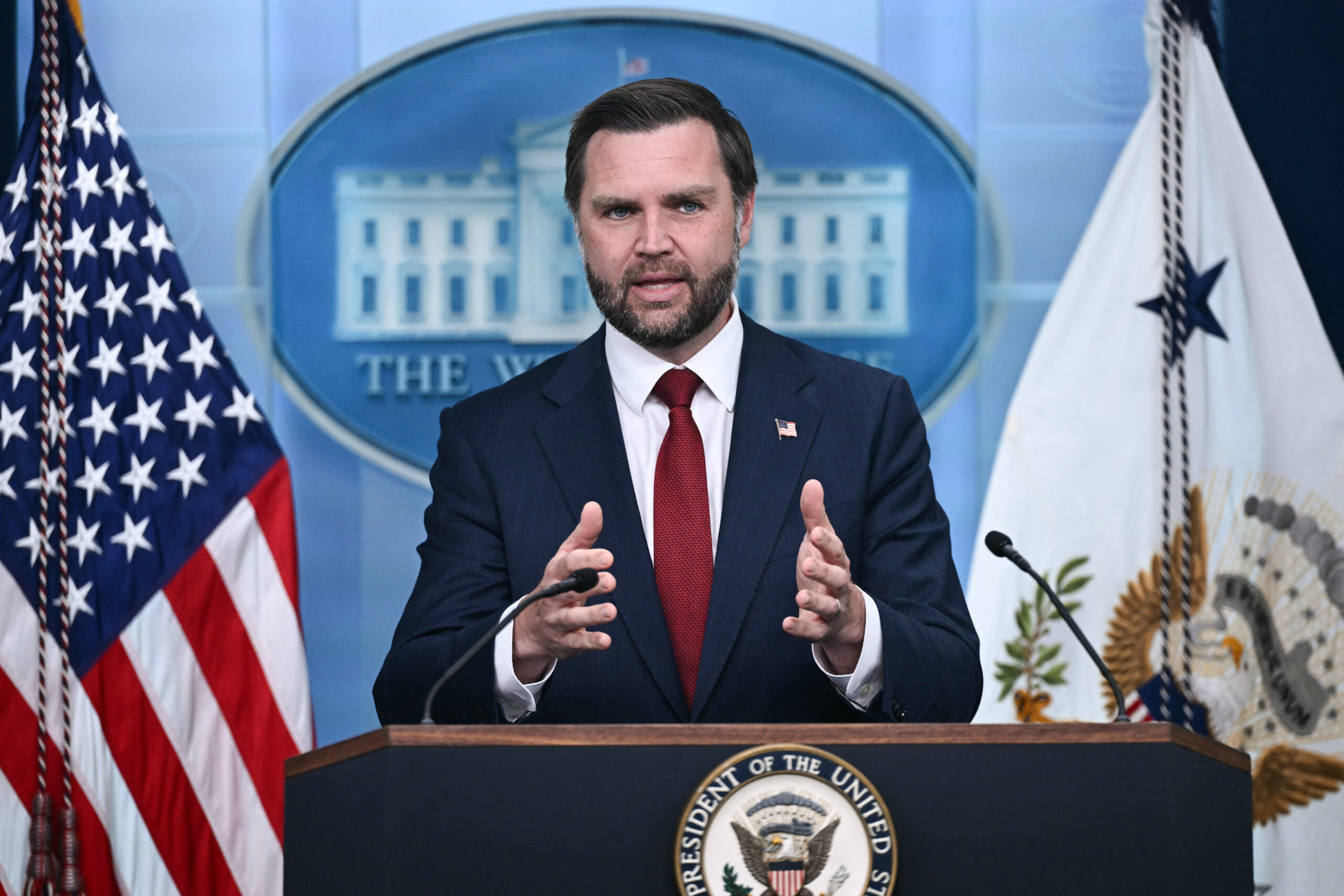
Many consider J.D. Vance the heir apparent to Donald Trump’s MAGA legacy and the man to beat in the 2028 Republican presidential primaries—a state of affairs the Republican foreign policy establishment has never liked.
Hawks have long worried that the vice president is too much of a foreign policy restrainer for their tastes (though Vance has often sounded more like neoconservatives in Trump’s second term).
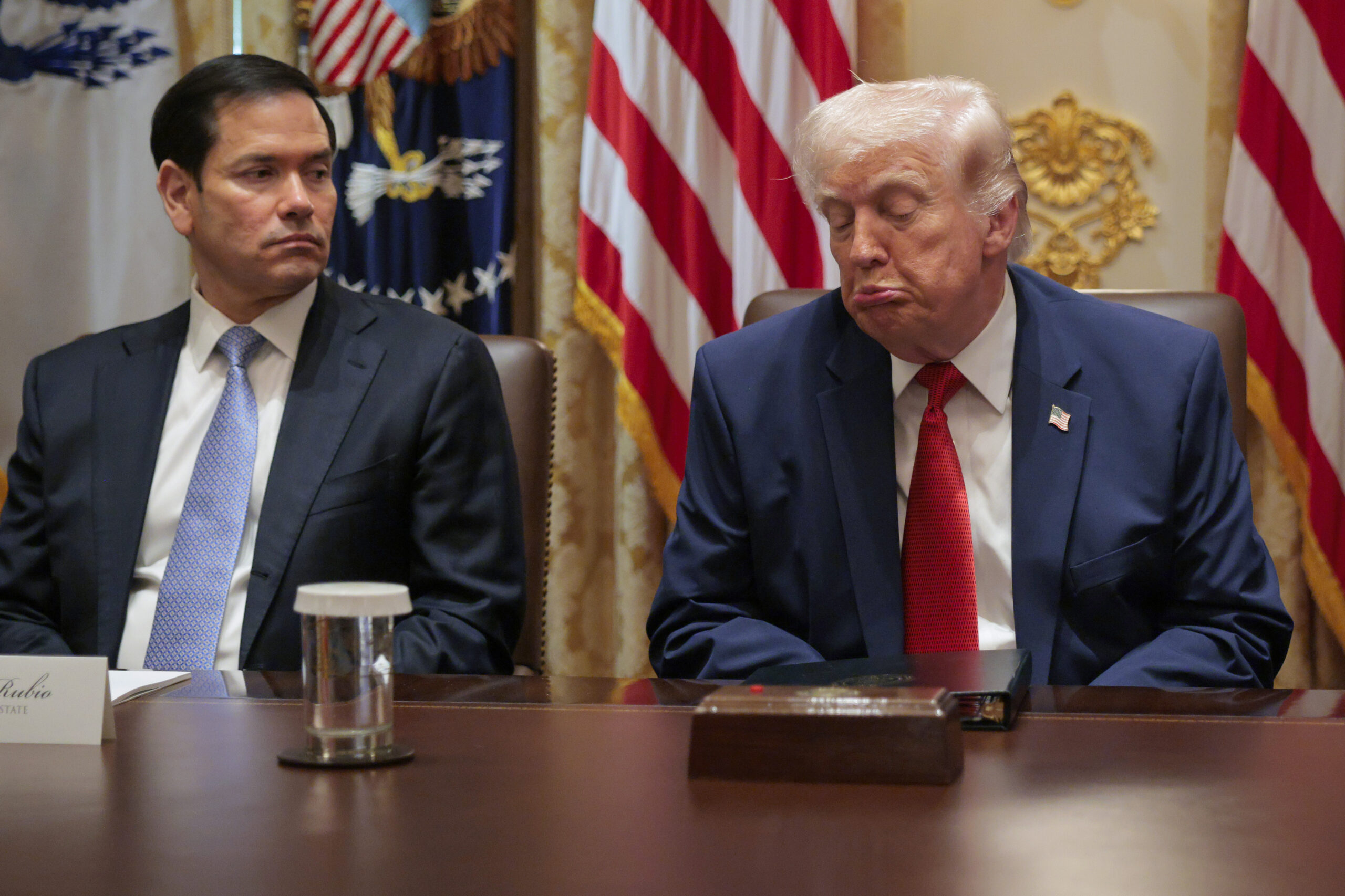
Still, neocons were giddy last week when polling showed that Marco Rubio’s numbers had improved against Vance, with the secretary of state being hawks’ main man in the 2016 GOP primaries and a figure who could repurpose “MAGA” as the neoconservatism of old (though Trump seems to be doing this already, making Vance’s supposed 2028 inevitability less clear).
But there could be more than one neocon champion in 2028.
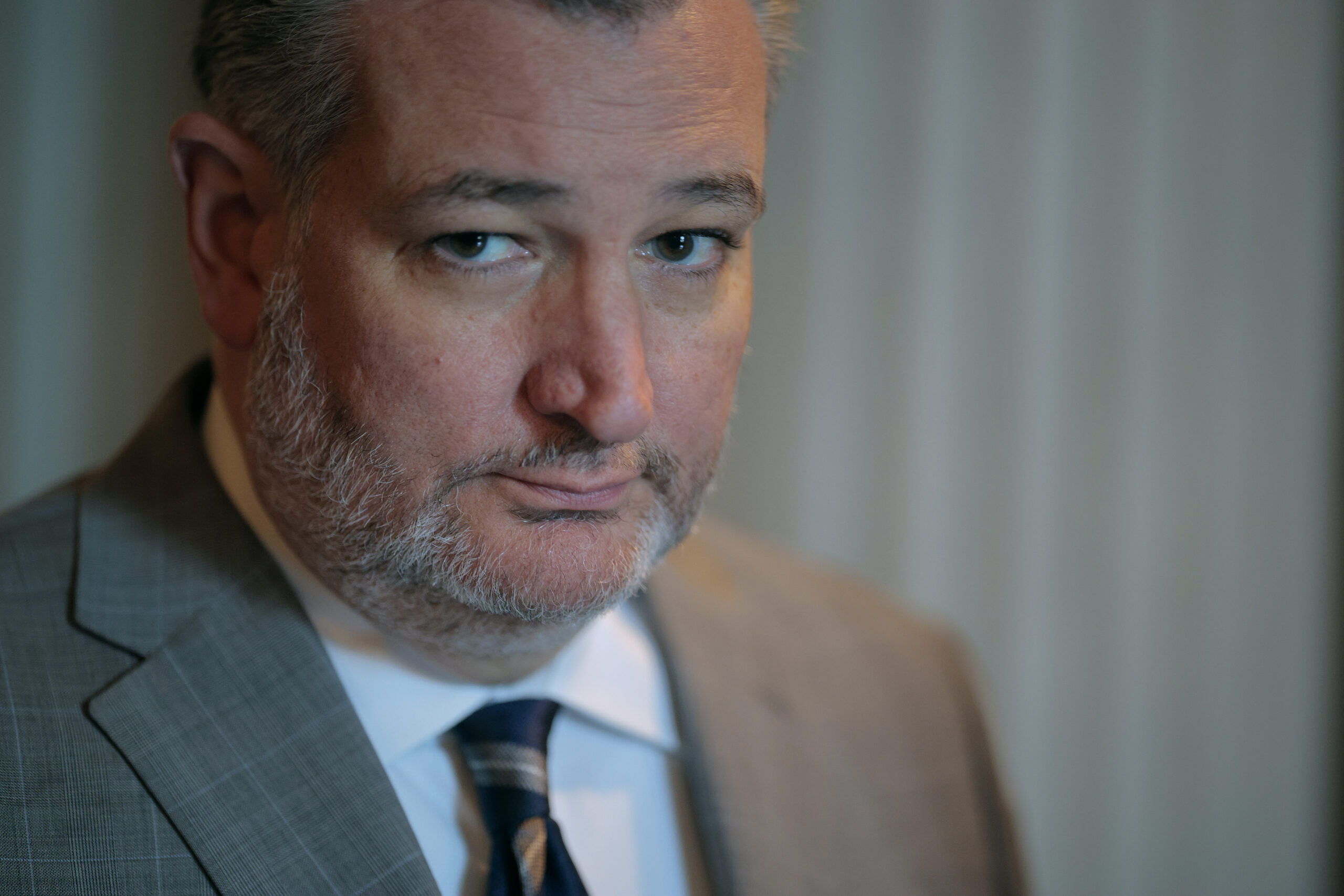
Ted Cruz has clearly been running for president, and the Republican senator from Texas is doing so by signaling to neoconservatives.
Axios reported in November that “Texas Sen. Ted Cruz is laying the groundwork for a 2028 presidential bid by leaning into his feud with Tucker Carlson — and staking out turf as a traditional, pro-interventionist Republican.”
True to hawk form, Cruz has regularly called outspoken antiwar conservative Carlson an antisemite and last week said he was “the single most dangerous demagogue in the country.”
The report noted, “By poking at Carlson's isolationist foreign policy views, accusing him of antisemitism and more, Cruz is putting himself on a collision course with Vice President Vance, a Carlson ally widely seen as the 2028 GOP frontrunner.”
If Vance was once positioned to be the thoroughbred MAGA torch-bearer of the promise of no regime-change wars and ending endless conflicts, Cruz wants everyone in his party to know he’s the opposite.
Cruz’s plan appears to to distinguish himself from Vance, or at least the Vance of the past.
Kamala Harris once did the same thing.
In her failed 2024 presidential campaign, Harris relished endorsements from America’s neocon royal family, Dick and Liz Cheney. The former vice president’s daughter and then-congresswoman even hit the road with Harris, a symbolism that appeared intentional and seemingly less to do with trying to pick up Never Trump Republican votes and more with winking at a hawkish Washington foreign policy establishment that detested Trump at the time (less so now).
The progressive magazine Mother Jones reported in September 2024 that “Harris’ Embrace of Dick Cheney Was Just One Way She Courted National Security Hawks.”
The reporter Dan Friedman wrote under that headline, “Harris’ embrace of a top architect of the disastrous militarism of George W. Bush’s administration was one of several signals she offered suggesting fans of the neoconservative foreign policy associated with the Cheneys should feel comfortable with her as president.”
“On Gaza, Ukraine, Afghanistan, and other national security matters, Harris appeared to deliberately strike notes aimed at appealing to the interventionist consensus in Washington’s foreign policy establishment,” he observed.
Friedman continued, “Harris also mocked Trump for exchanging ‘love letters with Kim Jong Un.’ The details of Trump’s diplomatic efforts are very much open to debate. But in singling out negotiations with the Taliban and North Korea, Harris flirted with the argument that the US should avoid talking to bad actors at all.”
He added, “That kind of criticism that has more often come from the hawkish right, and evokes the attacks that Republicans like John McCain and Mitt Romney—both of whom Harris name-checked Tuesday—once hurled at Obama.”
In other words, if Trump was the supposed antiwar candidate once hated by the DC foreign policy establishment, Harris wanted that establishment to know that she was the opposite. She was their gal.
Today, election autopsy data suggests that the Harris campaign ignoring the genocide in Gaza contributed significantly to her loss. Progressive Democrats who did not want to vote for Trump also had little incentive to vote for the Democrat alternative.
As Friedman observed two months before the 2020 election, “On Gaza, Ukraine, Afghanistan, and other national security matters, Harris appeared to deliberately strike notes aimed at appealing to the interventionist consensus in Washington’s foreign policy establishment.”
“The result was Harris’ latest and perhaps clearest suggestion that she will not venture far to the left of President Joe Biden, or former President Barack Obama, on national security,” he wrote. “That may or may not be good politics, but it is a disappointment to the substantial number of Americans hoping that Harris would pursue a more restrained, anti-war foreign policy than Biden.”
Harris ran as a hawk to win, and that political strategy sank her.
While Cruz now banks on being Dick Cheney Jr. to get to the White House, in his 2016 presidential bid, he was trying to lean into elements of the sometimes restraint-minded Tea Party and Ron Paul movement ethos prevalent on the populist right before Trump’s “America First” subsumed it all.
Cruz was a featured speaker at Ron Paul’s Campaign for Liberty “LPAC” (like CPAC but the “Liberty Political Action Committee”) event in September 2014. In 2015, Cruz got in trouble for saying, “If you look at President Barack Obama and Hillary Clinton, and for that matter some of the more aggressive Washington neocons, they have consistently misperceived the threat of radical Islamic terrorism and have advocated military adventurism that has had the effect of benefiting radical Islamic terrorists.”
Danielle Pletka and other neocons implied that Cruz was an antisemite at the time.
Today, Cruz says quite the opposite of what he did a decade ago—strongly advocating for military adventurism abroad over the threat of radical Islamic terrorism. Today, it is Cruz who tosses around accusations of anti-Semitism. He warned in late January, “There is a tangible, dangerous antisemitic contingent on the right that is gaining traction, gaining popularity, being listened to by young people, and gaining attention.” Has Cruz had a change of heart in the last decade? Or perhaps a mere and crude recalculation for his political future?
Subscribe Today
Get daily emails in your inbox
What’s the difference between Ted Cruz and Kamala Harris? One is a Republican and one is a Democrat.
What’s the difference in their presidential campaign strategies when it comes to foreign policy?
Not much.