Why Won’t the U.S. Protect Its Own Citizens in Palestine?
Family of Mohammed Zaher Ibrahim, a Palestinian-American teenager who was detained by Israel, sat down with The American Conservative to discuss his case.
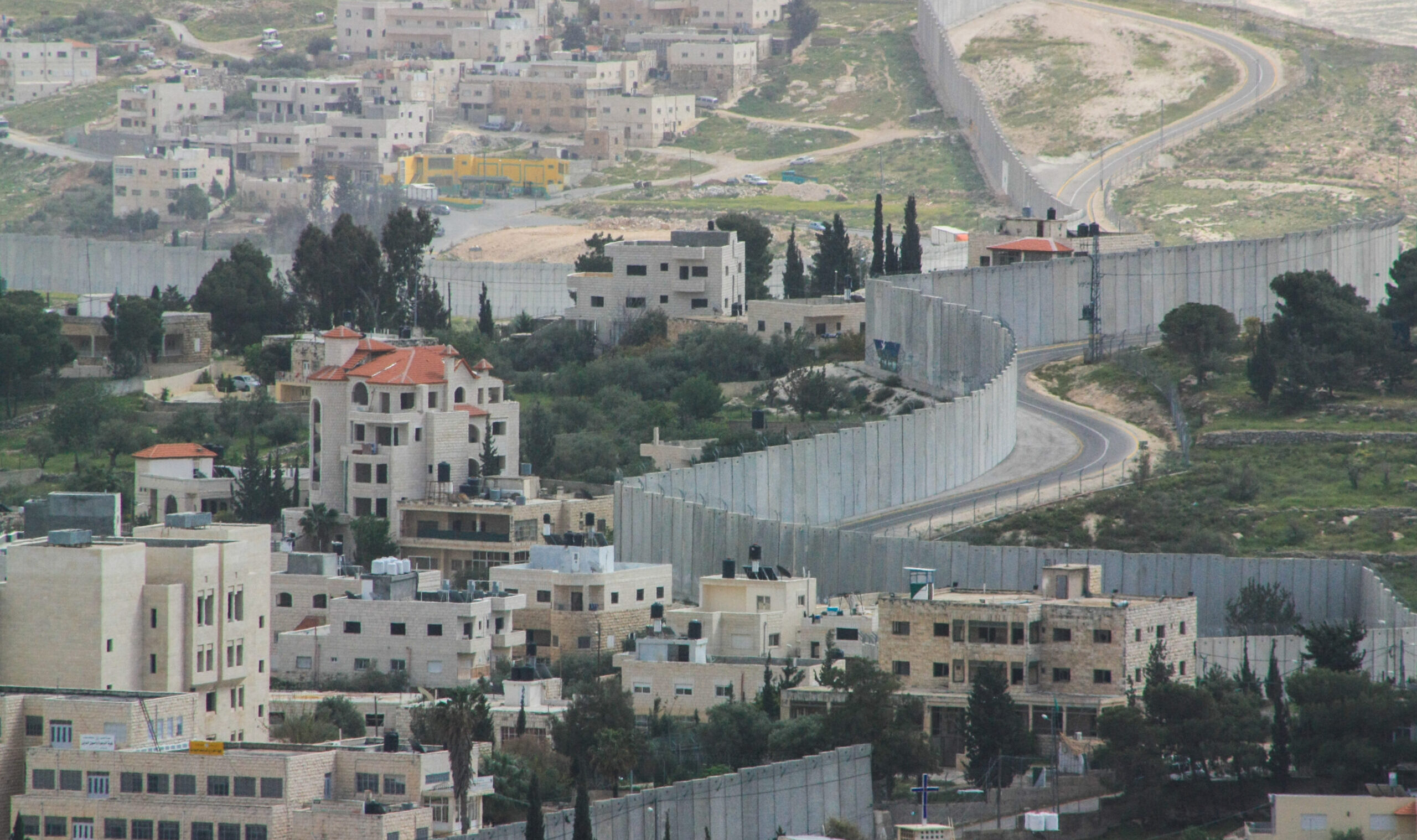

For most of last year, Mohammed Zaher Ibrahim, a Palestinian-American teenager, was detained by the Israeli military for allegedly throwing rocks at vehicles. Ibrahim’s father Zaher Ibrahim and his uncle Zeyad Kadur sat down with The American Conservative to discuss his case and the failure of the U.S. government to protect its own citizens in the West Bank.
Zeyad, can you talk about where you were when you heard about Mohammed’s extralegal detention in Israel?
Zeyad Kadur: So it was a little bit after Valentine’s Day February, 2025. I got a call from his father. and he said they picked up Mohammed this morning. And I said, what do you mean they picked him up? Who’s they? He said the IDF. I said why? He said, I don’t know. They wouldn’t answer any questions.
At like 4 a.m. was when Zaher said they raided the house. There were about 25 to 30 soldiers who came inside the house and around it while Mohammed was asleep. They knocked on the door. Zaher went to see what was going on. He said there were a bunch of ski masked soldiers with flashlights and M16s. The IDF went into Mohammed’s bedroom and he woke up with the flashlights in his face. The Israelis carried him out of his bed, they zip tied his arms and they blindfolded him. And then they carried Mohammed out of the house and threw him in the back of a Jeep.
So that was in February. And I wasn’t involved, just checking in on the family, seeing what I could do for them to help out from here. And the first visit was 60 some days later from the U.S. Embassy. They said Mohammed was feeling kind of sick and he was a little pale.
So his parents didn’t actually see him directly. It was the embassy who then talked to Mohammed. The embassy showed your family the photos of Mohammed and described his complaints in this torture cell.
ZK: So the embassy was not allowed to take pictures either. They just compared the visual that they had, that they saw with their own eyes, compared to family photos of Mohammed. They weren’t allowed to take a picture or a message or a letter for us or anything. So that was one of the rules: You can’t write them, you can’t call them, you can’t facetime. There’s no kind of communication, not for you, not for the embassy. It was just some type of Israeli law that due to security reasons, there’s no photos or videos or any type of communication with the prisoners. That was sometime in April when we got that update.
We were kind of just doing the steps of what you would do, you know, your embassy, your lawyers, and going through it with that. About five months went by, and they only had two visits in five months with Mohammed. The second visit they had, he was moved to a prison called Megiddo.
Megiddo was this really notorious prison in the northern part of Palestine or in the occupied territories. Once he was moved there, that’s when they said, “He lost a lot of weight, nearly 30 pounds in five months and he has scabies.” They said he was really pale and weak and that he wasn’t too talkative. We ended up hiring a new lawyer from the Israeli territories. We figured that since [the Israeli lawyer] speaks Hebrew, he may be more familiar with Israeli law, because every day after October 7th, the laws would change.
So this occurred in July, around the time that Mohammed’s cousin was killed in the West Bank by Israeli settlers. No one, to my knowledge, has been held accountable for that crime. Can you talk a little bit about what happened?
ZK: Yeah. So the first thing that kind of spooked us was what happened to a different young man, 17 years old, from the village of Silwad that Mohammed went to school with. We knew he was already in that prison before Mohammed, and that they were cellmates. He was a nice, healthy-sized kid, you know. He died in there due to starvation and illness. And he actually died in the cell with Mohammed. And they knew each other their whole lives, since childhood. His name was Walid. Walid passed away and his body is still in that prison in a freezer somewhere.
And then in July, Mohammed’s cousin Sayfollah went from Tampa, Florida to visit his family. And he was attacked. He was ambushed by Israeli settlers and beaten to death. And nobody was held accountable. Another young man got killed the same day there. He got shot in the back. And the bullet exited his abdomen. So there are these two 20 year olds who were killed in the West Bank, one of them an American by Israeli settlers. And that’s where I got more involved because we had one nephew who was just killed, the other nephew in a prison for five months where the kid his same age from the same town died.
I went to DC and I hooked up with a couple of organizations, one by the name of IMEU (The Institute for Middle East Understanding) and the other one was called CCR (The Center for Constitutional Rights). They had scheduled meetings with congressmen and senators for us. We were joined by four other families of Americans who were killed in Palestine, just recently that year.
Sayfollah, who was killed in July—his father joined us there in September. Another young American man from our same village, from New Orleans, named Tawfiq, 17 years old, was shot in the back of the head while he was sitting in his car by a sniper. We were joined by a young lady who was killed in the Nablus area of a village called Beta. Her name was Ayşenur; she was from Washington state and she was also shot by a sniper. She was only in the West Bank for three or four days at the time. And then some people who’ve been going through this for 23 years by the name of Cindy and Craig Corrie, the parents of Rachel Corrie, a young American girl who was bulldozed by a Caterpillar bulldozer. They ran her over and left her in the ground.
No one was held accountable for that last example, and that was over 20 years ago. So you went to DC over the summer, but Mohammed wasn’t released until the end of November. Why did it take so long?
ZK: It took nine and a half months exactly. It took February 16th to Thanksgiving Day for him to get released. Why it took so long, was our whole point of argument. Why do we have to convince you guys in politics to protect a 15 year old American boy who’s innocent? We believed if he had a different name or a different ethnicity that he would not have been there for nine and a half months. I didn’t think an Israeli American would be there for nine and a half months in prison, sick and being starved and beaten by what they tell us every day is our greatest ally in the Middle East, the only democracy in the Middle East.
When Sayfollah was killed by Israeli settlers, [U.S. Ambassador to Israel] Mike Huckabee visited. And he said that he was coming to pay his respects and condolences. And he called it settler terrorism. And we said, you know, the kid is gone. Thank you for your condolences, but why don’t you help us with Mohammed? And he said he would try and see what he could do. And he didn’t.
The State Department to this day has not made one phone call to us, hasn’t reached out once, didn’t call to see if we needed help with lawyers or help with getting him on a plane or anything. And our Florida politicians were also in high positions to help us. Governor Ron DeSantis and Senator Rick Scott are huge Israeli government supporters and they’re funded by AIPAC heavily. Secretary of State Marco Rubio was a Florida Senator, a Floridian. We thought there’d be a better sense of understanding from him but he wouldn’t respond to questions from the media or anybody else asking about Mohammed.
I’m happy that he’s home and that he said he’s alive, but I’m not happy that it took us that long to get him out.
Zaher, I have wanted to talk to you for a long time about what happened to your son Mohammed Ibrahim. You are both American citizens and you frequently visit Palestine where the Israeli security forces have occupied. Last year, the IDF detained your son, tortured him, and starved him for many months in an Israeli torture chamber, in one of their prisons, without charges. Your nephew, meanwhile, in July, was murdered by Israeli settlers. No one has been held accountable for that crime.
Mohammed was abducted in February, in the middle of the night. When were you informed of that, and when was the first time you were actually able to physically see him in person?
Zaher Ibrahim: In person was the day he got released. Before that, I got reports from the embassy, they played their role, visiting him. They could have done better, but at least they were getting some kind of information for me, especially when they assigned somebody for him on this case, Mark Marino. But before that, they only sent a visitation every month or every 45 days. So there was no contact. And it’s not like it’s a letter from him. So if somebody visited him and said, “He said X,” that doesn’t really mean anything.
You finally saw him in November of this past year. What was your son like and how did he change?
ZI: I mean, he looked like his bones and skin, you know. His face shrunk. Everything shrunk on him. It was good to see him, but at the same time when you see him like that, you’re like, damn. You know, when they show you the old photos of the Holocaust, the camps that the Jews were in, the way they looked in these old photos and pictures, that’s what they’re doing to the Palestinians.
Subscribe Today
Get daily emails in your inbox
Plenty of photos have come out of these torture prisons which prove what you say is absolutely true. And Mohammed is not an exceptional case, unfortunately he’s the norm of what’s been going on, completely financed by the United States.
ZI: If they had some leverage, like America supports Israel and funds Israel, military and financial and everything, you would think that as respect, as a U.S. citizen, they would take care of him, even like maybe a month before they let him out, feed him good where he comes out looking like a normal kid, but they didn’t even do that.
This interview has been lightly edited for clarity.