Will Trump Save the West—or Destroy It?
The White House needs a better strategy to strengthen civilizational ties.

Hey, hey, ho, ho, Western civ has got to go.
That uninspired rhyme has been associated with left-wing multiculturalists ever since the black activist Jesse Jackson, joined by 500 student demonstrators, chanted it on the campus of Stanford University nearly 40 years ago. They were protesting the humanities program “Western Culture” on the grounds that the authors featured in its traditional “Great Books” series lacked diversity—or rather, lacked the kind of diversity that the protesters cared about.
Stanford’s administration capitulated without much of a fight, renaming the program to “Cultures, Ideas, and Values,” adding non-Europeans to the curriculum, and ousting from it members of that most despised group, Dead White Men. Of course, the target of the protesters’ antipathy wasn’t just “Western Culture,” the humanities program, but Western culture, the thing itself. In killing off the former, they also struck a blow against the latter.
The blows have kept on coming, and the adults in charge more often than not have refused to punch back. Western leaders on both sides of the Atlantic, as if emulating Stanford on a more epic scale, have sought to replace the heritage of their once-proud civilization with supposedly universal “ideas” and “values” and with the disorienting anti-culture of multiculturalism.
Until Donald Trump.
“Americanism, not globalism, will be our credo,” he declared at the 2016 Republican National Convention. Over the course of Trump’s first term, his unapologetic nationalism evolved into something grander: an ideology of anti-globalism on a global scale. “The future does not belong to globalists—the future belongs to patriots,” Trump predicted at the United Nations General Assembly in 2019.
Trump’s second term has brought an even more striking development in the America First worldview: a romanticization of the Western world of which America is a part. A senior advisor at the State Department, in an essay published last May on the agency’s Substack website, articulated the administration’s civilizational view. The U.S.-Europe relationship, he wrote, “represents a unique bond forged in common culture, faith, familial ties, mutual assistance in times of strife, and above all, a shared Western civilizational heritage.”
Under Secretary of State Sarah B. Rogers said in an interview that Trump’s second administration features greater “ideological coherence” and a “deeper bench of people” who take a civilizational view of relations with Europe. “That’s part of the reason that you’re seeing this rhetoric more,” Rogers said.
Trump himself has discussed civilizational ties in strikingly personal terms. “I am derived from Europe,” Trump said this January in a speech at Davos, Switzerland. “And we believe deeply in the bonds we share with Europe as a civilization.” Secretary of State Marco Rubio and Vice President J.D. Vance have repeatedly depicted Europe as the wellspring of America’s cultural inheritance. “Anyone who doesn’t recognize, for example, that many of the features of our system of government find their root in Roman and Greek history is a fool,” Rubio told the Washington Examiner last December.
There’s a big problem, though.
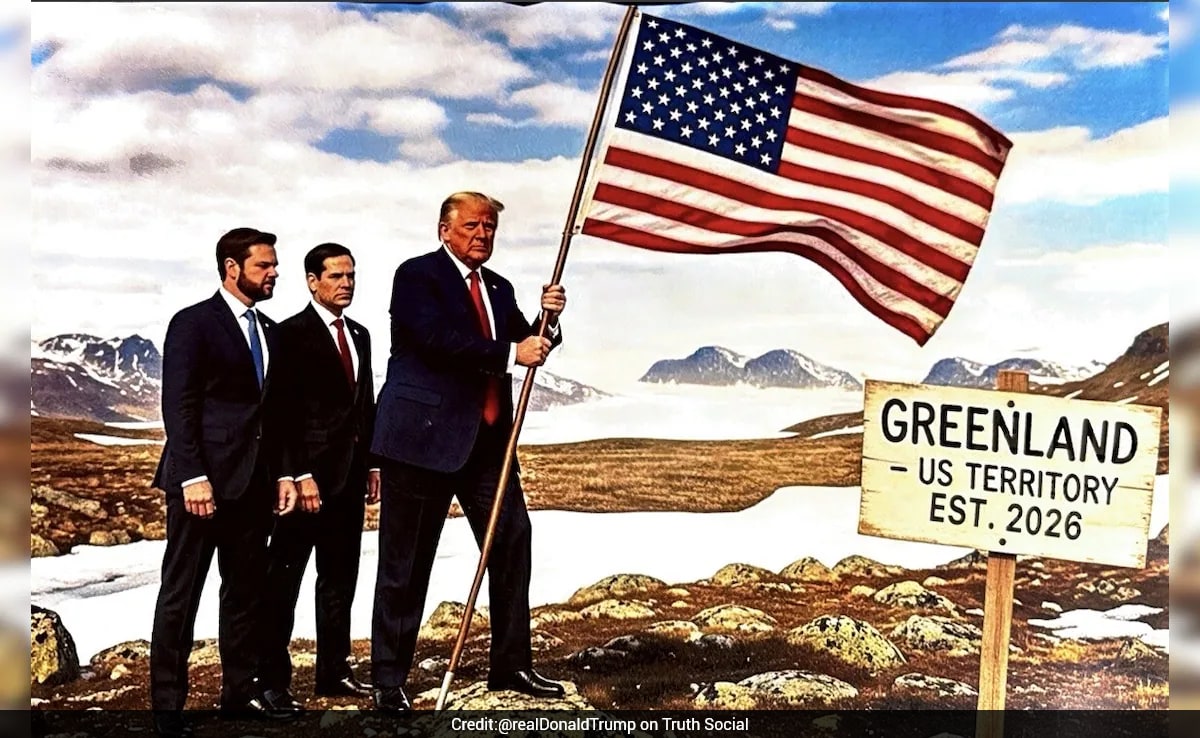
For all the administration’s talk of a united West, America and its Western partners are growing more divided than they’ve ever been in the modern era. The White House has launched a rhetorical barrage against Europe’s political establishment, which it accuses of opening the floodgates to migrant invaders, violating the rights of its own people, and freeriding on U.S. security spending. Trump has threatened Canada and European nations with devastating tariffs and last year strong-armed the European Union into a lopsided trade deal that favored Washington. He has even suggested annexing Canada and Greenland, a territory of Denmark.
While Trump has presented himself as the right-wing savior of Western civilization, such aggressive actions risk fulfilling the morbid dreams of those left-wing agitators at Stanford decades ago: its deconstruction. To correct course, the administration needs a better strategy to coax Europe toward sanity and self-sufficiency without also pushing it away from America. It will need to treat the European nations as civilizational partners, not as vassals nor as adversaries in a zero-sum geopolitical contest.
The Trump administration’s civilizational turn—and the suboptimal nature of its execution—are perhaps best exemplified by the National Security Strategy (NSS) released last December. The document proclaimed that America is “sentimentally attached to the European continent—and, of course, to Britain and Ireland.” It warned of Europe’s “civilizational erasure” by non-European immigration, liberal authoritarianism, and economic mismanagement. “We want Europe to remain European, to regain its civilizational self-confidence, and to abandon its failed focus on regulatory suffocation,” read the NSS.
“While American politics always featured pro forma invocations of ‘Western civilization’ and related values, the NSS means what it says, in a way that channels impulses which have risen in salience on the right in the past 10 years,” Rogers said in an email following our interview.
Encouraging Europe to reclaim its lost identity is worthwhile, perhaps even necessary, and the document’s diagnosis of European degeneration was, to my mind, entirely accurate. But the NSS suffered from a major flaw: Its authors seemingly did not craft it with an eye to Europeans’ profound mistrust of Trump. As an expression of frustrations with and concerns about Europe, the NSS succeeded. As an act of persuasion, it appears to have failed, at least if the intended persuadees were the Europeans themselves. “Three pages full of vitriol” was how one French political analyst, Sylvie Matelly, dismissed the section on Europe.
The White House erred by signaling support in the NSS for “patriotic European parties,” code for right-populist parties that criticize the EU. “Cultivating resistance to Europe’s current trajectory within European nations” is a top priority of the administration, the NSS explained, with shocking candor. Parts of the document were “unacceptable for us from a European point of view,” said German Chancellor Friedrich Merz. If European democracy needed saving, Merz added, “we would be able to handle that on our own.”
Even Europe’s right-wing parties had concerns. For them, the risk is that public support from the Trump administration amounts to the proverbial kiss of death. “Open backing from Washington, especially from a polarizing figure like Donald Trump, tends to reinforce the narrative that such parties are ‘externally aligned’ or acting as proxies,” Filip Gaspar, an advisor to the right-populist Alternative for Germany party, commented in an email. For the German right wing, Gaspar said, “this is politically damaging rather than helpful.”
Senior U.S. officials, to their credit, evince awareness of this risk, and they deny meaningful interference in Europe’s domestic politics. “I think ‘interfering’ is a term susceptible to a lot of interpretations,” Rogers said. She noted that previous administrations had funded civil society groups that promoted left-wing causes abroad, and that British Labour Party members had campaigned for Kamala Harris, Trump’s opponent in 2024. By contrast, Rogers said, the Trump administration is simply being “honest and transparent” about its commitment to common-sense migration policies and historic Western values, notably free speech.
Still, Gaspar’s concerns appear well-founded. Early in Trump’s second term, the president belittled Canada’s then–Prime Minister Justin Trudeau ahead of Canadian elections, calling him “governor” and urging America’s northern neighbor to become a U.S. state. The bullying manifestly backfired. The Conservative Party plummeted in the polls as Canadians rallied behind Trudeau and the Liberals. Thanks to the astonishing reversal of fortunes, the Liberal Party, now led by the former banker Mark Carney, was narrowly reelected. One year later, Prime Minister Carney, in his own speech at Davos, established himself as a key Western leader standing up to Trump.
This January, the Trump–Trudeau spat and controversial NSS started to look like the opening acts of an ever-escalating drama. Europeans began to worry that Trump intends not only to meddle in their politics, but to invade and steal their territory. Feeling his oats after a successful night raid in Venezuela, Trump intensified his push to acquire Greenland, even suggesting the possibility of military force. “If we don’t do it the easy way, we’re gonna do it the hard way,” he told White House reporters. Eight European nations sent a small number of troops to the Arctic island, seemingly as a show of resolve against the U.S., and Trump threatened steep tariffs in retaliation.
But days later, Trump climbed down, ruling out military force in Greenland and cancelling the tariffs amid reports that he and NATO Secretary General Mark Rutte had come to some kind of agreement respecting Danish sovereignty. What happened? In short, Europe bit back. While Rutte and Finland’s President Alexander Stubb continued playing their roles as conciliatory “Trump whisperers,” other European leaders organized a strong response.
The EU agreed to impose tariffs on the U.S. totalling nearly $100 billion if Trump’s own threatened levies took effect, and France’s President Emmanuel Macron even suggested deploying the Union’s trade “bazooka,” which would subject America to economic restrictions across the bloc. American stocks tumbled amid fears of a trade war, and investors worried Europeans could begin dumping the trillions in U.S. debt held across the continent.
Until the Greenland affair, Europe had seemed inclined to capitulate to Trump, partly for fear that he could undermine NATO’s collective defense arrangement, if not withdraw from the alliance. But concerns that the U.S. might no longer protect Europe became insignificant compared to growing anxiety that Trump might attack it. Though the Greenland crisis has receded, Europe and Canada are looking to de-risk from America, pursuing trade and visa deals with China and India, ostensibly to reduce U.S.-European interdependence that Trump has weaponized against them. Some analysts warn that the Western alliance could collapse.
For some in the MAGA movement, that sounds like a feature, not a bug, of Trump’s bull-in-the-china-shop approach to Europe. Conservative realists have long argued that NATO lost its raison d’être following the implosion of its main rival, the Soviet Union, and that it has become a vehicle for European dependency and American overreach. In this view, the looming demise of the Western alliance results primarily from structural factors—namely, divergent American and European interests—and Trump is merely accelerating the process.
Conservatives with well-placed sources told me the White House, in trying to secure control over Greenland, was hedging against the possibility of NATO collapse. Others speculated that instigating NATO’s irreversible dissolution was something more like the purpose of Trump’s Greenland threats.
Rogers denied this claim. “I have seen no evidence of any intent to sabotage NATO,” she said. “We talk about strengthening NATO, including by strengthening the ability of our NATO allies to defend themselves.” That’s consistent with the strategy outlined in the NSS, which framed opposition to Europe’s “current trajectory” around America’s interest in reversing its allies’ geopolitical decline.
Some conservative realists who broadly share the administration’s concerns about NATO have been left scratching their heads. “If the U.S. wants to burden-shift, which is a prudent instinct, Washington, DC must be prepared for a relatively independent Europe, which is also good for us,” Sumantra Maitra, founder of Clio Strategic Consulting and a TAC contributing editor, told me. Jennifer Kavanagh, a military analyst at Defense Priorities, wondered why the White House was antagonizing the Europeans rather than simply retrenching from Europe. “We could not defend them and still be partners and friends,” she wrote in a text message.
To be fair, the White House has successfully off-loaded onto Europe financial support for Ukraine’s war effort against Russia, and Trump got NATO allies to increase defense expenditures. But the U.S. has not taken commensurate steps to withdraw from Europe, nor coordinated the process with its allies. “We are committed to achieving self-sufficiency, but the administration won’t say what kinds of U.S. support will reduce or on what timeline,” said one diplomat from a major Western European power. “It’s hard to prepare with so much uncertainty.”
Clearly, there is much room for improvement. If the White House remains committed to a civilizational strategy coupled with a realist prioritization of American interests, it might stand to benefit from revisiting the great books on civilizational geopolitics.
The ur-text of modern civilizational theory is The Clash of Civilizations and the Remaking of World Order (1996) by the political scientist Samuel Huntington of Harvard University. In the heyday of the Pax Americana, Western elites rejected the book’s prediction of culture war on a global scale. Its stock rose after 9/11, when Western civilization itself seemed under attack from Islamic extremists. Years after its publication, the book shot back up the bestsellers lists and offered a framework for understanding the traumatic event.
But as the U.S. military response to that attack degenerated into unpopular forever wars, Huntington’s book became a convenient piñata for critics of military intervention in the Middle East. The association between The Clash and the Global War on Terror has damaged Huntington’s reputation among political scientists, including conservative realists who favor foreign policy restraint. In Maitra’s analysis, “One cannot push for burden-shifting on one hand and then appeal to the basest of Huntingtonian instincts that led to 20 years of failed nation-building and wars.”
Maitra, an erudite scholar of world affairs and elected member of Britain’s prestigious Royal Historical Society, is a lot smarter than me, but the connections he draws between civilizational theory and hawkism strike me as tenuous. Huntington himself wasn’t particularly hawkish by the standards of contemporary foreign policy elites. According to an obituary of Huntington on Harvard’s website, The Clash provided “the intellectual foundation in 2003 for his opposition to the U.S. decision to go to war in Iraq.” That claim is plausible, for “exporting democracy” to the Middle East was a neoconservative fever dream that Huntington had good reason to worry would become a regional nightmare.
Despite the book’s reputation and fearsome title, it didn’t envision perpetual war between the various cultural blocs. Rather, it argued that the new fault lines of global politics after the Cold War lay at the boundaries between cultures, though cooperation across those divides would remain possible and desirable. Huntington poured cold water on the idea, elaborated by his own former student Francis Fukuyama, that the triumph of liberalism over fascism and communism meant “the end of history” had begun.
In Huntington’s view, the world was facing something more like the return of history as it had appeared in all its crisscrossing complexity before the bifurcated ideological conflict of the Cold War. Armenia and Azerbaijan were in for more trouble because of the religious difference between them; resentful men in the Islamic world would wage jihad on an overbearing, liberal West; Beijing would aim to reincorporate the Han Chinese of Taiwan into its civilizational state; and the “cleft countries” of the world—those unfortunate states, like Ukraine, through which ran a civilizational fault line—would be vulnerable to fracture.
Huntington wasn’t an infallible prophet of global developments, but even his erroneous predictions somehow evinced foresight. His basic theory can’t account for the myriad bloody disputes within the Islamic world, but in his defense, he considered that civilization the least cohesive and most internally conflictual of all. And while Huntington wrongly, and infamously, forecasted that Ukraine would avoid war with Russia, his policy prescriptions deserve mention: Western statesmen, he counseled, shouldn’t try pulling the divided country into their own civilizational orbit, which would antagonize Moscow. While he wasn’t right above everything, one might argue it was the Western statesmen, and not Huntington, who proved misguided.
Regardless of how one tallies the empirical hits and misses of The Clash, its author was a profound theorist of world politics, and a surprisingly heterodox one. Huntington figured liberalism not as a universal ideology destined for global hegemony, but as a cultural product of the Western world. Paradoxically, universal values are, in this vision of politics, parochial values. What those angry students at Stanford might have learned, had they entered the seminar room with humility, is that the very uniqueness of Western culture meant its values could neither survive the mass influx of foreigners nor be imposed on alien civilizations.
And what the Trump administration might learn from Huntington is that America’s civilizational partners are the countries on which it is most likely and able to rely in the new multipolar era—unless Washington gratuitously alienates them. Trump’s tendency to weaponize intra-Western interdependence has the effect of driving Canada and Europe, reluctantly, into the arms of China, America’s only peer competitor and one that may require a united West to counter-balance. As Trump seeks to redress trade deficits, open foreign markets, and shift supply chains from China, he should recognize that Western partners can offer a stable source of crucial goods and consumers for U.S. exports.
Unlike Huntington, a WASP and lifelong Democrat, another great civilizational thinker was a Catholic and old-fashioned Republican: Pat Buchanan, the political advisor, presidential candidate, and prolific author (and cofounder of this magazine). In books like The Death of the West (2001) and Suicide of a Superpower (2011), Buchanan argued that America and Europe faced demographic submersion, falling birthrates, and attacks on Christianity—and would die together absent radical change.
Subscribe Today
Get daily emails in your inbox
Yet Buchanan was a fierce critic of the Western alliance, warning after the Cold War that the eastward expansion of NATO would antagonize Russia and commit U.S. soldiers to fight and die for European nations that were security dependents, not true allies. “How is America strengthened by a treaty to defend forever a continent that refuses to raise the armies to defend itself and whose populations have begun to die?” Buchanan asked in The Death of the West.
While Buchanan cherished Western civilization, he judged that the Western alliance in its post-Cold War form no longer passed America’s cost-benefit test. The Trump administration, evidently, stands on firm intellectual ground in criticizing European dependency while also seeking to fortify civilizational ties. The U.S. can, and should, reduce its subsidy of Europe’s security while encouraging sanity on migration, but it should avoid turning allies into adversaries who run to China and India out of desperation.
Under Trump, America has found the political will to revitalize the West. But without prudence, patience, and aides who can help translate his good instincts into a workable strategy, Trump might just deal Western civ its final death blow.