Trump’s Road to a ‘Friendly Takeover’ of Cuba
The administration believes that the time has come to return the island to the American fold.
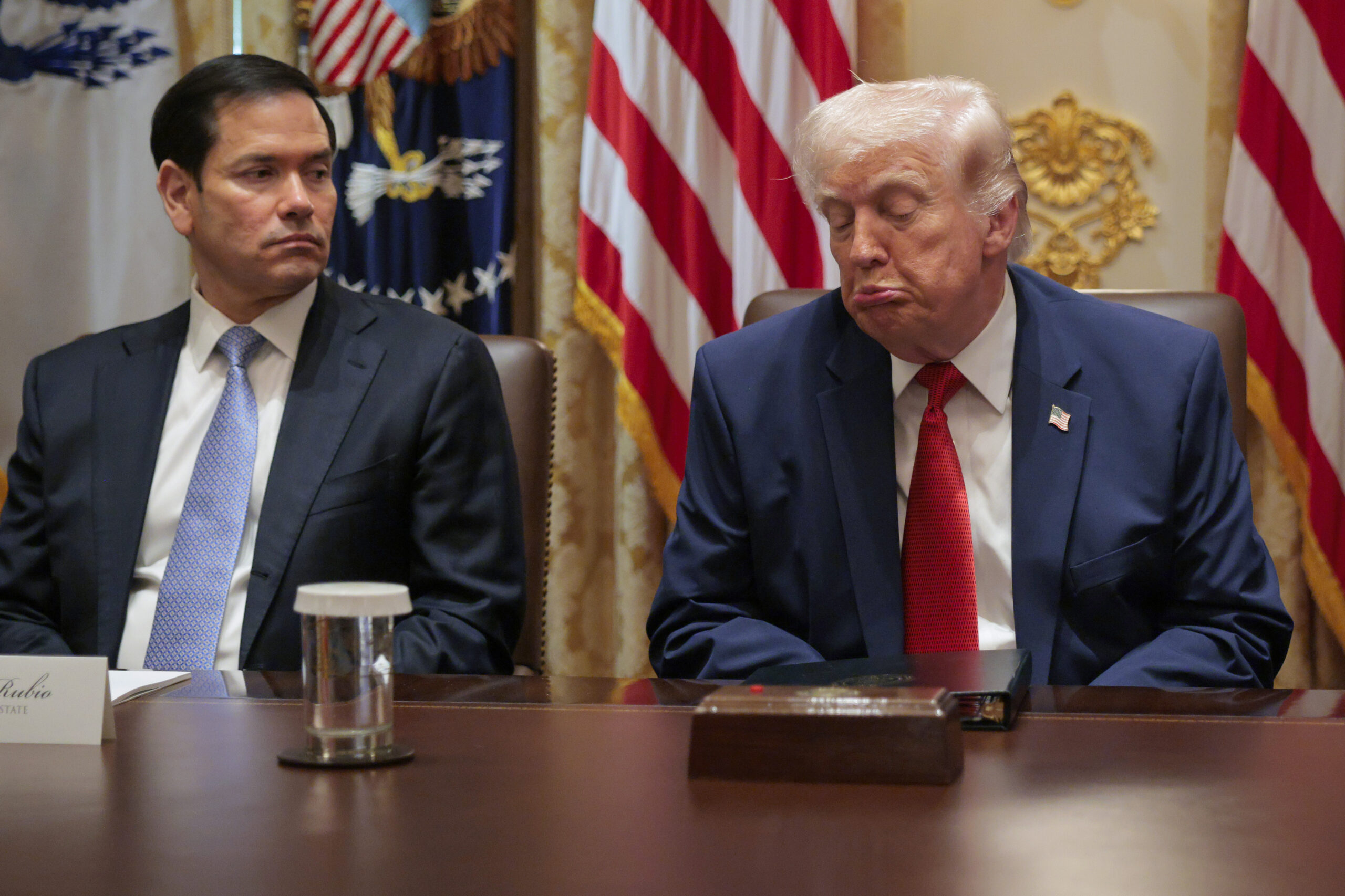
“I mean, whether I free it, take it. Think I can do anything I want with it. You want to know the truth,” President Donald Trump said to the gaggle of attending journalists in the Oval Office on March 16.
The president was speaking about Cuba, the island nation just 100 miles south of Florida, whose communist government has frequently proven a source of irritation for the United States. When Trump was 16 years old, the Cuban Missile Crisis emerged as one of the tensest moments in American history and perhaps the closest the world has come to the outbreak of nuclear war.
For much of its modern history, Cuba was a de facto protectorate of the United States. After Cuba’s liberty from Spain was secured with American intervention in 1898, the U.S. bound the nominally independent Cuban government with a series of severe restrictive measures under the Platt Amendment. These limited Cuba’s right to make treaties with other countries and allowed the U.S. to intervene in the country whenever it deemed the Cuban government to be incapable of “the protection of life, property, and individual liberty, and… discharging the obligations” it had made to the U.S. after the war.
American political and economic might exerted an overwhelming influence on the island nation during the early 20th century; U.S. corporations took particular advantage of Cuba’s climate and workforce to manufacture sugar for the exploding American market. Cuban governments largely served American interests and were dependent upon U.S. cash and military power to maintain order (and to line their own pockets), a state of affairs that fostered serious discontent among the Cuban population at large and proved advantageous to the revolutionary and revolting Fidel Castro.
The second Trump administration has decided that the time has come to turn back the clock and return Cuba to its natural place in the American sphere of influence. There are a variety of reasons for this development. The most important is the administration’s decision to emphasize the Western Hemisphere as a key theater for asserting American priorities. The administration’s 2025 National Security Strategy declared that the time had come for the United States to “reassert and enforce the Monroe Doctrine to restore American preeminence in the Western Hemisphere, and to protect our homeland and our access to key geographies throughout the region.”
The original Monroe Doctrine was a policy of opposing European interference in the hemisphere; the version as conceived by the NSS now includes “the Roosevelt corollary,” which asserts the right of the U.S. to intervene in any nation that fails “to keep order and pay its obligations,” as well as the novel “Trump corollary” that insists the U.S. must maintain primacy in the region and enforce its own interests there.
This approach is broadly popular even within the more dovish wings of the Trump coalition; if American intervention is justified anywhere, it is in the Western Hemisphere. Events here directly impact the quality of life of American citizens, and the United States clearly has an interest in preventing drugs, crime, and illegal immigration from flowing across the southern border. Asserting American power in the hemisphere is especially attractive to realists, who are predisposed to think in terms of pure interests and spheres of influence, making this a place of rare confluence between realists and hawks.
Assertive hemispheric policy is also attractive to prioritizers—those in the Trump administration who want to more carefully safeguard American resources for the most vital conflicts, especially great power competition with China. Beijing has made a concerted effort to increase its influence and economic integration with countries in the Western Hemisphere, and depriving it of any friendly regimes close to the United States and thwarting its foreign policy initiatives are obvious goals for China hawks. Additionally, Latin America is a natural place to relocate supply chains as the U.S. attempts to decouple from Chinese industry. Friendshoring and nearshoring to a friendly Latin America synergizes neatly with the prioritizers’ economic strategy for confronting the Chinese.
Finally, an aggressive hemispheric policy naturally appeals to an increasingly prominent demographic in the Trump camp, the various Hispanic diasporas that make up a powerful lobby centered in Florida. These groups—Venezuelans and Cubans most notably—hope to leverage American power to settle scores with hostile regimes in their homelands and improve the lot of their family and friends abroad with American money. With a strong voter base in the state and elected representatives like Mario Díaz-Balart, Carlos Gimenez, and María Elvira Salazar, this community has outsized power in the Florida-heavy Trump administration.
The most influential member of this ethnic lobby is Secretary of State Marco Rubio. Of Cuban extraction, Rubio has long made opposition to communist Cuba a priority. As a senator, Rubio sponsored dozens of bills and resolutions targeting the Cuban government, including nine in his last year in office. That has continued into his term in the executive branch, where, one source in the administration told The American Conservative, Rubio has carefully conserved his political capital to push an aggressive Western Hemisphere policy. Those efforts have borne fruit: The U.S. capture of Venezuelan president Nicolás Maduro removed one of Cuba’s last major allies in the region, and under Rubio’s supervision the country has cut off its Cuba-bound oil shipments. Mexico, too, once Cuba’s largest source of oil, halted its shipments after Trump threatened to tariff any country that supplies oil to the Cubans, leaving the Cuban power grid on its last legs.
When asked in a January Senate hearing whether the Trump administration would rule out regime change in Cuba, Rubio said, “We would love to see the regime there change… There’s no doubt about the fact that it would be of great benefit to the United States if Cuba was no longer governed by an autocratic regime.” The secretary of state has been seeing to that possibility personally, participating in secret talks with Raulito Castro, the grandson of Fidel Castro’s brother Raúl, on a potential change of direction for Cuba.
The convergence of multiple foreign policy communities on a muscular Western Hemisphere policy has left the administration with few brakes on its activities in the region. Cuba is the obvious target for American intervention; its close proximity to the mainland makes it both easily accessible and a source of grave danger if under the influence of hostile powers. The latter possibility has been mostly neglected since the fall of the Soviet Union, but the rise of U.S.–China great power competition has brought it sharply into focus once more—with rumors that China is operating spy bases on the island.
Trump has long been hostile to Cuba. In his first administration, he reversed the former President Barack Obama’s move to normalize relations with the island nation by rolling back permitted methods of travel to the country, repeatedly expanding the sanctions list to include Cuban state-owned corporations and government figures, restricting remittances to cut off the flow of dollars into the country, and redesignating the government as a state sponsor of terrorism. But the magnitude of the pressure that Trump and his administration are putting on the country, and the ambitions the U.S. is willing to entertain, have expanded dramatically during his second administration.
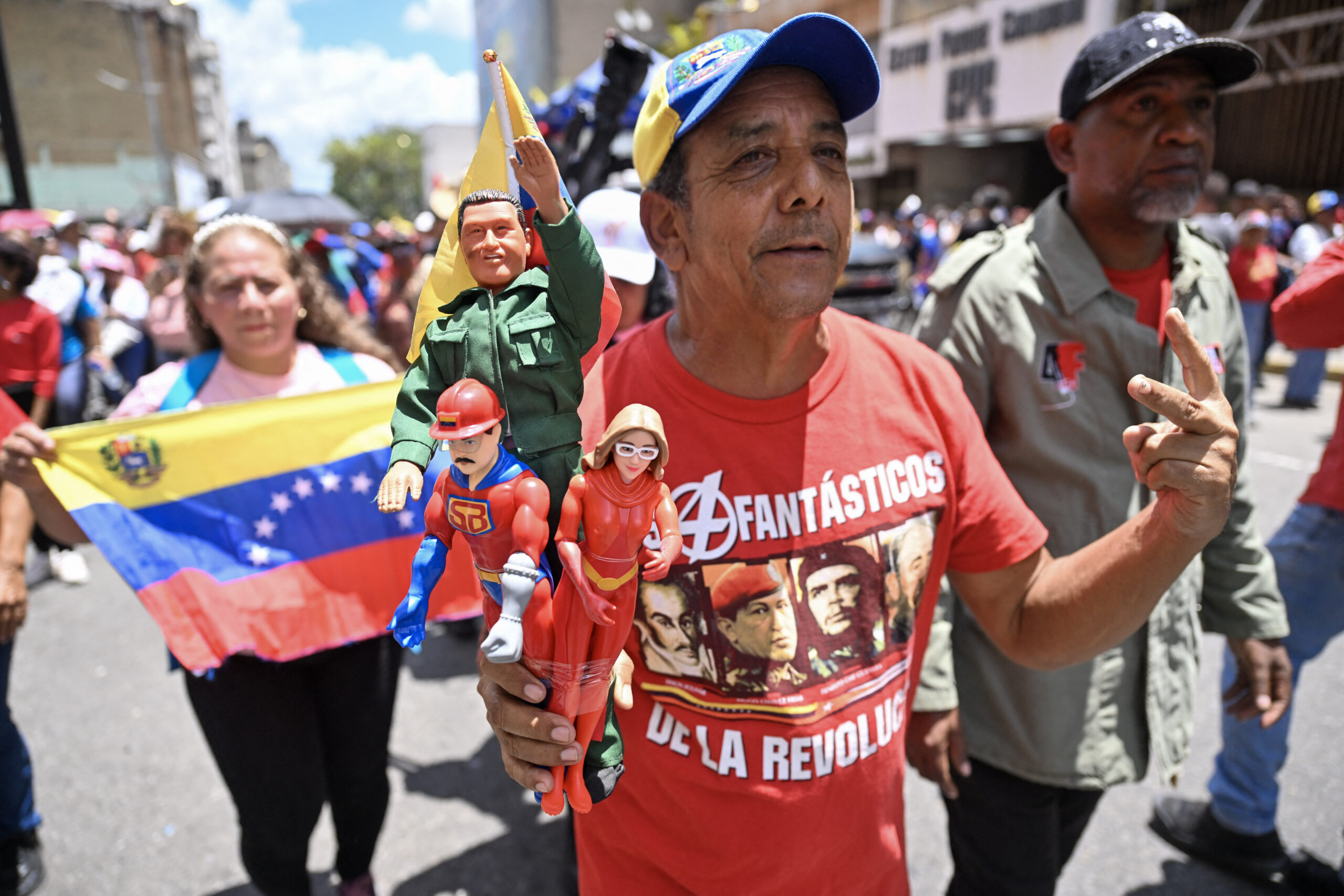
In June 2025, Trump signed a National Security Presidential Memorandum laying out the administration’s intention of increasing pressure on the Cuban government, including continuing restrictions on travel and trade restrictions and “fostering a free and democratic Cuba.” The administration’s focus in the Western Hemisphere, however, was diverted from the island for a time by the conflict with the Cuban ally Nicolas Maduro in Venezuela, whose support has often been seen as an important part of the Cuban government’s continued stability.
With Maduro’s capture in January removing that distraction from the region, the administration moved on to escalating against Cuba directly. Just a few weeks after Maduro’s capture, Trump signed an executive order declaring that Cuba presents “an unusual and extraordinary threat” to the United States, provides “defense, intelligence, and security assistance to adversaries in the Western Hemisphere,” and “supports terrorism and destabilizes the region through migration and violence.” The order included instructions enabling the U.S. to implement significant tariffs against any country that “directly or indirectly sells or otherwise provides any oil to Cuba.”
The order had its desired effect, and Cuban oil imports have dropped to almost nil. The country’s electrical infrastructure was already fraying badly, and this intervention has brought it close to complete collapse. Complete power outages are now frequent across the island, and have provoked rare protests as the populace expresses its frustration with the deteriorating standard of living.
Since then, Trump’s rhetoric has been remarkably belligerent, as the president has made clear that he aims for regime change. In February, Trump noted that “the Cuban government is talking with us, and they’re in a big deal of trouble…. They have no money. They have no anything right now, but they're talking with us, and maybe we’ll have a friendly takeover of Cuba.”
“I do believe I’ll be... having the honor of taking Cuba,” Trump said in mid-March. “That’s a big honor. Taking Cuba in some form.” And on March 27, Trump teased plans for a military operation against Cuba. “I built this great military,” the president said. “I said, ‘You’ll never have to use it.’ But sometimes you have to use it. And Cuba is next, by the way.”
Subscribe Today
Get daily emails in your inbox
The main concern with any regime-change operation is of course the successor regime to be appointed, and this seems to be top of mind for the Trump administration with regard to Cuba. There is broad speculation that the ongoing talks between various figures in the Cuban elite (including Raulito Castro) and the White House are attempts to find a Delcy Rodriguez–type figure that could replace the current Cuban President Miguel Díaz-Canel.
The task is likely to be a stiff one, as Cuba is less of a personalist regime than Venezuela; the principal power rests in the leadership of the Cuban communist party and the military and security forces. Cuba also lacks any form of robust civil society that could supply new leaders for an incoming government. If the Trump administration is willing to settle for regime compliance instead of full regime change and military occupation, it may find that its only option is to cut a deal with current Cuban elites.
That possibility is looking ever more likely, given military entanglements elsewhere in the world that have absorbed the administration’s attention. “We’re talking to Cuba,” Trump told reporters in March, “but we’re going to do Iran before Cuba.”