The UK’s Fiscal Apocalypse
Public spending is ballooning even as Labour degrades the British economy.
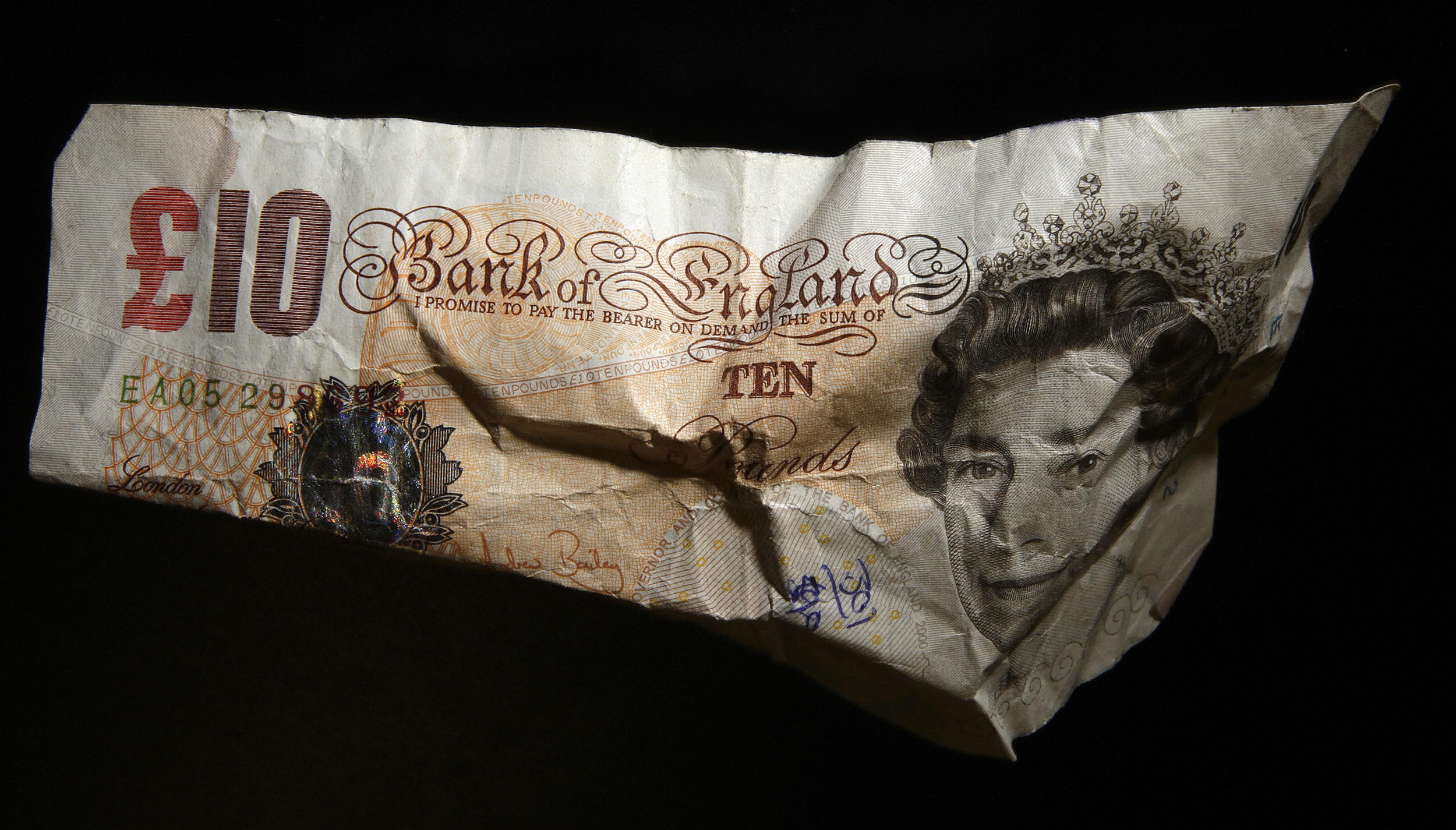
This week I came across a truly jaw-dropping statistic. Britain now spends more on benefits than it raises in income tax: £334 billion against £306 billion respectively. The UK, it seems, now taxes working people in order to pay other people not to work.
Of course, there are other sources of government revenue than income tax: VAT, corporation tax, fuel duty, to name but three. But the tax/benefit ratio is a prime index of economic irrationality.
The British economy has, to paraphrase Hemingway, been tanking slowly for years and is now about to tank very fast. The Iran War is about to throw the British economy and its febrile politics into their greatest crisis certainly since Covid.
This week, the UK learned that Iran apparently has the capacity to send ballistic missiles over 2,300 miles, far enough to reach not only the British overseas territory of Diego Garcia, but also London itself. Many argue that, though Britain may not have realized it yet, it is effectively at war. There is mounting pressure to abandon the nation’s broadly pacifist public morality and to devote huge expenditure on restoring the recklessly debased UK defense infrastructure. But where is the money to come from?
Borrowing? The Labour Chancellor Rachel Reeves borrowed a record £14.3 billion last month alone. Britain now spends twice as much on debt interest—around £120 billion—as on its entire defense budget of £60 billion. That figure’s another marmalade-dropper, as we Brits say.
Taxes are already higher than at any time since the Second World War. It’s only going to get worse. The Bank of England had to cancel its planned cut in interest rates last week because bond yields have surged past 5 percent on expectations of further fiscal tightening. Mortgages have frozen as markets sense an imminent recession brought on by the UK’s dependence on imported oil and gas.
Consumers are tightening their belts again as they are warned of a 20 percent increase in already sky-high energy bills by July. Petrol and diesel prices have jumped, fertilizer is becoming a precious commodity, and the oil majors are even pulling out of renewable energy projects in the North Sea. Spring may have arrived, but the British economy is entering a deep freeze.
There seems to be a complete lack of original thinking, or even a sense of urgency, either in the musty corridors of the Palace of Westminster or in the concrete and glass towers of the civil service. The UK political parties are all at sea, while voters are increasingly turning to populists of the right and left.
The antigrowth Green Party has been riding high in the opinion polls following its victory in the crucial Gorton and Denton parliamentary by-election. Its leader Zack Polanski, who makes the former leftist Labour leader Jeremy Corbyn sound like a fiscal conservative, has been ranting on TV about “billionaires” being behind every economic misfortune.
Like the Labour left, he is eager to impose ever greater wealth taxes to encourage well-heeled people to depart Britain’s shores—and take their businesses with them, as many, including the oil tycoon Sir Jim Ratcliffe and the vacuum cleaner billionaire Sir James Dyson, have already done.
It is an irony lost on radicals like Polanski and the Labour left that hatred of capitalism seems to have gripped the imagination of the young in Britain, even though it is only capitalism—investment and growth—that can bring Britain out of its slough of despond. Yet, according to YouGov opinion polls, wealth taxes and universal basic income are increasingly popular.
Anyway, when it comes to job-destroying wealth taxes, nobody does it better than Reeves, who has broken every taxation promise made by Labour before it was elected in July 2024 and added £80 billion to the nation’s tax bill, already the highest since the 1950s. She has directly increased taxes on jobs by increasing employers’ National Insurance levy, and spent it on giveaways to benefit claimants so that they can afford more than two children.
The most obvious thing to do to restore confidence in the British economy and lower borrowing costs would be to give the go-ahead for the development of the known new oil and gas fields in the UK sector of the North Sea. Two of them—the Rosebank oil and gas field off Shetland and the Cambo field off Aberdeen—are ready to roll, but have been halted by Energy Secretary Ed Miliband on the grounds that development would be “an exercise in climate vandalism.” The vandalism is entirely to the edifice of British public finances.
While development of new fields would not cut oil prices overnight, a resumption of drilling in the North Sea would greatly boost confidence in the British economy, increase tax revenues, and generate much-needed employment. It would also demonstrate to skeptical markets that Britain is prepared to do whatever it takes to reduce dependence on costly imports of oil and gas, which are more damaging to the environment anyway.
It is a grim irony that Britain survived the last great oil shock after the Yom Kippur War in the 1970s because it had recently discovered oil and gas in the North Sea. This time around, in the Iran war— “the greatest supply disruption in history” according to the International Energy Agency—Britain has elected to close down its oil and gas fields altogether, thus squandering its energy security.
The UK has been importing millions of tons of liquefied natural gas from the U.S., 3,000 miles by tanker over the Atlantic, instead of developing its own known resources. If there is a better illustration of economic madness, I can’t think of one. Britain is also increasingly importing more than half of its gas from Norway. This is extracted by the Norwegian state oil company, Equinor, from the same North Sea basin in which British governments have banned drilling and exploration.
The canny Norwegians never stopped exploiting fossil fuels and are even now drilling in the Arctic. They are also finding new fields in the North Sea almost by the month in areas like Troll, Castberg, and Sleipner. The North Sea is no longer what it was in the ’70s and ’80s, but it is still capable of producing a lot of the black stuff. The British field is estimated to contain around 14 billion barrels, according to analysts at Wood Mackenzie.
Subscribe Today
Get daily emails in your inbox
It’s hard not to agree with the columnist and former BBC TV presenter, Andrew Neil, that Britain is “stuck in an oil and gas crisis—and there’s a bunch of clueless inadequates at the tiller.” The bond markets have clocked that the UK political leadership is incapable of taking tough decisions and is addicted to borrowing to pay for a burgeoning benefits bill. Hence the surging cost of borrowing to service Britain’s £3 trillion national debt pile.
This cannot go on. Yet it almost certainly will. Prime Minister Keir Starmer has been served notice of a future leadership challenge from his left-wing former deputy, Angela Rayner. She resigned last year over her failure to pay taxes, which is also grimly ironic, since her agenda, backed by most Labour MPs, is to increase taxes and borrowing even more to fuel Britain’s benefits economy.
Forget Epic Fury. This is epic fantasy.