The U.S. Career Diplomat Scheming With the UN to Block Trump on Migration
UN leaders have maneuvered to keep out the Trump administration’s candidate for the UNHCR deputy position to stymie needed reforms.
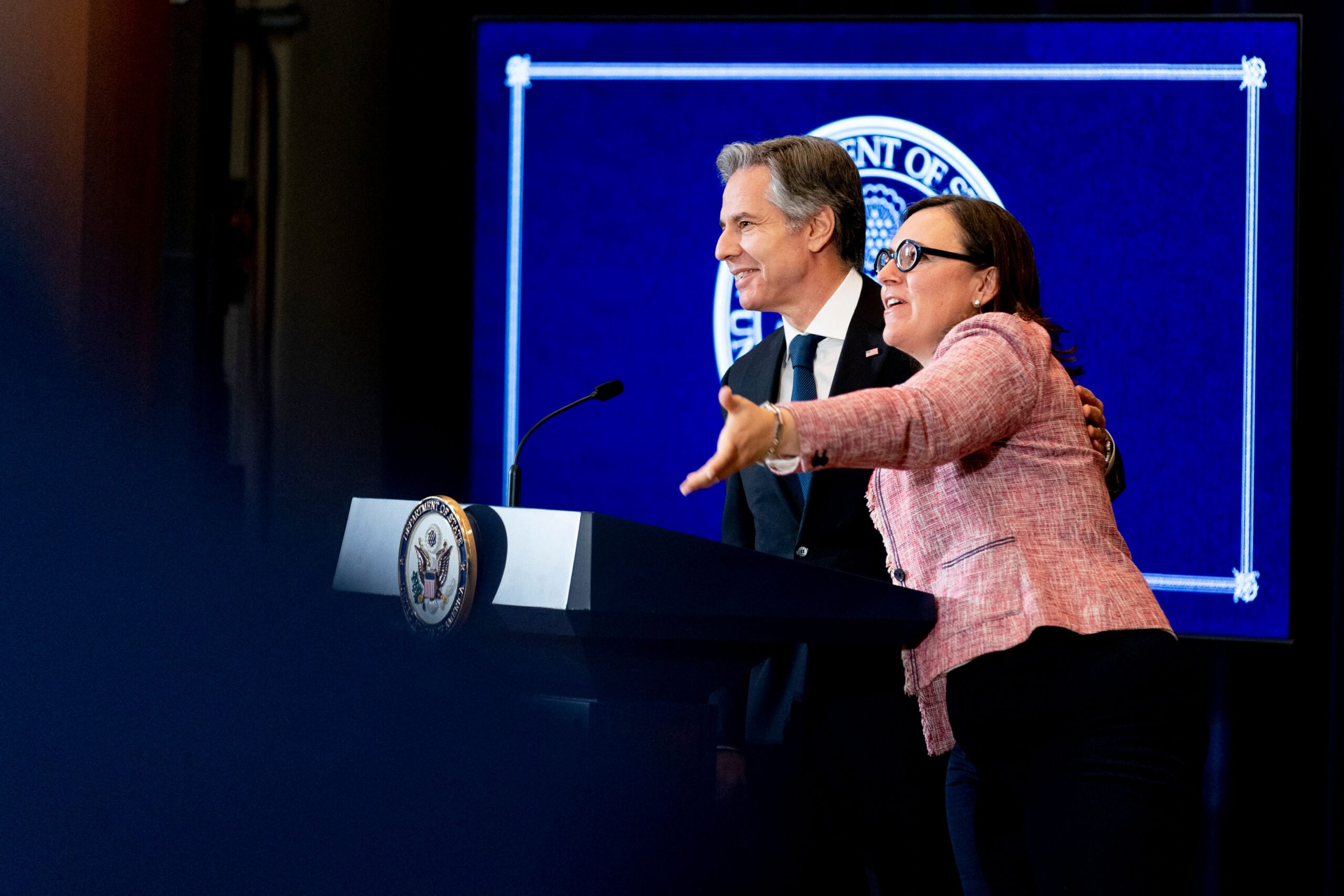
United Nations Secretary-General António Guterres has appointed Tressa Rae Finerty, a U.S. career diplomat, to be the Deputy UN High Commissioner for Refugees (UNHCR). While most Americans would regard this an obscure diplomatic appointment, the decision carries significant implications for President Donald Trump’s efforts to thwart global illegal immigration. Guterres intentionally rejected the White House’s nominee and selected someone whom he knows to be clearly out of step with Trump’s objectives for reforming the corrupt international refugee business.
One major issue that requires exposure is the sleight-of-hand ways UNHCR officials have erased the differences between genuine refugees and economic illegal migrants. In 2021–24, UNHCR was a major collaborator with the Biden administration in igniting a global explosion of illegal migrants under the guise of assisting refugees, incentivizing them to “surge” to the border of developed countries, particularly the United States. In a covert funding plan, in part masterminded by Antony Blinken’s State Department, UNHCR expanded cash-assistance programs to encourage economic migrants to pick up, run the risk, and just take off. These were dangerous journeys, often with young children, through places like the Darien Gap on foot or the Mediterranean Sea in a leaky raft. It is difficult to imagine a more irresponsible “refugee” policy.
Using aligned NGOs, UNHCR provided free cash subsidies to illegal migrants, giving out prepaid and debit cards to ensure that millions of clandestine travelers had money to unlawfully move across borders. It is still unknown how much UNHCR financing was made available to the millions of foreigners who moved across Central America and Mexico on their way to the U.S. border.
Since the United States is the single largest donor to UNHCR, contributing around 25 percent of the international organization’s annual budget of roughly $8–10 annual billion, the deputy position traditionally goes to an American. The White House’s nominee was Simon Hankinson, who would have brought gold-standard credentials to the position. Hankinson is not an unprepared Trump political loyalist or a mere policy wonk. During a twenty-year Foreign Service career, he worked immigration and border-security issues firsthand before becoming a leading researcher on migration policy at the Heritage Foundation.
By any measure, Hankinson was highly qualified, but because Guterres and his UN team, rightly, considered him to be a reformer and UNHCR skeptic, they chose another candidate. The last thing that Guterres wanted was a conservative like Hankinson rooting around in UNHCR’s closed financial books and asking hard questions on how the UN bureaucracy mismanages its billions of refugee dollars.
Instead, Guterres offered the job to Finerty, an American diplomat who was serving as the chargé d’affaires at the U.S. Mission to the UN in Geneva. According to media reports, Finerty had asked the State Department to put her name forward for the position but was told that Hankinson was the White House nominee. For a career diplomat, that meant she had orders to use her diplomatic influence to get Hankinson appointed. Finerty instead decided to freelance and promote herself for the position.
Finerty’s skillful but sly maneuvering is also a prime example of an intense debate in the boutique world of American diplomacy over the question whether State Department career diplomats can be counted on to advance the Trump administration’s international agenda. Foreign affairs conservatives have their doubts on this question because the White House’s signature foreign policies—on issues such as migration, trade, climate change, DEI, and foreign assistance—are in direct contradiction with positions that, for decades, the State Department has been advancing on the global stage.
Secretary of State Marco Rubio and his team, unlike their critics, are far from naïve on these matters. From the start, they did not view some senior U.S. diplomats, who made their careers advancing the Obama-Biden international priorities, as the best advocates for Trump’s diplomacy. Thus, there was reasonable justification for Rubio to recall many of them.
Those critics who charge Rubio with bringing Tammany Hall tactics to Foggy Bottom must first address the elephant in the room: Federal Election Commission records document that the overwhelming majority (94 percent) of political contributions from State Department employees during the last election cycle went to the former Vice President Kamala Harris. What does that stunning datapoint say about the ideological balance in the U.S. diplomatic corps?
Still, it should be recognized that most U.S. career diplomats are indeed professionals, who like good attorneys in court can represent a client whose case they personally reject. Yet, again, that does not necessarily mean they are the best advocates for Trump’s diplomacy. Some may be, but others are not, and the lawyer-client analogy only goes so far. After their courtroom exchanges, plenty of attorneys afterward gather privately over drinks to discuss what jerks their clients are.
The same thing happens in the professional world of diplomacy. Senior Foreign Service officers have personal networks and reputations that range across many foreign ministries, international NGOs, and multilateral organizations. These personal reputations are enduring and are based typically on the shared liberal-left values that dominate in most diplomatic corps around the world. UNHCR officials knew they could easily find a like-minded career U.S. diplomat to hire who would join them in maintaining the broken status quo on global refugees.
Thus, Finerty knocked on their door. A self-described “multilateralist,” she was never a neutral observer of the current U.S. president and his policies. When Finerty made her personal decision not to support Hankinson, but to promote her own candidacy, she made Rubio’s point on the necessity of the recalls. The honorable course for her would have been to leave her position as U.S. chargé d’affaires in Geneva and resign from the Foreign Service before pursuing her own personal ambition.
Subscribe Today
Get daily emails in your inbox
Instead of resigning, she remained as Trump’s senior envoy to the UN in Geneva and worked against his candidate. It must have been a bit awkward for Finerty to put aside the orders from Washington, which had instructed her to deliver an official demarche to the UNHCR in support of Hankinson as the American nominee. Perhaps Finerty might feel an obligation to explain publicly to the Foreign Service the explanation for her actions.
Alas, Rubio and his leadership team have learned another hard lesson about leaving senior career diplomats in crucial posts. Those committed to reforming UNHCR can only hope that Mike Waltz, the U.S. ambassador to the United Nations, has taken note of this sneaky affair. Waltz should work with Washington to launch a forceful campaign against the mission-creep, open-border initiatives, and mismanagement inside UNHCR. Such an effort remains crucial to Trump administration foreign policy efforts against illegal immigration.
Beyond the abiding question of whether career diplomats can effectively advance policies they oppose, the central issue remains: Why did UNHCR devote vast financial resources that facilitated the movement of millions of economic migrants toward the borders of developed countries, including the United States?