The Newsletters of the 1930s
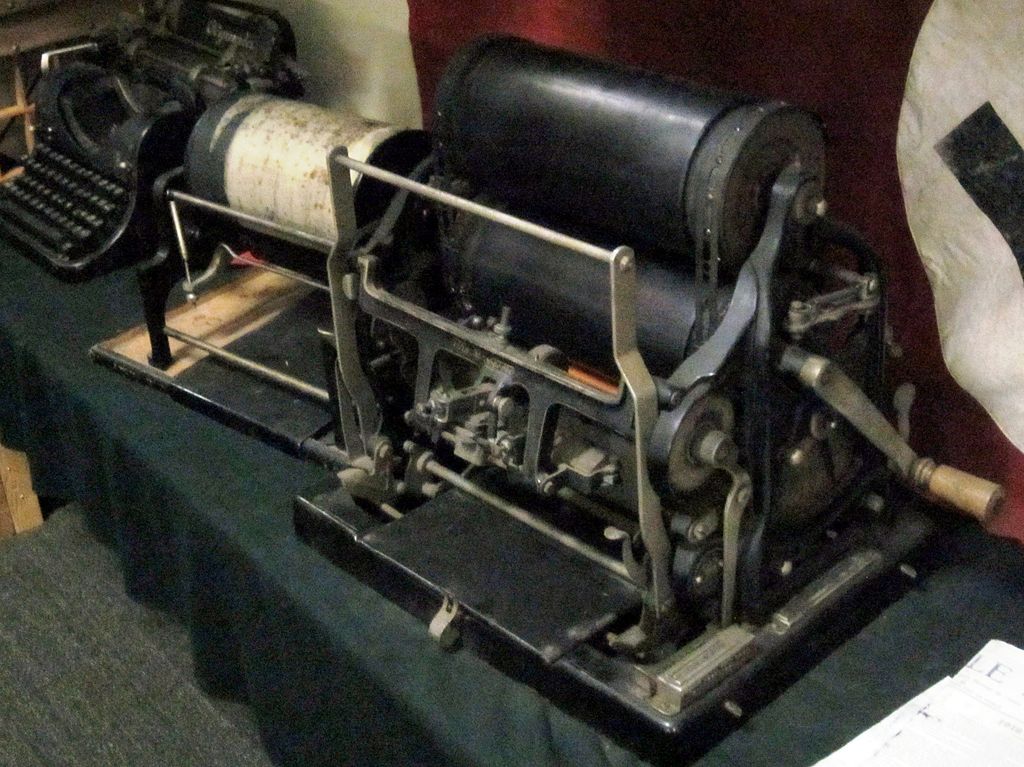
Newsletters are all the rage. Andrew Sullivan is back at The Dish, but now it is delivered by email. Steve Hayes and Jonah Goldberg launched The Dispatch late last year. Matt Taibbi announced his reporting would be delivered via email only in April. Emily Atkin, Judd Legum, and Casey Newton have all left magazine writing for newsletter gold. And the list goes on. This is not the first time writers have left mainstream publications to go it alone, Michael Waters writes in Wired:
“By the time Claud Cockburn resigned from his post as foreign correspondent for The Times of London, he’d grown sick of the newspaper’s conservative streak. But even as a freelancer, he continued to struggle with what he saw as the media’s complacency toward the rise of ultra-nationalist movements around the world. So he tried a new approach: He’d start a newsletter, and make himself a brand.
“Cockburn’s first issue went out to subscribers in March 1933. Produced from his one-room London office on a mimeograph machine, The Week would be unafraid to attack extremists such as Mussolini. His subscriber list started at just seven, but it soon grew to include even Charlie Chaplin and King Edward VII, among many others. In one of Cockburn’s biggest scoops, in June 1936, The Week broke the story that ‘a Fascist putsch by the higher ranks of the army officers’ was underway in Spain. A month later, as predicted, a coup set the stage for the fascist leader Francisco Franco to come to power.Cockburn was among a crop of journalists during the mid-20th century who turned their back on traditional media and used the mimeograph to go directly to their readers.”
In other news: NASA sends $23 million toilets to the International Space Station.
The magician Helder Guimarães has sold 6,000 tickets for a single performance of his Zoom show “The Present,” showing that there is a way to do virtual performances successfully. The key has been audience involvement: “Tickets for ‘The Present’ averaged $95 per household. The cost included a ‘mystery box,’ mailed to homes before the performance, that contained props for Guimarães’ story and allowed audience members to participate in his tricks. The grand finale Saturday, which has no audience cap, will allow people to watch (but not participate in the interactive portions of the show) for $25. With 6,000 households signed up so far, that’s $150,000 for a single performance. For an additional $15, viewers can receive a ‘mystery envelope’ that contains a limited number of items in the mystery box . . . The mystery boxes — mailed to audience members in 30 countries including Denmark, Poland, Singapore and Ukraine, the Geffen said — have been key to the magic, turning a solo viewing experience into a communal interactive activity.”
The rise and fall of Vanilla Ice: “Ice and I speak during a two-and-a-half-hour Zoom call in September. He dials in from the private theater inside his massive Florida rococo mansion, near Palm Beach. The estate contains 24-karat chandeliers, a lounge with platinum plaques, and a life-size Raphael from the Ninja Turtles; there are gilded ceilings, a quarter-million dollars’ worth of marble, and a custom-made pool designed to channel the turquoise waters of the Bahamas. It is exactly the house that you’d expect Vanilla Ice to have. He shrewdly invested his ‘Ice Ice Baby’ money, parlayed it into a fortune flipping real estate, and capitalized on that via The Vanilla Ice Project, a reality show that has aired for nine seasons on the DIY Network and turned him into hip-hop’s Bob Vila. When you talk to Vanilla Ice, you quickly realize that it was more than just privilege and luck that led him to stardom. He’s a master storyteller: charismatic, generous, and perceptive. The work ethic, self-belief, and sense of humor that allowed him to survive the withering backlash were there from the start. There is also the endearing charm of a lifelong hip-hop and funk obsessive.”
The literary friendship of John Berryman and Robert Giroux: “To a great extent, Berryman’s Homage to Mistress Bradstreet relaunched Giroux’s career, and Giroux’s expertise as an editor encouraged Berryman to write and publish as he so devoutly wished. They formed a most impressive publishing friendship.” (HT: Douglas LeBlanc)
Wendy Smith reviews William Souder’s new Steinbeck bio: “John Steinbeck’s fiction is often held up as an exemplar of politically engaged art, but William Souder’s concise new biography, Mad at the World: A Life of John Steinbeck, argues persuasively that the writer’s politics consisted primarily of a hatred for bullies.”
C. S. Lewis as philosopher: “What does Lewis mean by ‘transposition’?”
Photo: Lofoten