The Life and Death of a British Party
A new book sheds light on the origins of the longest-lasting political party in the world.
The Rage of Party: How Whig Versus Tory Made Modern Britain, by George Owers. Constable, 576 pages.
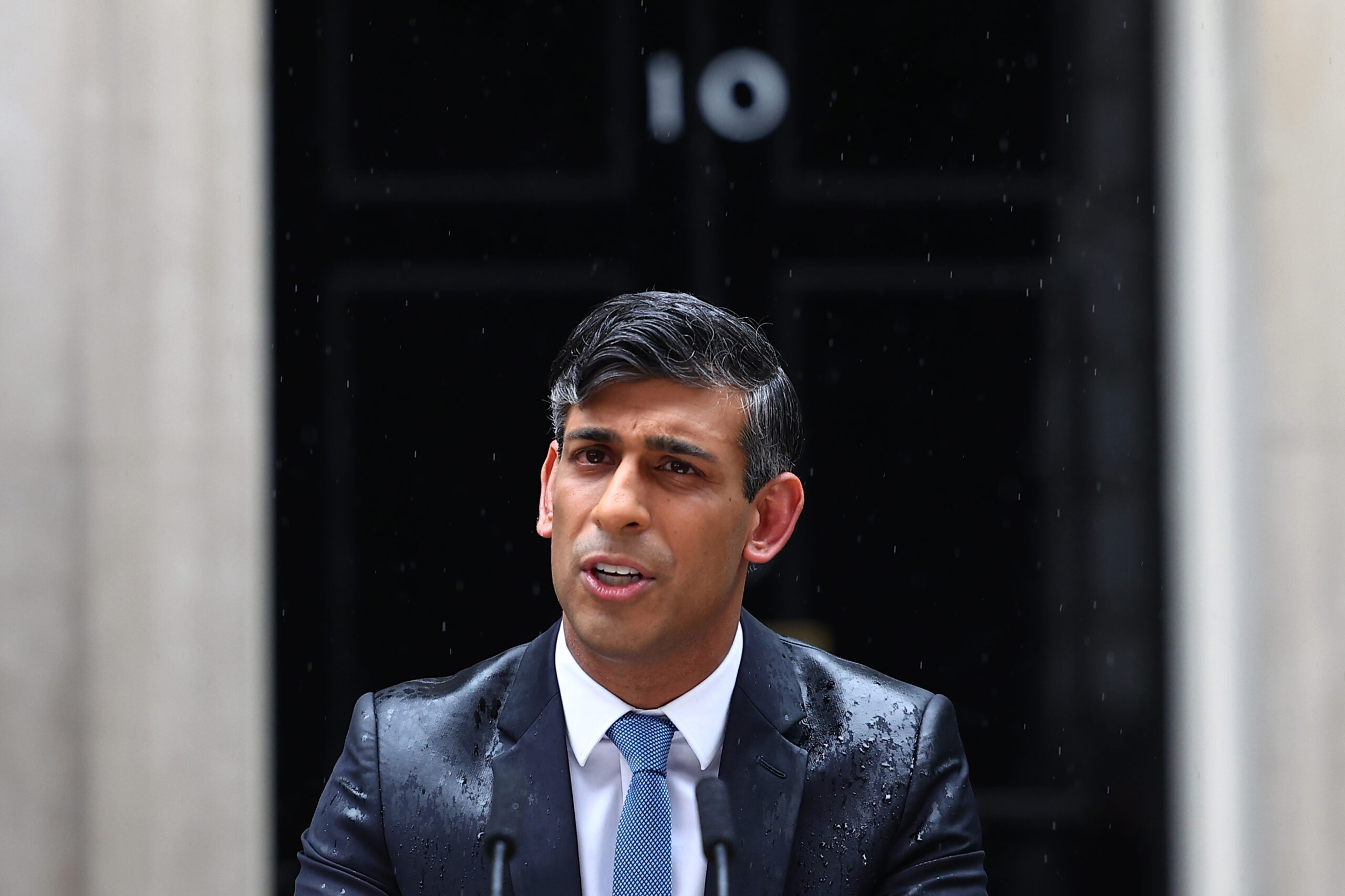
The last Conservative prime minister in British history was Rishi Sunak. During his 20 months in office, he tried and failed to crack down on cigarette smoking among teenagers; otherwise, Sunak is notable mainly for leading his party to a humiliating defeat in the July 2024 general election. As a political entity, the party will be extinct within a decade. Yet British conservatism is by no means dead, even if the party that claims to uphold it has been the opposite of “conservative” for some decades now.
What is British conservatism? George Owers illuminates the subject brilliantly in his new book The Rage of Party: How Whig Versus Tory Made Modern Britain. As this study makes clear, the Tory Party, as it used to be called, has a long (if not noble) tradition of snatching defeat from the jaws of victory. Owers’s main subject is English history between the so-called Glorious Revolution of 1688 and the coronation of the elector of Hanover as King George I in 1714. A protracted cycle of strife and infighting in the British parliament during this period led to the consolidation of the modern party system. The Rage of Party makes even the worst modern legislatures seem comparatively peaceful, polite and free from corruption.
Owers’s subject has its ultimate origins in the national discord that resulted in the English Civil War in the 1640s. The terms “Roundhead” and “Cavalier” that are used to describe the opposing factions in this conflict are necessarily imprecise on account of internal rivalries, ever-developing allegiances, and complex networks of alliances, but it seems fair to say that the Roundheads—pro-Parliament Puritans who favoured constitutional monarchy, if not outright republicanism—morphed over time into the “Whigs,” whilst the staunchly royalist Cavaliers eventually developed into the group we know as the ‘Tories’.
Even the most reactionary Tories tended to support the Church of England. By the mid-17th century, Catholics made up scarcely 1 percent of the English population. The nation was overwhelmingly Protestant and suspicious of “popery.” Yet there was widespread paranoia about the possibility of a Jesuit plot to install a Catholic on the English throne. In the late 1660s, James, Duke of York, converted to Catholicism. His brother, King Charles II, had no legitimate children, so according to the laws of primogeniture, the Duke of York would succeed him as king. The prospect did not please King Charles; he predicted that his brother would “lose his kingdom by his bigotry and his soul for a lot of ugly trollops”.
James II was crowned in Westminster Abbey on St George’s Day 1685. He was deeply unpopular, as was his policy of full toleration for Catholics, his habit of appointing Catholics to important positions, and his cynical attempts to court the favor of religious “Dissenters” during his squabbles with his Tory supporters, who preferred to side with the Church of England over their king. James’s incompetent authoritarianism drove his opponents to invite the staunchly Calvinist prince William of Orange to rescue the English from popish tyranny.
William and his men entered London on December 18, 1688, cheered on by adoring crowds, without firing a shot. King James fled to France at Christmas, and never set foot on English soil again. Supporters of James II, the “Jacobites,” are thought of today as self-defeating masochists who revelled in desires that could never realistically be fulfilled—flamboyantly harmless losers, in other words, as most modern Jacobites tend to be. But until the mid-18th century, Jacobites were regarded as genuinely dangerous. Even those who hated King James tended to agree that there was a good case for considering him a legitimate monarch.
Tories were often accused of wanting a Jacobite restoration, or worse, of being crypto-Catholics. They were dumb enough to let their enemies define them. The least ineffective Tories tended to be disaffected Whigs, like the great writer Jonathan Swift (1667–1745), whom we remember as the author of Gulliver’s Travels (1726), but was better-known in his day as a fearsomely effective polemicist. The same is true of Daniel Defoe (1660–1731), who is celebrated as the author of Robinson Crusoe (1719)—another children’s classic—rather than as a formidable pamphleteer.
Defoe was chronically short of money, and worked for whoever was willing to pay for his talents. He was sponsored by Robert Harley (1661–1724), later Earl of Oxford, who was the shrewdest political operator of his day, yet demonstrated an unusual degree of personal integrity. Harley was another Whig who felt alienated from his natural party. He ended up becoming the Tory equivalent of Hector of Troy, valiantly leading his hapless allies to victory after unexpected victory whilst recognising that he and his side were ultimately doomed. At the end of his political career he was imprisoned for two years in the Tower of London.
Harley’s main adversary was Thomas Wharton, First Marquess of Wharton (1648–1715), “the tutelary god of the Whigs”, who was notorious for his private life as well as his ruthlessness and cunning in electoral politics. When he was a young man, he drunkenly broke into a church, urinated on the altar, and defecated in the pulpit. He and his closest allies formed a group known as “the Junto,” which helped transform the Whigs into a party of financiers. When the Bank of England was formed in 1694, two-fifths of its directors were religious Dissenters, as were a quarter of its major stockholders. Tory squires were well aware that Whig dominance would arise at the expense of the landowners.
The Whigs knew that they could not prevail in their struggle against the Tories without winning control of the popular imagination. Yet they won this largely by accident. In the 1690s, some members of the Junto formed an informal drinking society known as the Kit-Cat Club. This rapidly transformed into an effective forum for organizing cultural and artistic patronage. Whig lords, MPs and other grandees met to eat, drink, toast the health of fashionable women—and court the attention of the most talented literary figures of the day. The English essay as we know it developed thanks to Joseph Addison (1672–1719) and Sir Richard Steele (1671–1729), whose magazines The Tatler (1709–1711) and The Spectator (1711–1714) influenced, among others, the Founding Fathers of the United States.
Addison and Steele helped transform Whig policies like limited monarchy into popular mythology. They championed Paradise Lost as a national epic—a daring claim at a time when its author, John Milton (1608–1674) was known less as a giant of English poetry than as a Puritan Republican extremist who vehemently defended the execution of King Charles I in 1649. Addison and Steele also created the character of Sir Roger de Coverley, the archetypical bumbling Tory reactionary. The Tories had little such mythmaking capacity; they settled instead for trying to censor the theater through controlling the Lord Chamberlain’s office—the first in a long line of conservative strategies in culture wars that were doomed to failure.
Subscribe Today
Get daily emails in your inbox
Owers has an enviable grasp of his material, but wears his learning lightly, and has a keen eye for telling details, not to mention a winning deftness at sketching larger-than-life characters in a few bold strokes. He has too much tact to draw heavy-handed parallels between the stories he tells and the situation of modern Britain, even where these seem unavoidable, as in the case of the “Poor Palatines Debate” that began in the wake of the bitter winter of 1708–1709. Whigs in Parliament had the bright idea of inviting unskilled Protestant refugees from Germany to England in the middle of a financial crisis. Thirteen thousand arrived over the course of summer 1709, and rapidly wore out their welcome. A Tory recorded a characteristic incident in his diary:
Three or four honest Englishmen being got together, and being drinking a Pot or two of Ale, they happened to see the said Palatines go by, and of course they made some Reflections upon the Receiving of these People into the Kingdom; which being heard by one of the Palatines, he gave a hint to his companions, & they all immediately came into the Room, beat the Persons in a very rude and inhumane manner, and were about to have cut their Throats, but the Constable being call’d in and a number rais’d they were over-power’d in their Attempt; but instead of receiving condign Punishment when they were had before a Justice of the Peace they were dismiss’d with a soft Reprimand, & the answer given for this Easy Penaltie was that being Forreigners they were ignorant of our English Laws, & ’twould be a piece of Barbarity to make them subject to it as yet.
The Rage of Party is great fun to read. There is no more entertaining introduction to the business of electoral politics. Yet the volume seems ultimately melancholy, at least for readers who notice the undeniable degeneration in the quality of our politicians of all stripes since at least the middle of the 20th century.