The Hawks’ New Plans for Iran Are Disastrous
Killing the supreme leader and balkanizing the country are terrible ideas.
As President Donald Trump has shown reluctance to engage in a risky large-scale bombing campaign against Iran, hawkish voices are advocating for alternative courses of action in an apparent bid to keep Washington on a confrontational footing with Tehran. The proposals being put forward appear clearly designed to present Trump with what may look like risk-averse strategies but in fact are not.
Two alternative courses of action in particular have emerged: the assassination of Supreme Leader Ali Khamenei, and the partitioning of Iran along ethnic lines. Both these options could have dramatic negative repercussions that would far outweigh any supposed benefits.
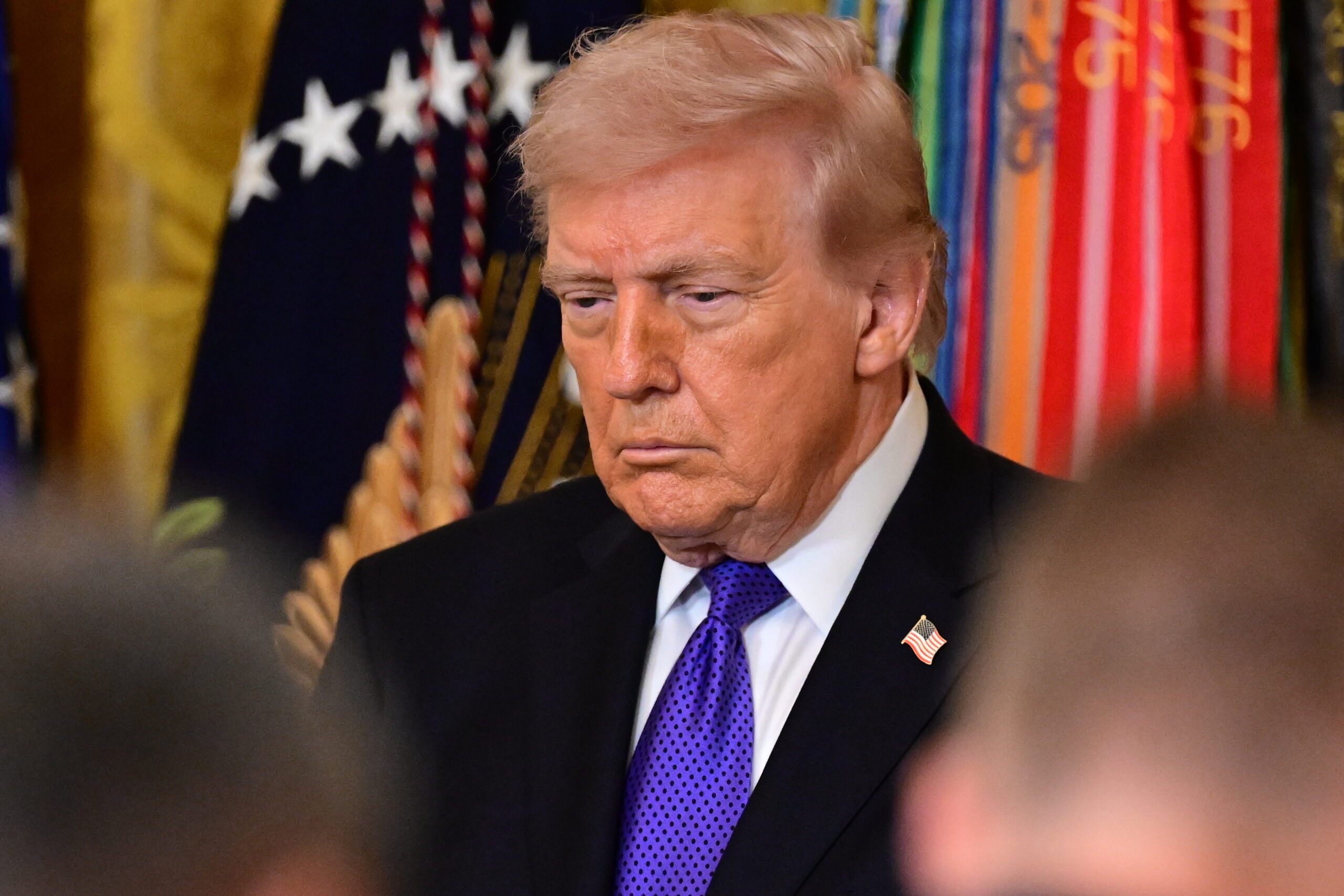
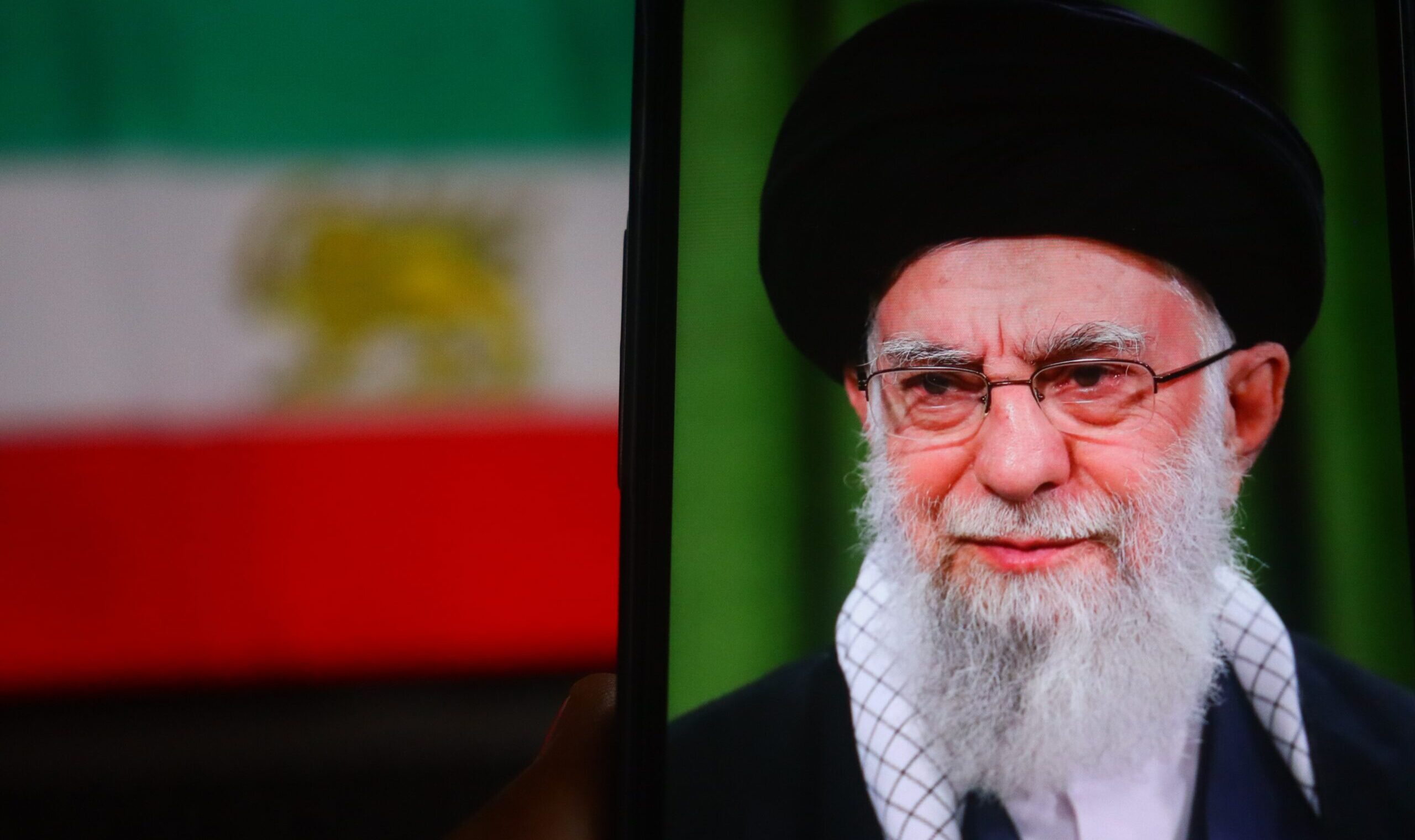
Calls for assassinating Khamenei have been gaining traction recently following Trump’s remarks in which he appeared to advocate for the removal of the supreme leader. “It’s time for a new leadership in Iran,” said Trump in an interview with Politico, after Khamenei labelled him a criminal who bears responsibility for the latest unrest in Iran. The hawkish camp seems to see an opportunity to appeal to Trump’s penchant for personal vendettas and seize upon his statements to create another “red line”—this time Khamenei staying in power.
After apparently failing to convince Trump to go all the way against the Islamic Republic, Republican Senator Lindsey Graham emphasized that Khamenei should not be allowed to remain in power and issued an open call to Trump to take him out. Khamenei’s removal from power, argued Graham, “would be incredibly positive,” whereas his continued reign would be “a giant step backward into darkness.” Michael Doran of the Hudson Institute also argued that Trump’s next step with Iran should be the elimination of Khamenei as a necessary precondition for defusing tensions with the Islamic Republic.
As is often the case, the roots of this proposed course of action can be traced back to Israel. During the 12-day Israel–Iran war in June, Prime Minister Benjamin Netanyahu suggested that killing Khamenei would settle the dispute with Tehran, after reports emerged that the Trump administration had vetoed an Israeli plan to assassinate the supreme leader. The killing of Khamenei is “not going to escalate the conflict, it’s going to end the conflict,” Netanyahu said at the time.
The recent calls to take out the supreme leader are another classic example of Israel and its Washington lackeys attempting to set U.S. policy in the Middle East on a path that would be detrimental to American interests, only this time the repercussions could be especially severe. This owes to the religious standing of Khamenei in the Shiite world as a senior “Marja,” a religious high authority. According to Shiite theology, adherents of this faith must follow a certain Marja who issues decrees—aka “fatwas”—on various aspects of religious worship.
There is a near consensus that Khamenei is a leading Marja, second only to Grand Ayatollah Ali Sistani of Iraq. His followers include Shiites in Iran, Iraq, Lebanon, Pakistan, and even African countries like Nigeria. That Iran is the world’s Shiite powerhouse further boosts his status, rendering him leader of this faith in the eyes of many of its followers. It is therefore not unthinkable to imagine a scenario in which America’s assassination of Khamenei leads to a Shiite fatwa of some sort, along the lines of former Al Qaeda leader Osama bin Laden’s 1998 fatwa that sanctioned the killing of Americans.
Members of the Iranian parliament have warned that assassinating the supreme leader would be met with a religious fatwa declaring jihad. While this should not be taken to mean the exact same Bin Laden playbook that justifies killing American civilians, there exists a possibility that the more radical Shiite players may sanction such acts. In any case, an Iranian fatwa calling for jihad against the United States would be a major game-changer.
Notwithstanding the anti-American rhetoric often employed by Iran and its coreligionists, much of the Shiite ire in practice has focused on Israel. This is likely to change should Khamenei be killed, as a sizable segment of Shiites would see the United States as a staunch ideological enemy deserving of punishment just as much as Israel, if not more. By assassinating Khamenei, the U.S. would therefore risk creating for itself an ideologically motivated enemy hellbent on revenge for no reason other than to satisfy Israel and its Washington backers.
How about the hawks’ other main alternative to large-scale bombing? In making the case for Iran’s fragmentation along ethnic lines, a recent article in the Wall Street Journal argued that this would mean a “diminished risk to Israel” while also dealing a blow to U.S. superpower rivals China and Russia. This ignores how ISIS stands to gain under such a scenario, which would be detrimental to American interests.
Dividing Iran into ethnic cantons would likely lead to a Sunni entity in the Sunni-majority Sistan and Baluchistan province bordering Pakistan and Afghanistan. This region has been a hotbed of terrorist activity, most notably by a group called Jaish al-Adl, a U.S.-designated terrorist organization. Jaish al-Adl—which recently rebranded under the name Jebhe-ye-Mobarezin-e Mardomi [Popular Resistance Front]—holds to a firm anti-Shiite doctrine. This makes it closely aligned with the anti-Shiite ideology of ISIS.
In fact, there has been a history of Jaish al-Adl elements joining the ranks of ISIS-Khorasan (aka ISIS-K), which is based in Afghanistan and Pakistan. As terrorism scholar Antonio Giustozzi notes, members of Jaish al-Adl defected to ISIS-K when the latter emerged in 2015.
Subscribe Today
Get daily emails in your inbox
What this means is that an ISIS or ISIS-like statelet coming into existence in the event of an ethnically divided Iran is an all too real possibility. This would go against Trump’s own policy instincts. When asked why he opted to work with Venezuela’s interim president Delcy Rodriguez instead of opposition leader Maria Machado, Trump cited the emergence of ISIS in Iraq. “If you ever remember a place called Iraq, where everybody was fired, every single person, the police, the generals, everybody was fired, and they ended up being ISIS,” Trump told reporters.
More importantly, last year’s annual threat assessment issued by the Office of the Director of National Intelligence warned that ISIS-K is committed to attacking the United States and other Western nations, while describing the group as the ISIS branch “most capable of carrying out external terrorist attacks.” Giving this group a safe haven in an ethnic partition of Iran makes little sense in terms of U.S. interests.
There is thus ample reason for Trump to resist the calls that appear to be designed as a more cost-free anti-Iran strategy, after having resisted (for now) the calls for a large-scale bombing campaign. The alternative courses of action put forward by the hawkish camp run the genuine risk of needlessly creating new ideological enemies and/or strengthening old ones. It is hard to find any policy recommendations that contrast so sharply with an America First approach.