Simon and Schuster Is Right to Publish Arday’s Memoir
The public has an interest in the late professor’s confabulations.
There are individual cases that reveal the state of, and fissures in, a society, and perhaps even of an entire civilization. Such a case is that of Jason Arday, the young black man who was chosen by Cambridge University on almost purely demographic grounds as a professor of the sociology of education, and who died shortly after his resignation from the post once the university announced an official enquiry into his appointment.
His is a kind of Dreyfus case in reverse, a mirror image of the affair that convulsed French society for more than a decade; no doubt it will spawn a literature, if not quite as vast as that of the Dreyfus case, at least very extensive. In fact, I should be surprised if several scribblers were not at this very moment engaged in writing what are called instant books, hoping for a first bite of the market cherry.
In the Dreyfus case it was the conservative wing that denied the most obvious and damning facts and persisted in believing in six impossible things before breakfast; in the Arday case, it is the other way round. Even now, when the basic outline of the story could hardly be clearer, he still has his defenders and even admirers.
It is true that in a sense he was a victim, of those who used him to exhibit their own supposed moral grandeur, and of the abysmal intellectual level and moral cowardice to which at least a part of the university had sunk; but victimization does not a hero make, and he could hardly claim to have played no willing part in his own downfall. Nor, incidentally (and I hasten to add before there are any accusations of hardness of heart), does his absence of innocence render him completely unworthy of all compassion. If innocence were the necessary condition of worthiness of compassion, no compassion would ever have been felt or displayed since the Fall.
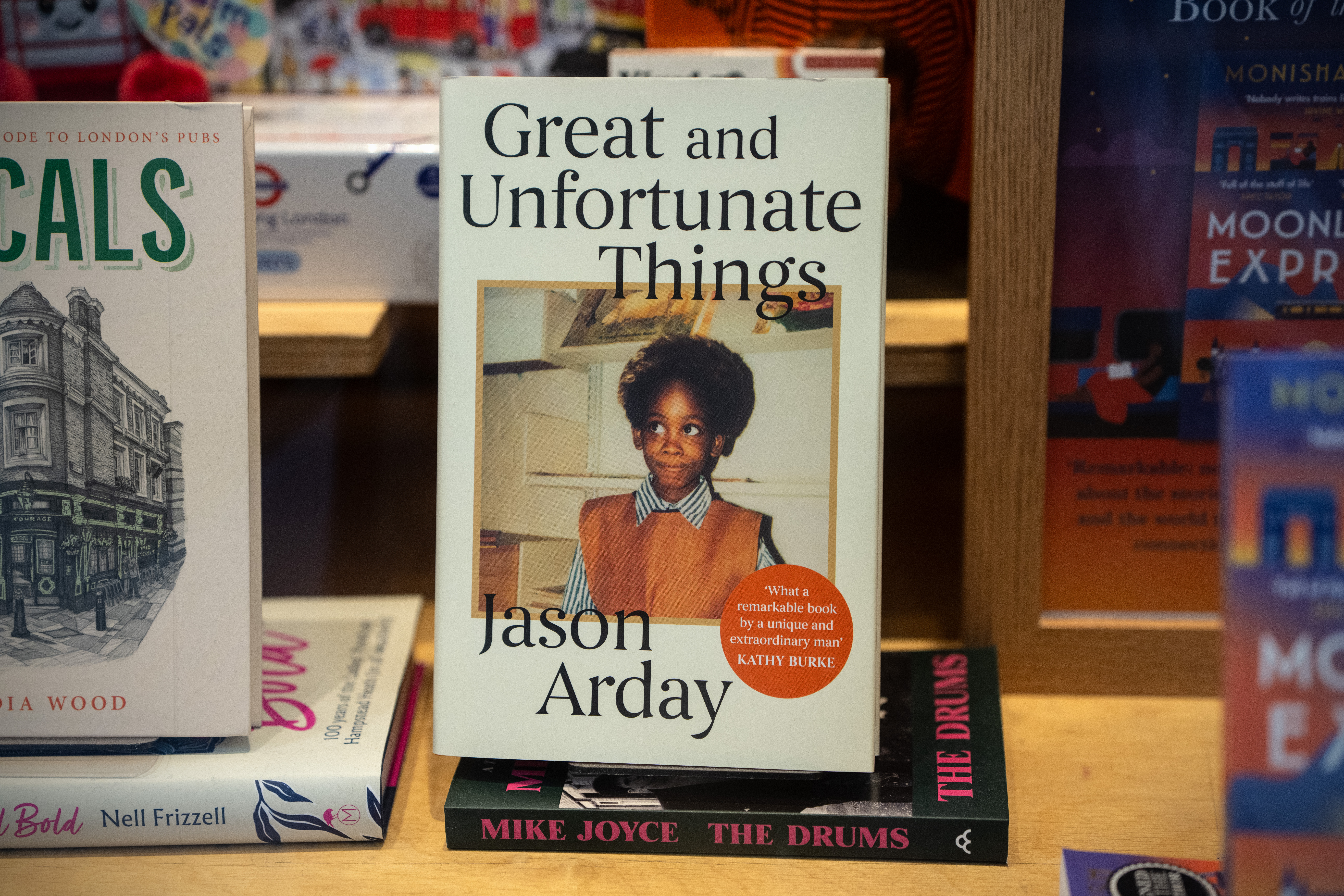
The unreliability of anything that Jason Arday said, especially about himself, is by now fully established, and the publisher, Simon and Schuster, has been severely criticized for going ahead with the publication of his now posthumous memoir, Great and Unfortunate Things. To have gone ahead, said the critics, was a cynical cashing-in on notoriety and a serious reduction in standards of truthfulness that ought to be required of works of non-fiction. It was not right of the publishers to publish a book that they must have known was full of what in Britain are known as porkies—Cockney rhyming slang for lies, pork pies.
These arguments are not entirely negligeable, but not in my opinion decisive.
I do not think publishers are responsible for the truth of what they publish. Academic publishers, of course, send out works to scholarly assessors in the hope of weeding out the egregious, but as anyone who had reviewed scholarly works published by university presses knows well, mistakes, even gross ones, continue to appear in them: besides which, academic standards, especially in the humanities, have been so severely eroded that the value of such peer-review is itself now doubtful. As the Arday case exposed (to those who did not already know it), there are whole university departments in which staff play-act at being academic and scholarly, and perform the rituals of academia, to the point of dressing up political propaganda in unreadable prose, and awarding degrees, but are actually little more than activists, and not even activists of the highest caliber. They are termites rather than carnivores.
Jason Arday’s professionally ghostwritten memoir does not pretend to be an academic work. The publishers judged it commercially viable, but that is not a question for morality. I do not see that they were under obligation to prove or disprove any of its statements, though they had a duty to ensure that it contained nothing grossly defamatory of any named individual. Fact checking has its place, especially in journalism, but not in literature of this kind, other than in the avoidance of defamation. If every memoir had been fact-checked into complete accuracy, no interesting memoir would have come down to us.
There is, moreover, an intrinsic interest in the memoirs of public figures, which at least may reveal to us their mentality: we want to know how important people think, even if their thoughts are not worth the neurotransmitters they are compounded of. This is not the same as saying that such figures have their truth, as supposedly, in these days of inviolable subjectivity, everyone has his truth: Everyone has his version, which is not the same thing at all.
Where a memoir is ghosted, as was Arday’s, there is the additional question, of course, of how much is alleged memoirist and how much is ghost: but Arday had the merit, at least, of repeating on many occasions, if in slightly different versions, some of his Baron Munchausen–style stories. Besides, skepticism has to stop somewhere; if the alleged memoirist puts his name to the ghost’s work, it has to be assumed as his own, at least in essentials, including his misinterpretations or lies. Prince Harry did not write his memoirs, but one heard the authentic voice of his self-pity throughout.
A fact-checker once almost turned me Pontius Pilate with regard to truth. (“What is truth? said jesting Pilate and would not stay for an answer.”) I had written an article in which I had mentioned the Emperor Napoleon for a publication and not long after I went it received a call from the publication’s fact-checker, a young woman who, I imagined, was recently out of an educational establishment.
“You say this Napoleon was an emperor,” she said. “Do you have a reference for that?”
“Well,” I said, “I thought that everyone knew that Napoleon was an emperor.”
Subscribe Today
Get daily emails in your inbox
“Yes, but I need a reference.”
I was a bit stumped. Of course, it would be easy to tell her to look in such-and-such a book (this was in the days before the internet), but suppose she asked me to prove to her that such-and-such a book was actually to be trusted to tell the truth? I could point her to another book which would also tell her that Napoleon was an emperor, but she might look at this as merely consulting two copies of the same newspaper to confirm the truth of what was written in them. An infinite regress beckoned. Actually, my belief that Napoleon was an emperor was taken entirely on trust, one might almost say on faith, and perhaps the world had been a conspiracy to deceive me on this subject (and every other) since my birth. Napoleon was known to me only nth hand, and everyone knows what happens to Chinese whispers.
What is truth? said jesting Arday, and would not stay for an answer.