Lessons for Venezuela From Two Afghanistan Wars
The dysfunctions of Soviet and American interventions in Central Asia could be replicated closer to home.
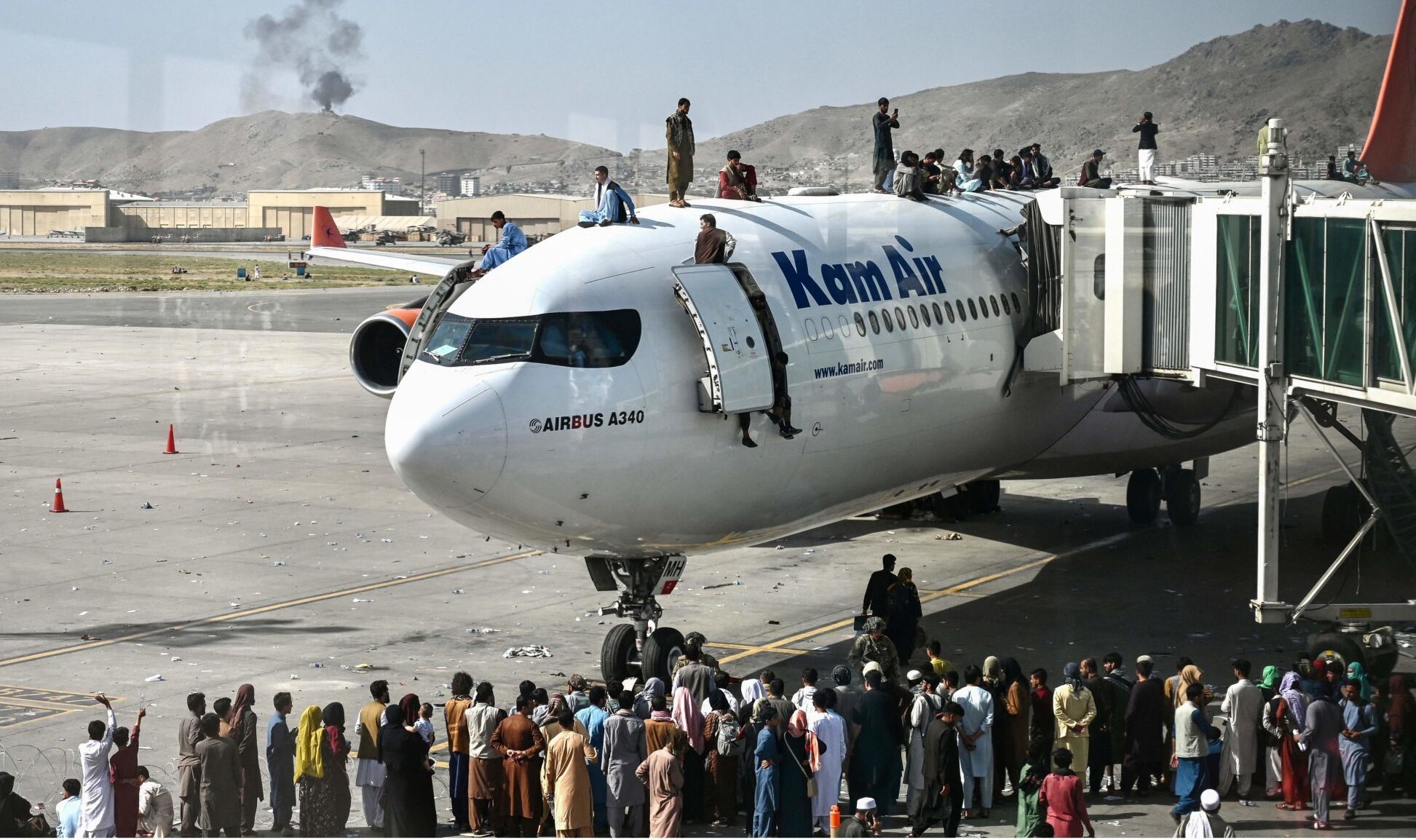
The 20-year American adventure in Afghanistan, just a little younger than your humble author, came to an end a few years ago. It ended far more unceremoniously than it began: People clinging to the final planes departing from the airport and the almost immediate collapse of the hilariously corrupt government we helped empower were the final humiliations.
This is not to say there was an alternative on the table; the American exit was always going to be chaotic. Yet it was still what the people voted for: The winning candidates in both 2016 and 2020 vowed to end the war. The former signed the withdrawal agreement, and the latter executed it—a far cry from the Freedom Agenda undergirding the 2005 inaugural address.
The closest analogue for the American invasion of Afghanistan was the Soviet one 20-odd years earlier. Unlike the Soviets, American troops went in initially as invading forces, whereas the Soviets initially entered to stabilize an incumbent Afghan government that had overthrown the last one. Like the Soviets, the Americans found themselves unable to extricate themselves from the country or its politics, although, to their credit, the Soviet-installed leader lasted post-occupation for a few years, whereas the American-backed one didn’t last as long as some milk.
Like the Soviets, the Americans dreamed of liberating and liberalizing institutions. Vladimir Snegirev, a Soviet advisor pointed out the clash of civilizations set up by the communist invasion when he argued that there
is a striking contrast, which is only possible here: many of the women on the terraces conceal their faces under the chador—a primitive, medieval superstition; but parachutists are landing in the stadium and they are women too, who grew up in this country. The chador and the parachute. You don’t have to be a prophet to foretell the victory of the parachute.
Thirty years later, the U.S. envoy to Afghanistan argued to widespread mockery that the women of the beleaguered country required “black girl magic”—though, to her credit, she was no less wrong than the Soviets.
Both invasions also engendered significant domestic opposition. Some of the most powerful civilian organizations in the history of the Soviet Union came about as a result of those killed in action, and the mismanagement of the Afghanistan war is arguably one of the things that led to the dissolution of the Soviet Union as a whole. American opposition to the invasion was initially muted, though it also grew as the scale and mismanagement of the conflict became more widely known. By the end, Soviet correspondents sounded as annoyed as your standard mid-2000s paleocon; some argued that “the blood of our sons is being spilled in a foreign land for the interests of foreigners,” which is not dissimilar to an antiwar line taken by some in the United States.
Subscribe Today
Get daily emails in your inbox
The Russian experience is more than a historical footnote. It could end up being instructive for the U.S. today. The Soviets couldn’t sustain enthusiasm for a war happening in a country separated from theirs by a bridge; is it any wonder the US was unable to muster continuous support 30 years later in the same place? More to the point, what does this suggest about the U.S. ability to wage war closer to the homeland today, and what citizens may or may not be willing to tolerate?
American enthusiasm for limited strikes in Venezuela is present but muted, especially compared to public opinion in the early days of shock and awe. Sustained occupation of the sort required to ensure skittish capital to commit seems to be more than what either American politicians or the American people are interested in. This is without the general consequence of regime-change operations: the refugees that tend to follow. There is a case to be made that Nicolas Maduro’s downfall could reverse the nearly 8 million refugee outflow under his rule. Yet, given that his vice president and other leaders involved with human-rights abuses are leading a far more paranoid and fragile regime, it seems unlikely there will be a mass return. Given the lack of clarity around the future of the nation, it is more likely that more refugees will be the result.
In recent history, one benefit of U.S.-backed regime change in the Middle East was that the inevitable refugee crises wound up being far bigger problems for our European or Middle Eastern allies, who were less geographically fortunate than for those of us an ocean away. But if we choose to engage in these activities without that ocean in between, we’d be foolish to think we’d be immune to the consequences of these actions out of a desire to own the hemisphere. The Soviets entered Afghanistan looking to project their empire over more of the continent. They instead wound up destroying the entire thing.