
Indiana University was never supposed to win a national championship in football. Long the basement-dwellers of Big 10 football, the Hoosiers were known almost exclusively for its basketball program, which captured multiple national titles under legendary coach Bobby Knight in the 1970s and ’80s.
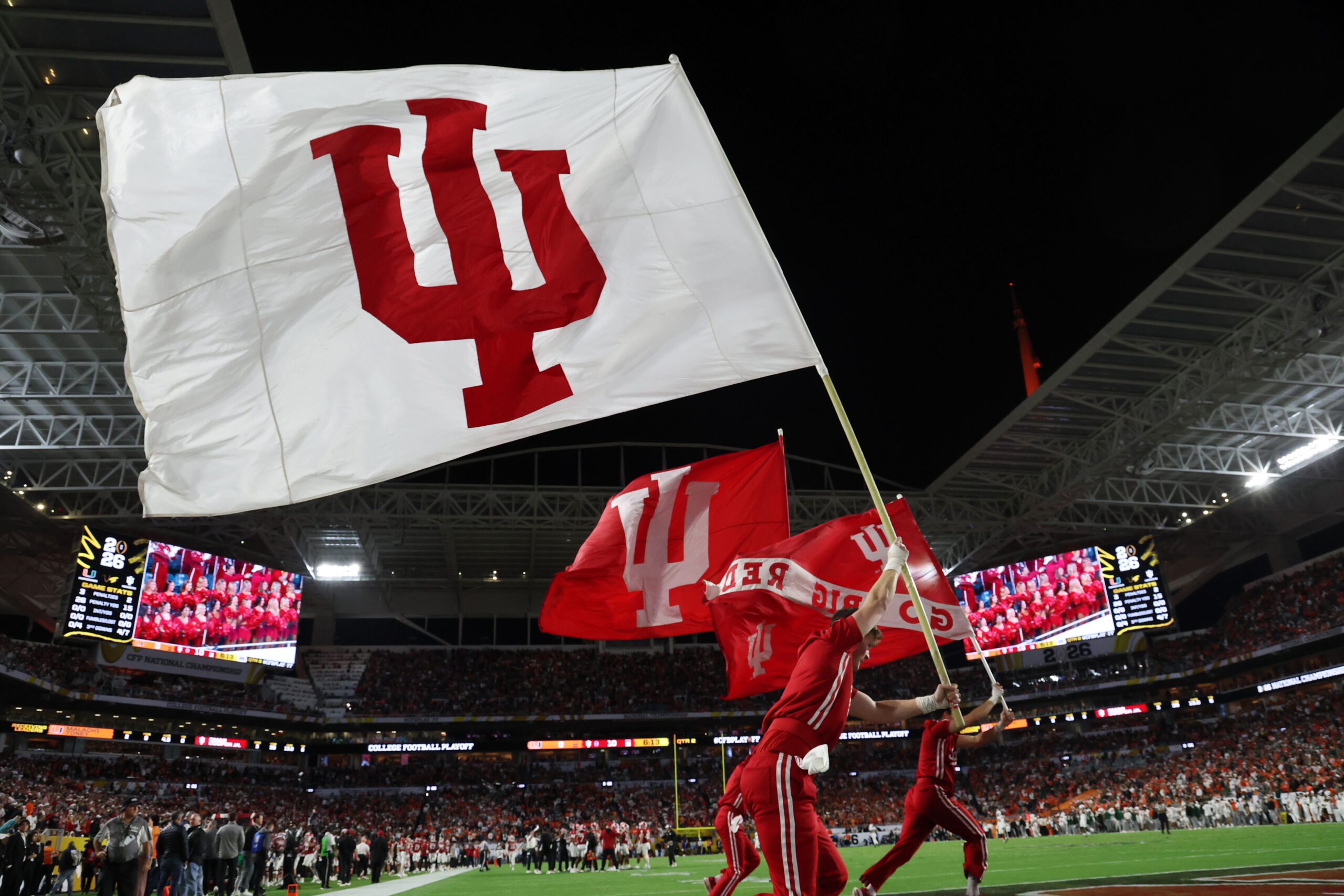
That narrative changed, however, on Monday, January 19, when the Hoosiers defeated the University of Miami 27–21 in the 2026 college football national championship game. The victory capped a remarkable 16–0 season and completed an unlikely rise under second-year head coach Curt Cignetti.
“National champions at Indiana University, which I know a lot of people thought was never possible,” Cignetti proudly told the assembled press in the aftermath of the game. “It probably is one of the greatest sports stories of all time.”
Cignetti wasn’t exaggerating. Indiana’s Cinderella run defied the odds, as the longtime college football laughingstock toppled the SEC giant Alabama, the West Coast powerhouse Oregon, and the once-vaunted Miami Hurricanes en route to the first national football title in the school’s history. And none of it would have been possible without the transformation of college athletics into a Wild West affair, where new Name, Image, and Likeness (NIL) rules allow programs to spend aggressively in pursuit of elite success.
But chalking up Indiana’s new winning ways to being only a money-infused achievement would also downplay the path the Hoosiers took to win a national title. Mark Cuban, owner of the Dallas Mavericks and Indiana University’s richest alumnus, said as much when fielding questions moments before the national championship game in Miami, Florida. Rejecting the notion that overspending on transfer players and new recruits is a prerequisite to winning in college athletics today, Cuban emphasized culture and fit as much as the pure power of cold, hard cash.
“Every team, whether it’s college or pro, has to have an identity,” Cuban explained. “You have to understand how you want people to fit in. You have to understand how you use economics. And I think what really sets IU apart is that, we’re not like, ‘OK, let’s raise as much money as we can so we can pay everybody more.’ It’s more about, how do we build a culture, how do we set roles so that when guys come in they’re happy and they know exactly what they’re going to do.”
Cuban’s assessment was never more prescient than when the Hoosiers demolished the Oregon Ducks in the tournament’s semifinal matchup by a stunning score of 56–22 at the Peach Bowl on January 10. Oregon, who boasted a roster of more than 50 four-star and five-star recruits struggled mightily to keep up with Indiana and its roster featuring zero five-star recruits and less than 10 four-star recruits. At Indiana, Cignetti focused on the culture and staff he built at James Madison University, his previous coaching stop, to jumpstart a program whose woes had lasted for more than half a century.
But the marriage of culture and money that Cignetti has used to transform the Hoosiers is an outlier in a sport that has become increasingly devoted to bidding wars and court rulings. As Indiana was capturing its first national title in history, its opposition Miami was busy purchasing quarterback Darian Mensah, the supreme talent of one of its main competitors, Duke University, on the eve of the championship matchup. Duke, which like Indiana has struggled to compete at the highest levels of college football before the onset of NIL, has been a revelation in recent seasons, using its donor base to strengthen what has long been a perennial loser in the Atlantic Coast Conference.
Mensah, whom Duke signed from Tulane University only a season ago, first recommitted to the Blue Devils at the beginning of the transfer window in early January before suddenly announcing his intention to sign with Miami on the final night of the portal period. Duke fans were outraged and cited Mensah’s multiyear, $8 million commitment to the Blue Devils which he signed in July 2024 that should hypothetically keep the NFL prospect in Durham for another season. But the opportunity to take over as starting quarterback for the Hurricanes, who will lose their talisman leader, quarterback Carson Beck, this offseason, was too great a chance for the 6’3” talent to pass up. After a turbulent saga that lasted several weeks, Duke quietly abandoned its lawsuit, permitting both Mensah and Cooper Barkate, Mensah’s preferred wide receiver target at Duke, to transfer to Miami.
The Mensah situation is not dissimilar to what transpired in the Pacific Northwest in early January, when the University of Washington’s quarterback Demond Williams Jr. signed a year-long, $4 million contract to remain in Seattle before then attempting to transfer away from the school only four days later. Washington also threatened to sue, and after a whirlwind 48 hours during which Louisiana State University, and its new coach Lane Kiffin, attempted to convince Williams Jr. to head down to Baton Rouge, the young quarterback talent recommitted to the Huskies.
In the era that preceded the introduction of NIL in college athletics, transferring schools was generally a one-time decision that, in some ways, punished athletes who opted for new scenery. Because athletes were forced to sit out a full academic year before resuming play at their new school, the decision came with serious risk should the move not meet the expectations of player or coach. But in the new NIL landscape, players are not only immediately eligible to play at their new school of choice, they are also free to transfer as many times as they see fit.
Perhaps the most troubling aspect of the free-wheeling scenario introduced by NIL is that it has markedly diminished the interesting and peculiar fandom that once made college athletics unlike any other American or global sporting institution. Though the Hoosier faithful lined the streets of Bloomington in freezing weather to celebrate a historic national title, it cannot be denied that NIL has taken an undeniable toll on the fanbases of schools that once relied on tradition, integrity, and regional influence to recruit players and compete at levels beyond their pay grade.
The Virginia Tech Hokies under former head football coach Frank Beamer instantly come to mind when considering the new landscape of college sports. As a child of Virginia, and a young fan of the University of Virginia Cavaliers, I watched for many years, in awe and dismay, at the towering success Beamer cultivated at Tech, a military-style campus nestled in the foothills of the Appalachian mountains. In today’s architecture, Tech has found great difficulty keeping up with the Joneses. But in the years before NIL changed the sport forever, Beamer muscled past in-state rivals and national foes by convincing top-level recruits that Blacksburg, a tiny outpost in the southwest corner of Virginia, offered as good an opportunity as any to win titles and develop skills for the pro level.
In those days, UVA rarely challenged Tech for players or wins. The Hokies routinely dominated the Cavaliers in their annual fall matchup, and the gap between the two was as wide as the Mississippi. It was a gulf that Beamer had earned through years of regional dominance and a deep, structural tradition based on community, which stemmed from the men and women of Blacksburg whose hearts bled Hokie orange. It’s why Michael Vick, one of the greatest high school talents to ever come out of Virginia, chose Blacksburg over offers from every top college program in the country, a decision that would be characterized as a distinct outlier in today’s NIL environment.
The introduction of NIL has not only changed how top prospects are lured to schools that once would have been considered mid-level institutions, it has also created a situation where aging talents now often attempt to remain in college for as long as possible. Ole Miss quarterback Trinidad Chambliss was fresh off an appearance in the college football semifinals this January when his waiver request to play a sixth year of collegiate sports was denied by the NCAA. Lawyers representing the 23-year-old redshirt senior, who is seen by many as a tantalizing NFL prospect, immediately sued the NCAA in Mississippi state court, seeking permanent injunctions which would allow him to play an additional season in 2026.
Chambliss has time on his side. The longer his case weaves its way through the Lafayette County court system, the more likely it becomes that Chambliss will be granted another year of collegiate eligibility. That’s good news for fans of the powder blue Rebels but poses intriguing questions about the new nature of college sports. In the past, the opportunity to play in the NFL and the promise of big-money contracts that came along with such success was the ultimate goal for the best players in college football, many of whom come from impoverished backgrounds. But for the very best in today’s college game, such as Chambliss who is set to receive a stunning $5 million NIL deal from Ole Miss should his eligibility waiver be granted for 2026, the NFL is now seen for the difficult proving ground it is, where securing a payday past your first rookie contract requires outcompeting out the best men in the world.
Furthermore, the growing desire for aging talents to remain in college has created a developmental bottleneck for younger prospects. Freshman and sophomore players, who once received immediate roles, now find themselves buried on depth charts, stunting the development of future talent in favor of rewarding fully-developed players who can effectively be bought and sold within a transactional marketplace that prioritizes instant production. What NIL has disrupted isn’t parity, but patience; the belief that staying, building, and belonging can produce champions. In college football, the consequences of that shift are still partially masked by roster size and tradition. In men’s college basketball, however, they are impossible to ignore after a series of questionable in-season acquisitions have cast a long shadow over the integrity of the 2025–26 season and beyond.
If the state of college football reveals NIL’s economic distortions, men’s basketball exposes its existential contradictions. Rick Pitino, a coaching legend and the current head coach for St. John’s University, summed up the current state of college hoops with a scathing critique of the NCAA’s new landscape. “The game I've been in for over 40 years no longer exists,” Pitino wrote in a widely-circulated post to X in late December. His comments came a week after Baylor University announced it had signed James Nnaji, a 7-foot-tall center from Nigeria who was selected 31st overall in the 2023 NBA Draft by the Detroit Pistons but never signed a standard NBA contract or played in an NBA-regular season game.
After being selected by the Pistons, Nnaji played professionally in Europe for Spanish giants FC Barcelona and also appeared in several NBA Summer League games but did not make an NBA roster. Because he never signed an NBA contract and his only professional appearances were made abroad, under NCAA regulations, Nnaji was technically still eligible as an amateur. This sequence of events would have been unthinkable just a few short years ago when declaring for the NBA Draft, and remaining in the draft, whether you were selected or not, barred players from returning to college athletics.
Opposing coaches and fans were outraged by the Nnaji case. Mark Few, the head coach of college basketball powerhouse Gonzaga University, and one of the most respected coaches in all of college hoops, called on federal legislators to stop the madness. “It’s probably time to get some help from Congress but they’re more screwed up than the NCAA,” Few said flatly. He added that the NCAA “didn’t have any real rules” regarding whether players with prior professional experience abroad, who never signed an NBA contract, could return to college midseason with immediate eligibility.
And so, on January 3 of this year, Nnaji, amid a torrent of boos from the TCU faithful in Fort Worth, made his college basketball debut for the Baylor Bears, scoring five points and grabbing four rebounds in 16 minutes off the bench. University of Connecticut coach Dan Hurley responded by suggesting college basketball needed a commissioner. Tom Izzo, the long-tenured head coach of Michigan State, said Baylor coach Scott Drew and the NCAA should feel “shame” for allowing the situation to unfold. If Nnaji’s mid-season acquisition and immediate introduction into the squad sparked outrage from fans and coaches alike, what happened next rocketed the conversation regarding amateurism in collegiate sports to another level.
Canadian-born basketball player Charles Bediako first enrolled at the University of Alabama in the fall of 2021. He played a consequential role in the Crimson Tide’s season that year, earning all-SEC freshman team honors after averaging six points and four rebounds a game. In his second year at the university, Bediako helped propel the Tide to the NCAA tournament and earned all-SEC defensive team honors along the way. After appearing in 70 games across two seasons at Alabama, Bediako declared for the 2023 NBA draft, forgoing his remaining collegiate eligibility. That was until a Tuscaloosa County Circuit Court run by Judge James H. Roberts Jr., a University of Alabama donor, intervened on Bediako’s behalf.
Though Bediako failed to get drafted by an NBA team, the 7-foot-tall center from Ontario eventually signed a professional two-way contract with the NBA and its development league, the G League. And though Bediako spent nearly three years playing for several semi-pro teams in the G League, the University of Alabama challenged the NCAA and requested the lanky shot blocker be allowed to return to campus and play for the Tide midway through the 2025–26 college basketball season.
Judge Roberts, an active “circle” donor who gave between $100,000 to $249,999 to the University of Alabama, granted the temporary restraining order necessary to challenge the NCAA’s eligibility rules blocking players who have signed NBA-related contracts. And just like that, Bediako was a college student and athlete once again. On January 27, Bediako suited up and started for the Tide in its game against Missouri. The former student-turned-professional-turned-student athlete scored 14 points and recorded six rebounds in a game Alabama dominated from start to finish.
Subscribe Today
Get daily emails in your inbox
The Bediako soap opera took another turn the very next day when Judge Roberts recused himself from the case, highlighting the murky aesthetics that have come to characterize college athletics in the NIL era. To the NCAA’s credit, the institution announced in January that it would shorten the transfer window to the 15 days following March Madness, the annual tournament to crown a champion in the sport. It’s the shortest transfer window yet and should keep the sporting world’s focus squarely on the teams and players competing in its premier competition.
Indiana University’s national championship proves that culture and leadership can still triumph in the age of NIL, but it also highlights how dramatically the rules of college athletics have shifted amateur sports in the United States away from their guiding ethos. That reality appears even more dire and unbalanced in college basketball, where small rosters permit one addition at a key position late in the season to completely transform a program’s pursuit of a championship.
It’s undeniable that American culture lives upstream from its politics. It’s partially why President Donald Trump and Secretary of State Marco Rubio flew to Miami, Florida to witness this year’s college football national championship in person. As courts, collectives, and contracts continue to fill the vacuum left by the NCAA’s retreat, college football and men’s basketball face a fundamental question: whether they can preserve any distinction from the professional sports they now so closely resemble, or if the Wild West has already won.