Family, Faith, and Flag After the Soviets
Just three decades ago, Armenians and Azerbaijanis lived side by side. Now, they’re on the brink of war.
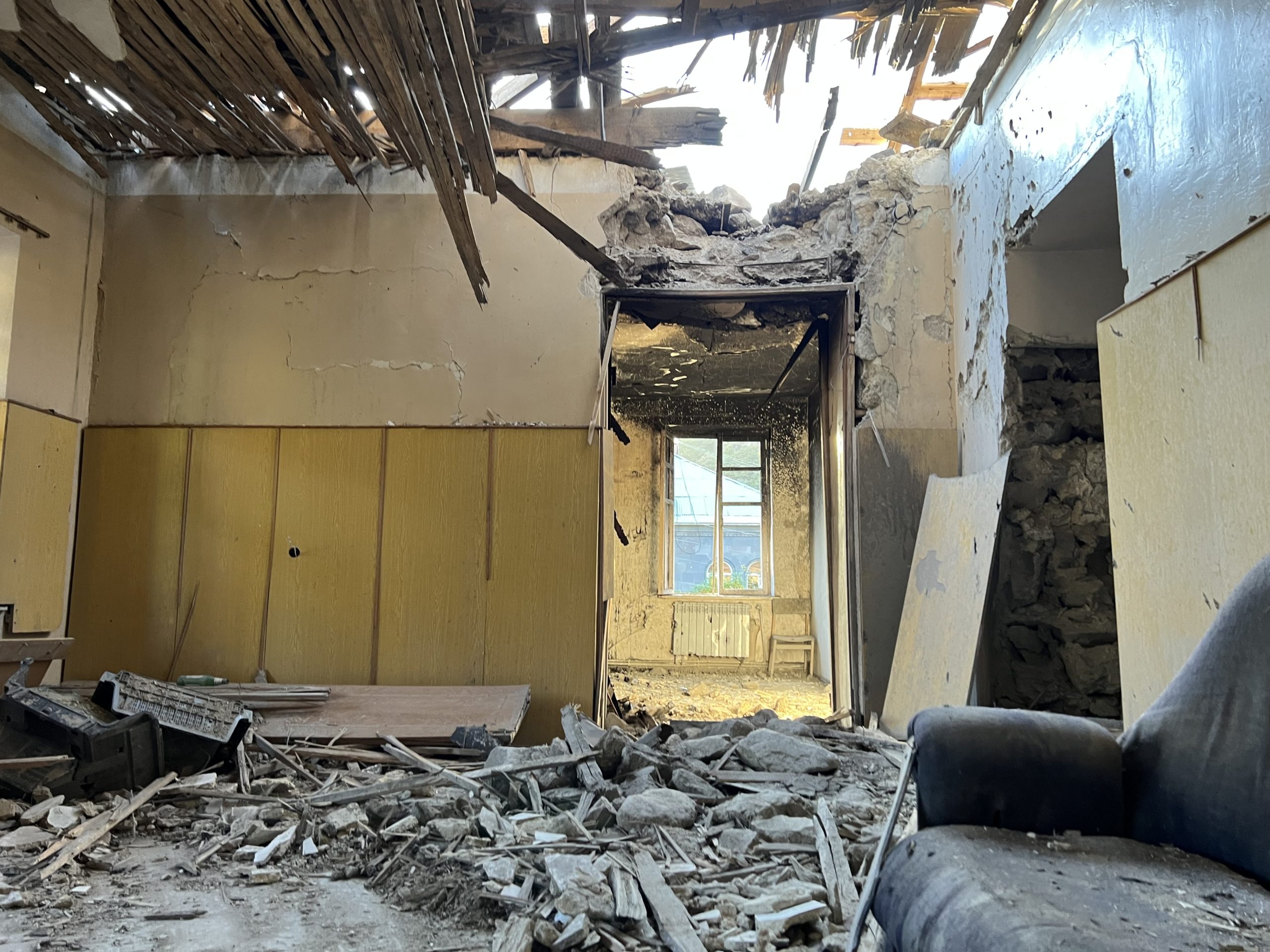
Fourteen years ago, Narine Gevorkyan and her husband, Ishkhan Arsatkyan, started building their farmhouse on the outskirts of the quiet Armenian hillside town of Jermyk, famous for its hot springs and clean air. Around their brick and corrugated iron ranch buildings, they put up a ramshackle scrap metal fence to keep in a growing flock of farmyard animals, cats, dogs, and children.
“This is where the first bomb fell,” says Narine, pointing to a patch of scorched earth next to the now-shattered perimeter wall. “We wanted to pack up our things and run,” adds Ishkhan, smoking a cigarette against his fixed-up Soviet-era Lada car, “but this is where we’re from. Where would we even go?”
On the night of September 12, towns and villages throughout Armenia came under a heavy artillery barrage from across the border with Azerbaijan. Military chiefs in the neighboring country insist their troops came under fire first and moved in to take a number of strategic heights. Although civilian casualties have remained low, at least 105 Armenian soldiers and 71 Azerbaijani personnel have died, and there are fears that a tentative ceasefire signed two days later could collapse at any moment.
The clashes are the most serious escalation between the two former Soviet Republics since they fought a brief but bloody war in 2020 over the disputed region of Nagorno-Karabakh, which lies inside Azerbaijan’s internationally recognized borders but was held by Armenian separatists since the 1990s. A Moscow-backed peace agreement put an end to the fighting, handing swathes of territory back to the Azerbaijani government and saw Russian peacekeepers deployed to the region. With the Kremlin distracted by its war in Ukraine, it appears it is no longer willing or able to hold the status quo.
Buoyed by its colossal oil and gas exports and supported militarily by close ally Turkey, Azerbaijan insists Armenia must formally recognize its sovereignty over Nagorno-Karabakh and end its support for the breakaway region. The Karabakh Armenians, however, fear that without protection they will be forced out of their homes, or worse. Now, with the conflict playing out on Armenian soil, there is more and more pressure to make a deal after three decades of standoffishness.
In the days of the Soviet Union, the border that is now being fought over hardly even existed. Both Armenians and Azerbaijanis lived side by side on the same land. As the communist empire collapsed, communities split down ethnic and religious lines. In a spate of purges and pogroms, more than a million Turkic Muslim Azerbaijanis were expelled from Nagorno-Karabakh and villages inside Armenia. As many as 500,000 Christian Armenians were also pushed out of their homes, having at one point been the majority in the Azerbaijani capital, Baku.
“I don’t know what the Azerbaijanis want,” says Narek, working behind the counter of his store in the center of Jermyk. He used to sell sweets and sunscreen to tourists, but with the town closed off by the army, he gives out food and water for free to the young soldiers passing through. “Every Armenian has memories of holidays here, swimming in the lake, playing games at the funfair. This is a place of peace. We don’t want war.”
The head of one Armenian military unit gives a more unvarnished view in a bombastic rant at his command post. “Azerbaijanis and Turks are Muslims. They have nine children, so if seven of them die in the war, they don’t care. For us Christians, every child we lose is a tragedy. They’re also circumcised, which makes them more violent.” Just days before we spoke, he was forced to tell dozens of parents that their sons, who had been under his command, wouldn’t be coming home, his face now a picture of grief and hatred.
Across the border in Nagorno-Karabakh, Azerbaijanis displaced in the 1990s are returning home to territory their country recaptured two years ago. Mohubbet Samadov was a young man when he was forced to flee the village of Agali as Armenian forces moved in. He’s now 69 and spent three decades living in unimaginably harsh conditions, neglected by the government and left languishing in dormitories and tent villages. The same day the peace deal was signed, he packed up his possessions and went back to find the ruins of his house.
“I don’t hate the Armenians,” he says over lunch in the newly rebuilt village, “I just don’t understand why they came here. This was never their land. We belong here, not them.” He beams as he flicks through photographs of his family, the elderly mother and his sons and grandchildren who have moved back to Agali with him. “We always knew we had to come back. And now we’ll be here forever.”
Joe Kasabian, a Detroit-born Armenian-American who served in the US Army in Afghanistan also felt an obligation to come back to the place his family came from. “I visited Armenia first in 2020 and fell in love with it. I’m culturally intensely American, and I don’t feel it had anything to do with my ethnicity or religion, but I did feel strangely at home.”
Now he’s ready to take up arms and defend his adoptive country if hostilities resume. “Being an American soldier, you fight wars of choice—nobody is invading the US, we invaded other people,” he says. “But this is a tiny landlocked country and it’s entirely possible it could be wiped off the map. The U.S. government spent millions of dollars training me, and I may as well do my bit to prevent that.”
The Armenian diaspora exists in no small part because of the genocide waged against their people in the Ottoman Empire from 1915, with entire families exterminated and an estimated 1.5 million people murdered or deported in what is now modern-day Turkey. Those who survived either moved eastwards, settling in places like Nagorno-Karabakh, or took their chances abroad in North America and Western Europe.
Many fear history could repeat itself. “It’s hard not to view this as an existential conflict when the other side frames it that way,” says Kasabian. Just days before, far-right Turkish MP Mustafa Destici made headlines with a rant aimed at the country as talks over the future of Nagorno-Karabakh stalled. “I remind you once again that the Turkish Nation has the power to erase Armenia from history and geography, and that they stand at the limit of our patience,” he said. Turkey and its close ally Azerbaijan continue to officially deny the genocide took place.
With their fragile government seemingly deadlocked over the idea of recognizing Azerbaijani sovereignty over Nagorno-Karabakh, and security guarantees from Russia failing to materialize, many Armenians are now taking matters into their own hands. Paramilitary group Voma operates out of a former dance studio in the capital, Yerevan, training everyone from housewives to science students in how to fight for their country.
“I’d never done anything like this before,” says 31-year-old Narine. By day, she works in HR and sometimes tutors foreign languages for extra cash. More recently, she has been spending her evenings drilling with a heavy wooden replica of an AK-47, lying prone on the floor of the dusty training ground and practicing carrying out door-to-door raids.
“Age and gender doesn’t matter, everyone should know how to protect their family and their country,” she says. Many of the program’s graduates go on to enlist in the army, committed to fighting on with only outdated equipment and shortages of everything from ammunition to dry rations.
But, according to Dr. Fariz Ismailzade, the vice-rector of the Azerbaijan Diplomatic Academy in Baku, Yerevan would be better off negotiating than preparing for a war it is unlikely to win. “Azerbaijan has proposed a peace plan, but Armenia has unfortunately declined. It would be a win-win scenario that Armenia could benefit from,” Ismailzade said.
With the living memory of genocide, though, and increasingly worrying rhetoric from its neighbors, many Armenians feel any concessions will only hasten their country’s demise and they should focus on addressing the imbalance of power first before doing any kind of deal. Abandoning the Karabakh Armenians, many fear, would lead to ethnic cleansing. Signals from officials that they could be prepared to make a move in that direction have been met with massive protests.
A number of international organizations, including the European Union, have accused Baku of trying to erase any trace that Armenians once lived in the areas Azerbaijan now controls. In the region of Nakhichevan, for example, U.S. scholars from Purdue and Cornell say at least 108 Armenian churches, cemeteries, and other religious sites have been wiped off the map. Videos show Azerbaijani soldiers vandalizing historic Christian monuments.
At the same time, Armenians allowed Azerbaijani cultural and religious buildings to fall into disrepair during the thirty years they had control over the entirety of Nagorno-Karabakh. In some cases, they went as far as keeping cattle in ancient mosques and dismantling entire villages to sell off or reuse building materials.
Subscribe Today
Get daily emails in your inbox
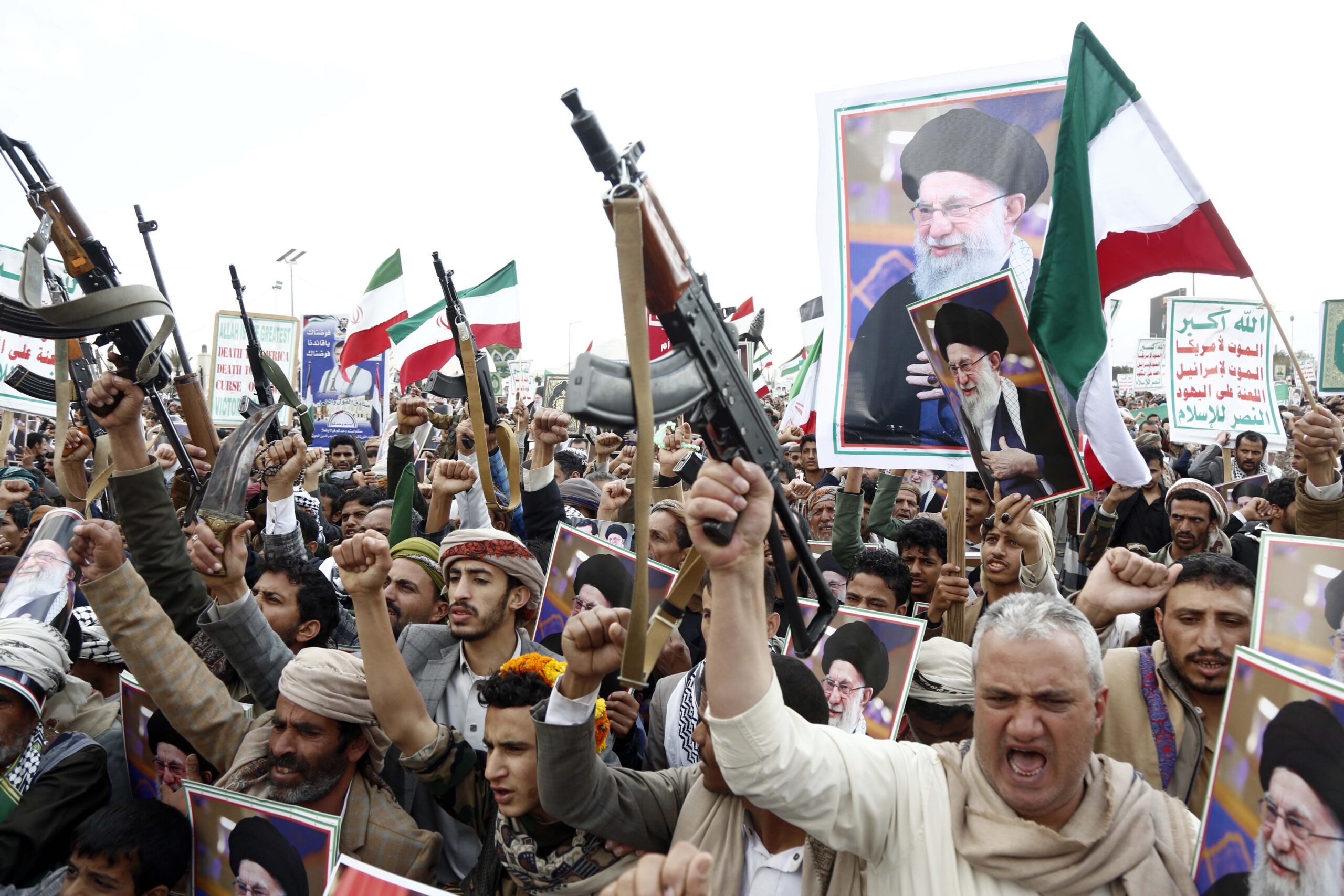
The origins of the dispute appear not to be about religion as much as historical enmity. Azerbaijan is a secular Muslim nation with a thriving Jewish community and a dozen other ethnic minority groups. Meanwhile, few Armenians are fundamentalist Christians, and their country maintains close political ties with Islamic theocracy Iran, just across the border.
“It's true that the roots of the enmity between Azerbaijanis and Armenians have a certain religious component,” says Bahruz Samadov, a prominent Azerbaijani liberal commentator and PhD researcher at Charles University in Vienna. “But Armenians and Azerbaijanis also have a history of co-existence during Soviet rule. The war has affected both sides’ national identities, and the prospect of living together does not seem real—it seems even potentially dangerous.”
With neither side trusting the other, and the wounds of history still raw and exposed, any hope for peaceful coexistence seems a long way off. In the meantime, both Armenians and Azerbaijanis are getting ready for war.