
Eliot’s Late Prose
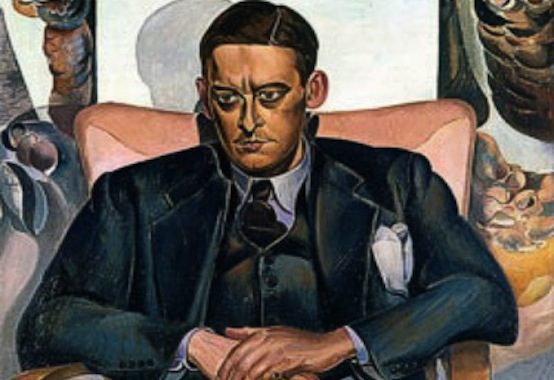
In The Hudson Review, William Pritchard takes stock of Eliot’s late prose. He finds Eliot’s essays on a “Christian Britain” and the role of the Church a “falling off”—a view with which I can’t agree—but he’s right that the literary pieces for large audiences generally don’t satisfy. But there are nuggets: “There are a number of places in which the critic succeeds in saying something very much worthwhile about poetry in practice. One such contribution occurs in ‘The Music of Poetry,’ a worthy attempt to speak about a very complicated subject indeed . . . If I were to choose one moment or sequence from these late essays where the Eliotic genius appears, it would be his attempt, in ‘The Three Voices of Poetry,’ to find words for what he called the First Voice—that is, the poet speaking to himself or to nobody.”
In other news: Museums share photos of their creepiest items (assistant curators excepted).
Researchers recreate a medieval blue ink: “Back in the medieval era, the pigment, known as folium, decorated elaborate manuscripts. But by the 19th century, it had fallen out of use, and its chemical makeup was soon forgotten. Now, a team of chemists, conservators and a biologist has successfully revived the lost blue hue. The scientists’ results, published April 17 in the journal Science Advances, detail both the medieval ink’s recreation and the pigment’s chemical structure.”
The art of Gerhard Richter: “Richter is contemporary art’s great poet of uncertainty; his work sets the will to believe and the obligation to doubt in perfect oscillation. Now eighty-eight, he is frequently described as one of the world’s “most influential” living artists, but his impact is less concrete than the phrase suggests. There is no school of Richter. His output is too quixotic, too personal, to be transferrable as a style in the manner of de Kooning or Rauschenberg. Though his influence has indeed been profound, it has played out in eyes rather than hands, shifting the ways in which we look, and what we expect looking to do for us. In Germany he is treated as a kind of painterly public intellectual—personally diffident and professionally serious, a thoughtful oracle especially as regards the prickly territory of German history. He was among the first postwar German artists to deal with pictorial records of Nazism, and his approach to the past might be summarized as poignant pragmatism, rejecting both despair and amnesia.”
The life and work of bright, young, thing Arthur Jeffress: “The name Arthur Jeffress may not conjure many associations for those not familiar with the London post-war art world, but this wayward, flamboyant, controversial connoisseur and patron who left much of his ‘small but subversive’ collection to the Tate and the Southampton Art Gallery after his death in 1961 certainly deserves his footnote in history . . . Whether hobnobbing with his neighbor Peggy Guggenheim or swanking around in a fur coat lined with the pelt of 45 wild hamsters, he never stopped striving for effect, and friends noted an underlying melancholy that suffused his sybaritic lifestyle. Indeed Gill Hedley’s biography makes no claim for any particular originality or lasting achievement. Jeffress’s portrait is sketched through his frenetic social life which, thanks to his inordinate wealth and extravagance, encompassed just about everyone who was anyone.”
Essay of the Day:
Why are there almost no works of art on the 1918 Spanish Flu or any other modern pandemic? Artists were once preoccupied with illness, James Panero writes in The New Criterion:
“The history of culture is a history of plague. The Abrahamic religions were forged in it. The deity Horus might be a bigger bird today were it not for the ten plagues of Egypt. ‘The Egyptians shall know that I am the lord, when I have gained honor for Myself over Pharaoh, his chariots, and his horsemen,’ we read in the Book of Exodus. Each spring, the Passover holiday marks the freedom of the Jews from Egypt by reenacting the Israelites’ salvation from the torments that plagued Pharaoh. The ten drops of wine ceremonially spilled in the Seder meal are meant to cast out the bloody water, frogs, lice, flies, pestilence, boils, hail, locusts, darkness, and firstborn death, the last of which ‘passed over’ the Chosen People. Plague not only meant the exodus of the Jews and the beginning of the end of Pharaoh. Plague also meant the start of the world as we know it today.
“Yet somewhere along the way to modernity these important lessons were lost if not wilfully forgotten. Primary among contemporary fallacies is the belief that science alone offers salvation. Pandemics, to the contrary, and often quite inconveniently, remind us of the limitations of human power, and so are readily forgotten. For this reason, the Spanish Flu epidemic of 1918 quickly came to be regarded as a historical footnote rather than the world-defining event that it was—killing, as it did, more people than were killed in battle during World War I. There are few memorials to this Spanish influenza. The literature it inspired is scant. H. L. Mencken noted how the 1918 virus had ‘an enormous mortality in the United States and was, in fact, the worst epidemic since the Middle Ages,’ yet it is ‘seldom mentioned, and most Americans have apparently forgotten it. This is not surprising. The human mind always tries to expunge the intolerable from memory, just as it tries to conceal it while current.’
“We don’t have to look far and wide to see how disease has challenged and shaped our increasingly cosmopolitan world. The modern epidemics of cholera, typhus, yellow fever, measles, smallpox, and polio, among a host of other infectious diseases, might have better prepared us for our current crisis—if only their histories were better remembered and their dead and injured duly honored. In a more just world, London’s Broad Street pump and New York’s High Bridge would both be shrines to our cholera dead, one for marking a locus of contamination, the other for the delivery of clean Croton water.
“Epidemics were a central feature of Venice, with its ‘putrid smells,’ ‘febrile effusions,’ and ‘revolting sultriness,’ in the words of Thomas Mann, long before Death in Venice. From its swampy beginnings through its mercantile heights, the Most Serene Republic has been defined by disease. Yet rather than turning away from its fate, Venice has used illness as inspiration for its greatest works of art and architecture.”
Photo: Béarn
Receive Prufrock in your inbox every weekday morning. Subscribe here.


