Canada Opens Up to China
Carney has decided that Canada must balance U.S. power with overtures to the east.
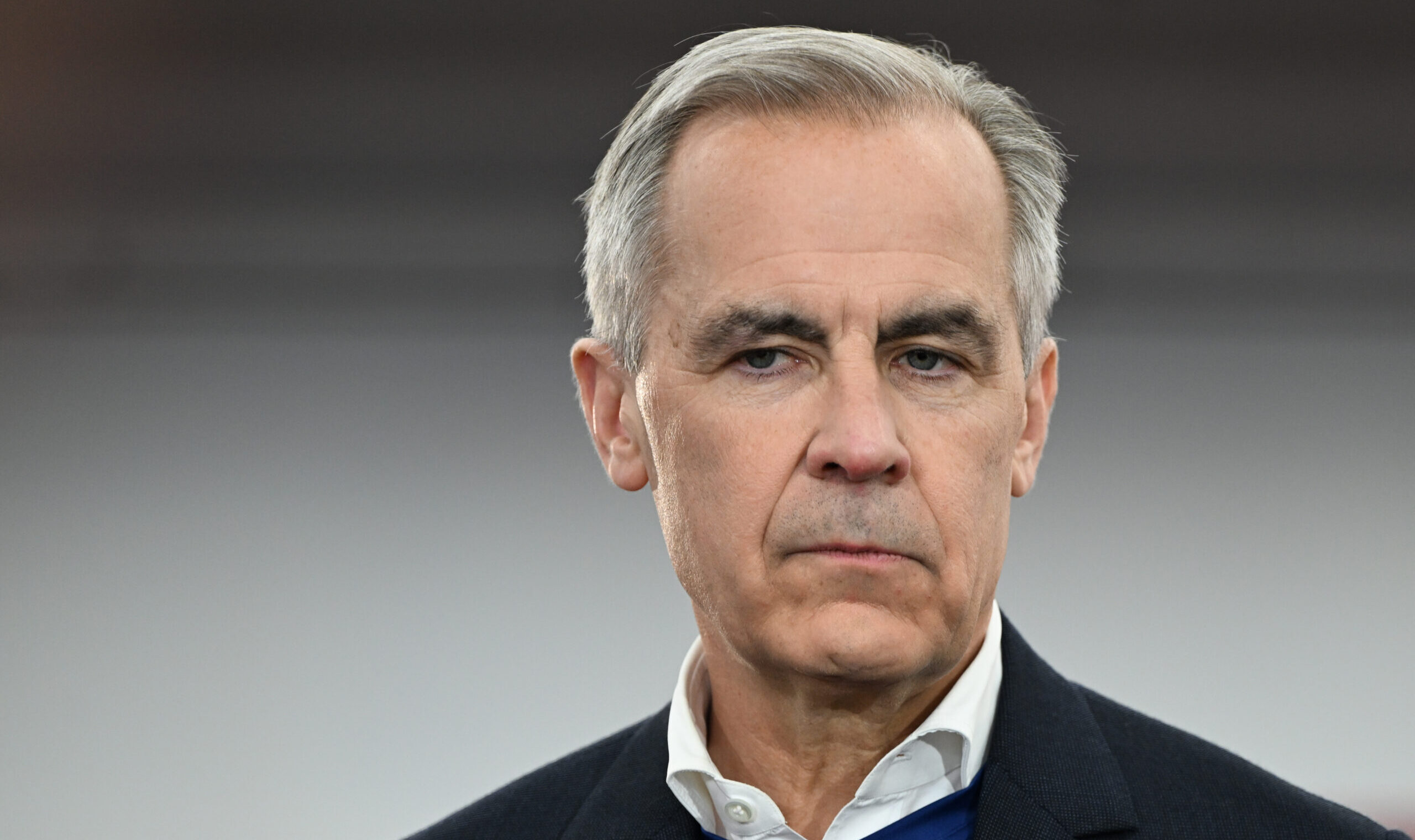

Canada is too dependent on the U.S., Mark Carney has decided. The prime minister has had enough of President Donald Trump’s tariffs and threats, and he has a plan to get out from under the Yankee yoke. Step one: build stronger ties with China.
In January, Carney travelled to Beijing to meet with China’s President Xi Jinping—the first time a Canadian prime minister has done so in nearly a decade. There, he signed a new “strategic partnership” with Xi, which will begin the process of opening up the Canadian economy to further integration with that of China.
The agreement itself is modest; a strategic partnership is a low-level instrument in Chinese foreign policy, and most of the concessions on both sides are for now only promises of future investment. The meat of the deal is an export swap: Canada will import 49,000 Chinese-built electric vehicles (EVs) at the most-favored-nation tariff rate of 6.1 percent—down from the current 100 percent tariff—while China will cut its tariffs on Canadian canola from 85 percent to about 15 percent. The most notable other inclusion in the document is a promise for increased bilateral investment in the energy industry, which would amount to Canada importing Chinese renewable equipment—batteries, solar panels, wind turbines, etc.—in exchange for Chinese investment in (and presumably access to) Canadian oil and gas.
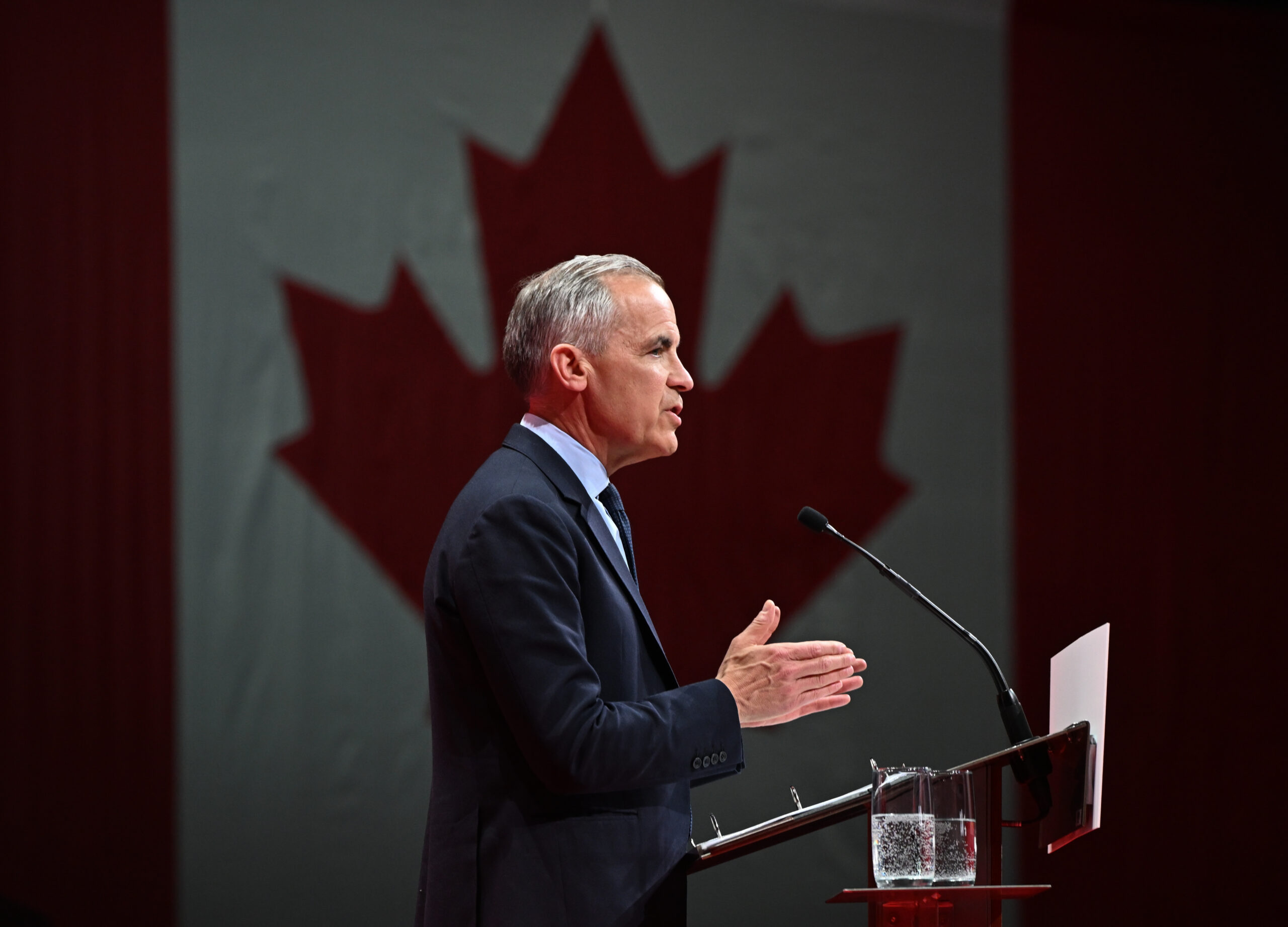
Carney’s trip on its own would have been a significant enough signal that Canada no longer views the U.S. as a reliable partner or ally and is looking for ways to reduce American leverage over the country. But he made his intentions particularly clear just four days later, in a widely quoted speech at the World Economic Forum in Davos. Canada is facing, Carney said, “the beginning of a harsh reality, where geopolitics… is submitted to no limits, no constraints.” Instead of a rules-based international order where countries conduct themselves in accordance with the laws of nations and the guiding ideals of liberal internationalism, Canadians find that “we live in an era of great power rivalry, that the rules based order is fading, that the strong can do what they can, and the weak must suffer what they must.”
The dart was obviously aimed at Trump and the broader, emerging phenomenon of right-wing nationalism of which he has been the herald.
“Great powers have begun using economic integration as weapons, tariffs as leverage, financial infrastructure as coercion, supply chains as vulnerabilities to be exploited,” Carney declared. The correct response for “middle powers” like Canada (and by implication European countries with similar values), the prime minister argued, is to distance themselves from coercive great powers, reengineer economies and alliance systems to reduce their leverage, and form a new bloc capable of collectively defending their own interests and values.
You cannot live within the lie of mutual benefit through integration, when integration becomes the source of your subordination… So, we’re engaging broadly, strategically with open eyes. We actively take on the world as it is, not wait around for a world we wish to be. We are calibrating our relationships, so their depth reflects our values, and we’re prioritizing broad engagement to maximize our influence, given the fluidity of the world at the moment, the risks that this poses and the stakes for what comes next.
In other words, Carney has decided that it’s time for Canada to try to cut bait with the U.S. and work towards a non-aligned status, and the easiest way to do that is to begin increasing its integration with the only great power capable of giving Americans any competition: China.
It’s a bold move, and a risky one. The U.S.–Canada trade relationship is the largest in the world, with a total value of nearly $1 trillion annually. Seventy-six percent of all Canadian exports end up in America, and half of all Canadian imports originate in the United States. In contrast, China buys just 4 percent of Canada’s exports. Distance alone makes it impossible for China to materially compete with the U.S. for market share in the country; even a vast expansion of Canada’s western ports would never be able to accommodate the commercial and industrial exchange between the Canadian heartland and the American northeast (more than two-thirds of Canadians live within 100 miles of the U.S. border). Shared history, culture, and language add another barrier.
The U.S. will also not be inclined to play nicely with a counterbalancing Canada. Trump has already made it clear that he’s willing to make the Canadians pay if they go too far. “If Governor Carney thinks he is going to make Canada a ‘Drop Off Port’ for China to send goods and products into the United States, he is sorely mistaken,” Trump wrote in a post on Truth Social shortly after Carney’s speech. “If Canada makes a deal with China, it will immediately be hit with a 100% Tariff against all Canadian goods and products coming into the U.S.A.”
Despite the challenges, Carney has made it clear that he believes the flexibility Canada would derive by distancing itself from the U.S. and increasing Chinese influence in the country outweighs the potential short-term pain American retaliation will cause. “Diversification internationally is not just economic prudence, it's a material foundation for honest foreign policy, because countries earn the right to principled stands by reducing their vulnerability to retaliation,” he concluded.
For now, at least, Carney’s approach is popular with Canadians, who have broadly supported his more aggressive pushback against Trump’s imposition (and threats) of tariffs. Trump’s statements early in his second term that Canada should become the 51st American state hit a particularly sensitive nerve and touched off a firestorm of anti-American sentiment in the country; his administration has continued to engage in actions that strain the bilateral relationship, as when it was recently revealed that officials from the administration surreptitiously met with representatives from the Albertan separatist movement.
Subscribe Today
Get daily emails in your inbox
Still, it’s not clear to what extent the prime minister is willing to go to cut his country off from American influence. A free trade agreement with China is not currently in the cards, he told reporters, and, although the implication of his speech is that Canada should reduce its trade with the U.S., to do so deliberately would be politically difficult.
One good opportunity to judge how serious Carney is in his intention to counterbalance American economic influence in Canada is the upcoming renegotiation of the U.S.–Mexico–Canada Agreement (USMCA), the free trade agreement that replaced NAFTA during Trump’s first term. That agreement must be renewed this year, and the Trump administration has been clear that it wants to secure new terms that are more favorable to U.S. industry as well as conditions that will make Chinese imports less competitive. If Carney is going to make a stand to begin decoupling from the U.S., it will be at talks over the terms of the USMCA.
The disruption of the old geopolitical order is a natural consequence of the United States’ new, national interest–based approach to foreign affairs. A truly America First foreign policy was destined to produce significant changes in how the U.S. relates to other countries and how they relate to each other. Nor is Canada alone; European countries are also feeling the heat and moving in similar directions. The UK’s Prime Minister Keir Starmer arrived in China on January 29 for a four-day visit; Finland’s Prime Minister Petteri Orpo met with Xi Jinping in Beijing just two days previous. How the U.S. responds to this shift will be a major test for the Trump administration’s America First foreign policy and for the emerging global order broadly.