On the Front Lines of Assisted Dying

The Inevitable: Dispatches on the Right to Die, by Katie Engelhart (St. Martin’s Press: 2021), 352 pages.
Sometime around 2019, it started to look like assisted suicide would be one of the rare culture war battles that social conservatives were going to win. Mainstream publications like the Guardian and the New Yorker published negative articles about the Dutch and Belgian euthanasia regimes. The case of Noa Pothoven sparked bipartisan outrage: Despite having no illness other than depression, the Dutch 17-year-old was given palliative care and helped to die at home (though she was not actively euthanized, as initial reports suggested). A consensus seemed to be forming across political lines that when more than a quarter of deaths are induced, as is the case in the Netherlands, that is not a good thing.
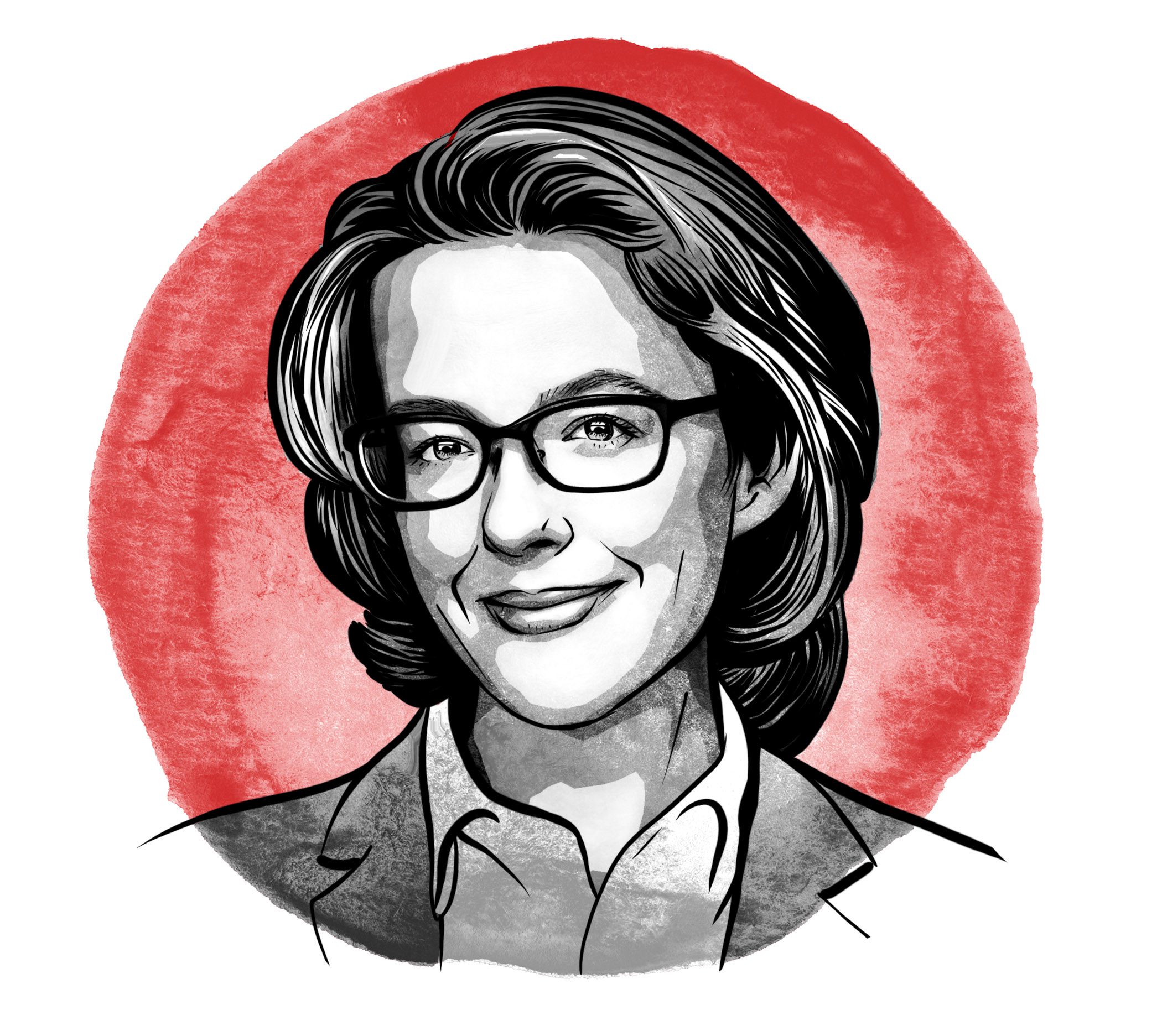
Katie Engelhart wants to change all that. Her new book The Inevitable: Dispatches on the Right to Die, underwritten by a New America fellowship, is a report on the current state of assisted dying. It’s an excellent read, full of good reporting. I highly recommend it as literary nonfiction. But it is also a presentation of the most up-to-date version of the pro-euthanasia argument, one that assimilates and responds to the backlash, and is thus a preview of what to expect when that debate heats up again.
Naturally the most obvious addition, this being the Black Lives Matter era, is identity politics. Euthanasia is said to be okay because it does not disproportionately affect minorities. “I don’t know of a situation or condition in medicine that we’ve worried so much about for which the risk factors have been wealthy, white, and insured,” jokes one doctor quoted by Engelhart. Before Oregon passed its pathbreaking euthanasia law, many feared it would be used to target the poor and socially marginal. In fact, patients who seek out physician-assisted dying are mostly well-off and educated, and overwhelmingly white.
But that’s true of suicide in general: White people are more likely to commit suicide than black people. Antidepressant use is highest among the college-educated. If the demographics of assisted suicide look more like the demographics of regular suicide than, say, cancer—where whites and the college-educated are not overrepresented—doesn’t that suggest that the two are more similar than advocates would like to claim? That euthanasia is more of a psychological phenomenon and not just a rational response to unbearable pain?
Engelhart herself concedes that euthanasia is rarely about pain. “What surprised me most, looking through the Oregon Health Authority data, was that most people who ask to die are reportedly not in terrible pain,” she writes. “The vast majority cite ‘losing autonomy’ as their primary end-of-life concern. Others worry about ‘loss of diginity,’ loss of the ability to engage in enjoyable activities, and ‘losing control of bodily functions.’”
The best chapter in the book is the profile of Maia Calloway, a woman in her late 30s with rapidly progressing multiple sclerosis who goes back and forth on whether to travel to Switzerland to end her life. She is put off by the way the founder of Dignitas comes across on television, “emotionally detached and a bit full of himself,” and even when she finds another clinic she likes better, she wavers. When Engelhart leaves her, Maia still plans to go to Switzerland someday, but in the meantime is binge-watching news about Russian election interference and getting really into the Mueller report—which says something both about the affluent liberal tinge of this issue and also about how tenaciously human beings find reasons to cling to this world.
The overall impression of the pro-euthanasia movement left by this book is that it is driven by Boomers. I am not saying that because I just wrote a book about Boomers; Engelhart notices it, too. The notorious “Dr. Death” of Australia, Philip Nitschke, is described to Engelhart as “a child of the Sixties” by his partner Fiona. Nitschke targets his rights-based euthanasia pitch at seminars to a Boomer audience. “The men and women of his generation—people who had fought for civil rights and women’s rights and the end to the massacre in Vietnam—shouldn’t have to bow and scrape to healthcare bureaucrats in their final years,” as Engelhart summarizes it. “Boomers getting into their twilight years,” Nitschke observes, “just want access to lethal drugs.”
Liberation is the keynote of Boomer politics, and that’s how Engelhart frames euthanasia: as a liberation movement. She compares today’s “euthanasia underground” to the Jane Collective, which performed thousands of illegal abortions in Chicago between 1969 and 1973. “Hadn’t I read about underground women’s groups that offered abortion in the years before Roe v. Wade?” she writes. “Didn’t I know that whenever the law falls short, people find a way?”
Abortion is the right comparison, but not for the reason Engelhart thinks. Social liberals have gotten the idea that all their culture war fights are like gay marriage: once they win, it’s over. But after Roe v. Wade, conservatives did not slink away defeated. Far from it. The issue is even more divisive today than it was in 1973. Such will be the course of the euthanasia issue, even if more states join Oregon and California in legalizing it or if those states expand their eligibility criteria.
Euthanasia will never achieve gay marriage’s widespread acceptance because it is, fundamentally, unsettling to the human conscience. There is a reason the people who campaign for it tend to be creeps. Engelhart deserves credit for admitting honestly that she is sometimes unnerved by Nitschke, for instance by the way he felt exhilaration and “this sexual urge” after killing his first patient: “Reading his description years later, I shuddered. He had liked it.”
Personally, I was most disturbed by Dr. Lonny Shavelson, the Bay Area assisted suicide specialist profiled in the first chapter, who added fentanyl to his drug cocktail after being inspired by a drug abuser. “He had got the idea from a New York Times article about an opioid addict who overdosed after sucking the fentanyl out of some prescription pain patches and letting the solution dissolve in his check. ‘Wow, why can’t we do that?’ he had wondered.”
But this unsavoriness should not obscure the fact that there is in fact room for common ground on this issue, even between such natural enemies as the Final Exit Network and the Catholic Church. People forget that in the first landmark euthanasia case, Karen Ann Quinlan’s in 1975, it was her Catholic parents and their priest who wanted to pull the plug. It was the medical professionals who resisted, not because they thought Quinlan should live but because they were afraid of legal liability. Bureaucratization made a prolonged mess of American dying more than any scientific advances did. Opposing this bureaucratization and acknowledging that sometimes it is right to let go are natural points of agreement between the two sides.
Engelhart observes that many elderly patients who feel ready to die don’t dare mention this to their doctors and nurses, or even their friends, because they fear being reported as a suicide risk and put into “lockdown psychiatric watch, stripped of their belts and shoelaces and privacy, for hours or days.” That is another natural point of agreement: We should all want people at the end of life to feel able to discuss these matters with total candor. But even with all the candor in the world, euthanasia will never be something most of us can accept as normal. The stories that Engelhart presents, whether or not this was her intention, give a glimpse of why.