
The Trump administration may have planned a rapid fall of the Iranian regime after the assassination of Supreme Leader Ali Khamenei and a quick victory that would force Iran to agree to its terms. They may have planned for a precision victory that would be quick and not spread across the region, like the mission in Venezuela. But it seems not to have happened. Iran is losing the war, but the regime has not collapsed, the people have not risen up, Tehran is not yielding to U.S. demands, and there is a great danger of the war spreading and destabilizing, not only the region, but beyond.
Washington faces the possibility of leaving a devastated Iran with its regime still in place to rebuild its civilian nuclear program, its missile program, and its ties with its regional proxies, potentially leading to another war in a few years. Searching for a plan B among a whirlwind of changing justifications and goals for the war, the Trump administration is considering one that would risk a war that would last longer and spread wider.
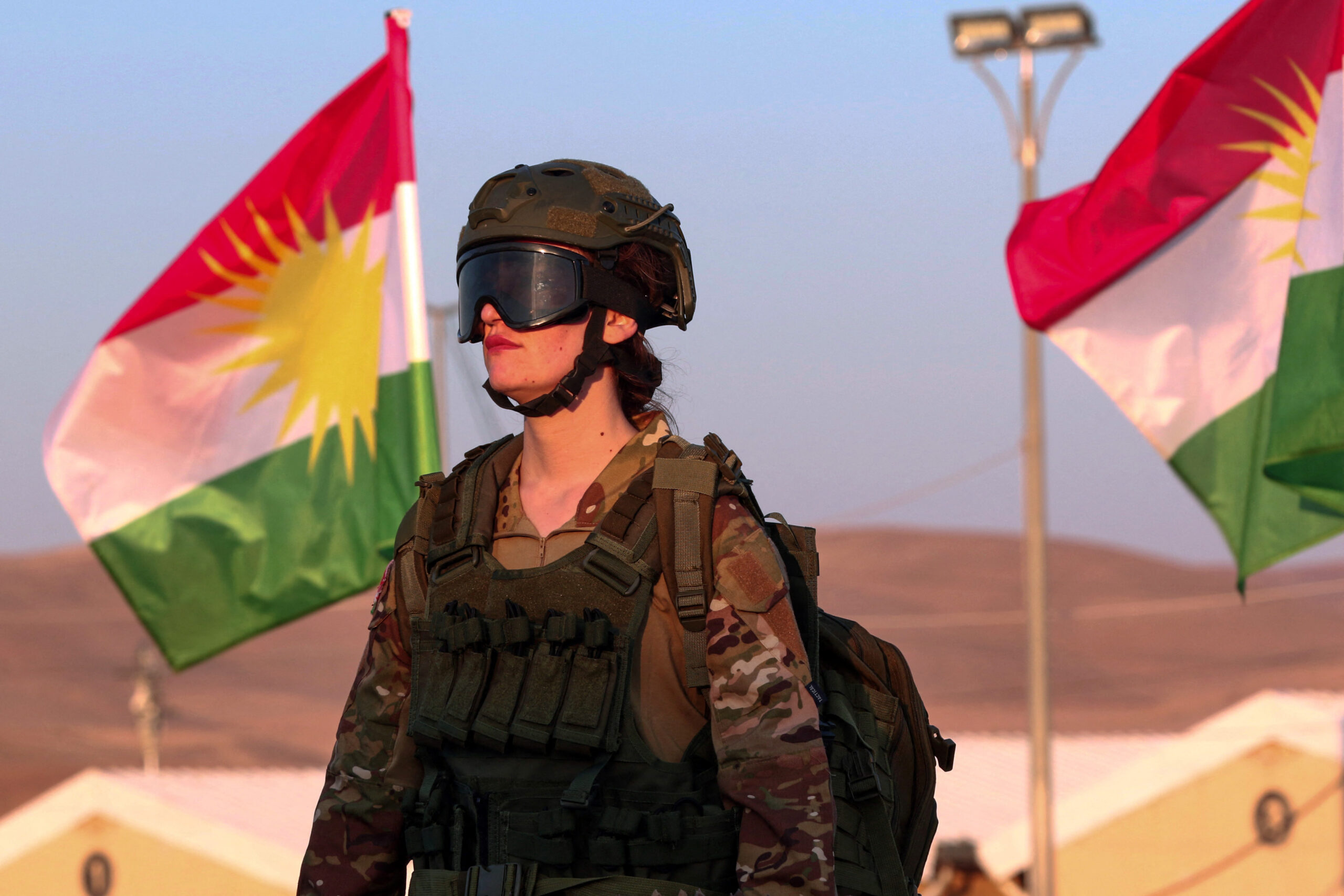
There are multiple reports that the U.S. is considering arming Iranian Kurdish opposition forces in Iraq in support of an invasion into Iran. The Kurds make up a large ethnic minority in both Iran and Iraq. Their ancestral land covers parts of Iran, Iraq, Turkey and Syria. There are thousands of Kurdish soldiers inside Iraq along the Iraq–Iran border, primarily in the Kurdistan region of Iraq.
The Trump administration has reportedly been “in active discussions with Iranian opposition groups and Kurdish leaders in Iraq about providing them with military support.” On March 1, President Donald Trump spoke with Kurdish leaders in Iraq and asked them “to enable Iranian Kurdish fighters based in Iraq to move into Iran.” One Kurdish party he spoke to says “Trump was clear in his call. He told us the Kurds must choose a side in this battle—either with America and Israel or with Iran.” Though the call reportedly went well, the Kurdish leaders “expressed reservations about getting involved in any ground invasion into Iran.”
Iran’s Foreign Minister Abbas Araghchi has warned of “terrorist movements” at the border with Iraq, and hundreds of Kurdish fighters have crossed from Iraq into Iran in preparation for a possible attack. Part of the bombing of Iran has focused on targets in western Iran and Kurdistan Province. Kurdish leaders say the bombing is meant to facilitate an infiltration from Iraq. The strikes have hit Revolutionary Guard facilities, police stations, and border guard posts. According to video analysis by the New York Times, “the strikes have been concentrated on locations near highways that run from the Iraq-Iran border into Iran.”
The CIA began work to arm Kurdish forces several months before the war. They have provided “small arms to the Iranian Kurdish forces as part of a covert program to destabilize Iran.”
The strategy is meant to provide a menu of outcomes. Kurdish forces could be used to increase pressure on regime change or to encourage an uprising in Iran. According to one U.S. official, the goal would be to “take over a specific territory in the Kurdish region inside Iran in order to challenge the regime and inspire a broader uprising.” An incursion from Iraq could also force Iranian forces to respond, drawing them out into the open where they could become targets for fighter jets. Others suggest that the idea would be for Kurdish armed forces to occupy Iran’s security forces, helping Iranians to take to the streets without getting massacred. An invasion from Iraq and a Kurdish uprising could also create instability and a security crisis.
The status of the plan remains unclear. The New York Times reports that American officials are still “debating the utility of a Kurdish invasion” and that “the White House had not yet decided whether to send the Kurds into Iran.”
White House Press Secretary Karoline Leavitt denies it, insisting that, though “Trump has spoken with Kurdish leaders,” he “has not agreed to any plan to arm them to overthrow the Iranian government.”
A senior Iranian Kurdish official told CNN that “Iranian Kurdish opposition forces are expected to take part in a ground operation in Western Iran, in the coming days.” Axios reports that Kurdish, American, and Israeli officials told them that “several Kurdish Iranian factions are preparing for a possible ground offensive against Iran's regime in the northwestern part of the country.”
Government officials in Iraq tell a different story. Kurdish regional government officials deny involvement in plans to send armed fighters into Iran. Nechirvan Barzani, president of the semi-autonomous Iraqi Kurdistan region, said it “must not become part of any conflict or military escalation that harms the lives and security of our fellow citizens.” According to Iraq’s national security adviser, Qasim al-Araji, Iraq will not permit Kurdish groups “to infiltrate or cross the Iranian border to carry out terrorist acts from Iraqi territory” and says that the “Kurdistan Region’s Interior Ministry has sent Peshmerga security reinforcements to the border strip with Iran” to prevent it. Iraq’s Prime Minister Mohammed Shia al-Sudani has also said that “the Iraqi government will under no circumstances allow any threat to be directed at Iran from Iraqi territory.” The New York Times reports that officials in Iraqi Kurdistan “seem to have complied” with an Iraqi government order “not to allow Iranian Kurdish militants to cross the border.”
One of the Kurdish leaders who spoke to Trump, Bafel Talabani, also received a call from Araghchi. On that call, Talabani “emphasized the importance of finding peaceful solutions to the issues.”
If the plan proceeds, the result could be catastrophic. A ground invasion from Iraq could prolong the war and increase the number of deaths. It could also make the war harder to contain and spread it to other regions. It could potentially draw in, not only Iraq, but Syria and Turkey. Turkey could also be problematic because, as Stephen Zunes, Professor of Politics and Program Director for Middle Eastern Studies at the University of San Francisco told The American Conservative, since Turkey and Iran work together “in their suppression of Kurdish fighters in their two countries, the U.S. would essentially be undermining a NATO ally.” So the plan could create division and strife in NATO.
Since the Persian majority in Iran “would not welcome a Kurdish incursion,” the strategy could lead to ethnic strife and civil war in which different ethnic and other groups are pitted against each other in a fragmented and weakened Iran. Granted, this may well be part of the American intention. Zunes says that supporting the Kurds may be one way of America achieving its goal of turning Iran into a failed state.
Subscribe Today
Get daily emails in your inbox
It could also hurt the Kurds. Trump is not arming the Kurds to support them in their quest for a homeland. Consistent with a long pattern of history in American-Kurdish relations in which the Kurds are used as an instrument and then abandoned, including by Trump, the danger is not only that Kurds would get killed in the fighting, but that they would, once again, be abandoned—leading, as Zunes says, “only to more suffering.”
Though ethnic strife could serve American goals, the Kurdish plan could subvert them by also working the opposite way. The Iran expert Trita Parsi says that “Tehran believes a land invasion will help unify the population against invaders and separatists.”
The war against Iran has already destroyed Iran, destroyed international law and killed too many people. Arming a Kurdish incursion from Iraq would not likely change the outcome of the war. It is a mad idea that mocks history and risks bringing Iraq and other countries into the war, while further destabilizing the region and Iran.