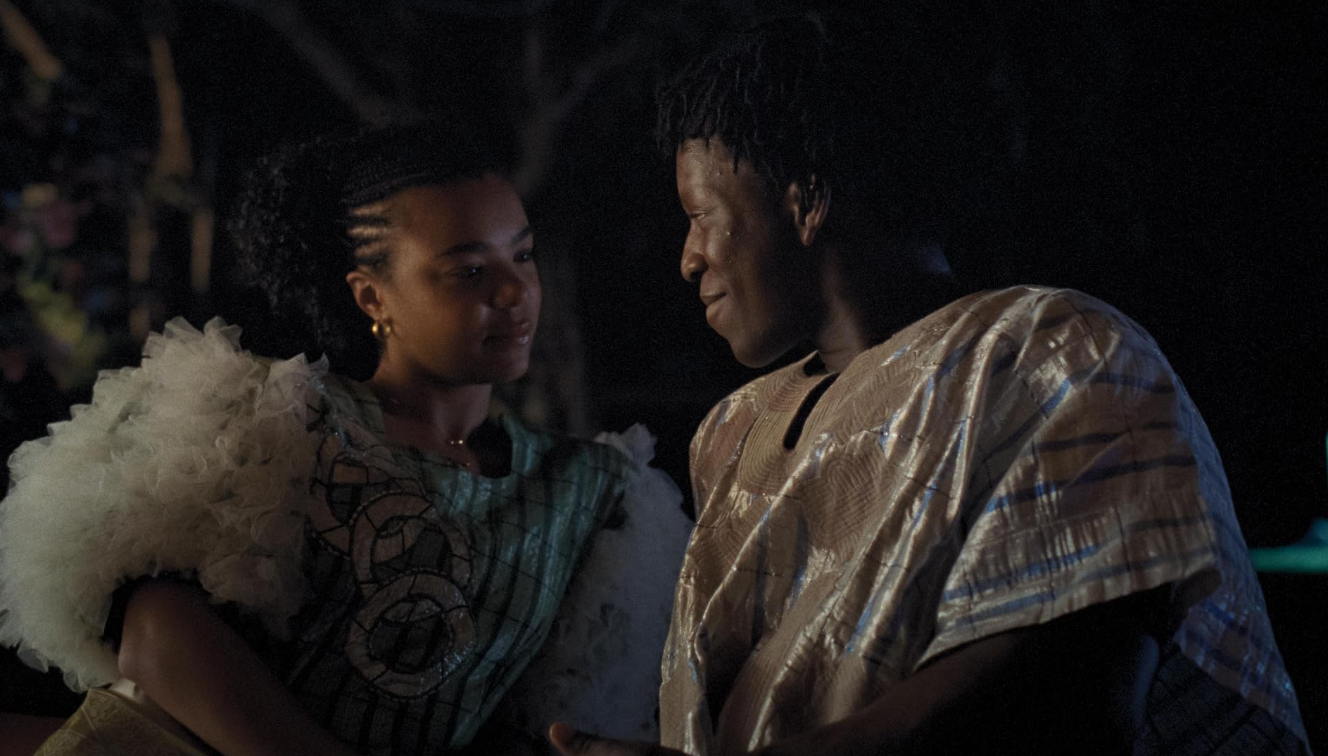
A Taste of Kiarostami
Humanity is always more complicated than rhetoric would present it.
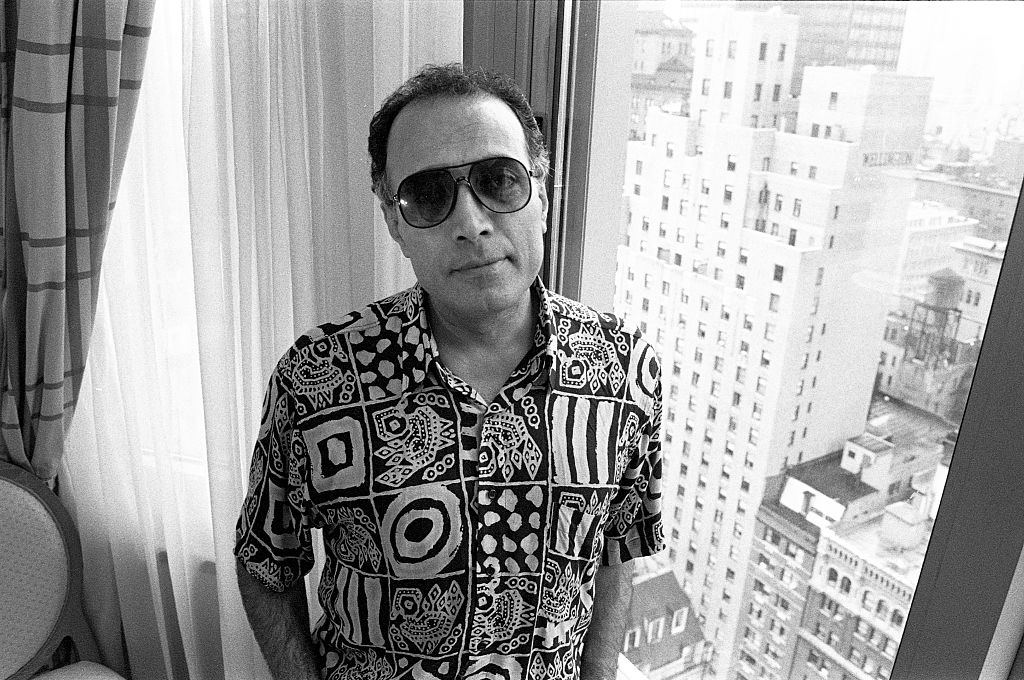

The French filmmaker Jean-Luc Godard once said that cinema begins with the American D.W. Griffith and ends with the Iranian Abbas Kiarostami. Across the century that separates the two auteurs, our world has been written and rewritten through the language of images. Few nations have shaped those images more powerfully, or more distinctly, than the United States and Iran.
Where Griffith excelled in the art of narrative coherence, Kiarostami created a cinema that resists finality. Griffith helped define the technical grammar of early filmmaking; Kiarostami shifted meaning away from dialogue and into experience. Where Griffith guided viewers, Kiarostami asked them to question what they were really seeing. Griffith grounded his narratives in moral binaries; Kiarostami crafted worlds in which the lived experience of everyday people revealed turmoil, ambiguity, and spatial questions about what it means to be human.
In contrast, Sen. Lindsey Graham (R-SC) wears his arrogance and ignorance of the other with pride. At the outset of the Iran War, he mocked Iran’s late Supreme Leader Ali Khamenei in a tweet that distilled his incuriosity of Iranian society into a single, flippant line. “See you at the movies,” Graham wrote. “Oh I forgot, you don’t have movies.”
But Iran does have movies—a litany of masterpieces that not only navigate the repression of the Islamic Republic, but provide one of the most vital cinematic traditions the world over.
The films of Jafar Panahi, Asghar Farhadi, Mohsen Makhmalbaf, Nasser Taghvai, Amir Naderi, and Kiarostami are not simply marginal curiosities. Their films are works that toe the line of restraint and imbue the smallest gestures with grandeur and depth; they transform political and cultural constraints into invention and expand the very vernacular of cinema.
Glibly overlooking these contributions to humanity reflects a broader tendency in 21st-century America to reduce complex cultures into a disposable satire. It is to miss entirely the humanity and creativity of a people that have long been seen from afar only in terms of conflict and strife. Graham, like many of the voices currently surrounding President Donald Trump, betrays America’s great intellectual tradition by flattening the nuances of Iranian society into a caricature and mistaking that caricature for reality.
At the core of all Kiarostami’s films, one thing is always present: life. A child’s anxiety over a misplaced notebook. A man who circles the hills in quiet despair. Strangers speaking past one another, and sometimes, miraculously, connecting. Love, loneliness, resentment, companionship, and misery. These are the experiences of the people and places at the center of Kiarostami’s cinema—-the burdens we all must carry.
Perhaps his best-known film, the 1990 metafiction Close-Up, is a work where deception emerges from loneliness and where redemption, if you can call it that at all, arrives through understanding rather than resolution. Kiarostami was working on a separate project when he read the real-life story of Hossain Sabzian, a poor, depressed man who was accused of impersonating the Iranian director Mohsen Makhmalbaf and conning the middle-class Ahankhah family in Tehran into starring in his upcoming film. Kiarostami dropped his film project immediately and was granted permission to film the trial instead.
Kiarostami sought out the real journalist who documented the crime, the real Sabzian, and the real members of the Ahankhah family to participate in his film, which transformed the work into a spectacular blend of fiction and documentary. After the Ahankhah family agreed to pardon Sabzian for his deception, Kiarostami convinced Makhmalbaf, the director Sabzian had impersonated, to facilitate a reconciliation with the Ahankhah family. It culminates in one of the most powerful endings in the history of film, as Sabzian clings to the back of the man he once impersonated and rides across Tehran by motorbike.
In this way, Kiarostami’s cinema is not merely fixed but negotiated, shaped, and shared by shifting perspectives. It embraces an ambiguity that is nonexistent in so much of the rhetoric we hear about Iran. Close-Up shows the nation’s human side, where a crime can be a confession, where a stranger can become recognizable, and where lies reveal the inner chaos of the everyman.
Kiarostami did not always find it easy to work within the constraints of the Islamic Republic. For nearly a decade at the outset of the 21st century, his films were prohibited from being screened, though he was not barred explicitly from creating nor did he face punishment for his work. But the cryptic narratives and modern style that characterized his filmography were questioned by clerics who wondered whether there were hidden social messages in the films. As Kiarostami gained prominence internationally, he was forced to retreat from public life in Iran, spending nearly a decade focused on poetry which he wrote extensively.
When asked why he remained in Tehran after the 1979 revolution, Kiarostami stated that his work was inseparable from the place that shaped it. “When you take a tree that is rooted in the ground and transfer it from one place to another, the tree will no longer bear fruit,” Kiarostami said of his native Iran. “And if it does, the fruit will not be as good as it was in the original place. This is a rule of nature. I think if I had left my country, I would be the same as the tree.”
Yet later works by Kiarostami would challenge that very notion. His final two films, Certified Copy and Like Someone in Love, filmed in Paris and Tokyo, respectively, suggest that Kiarostami’s sense of place was never purely geographical. Both films embody his signature explorations of dislocation, identity, and perception, the very qualities that made him a singular voice in world cinema.
The films of Kiarostami show a sophisticated admiration for time and place. In his 1999 masterpiece The Wind Will Carry Us, a journalist named Behzad travels from Tehran to the rural Kurdish village of Siah Dareh to document the mourning ritual following the death of a woman said to be over one hundred years old. In this small, remote village where cell-phone reception is scarce, Behzad forms complex relationships with a young boy and the local villagers, whose lives move at a pace unaffected by the constant demands of modern life.
Kiarostami, who turned to poetry when the Iranian regime imposed the 10-year ban on the screening of his films, draws on the language of poetry to animate the spiritual texture of both the villagers and the landscape they inhabit. The Wind Will Carry Us takes its name from a poem written by the modern Iranian poet Forough Farrokzhad, and Kiarostami weaves poetry into the film’s fabric, including passages from the 11th-century Persian poet Omar Khayyam. As Behzad rides on the back of a motorbike driven by an aging doctor across farmlands shaped by the undulating, golden hillsides of Iranian Kurdistan, the words of Khayyam echo across the landscape, merging image and text into a single, meditative experience.
Remarking on the beauty of the landscape, Behzad shouts, “They say the next world is more beautiful.” The doctor replies simply, “Who has come back to tell us?” Then he recites Khayyam as the pair disappear into the distance: “Prefer the present to those fine promises / Even a drum sounds melodious from afar.” Here, as in many of his films, Kiarostami presents a vision of Iran not as a geopolitical abstraction, but as a culture shaped by language, memory, and continuity.
The Wind Will Carry Us also explores the mystical nature of Sufism, which emphasizes a personal, spiritual experience of God. Iranian artists often express their principles through poetry, music, and filmmaking. Behzad’s journey to the village of Siah Dareh and his loss of ego amid the simple, everyday moments of rural life embodies the Sufi idea that truth is found through presence and awareness.
Ideas such as identity as an illusion and journey as a means of devotion appear throughout much of Kiarostami’s work. In his finest film, 1997’s devastatingly simple but mesmerizing Taste of Cherry, the filmmaker tells the story of a beleaguered man piloting the winding dirt roads on a mountain outside Tehran.
The film’s protagonist, Mr. Badii, is a middle-aged man seeking the help of a stranger. He will pay top dollar if the stranger agrees to return to a roadside grave he has dug for himself the next morning. He asks each stranger to call out his name in the morning and if he replies, to help him out of the self-dug grave. Otherwise, he asks each man to bury dirt on him and accept a pre-arranged payment regardless of the outcome.
Much of the film unfolds inside Badii’s beige Range Rover which becomes a staging ground for an exploration of the self. Along the way, he first meets a shy young Kurdish soldier who runs in fear when Badii explains his predicament. Badii then encounters an Afghan seminarist who outright refuses to participate due to his religious objections to suicide. Finally, Badii meets Mr. Bagheri, an aging Azeri taxidermist, who hesitantly agrees because he needs money for his sick child.
After being shown the burial site, Bagheri asks Badii to drive him back to the city but not before they take an especially long route that winds along a passage of beautiful golden rain trees. There, Bagheri makes his stand. “Every problem has its solution,” says the aging taxidermist who admits he, too, attempted suicide at a particularly low point in his life. “But if you don’t talk, no one can help you.”
As the pair continue down the long, dirt path back to Tehran, Bagheri implores Badii to reconsider ending his life. “Have you lost all hope?” asks Bagheri. “Have you ever looked at the sky when you wake in the morning? At dawn, don’t you want to see the sun rise? The red and yellow of the sun at sunset. The night of the full moon, don’t you want to see it all again?”
Alone, under a full moon, Badii returns to the graveside road and enters the hole. There, laid beneath a sky of stars and passing clouds, the film fades to black. We never learn if Badii commits the deed. In fact, the final scene of the film catapults the viewer into the hyperreal. In a handheld scene filmed on a digital camera, Kiarostami breaks the fourth wall, showing the audience both himself and his crew on the outskirts of Tehran in the process of creating a scene from the film.
This decision has puzzled and inspired future filmmakers and cinephiles alike. Was this meta moment Kiarostami’s cherry? Was filmmaking, or the pursuit of art across his entire life, the thing that kept him alive during all the years we must travail in our own special way? Whatever he meant by it, it’s the sort of brave and jolting production choice that helped propel Kiarostami into an internationally renowned filmmaker with a singular vision. For its unflinching portrait of a man on the edge, Taste of Cherry won the Palme d’Or at the 1997 Cannes Film Festival.
This level of ambiguity explains why Kiarostami was both banned from screening his films in Iran for a decade but also why he was permitted to continue working while filmmakers such as Jafar Panahi faced imprisonment for pushing overt political tones in their work. With Kiarostami, it’s often what is left unsaid that is most devastating in its questions of the soul and the purpose of life itself.
Kiarostami, who repeatedly refused to leave Iran throughout his career, died in a Paris hospital on July 4, 2016 after receiving initial treatment in Tehran. The cause of Kiarostami’s death remains contested. Iran’s Ministry of Health and Medical Education reported that the filmmaker died of gastrointestinal cancer, but the Tehran Times later said Kiarostami had succumbed to a massive brain hemorrhage caused by an overdose of heparin. Members of Kiarostami’s family questioned the care he received in his native country after his fellow filmmaker Mohammad Shirvani said Kiarostami’s medical team had “destroyed” his digestive system.
Whatever the cause, Kiarostami’s death, and life, as with much of his art, often remained shrouded in a beguiling set of mystery due to the nature of his artistry and the land he called home. His body was returned to Iran and buried in the town of Lavasan, which means “Mountaintop of Sunrise” in Persian. Makhmalbaf, the director who was featured in Kiarostami’s Close-Up, praised Abbas for giving Iranian cinema “the international credibility it has today” while lamenting the fact that his work had been, at times, suppressed in his homeland of Iran.
Though Kiarostami was barred from screening his films in Iran for a decade, mourning crowds across Iran who recognized his profound effect on cinema and Iran bid farewell to the director. Iran’s then-President Hassan Rouhani also released a statement, stating that Kiarostami’s “different and profound attitude towards life and his invitation to peace and friendship" would be a "lasting achievement.”
Subscribe Today
Get daily emails in your inbox
The statement reflects the uneasy reality of Iran, a country with a deep artistic tradition whose artists have long navigated restriction and contradiction. Such constraints, however, are exactly what acted as the emotional impetus for Kiarostami’s distinctive cinema—a cinema that succeeded in etching the very nature of our uniquely human condition.
Days before renewed threats from Donald Trump to bomb Iran “back to the Stone Ages,” a missile strike reportedly damaged Kiarostami’s family home in Tehran. The image is difficult to ignore. The house of a filmmaker who spent his life revealing the humanity of his country, caught once again in the crosshairs of abstraction.
Kiarostami’s films ask us to look closer. They demand we sit with uncertainty and recognize ourselves, across all nations, in strangers. In doing so, Kiarostami’s oeuvre offers something increasingly rare: a way of seeing that resists caricature. At a time when Iran is so often reduced to either a slogan or a threat, his cinema remains a quiet but enduring reminder that no nation, and no people, can be understood from a distance.