A First Pass at Scoring the Iran War
Despite the battlefield success, the scale of Washington’s dysfunction has been on full display.
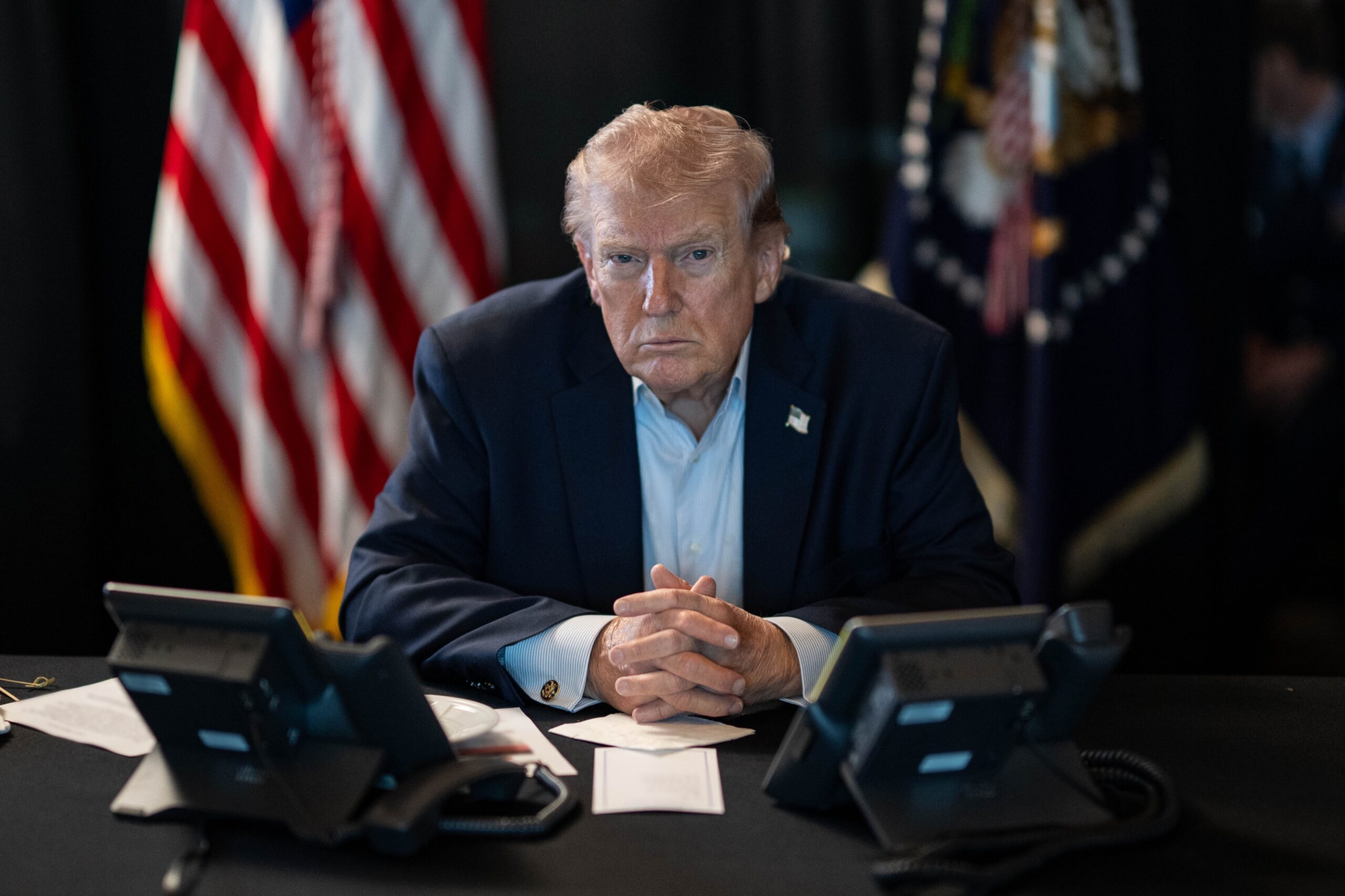
Listen to the Trump administration’s assessments of the war in Iran, and you could be forgiven for believing that Washington’s biggest adversary in the Middle East was at death’s door. When he’s not on Truth Social lobbing rhetorical grenades at what’s left of the Iranian government, President Donald Trump is giving impromptu remarks to the press about the dire state of the Iranian military and how the air campaign will be wrapped up soon. Speaking to the nation on April 1 in a rare prime-time televised address, Trump dressed up the conflict as an unquestionable success.
“Tonight, Iran’s navy is gone,” Trump bellowed.
Their air force is in ruins. Their leaders, most of them, terrorist regime they led, are now dead. Their command and control of the Islamic Revolutionary Guard Corps is being decimated as we speak. Their ability to launch missiles and drones is dramatically curtailed, and their weapons, factories and rocket launchers are being blown to pieces. Very few of them left.
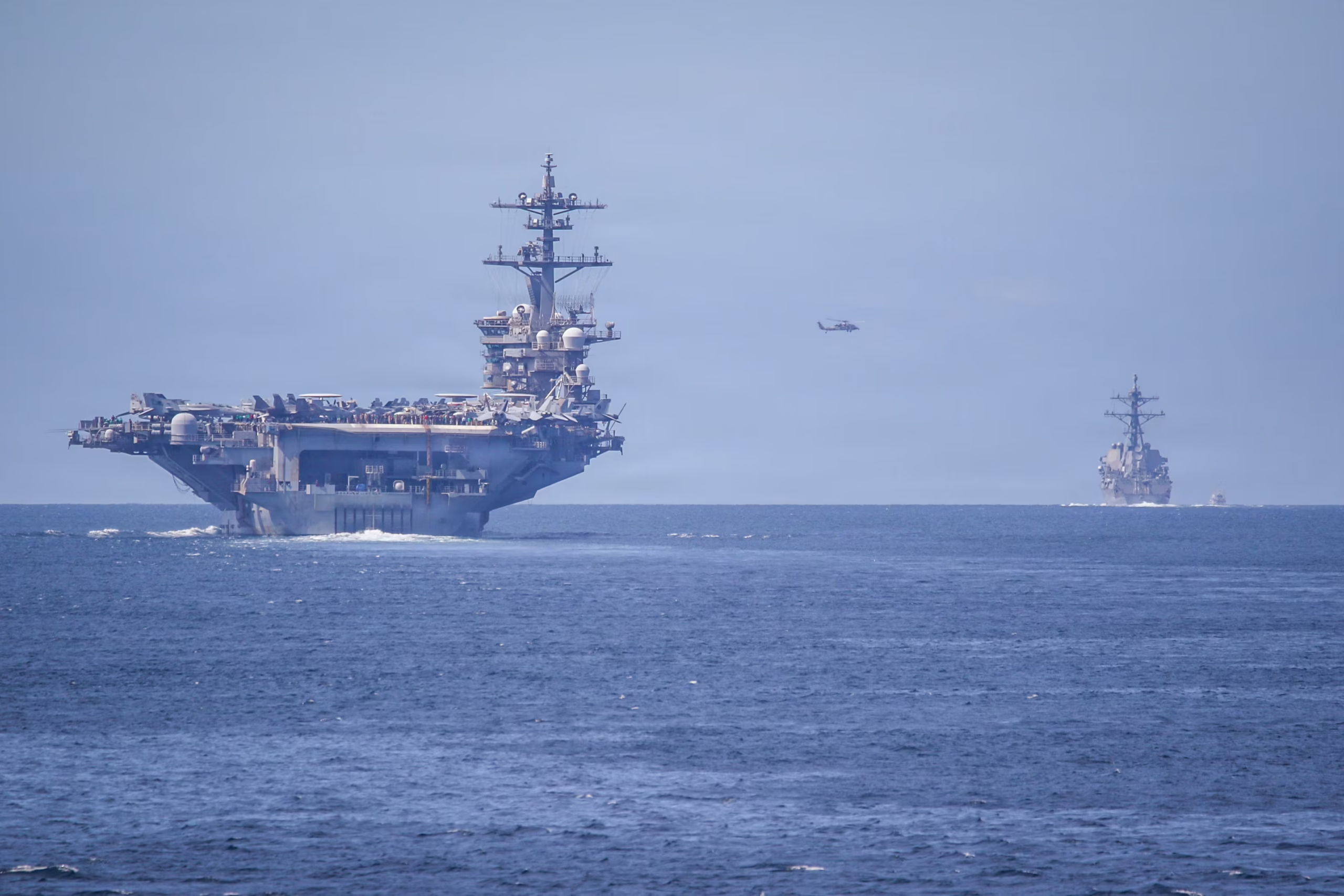
To be fair, the president known for embellishment and braggadocio wasn’t necessarily lying. As of April 3, the United States had conducted more than 12,000 strikes on an assortment of Iranian military and government targets, from navy vessels and command-and-control headquarters to weapons manufacturing facilities and ballistic missile launchers. So many Iranian political and security officials have been killed—Supreme Leader Ayatollah Ali Khamenei; Islamic Revolutionary Guard Corps (IRGC) Commander Mohammad Pakpour; Defense Minister Aziz Nasirzadeh; and the senior security official Ali Larijani, to name just a few—that it's difficult to keep track of the ever-evolving roster on a daily basis. The Pentagon reports that more than two-thirds of Iran’s ballistic missile launchers are destroyed. Assuming those numbers are correct, it would go a long way to explaining the 90 percent drop-off in Iranian ballistic missile and drone attacks since the war’s early days.
The other explanation is more worrisome: Iran is conserving its firepower for a long military engagement and picking its spots for maximum impact. Indeed, the Iranians don’t need to fire hundreds of missiles or drones every day to create significant damage. Far from it: Keeping up a steady pace of a few dozen a day is more than enough to roil the energy markets. The clearest example of this was the mid-March strike against Qatar’s largest liquified natural gas plant, which took 17 percent of the country’s production off-line and caused $20 billion worth of damage that will take years to repair. As beat up as the Iranian security establishment is, its war strategy—maximize the economic and political pain around the Persian Gulf to the point where Trump decides cutting the conflict short is the best option possible—is logically sound and is being implemented to a tee. Trump is betting on munitions; Iran is betting on time, psychology, and economics.
At the time of writing, a fragile ceasefire has been announced, but the United States and Iran do not seem close to resolving the issues, like the status of Iran’s nuclear program, that have bedeviled bilateral relations for decades. Once the war is over and the chips settle, historians and foreign policy analysts around the world will write long-form articles and books dissecting the U.S. military strategy, the decision-making process that led to the decision to go to war, and how the conflict has changed the Middle East’s geopolitical alignment. A final verdict will have to wait.
Still, some preliminary conclusions and lessons come to mind even as the fighting and bombing continue. Some, such as Washington’s propensity to willingly stumble into wars of choice that often generate more problems than they solve, appear systemic. Others, such as how Gulf Arab states reorient their security policies after the war is over—assuming they do—will be pored over by regional scholars in the months and years to come.
One of the first, most glaring lessons is that the men and women who run U.S. foreign policy—or at least those who make the decisions—continue to commit the same mistakes. Poor judgement is inherent or ingrained in the system. Viewed from a 40,000-foot level, it’s both fascinating and disturbing how similar the 2026 Iran War is with the 2003 Iraq War, not so much in how it’s being fought or what the U.S. objectives are, but in how susceptible our country’s policymakers are to overestimating U.S. power and succumbing to threat inflation. Just as President George W. Bush, Defense Secretary Donald Rumsfeld, and Secretary of State Colin Powell underscored the supposed dire, existential security threat posed by Iraq’s Saddam Hussein, Trump, Defense Secretary Pete Hegseth, and Secretary of State Marco Rubio have tried to convince the American people that Iran is nothing short of a more maniacal version of the old Safavid empire. A nuclear-armed Iran, Trump alleged, would wipe out Israel and eventually send intercontinental ballistic missiles into American cities, a more Trumpian version of Condoleezza Rice’s “we don’t want the smoking gun to be a mushroom cloud” tagline more than two decades earlier.
Yet the reality was far less scary than proponents of both wars made it out to be. Saddam was a ghastly brute, but his weapons of mass destruction program proved to be a bad joke. The Iraqi military, described as threatening to the region and to the U.S. homeland, was little more than a collection of disoriented, disheveled, and under-equipped units. Saddam’s purported alliance with Al Qaeda’s Osama bin Laden was a myth as credible as the Easter Bunny. Some realist academics understood this, taking out a full-page ad in the New York Times advising the Bush administration to continue a policy of containment and avoid war. The decisionmakers didn’t listen.
Twenty-three years later, we are essentially watching the same movie, even if the characters are different. Iran has taken Iraq’s place as the monster whose evil powers are grossly exaggerated. Rubio made Iran’s ballistic missiles out to be an imminent danger that needed to be destroyed in order to avert Iranian attacks against U.S. military bases in the Middle East. Yet the U.S. intelligence community never backed up that claim, which suggests Rubio was either lying to the American people or didn’t bother to consult with intelligence officials before he mouthed off to the press.
Ironically, Trump’s decision to go to war with Iran wound up turning Rubio’s fear into a self-fulfilling prophecy; multiple U.S. military installations, from Saudi Arabia and Kuwait to the United Arab Emirates, Qatar, and Iraq have been the target of Iranian missile and drone barrages ever since. Some expensive U.S. military aircraft have been hit and American lives have been lost. It seems that Iran’s ballistic missiles were only a threat to American bases if a U.S. president was reckless enough to go to war with Tehran in the first place.
Another similarity between the two wars is worth highlighting: U.S. officials have habitually fooled the American public into believing the military can pretty much do anything it wants in short order with next to no costs. In the months leading up to the invasion of Iraq, Rumsfeld, Vice President Dick Cheney, and Deputy Defense Secretary Paul Wolfowitz assured lawmakers and citizens alike that regime-change in Baghdad would be fast, low-risk, and cheap. As history shows, those promises unraveled within months, if not weeks. In the end, the Bush administration’s war of choice resulted in the deaths of more than 4,400 American servicemembers, cost trillions of dollars, and gave Al Qaeda an opportunity to expand into the heart of the Middle East.
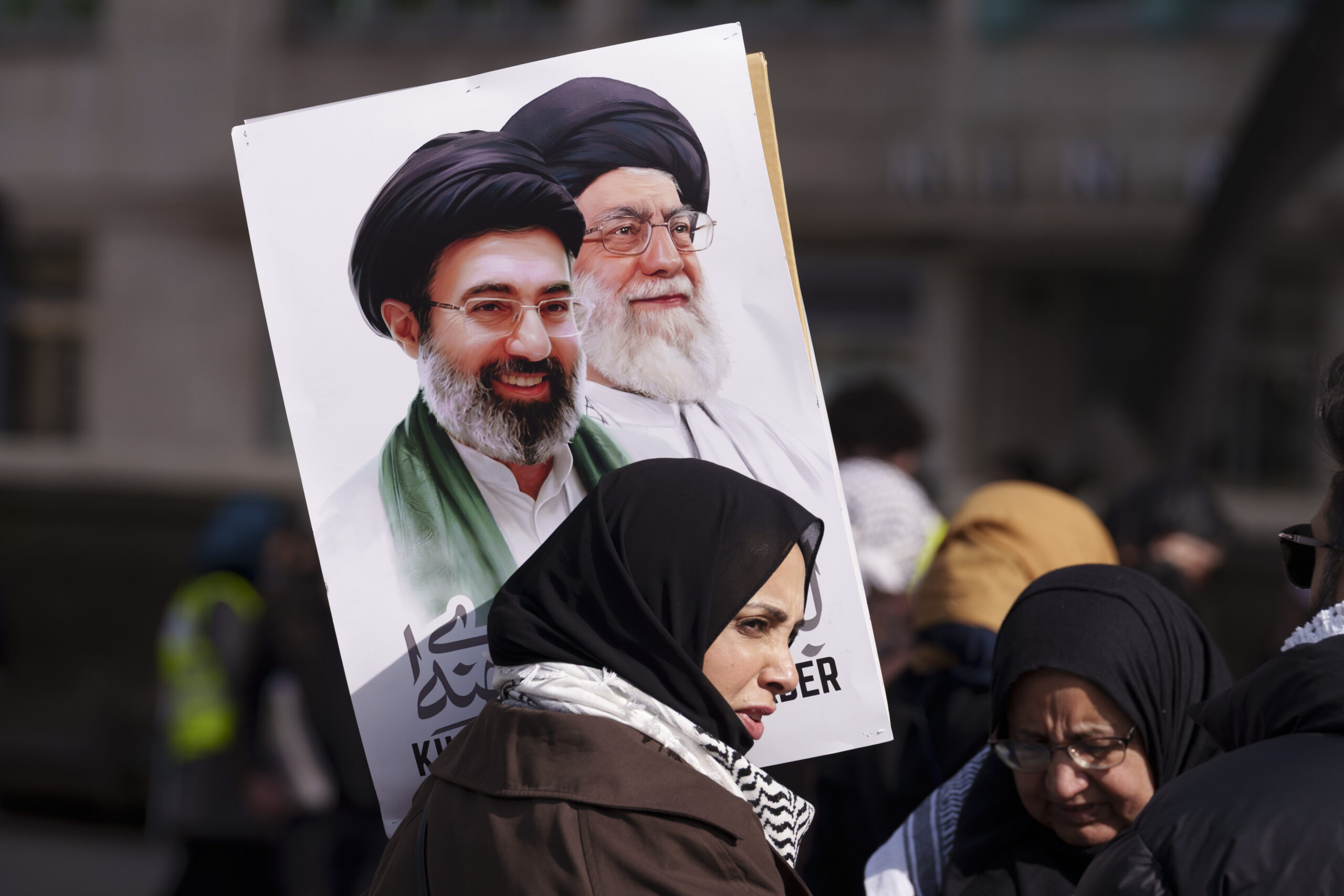
One would have hoped the Trump administration learned lessons from that fiasco. Instead, Trump himself, the chief advocate of America First, committed some of the same blunders as the neoconservatives. As in Iraq, American expectations in Iran fell by the wayside very early on. The deaths of Iran’s Supreme Leader Ali Khamenei and his close advisers were supposed to elicit such turmoil in the Iranian ranks that one of two things would occur—the Iranian population would rise up and overthrow the 47-year-old clerical regime, or a new political leader would magically emerge, as in Venezuela, and transform Iran into a pro-U.S. puppet state. Six weeks of American and Israeli bombardment later, neither of those scenarios have come to pass. Iran is still led by a Khamenei, the IRGC is consolidating its hold over Iranian politics, Tehran’s negotiating position is as hardline as ever, and ordinary Iranians are staying home for fear of getting killed. The faces may be different, but the same regime in Tehran still stands.
The second lesson of the Iran War is as critical as the first: In terms of grand strategy, the United States has a terrible time prioritizing and can’t even bother to stick with the national security policies it writes for itself.
Every American administration comes into office with major plans for the global problems they wish to address and grand opinions on which region of the world is most important to U.S. security interests. In 2009, the newly-elected President Barack Obama vowed to remove the United States from the post-9/11 wars that dominated the U.S. foreign policy apparatus for the previous eight years. At his inaugurations in 2017 and 2025, Trump pledged to do the same. And when Joe Biden entered the White House in 2021, he tried to ditch the Middle East for greener pastures and refocus American defense resources on containing China. National security strategies were written, policy speeches were given around Washington’s think-tank circuit, and officials ran up to Capitol Hill to testify about why the new doctrine would succeed where the old ones failed.
But time and again, prioritization is sacrificed or simply discarded. The documents U.S. defense officials produce turn out to be a collection of empty words as events pull the United States in multiple directions. The result is typically an extension of the status quo. Far from leaving the global war on terrorism in the rear-view mirror, Obama escalated it by sending 30,000 additional troops to Afghanistan and increasing drone strikes in places like Yemen and Somalia. Trump actually increased the American force presence in the Middle East during his first term, bombed Syria’s former regime twice, and assassinated the IRGC commander Qassem Soleimani. Biden’s foreign policy will forever be tainted as one that armed, financed, and otherwise enabled Israel’s own war in Gaza. And Trump, despite making a big deal on the campaign trail about ending wars and pulling American involvement out of unnecessary quagmires, has followed in his predecessor's footsteps by diving head-first into a part of the world that has burned the United States multiple times before. As a consequence, the pivot to East Asia that the last three presidents have talked about is repeatedly deferred further into the future.
The war in Iran holds a valuable lesson for the Gulf states too. These rich, autocratic royal families are used to hosting European soccer tournaments and being courted by Western business elites, not to dealing with missiles and drones flying into their kingdoms. The Saudis, Emiratis, and Kuwaitis have no love lost for the Iranians, but none of them wanted a war in their neighborhood—war is bad for business, after all. Gulf Arab officials spent weeks trying to convince the White House that quitting diplomacy and embarking on another military adventure would do more harm than good.
That advice fell on deaf ears. The Gulf finds itself in the middle of a conflict it never wanted, provoked by an ostensible strategic partner in the United States who refused to really take their worries seriously. The result has been a deep hit in investor confidence, sagging stock market numbers, and economic damage in the tens of billions of dollars. Saudi Arabia saw its crude oil production decline by 50 percent in March, a consequence of Iranian missile and drone strikes on their oil fields as well as Tehran’s effective closure of the Strait of Hormuz, where roughly 20 percent of the globe’s oil passes through every day. At the time of writing, the UAE has been the target of 457 Iranian ballistic missile attacks and more than 2,000 drone incidents, the vast majority of which have been neutralized by air defenses.
When the war ends, Washington’s traditional partners in the Middle East will need to do some soul-searching about whether continuing the current strategic relationship with the U.S. is the best option for them. Although the Saudi Crown Prince Mohammed bin Salman and the Emirati President Sheikh Mohamed bin Zayed are highly unlikely to be so blatant in public, both leaders will naturally begin to wonder whether American military bases in their respective countries instigate war rather than deter it. If they don’t already exist, plans will likely be drafted to explore alternative security arrangements apart from relying so heavily on the Americans.
Unfortunately, these states don’t have many good options, and those that are on the table come with drawbacks and problems. The Gulf Cooperation Council could establish a formal, region-wide air defense and intelligence network to counter whatever threat Iran poses after the war, but this initiative presumes the six Arab states under the GCC umbrella can stay together under the weight of competing interests. Given the rivalries and fraught history between some of them, maintaining that unity beyond the short-term is no sure bet.
Beijing might at first be viewed as an appealing candidate to replace dependency on Washington, yet the Chinese have exhibited throughout the Iran war that they neither possess the capability to become the Persian Gulf’s security guarantor nor find this prospect particularly appealing. Beijing wants Persian Gulf oil to power its own economy, but little else. Moscow, too, is a non-starter. Considering the number of Russian allies that have fallen since 2024—Bashar al-Assad, Nicolas Maduro, Ali Khamenei—who in his right mind would expect Russia’s President Vladimir Putin to save the day if a security crisis reared its ugly head? And surely no Arab leader would be clueless enough to expect the Europeans to do much in the security realm, especially when sustaining Ukraine’s fight against Russia remains the continent’s principal aim.
Subscribe Today
Get daily emails in your inbox
The only certainty is the Gulf monarchies are in perhaps the toughest position of all, trapped between a neighbor in Iran that is now more bellicose than it was a few months earlier, an American defense commitment that is looking increasingly shaky, and a global oil market that Tehran can meddle with at will.
Regardless of how the war ends, the United States and Iran will both claim victory to satisfy their domestic audiences. As he has in the past, Trump will squawk about how Operation Epic Fury was an unqualified success that prevented Iran from building a nuclear weapon, degraded its military capacity by at least a decade, and humbled the regime into respecting the full weight and power of the U.S. military. The regime, in turn, will come out of the conflict having survived, with its even more hardline leadership celebrating its ability to battle the Great Satan and emerge on the other side of it with the Strait of Hormuz under its de facto control. Partisans in both countries will attempt to persuade their constituents that the war was either a masterstroke or a road to ruin.
But based on the facts as they exist today, the provisional verdict is depressing. This is a war that could have been avoided if the Trump administration actually gave diplomacy with Iran a serious chance to succeed. Regrettably, the United States opted to roll the dice on a military solution for the umpteenth time, only to find out yet again that wars have consequences for even the strongest powers.